

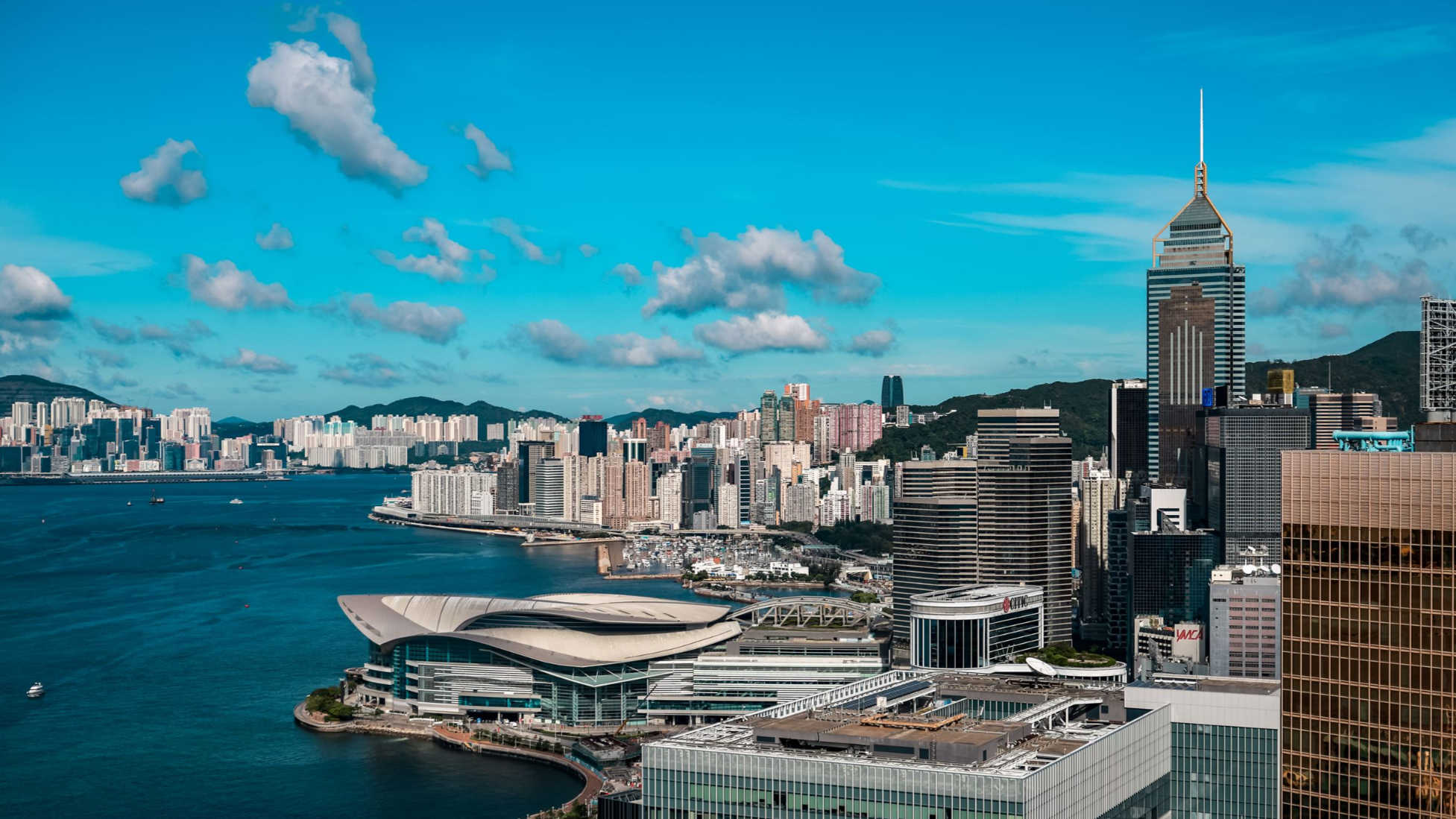
Hong Kong ranked third among global financial hubs and continued to lead in fintech with a slight increase in scores, according to the 39th Global Financial Centres Index, published on Thursday.
In the overall ranking, Hong Kong’s rating increased by one point to 765. Competition among the world’s top four financial hubs — New York, London, Hong Kong, and Singapore — remains intense, with each separated by just one point.
Shanghai and Dubai rose to sixth place and seventh place respectively. Tokyo climbed five spots to rank 10th, entering the world’s top 10 financial hubs again after four years.
ALSO READ: HK, Shenzhen lead global financial rankings with fintech prowess
The score gap narrowed further among top financial hubs in the Asia-Pacific, North America, and Western Europe, which still significantly outperform other regions.
This year, Hong Kong once again topped the fintech ranking, scoring seven points higher than last year. Shenzhen and New York followed closely behind. Tokyo, Busan, Stockholm, and Abu Dhabi all moved up in this field.
In key industry sectors, Hong Kong ranked first in banking, insurance, and financing, and second in investment management.
The index was jointly published by UK-based Z/Yen and the Shen-zhen-based China Development Institute, evaluating the competitiveness of 120 financial centers across the globe.
READ MORE: Cross-border payment system boosts HK’s financial hub status
Over the past year, Hong Kong’s financial sector has made strides in areas such as fintech, virtual-asset regulation, and renminbi internationalization.
In November, the Hong Kong Monetary Authority unveiled its “Fintech 2030” development strategy, aiming to foster the city’s fintech ecosystem through payment infrastructure development, artificial-intelligence applications, technology resilience, and tokenization.
Benjamin Hung Pi-cheng, chairman of Hong Kong’s Financial Services Development Council, said the index once again is a testament to the stability, dynamism, and connectivity of Hong Kong as a leading international financial center.
Hong Kong’s financial markets, underpinned by regulatory excellence and world-class infrastructure, offer international investors a secure, neutral and globally connected hub for capital and wealth worldwide, assuring resilience and enduring value amid uncertainties, he added.
Hailing the performance, a spokesperson for the Hong Kong Special Administrative Region government said that the city will respond to the ever-changing global political and economic landscape with an innovative mindset and proactively align with the nation’s 15th Five-Year Plan (2026-30) to seize opportunities emerging from the reshaping of the global investment landscape.
“Hong Kong should position itself as a world-class international financial center that integrates into and serves the overall national strategy,” said Yu Lingqu, deputy director of the department of financial development and State-owned assets and State-owned enterprise research at the China Development Institute.
“It needs to play a leading role in and provide financial support for major national initiatives, including science and technology self-reliance, institutional opening-up, renminbi internationalization, and the Belt and Road Initiative,” Yu said.
He added that the Hong Kong SAR needs to take full advantage of its fintech strengths to serve the country’s needs and deepen collaboration within the Guangdong-Hong Kong-Macao Greater Bay Area.
“Hong Kong can leverage fintech’s high efficiency, low cost and cross-border convenience to provide high-quality financial services for mainland technological innovation and the real economy,” he said.
“It’s also important to promote mutual recognition of fintech standards, cross-border data flows and talent mobility in the 11-city cluster to establish a collaborative framework of research and development in Hong Kong, commercialization in the Greater Bay Area, and global application.”
The city should also work to help shape influential international standards by developing a closed-loop system of “innovation, testing, compliance, and scaling” in emerging areas such as AI finance, stablecoin, digital currencies and real-world assets, which can be elevated into international norms, Yu added.
Contact the writers at bingcun@chinadailyhk.com
