

Sustainability, energy transition, smart infrastructure offer good potential for cooperation, forum hears
Chinese companies looking to go “greener” are encouraged to look at the Middle East where national sustainable initiatives and digital innovation have been transforming the Gulf region, a Hong Kong panel event heard on Monday.
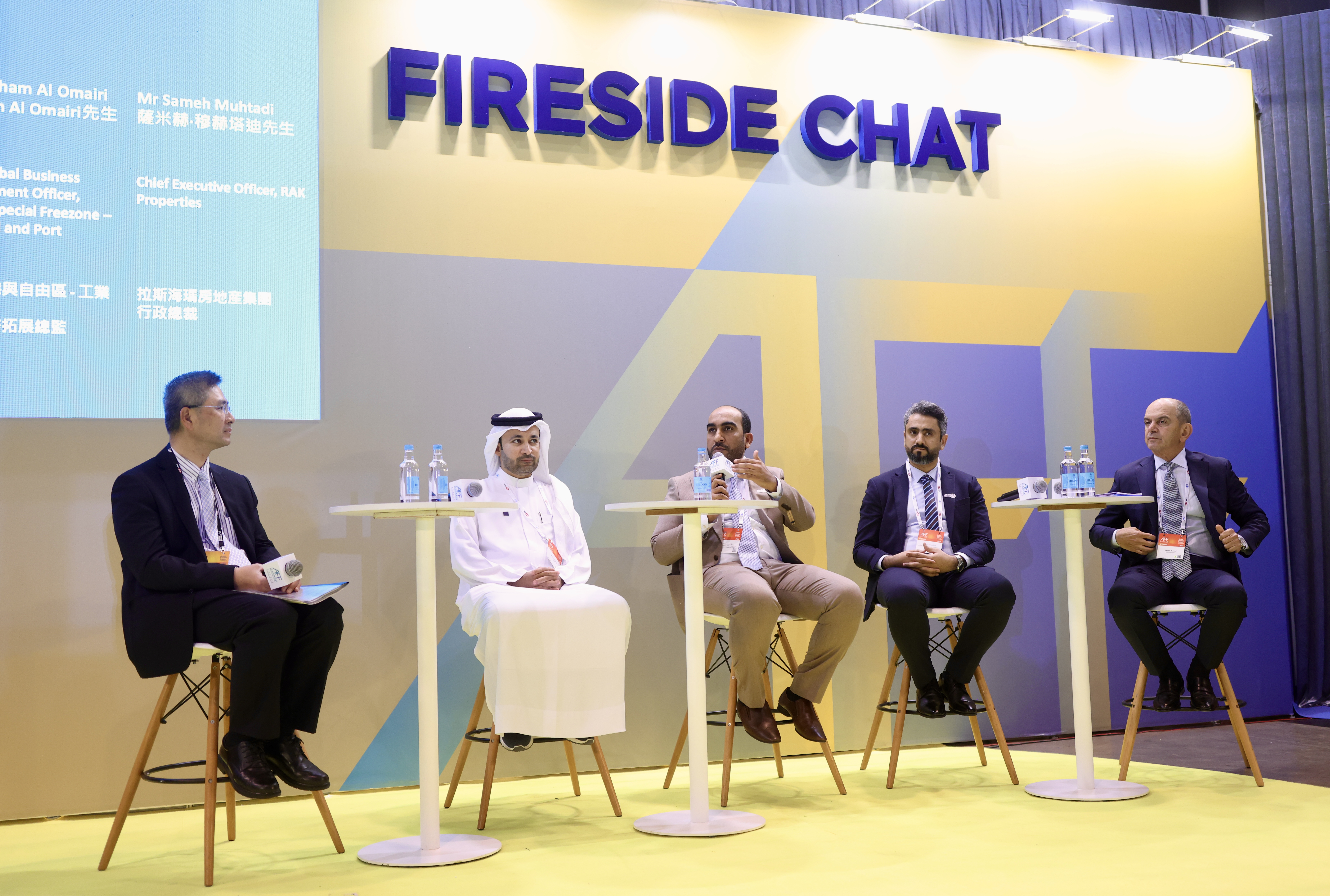
At a fireside chat themed “Integrating Sustainability and Digital Innovation to Unlock Regional Investment in the Middle East", speakers from the United Arab Emirates (UAE) and Oman — which are both members of the Gulf Cooperation Council — advocated collaboration among companies in the fields of smart infrastructure, logistics and renewables, to name but a few.
Abdulla Al Abdouli, chief executive officer at Marjan, the master-developer of freehold properties in Ras Al Khaimah, one of the seven emirates that make up the UAE, noted that master planning is key when it comes to development.
“There is a need today to differentiate ourselves to create iconic destinations with sustainability in consideration, ensuring that we add to sustainability, (and) don't take out,” Al Abdouli said during the panel discussion.
When considering master planning, people must look to sustainability and energy saving as there “is a need today … to create open spaces and green areas within our communities".
“And those green areas are not only spaces to look at but also a space to entertain guests, to enjoy with the kids …How we can create some spaces using technology …How we can reduce temperature? How we can create a space that can work all the time, all the year?” said Al Abdouli.
“This is I think where the opportunity we would like to be innovative at…This is the new chapter of the development of urban planning plus sustainability plus the energy-saving,” he added.
Sameh Muhtadi, chief executive officer of RAK Properties, also from the UAE, noted that the UAE government has a target of net-zero footprint by 2050 so as a master developer or a real estate developer, sustainability “is at the forefront of our strategy”, and that it is “incumbent upon us as real estate developers to protect the environment”.
“Smart infrastructure is one of the areas that we can definitely benefit from, from the experience of Hong Kong,” he said, adding: “(From) drones, to autonomous vehicles, autonomous greening of the streets, lighting of the streets, these are areas we'd all be interested in exploring.”
ALSO READ: HKSAR, mainland seek pragmatic path to green transition
Haitham Al-Omairi, senior business development manager at Oman’s Sohar Port and Freezone, said there had been initiatives the Omani government had taken in the last few years, “especially when we talk about green energy and sustainability”.
He said there is a clear road map now for establishing cleaner energy and cleaner resources.
“The landscape of the energy transition is already established. So when you are talking about the developers of this landscape of green energies, there are a few already in the sultanate. But these developments are also supported by the government itself, by establishing the right policy and the regulation as well,” said Al-Omairi.
“We are really looking forward to having Chinese partners to tap into those initiatives and take part in the mass developments and energy mix in Oman right now,” said Al-Omairi.
He also invited companies to collaborate in the financial sector and called on “logistics partners” from Hong Kong to “establish and connect the two regions”.
“Seaports, shipping companies, can connect the two regions, (with) direct shipping line to transfer the goods,” he said. “Chinese companies can enjoy low taxation when exporting final goods from Oman to different countries. We are here to support (such initiatives).”
READ MORE: Tse: HK can help channel capital to support low-carbon green transition
Saeed bin Ali Al-Abri, chairman, Oman Chamber of Commerce and Industry, North Al Batinah Branch, said sustainability “definitely (applies) to business and economy” as more people are pushing to ensure proper utilization of resources.
As Oman’s vision is to achieve zero-carbon by 2050, investors may want to look at the cost of generating energy from green sources, he said, adding that such business “is very valid and also competitive".
“Currently, in terms of solar farm, (we) are able to produce energy even cheaper than those generated by gas or oil,” he said, adding that “we are looking into foreign direct investment” to tap opportunities where there is abundance of energy sources.
Contact the writer at jan@chinadailyapac.com
