

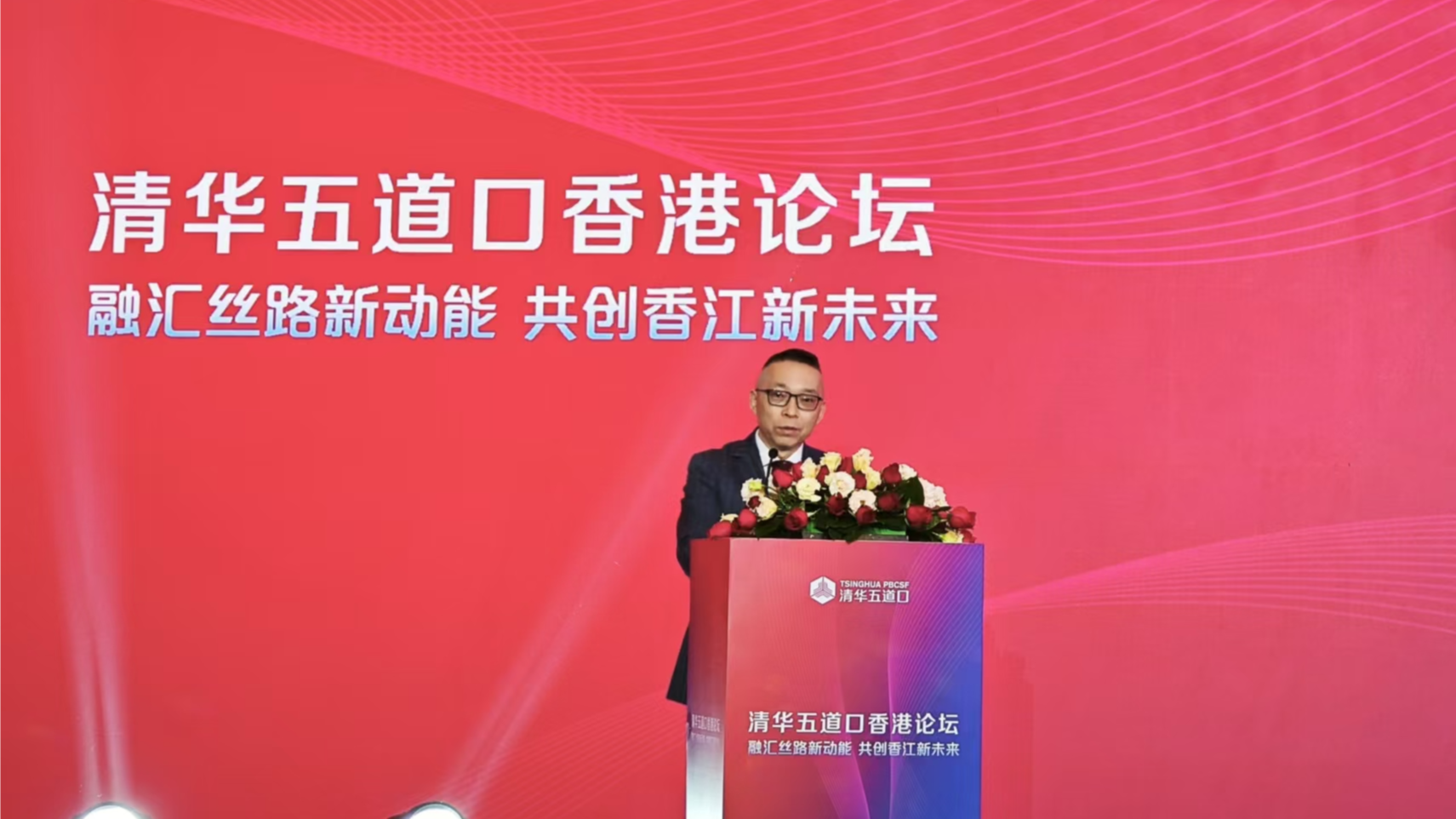
As China accelerates its industrial upgrade and introduces its artificial intelligence capabilities on the global stage, the Hong Kong Special Administrative Region is increasingly being positioned as a unique platform to provide strategic financing and to help scale Chinese innovation overseas, policymakers and leading experts said at a forum on Wednesday.
“The world is undergoing a new round of structural changes, marked by both opportunities and challenges,” said Jiao Jie, dean of the Tsinghua University PBC School of Finance (PBCSF), in his opening remarks at the Tsinghua University PBCSF Hong Kong Forum.
“As a key gateway for China’s high-level opening-up, the SAR stands not only as a bridge for renminbi internationalization and Belt and Road financing, but also as an accelerator for the Guangdong-Hong Kong-Macao Greater Bay Area to attract global capital, technology and standards, accelerating the cultivation of new quality productive forces,” he said.
Stephen Wong Yuen-shan, head of the Chief Executive’s Policy Unit of the HKSAR government, highlighted the significant investment opportunities up for grabs as China’s traditional sectors climb up the value chain, and emerging industries of the future, such as renewable energy, quantum technology and biomanufacturing, gain global traction.
Wong said that such transformation aligns with a trend among Chinese companies going global, exporting not just products but entire supply-chain capabilities, which generate growing demand for trade and project financing.
Contemporary Amperex Technology Co Ltd, the world’s largest electric vehicle battery maker, is a case in point. It secured a fast ticket to global expansion via its $5.3 billion Hong Kong listing in May. The mega deal, one of the biggest floats globally in 2025, helped vault the city back to the top spot of the global initial public offering listing for the first time since 2019.
Wong said that the SAR, riding high on “a critical window of opportunity”, has a vital role to play as “a magnet and a control tower for global capital”, helping transform China from a large financial system to a globally competitive financial power, and from a major manufacturing base to a manufacturing powerhouse.
As China accelerates its push onto the global stage, Zhu Min, a member of the Senior Expert Advisory Committee of the China Center for International Economic Exchanges, highlighted the importance of artificial intelligence as a critical pillar underpinning that outward expansion.
Two to three decades ago, the city was where the world came to make inroads into the Chinese mainland market, channeling global capital, talent and technology into the country. Today, the SAR increasingly serves as a launchpad for mainland companies, capital and innovation to go global, Zhu said.
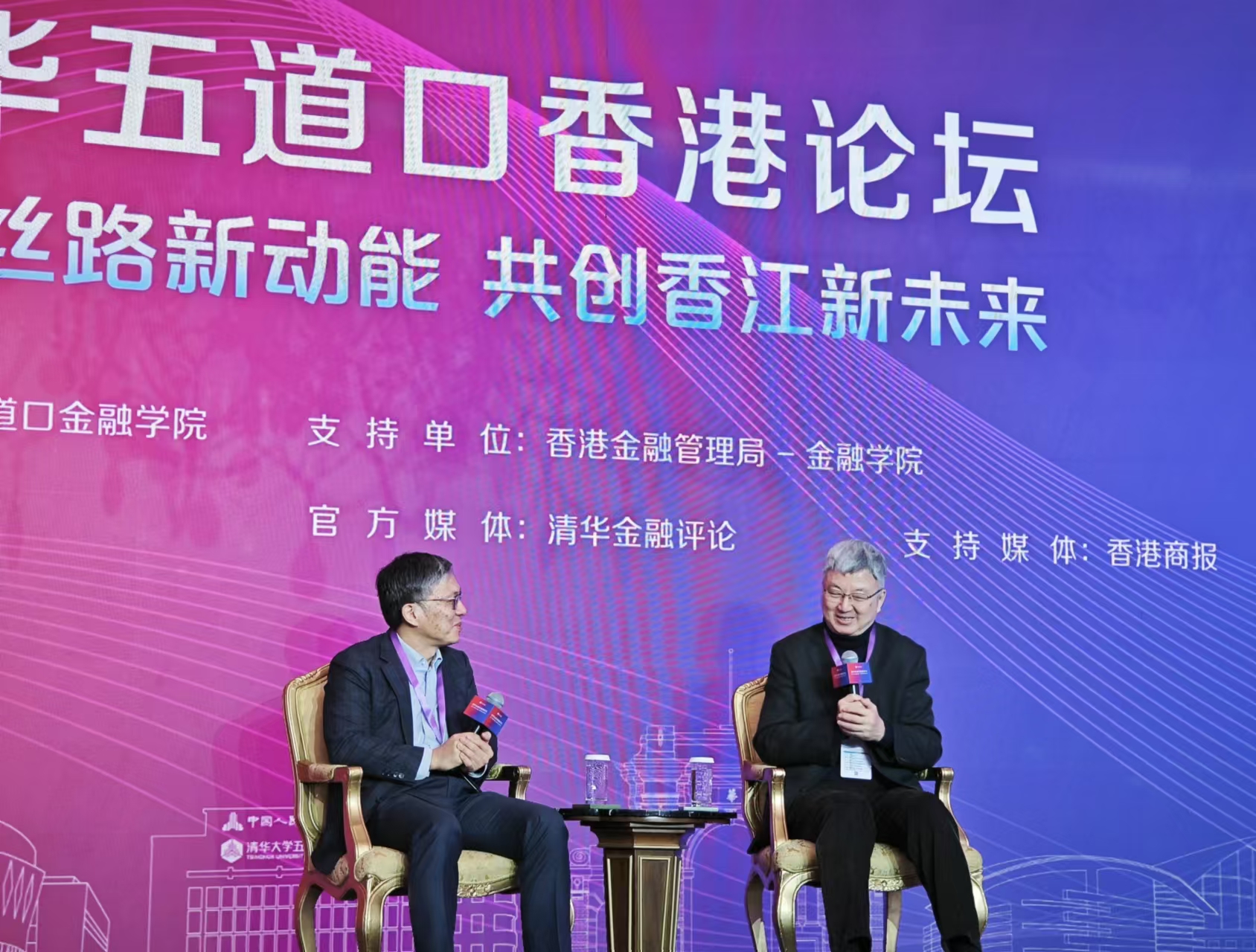
“Chinese AI models are lightweight, cost-effective, open-source and highly practical, giving them strong potential to scale globally," said Zhu, who also was a former deputy managing director of the International Monetary Fund. “In an era where it is almost unthinkable for businesses to operate without AI, Hong Kong has a clear opportunity to build its own large-model data and computing infrastructure and to serve as a high-end base for China’s global AI ambitions.”
Companies are already knocking on the SAR's door. The SAR’s IPO market started 2026 on a strong footing, with the country’s promising AI firms leading a wave of listings. Two of China’s largest generative AI startups, MiniMax and Zhipu, coupled with AI chipmakers Biren and Iluvatar CoreX, have made dazzling debuts this month.
Harry Shum Heung-yeung, council chairman of the Hong Kong University of Science and Technology, pointed to the city’s intellectual depth and academic breadth — its universities and talent pool — as Hong Kong’s key edge in the AI wave.
A former executive vice-president of Microsoft’s AI and Research group, Shum said that Hong Kong’s AI development will move forward through deep collaboration with the Chinese mainland.
Contact the writer at sophialuo@chinadailyhk.com
