

The Guangdong-Hong Kong-Macao Greater Bay Area Maritime Silk Road Heritage Trail was launched on Wednesday at a 2026 Guangdong-Hong Kong-Macao cultural heritage exchange event, hosted by the Department of Culture and Tourism of Guangdong province.
Spanning Guangdong province, the Hong Kong Special Administrative Region and the Macao SAR, the trail traces the millennia-old Maritime Silk Road to illustrate how the Greater Bay Area has long served as a vital gateway for China's exchanges with the wider world, marking another milestone in deepening regional heritage cooperation and building a humanistic Greater Bay Area.
Since the Qin and Han dynasties, this maritime network has linked China with overseas regions, carrying a rich legacy of trade and cultural exchange across royal tombs, walled cities, kilns, ports, ancient roads, forts, lighthouses, temples, churches and customs buildings.
The Hong Kong section comprises 18 sites, including Declared Monuments, graded historic buildings, archeological sites and heritage displays.
Structured around three themes — “Transit Trade Economy”, “Navigational Safety” and “Confluence of Beliefs” — it highlights Hong Kong's long-standing role as a key node in the Maritime Silk Road network and its cross-cultural exchanges.
Key sites along the Hong Kong route include the Archaeological Display at Sung Wong Toi Station and the Tai Po Wun Yiu Kiln Site, which reflect early trade and ceramic-making traditions, alongside the lighthouse cluster, the Former Marine Police Headquarters and signal towers that protected maritime commerce.
ALSO READ: Passing the torch
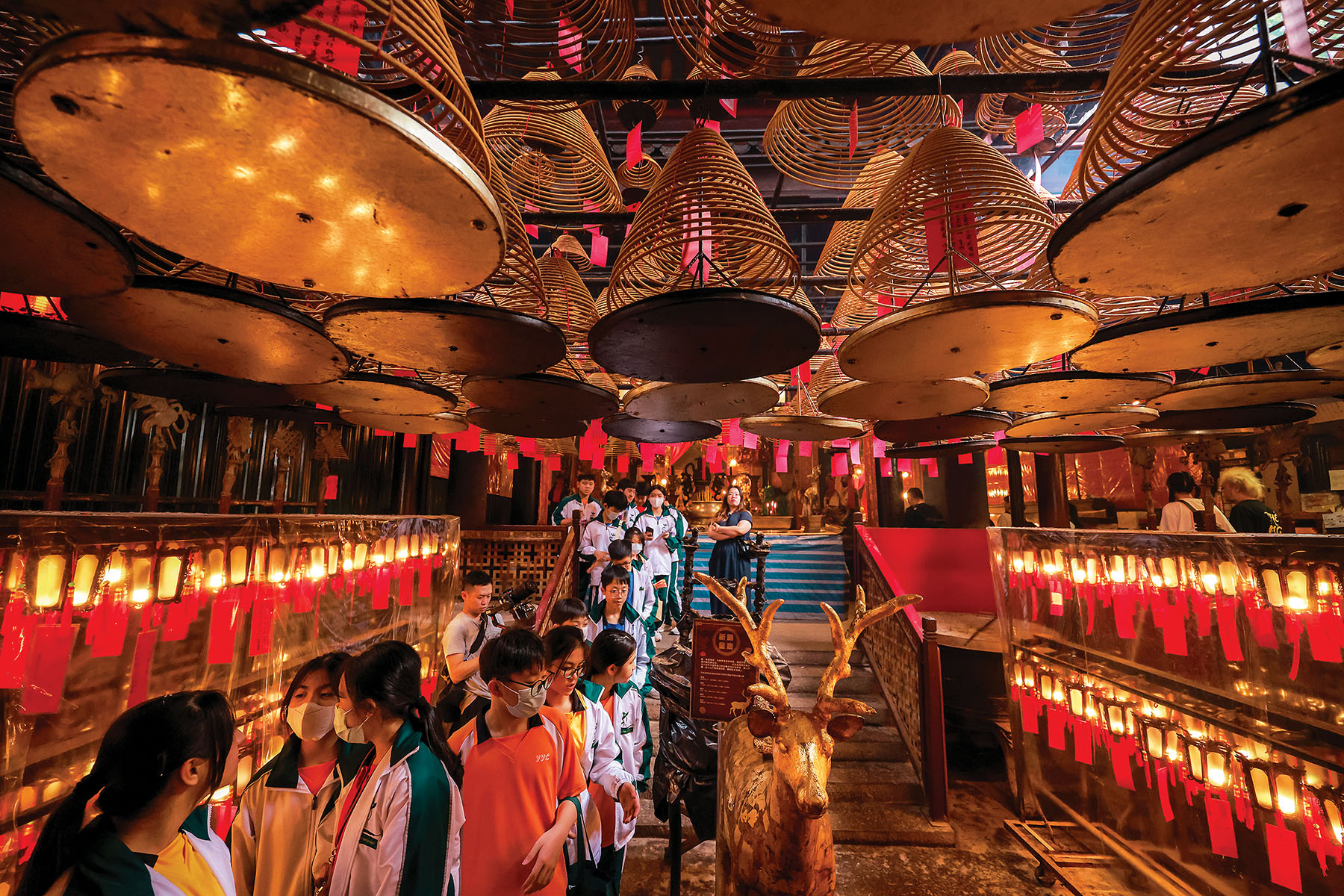
The Tin Hau temples, the Man Mo Temple, several churches, the Jamia Mosque and historic cemeteries further showcase how diverse faiths converged in the city.
Audio guides in Cantonese, Putonghua and English are available on the Antiquities and Monuments Office website via QR codes on site plaques.
The Guangdong section covers 38 sites, boasting a complete chronological sequence and a comprehensive range of heritage types.
In Guangzhou, the Persian silver box, African ivory and Red Sea frankincense unearthed from the Mausoleum of the Nanyue King represent the earliest known imported goods in Lingnan.
Together with places of interest such as the Site of the Nanyue Kingdom Palace, Guangxiao Temple, the Minaret of Huaisheng Mosque, they attest to Guangzhou's more than 2,000-year history as a premier trading port.
ALSO READ: HK's Golden Week tourism surge
Other sites across Guangdong highlight coastal defense, export porcelain production, friendly international exchanges and the meeting of Chinese and Western cultures.
Encompassing ancient cities, kilns, stone inscriptions, ancient roads, settlements, ports and pagodas, they form an intact chain of Maritime Silk Road heritage across the Pearl River Estuary hinterland.
The Macao section features 16 sites that confirm its historical stature as a major transit port during the Ming and Qing dynasties and a crossroads of Chinese and Western civilizations.
A-Ma Temple, the Chapel of Our Lady of Penha and St. Lawrence's Church preserve the spiritual heritage of seafarers, while the forts and city walls form a comprehensive coastal defense system.
Meanwhile, many other sites bear witness to education and missionary work, the export porcelain trade, foreign merchant communities and official-public interactions.
