

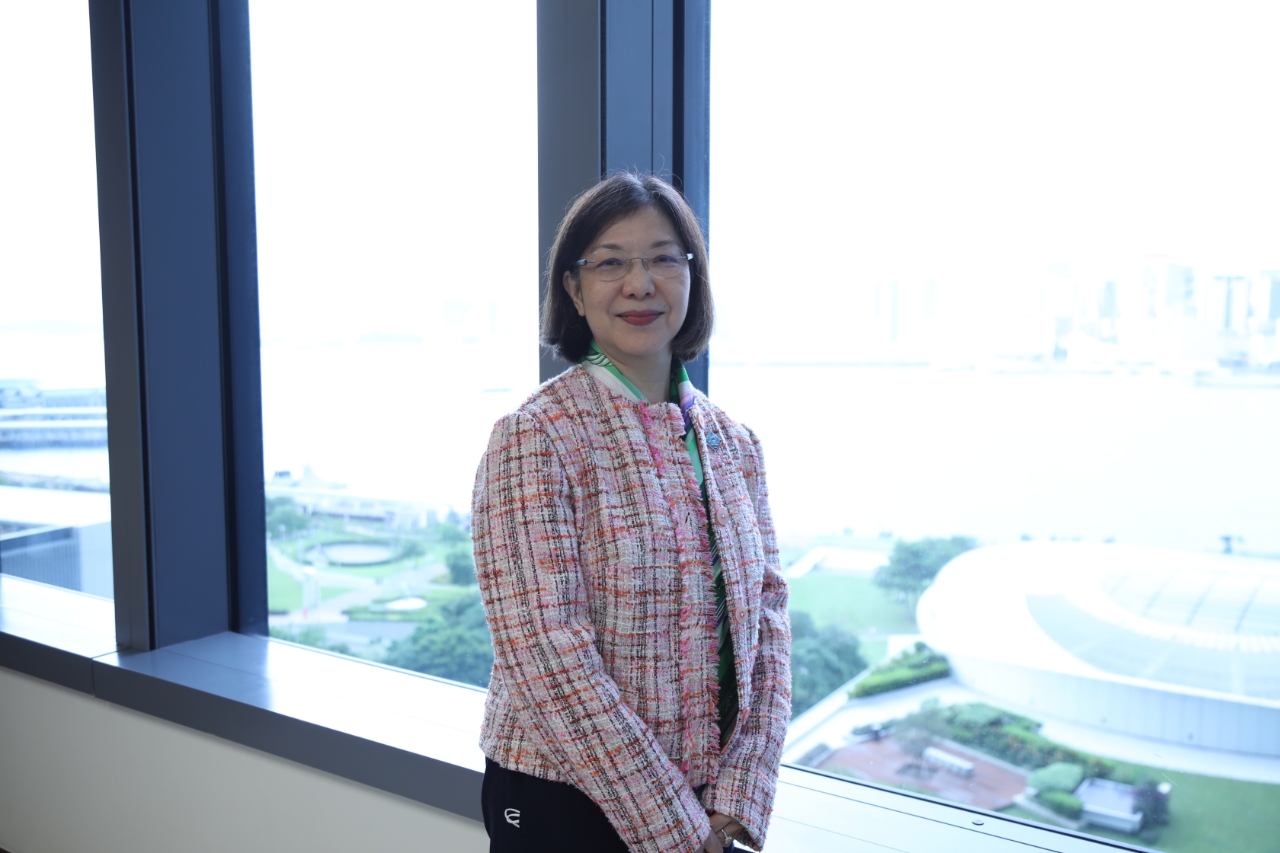
Hong Kong’s first Five-Year Plan for Economic and Social Development (2026-30) will reinforce the city’s longstanding free-market advantages, providing businesses and investors with a clearer policy direction and greater predictability amid global uncertainties, says Secretary for Constitutional and Mainland Affairs Janice Tse Siu-wa.
In an interview with China Daily, she outlined the key priorities of the special administrative region’s development blueprint, including its role in the SAR’s economic and social development, how the mega Northern Metropolis project can help Hong Kong better play its role in Guangdong-Hong Kong-Macao Greater Bay Area’s integrated development, and the importance of a fostering patriotic sense among the younger generation.
Highlighting the synergy between medium-term strategic planning and Hong Kong’s market-led traditions, Tse says effective governance and a vibrant free market can coexist.
“We must make it very clear that Hong Kong’s five-year plan does not undermine the free economy, but instead reinforces it.”
READ MORE: BRI countries give the thumbsup for HKSAR’s blueprints
Designed to align Hong Kong with the national 15th Five-Year Plan (2026-2030), the city’s blueprint charts five overarching goals: achieving new economic breakthroughs, expanding global competitiveness and influence, enhancing the speed and effectiveness of Northern Metropolis development, improving social well-being markedly, and taking significant strides in integrating into and serving national development.
Guided by the principle of combining an “effective market” with a “capable government”, the five-year plan isn’t meant to “substitute our market economy with a 100-page document”, says Tse. “Instead, by setting out our high-level economic development, we contribute to the efficiency of the market with a clearer direction, greater transparency, and more effective regulation.”
Such a balance is reflected in the blueprint’s 22 key indicators, comprising five binding targets and 17 anticipatory ones.
While the binding targets cover essential public priorities, including environmental protection that the government implements directly through resource allocation, the anticipatory targets are goals to be realized through policy and market facilitation.
ALSO READ: Greater Bay Area boosts cross-system cooperation
Another core focus is deepening regional integration with the Greater Bay Area. Upgraded cross-boundary infrastructure has significantly eased regional travel, while ongoing efforts to enhance soft connectivity -- facilitating the flow of people, goods, capital and data -- are unlocking vast business opportunities, Tse notes.
Measures like mutual recognition of professional qualifications, alignment of rules, and the promulgation of standards within the region are also helping Hong Kong enterprises and professionals tap into a mega-market of over 80 million people.
Meanwhile, fast-tracking the development of Northern Metropolis to enhance both speed and efficiency stands as another key priority of the blueprint. Aimed at developing the Northern Metropolis into a main platform for Hong Kong to give full play to its role in the Greater Bay Area’s development, it’ll “play as a new engine” for Hong Kong to develop innovative quality productivity, says Tse. “The Northern Metropolis University Town will also pool the strengths of industry, academia, research and investment to drive the coordinated development of the region.”
Along with economic and technological integration, the development plan will further foster a sense of national identity among Hong Kong’s younger generation.
In collaboration with the Education Bureau and the Working Group on Patriotic Education under the Constitution and Basic Law Promotion Steering Committee, the HKSAR government has woven national education into school curricula, community events and Chinese mainland study tours.
READ MORE: Chan: HK tapping into bay areas to help boost Asia-Pacific growth
Looking ahead, Tse says the SAR government will continue to roll out various patriotic education activities marking major national milestones, including the 90th anniversary of the victory of the Red Army’s Long March, the 160th anniversary of the birth of Dr Sun Yat-sen, and the 30th anniversary of Hong Kong’s return to the motherland on July 1 next year.
“Patriotic education is a matter of connection with people’s hearts and a task that requires ongoing effort, and should be conducted through a soft and heartwarming approach,” stresses Tse.
Since assuming office in March this year, coordinating the plan’s formulation with the Legislative Council and various sectors has been her top priority, especially as the SAR government needs to complete the task in less than a year -- a process whose preliminary research alone would typically take mainland cities one to two years.
Having never undertaken a coordination exercise of this scale in her civil service career, Tse notes that the mission requires her to quickly familiarize herself with emerging fields, such as biomedicine and the aerospace economy.
“Yet, the process has been highly rewarding as I’ve learned a great deal and have had the privilege of feeling the profound aspirations held by many for Hong Kong. While different sectors may have their unique demands, I acknowledge that their ultimate goal is to advocate what’s best for Hong Kong as a whole,” she says, describing the 60,000 Chinese words document as the “fruit of the collective wisdom of various sectors”.
“At the same time, recognizing that Hong Kong is an open economy facing global economic changes, we’ll remain agile in the course of implementation,” says Tse, adding that the authorities will conduct dynamic assessments and regular reviews to keep the goals practical.
With preparations underway to celebrate the 30th anniversary of the city’s return to the motherland next year, she’s confident the city is well-positioned to advance from stability to greater prosperity.
Contact the writer at hazelwong@chinadailyhk.com
