

Wealth management emerges as revenue anchor, as lenders pivot to AUM expansion and customer-centric services

Third-quarter results from China's listed banks reveal a widening divergence in fee and commission income, a key component of non-interest revenue. Some large State-owned commercial banks and leading joint-stock commercial banks continue to outperform in wealth management and distribution services, leveraging their advantages in customer bases, products and distribution channels. By contrast, many city commercial banks and rural commercial lenders are facing mounting pressure on fee-based income.
The 42 A-share listed banks generated a combined 568.67 billion yuan ($85.35 billion) in net fee and commission income in the first three quarters, down 1.65 percent year-on-year. Only 17 banks recorded year-on-year growth, while the remaining 25 saw declines, according to market tracker Wind Info.
Market observers attribute the weakness in part to heightened volatility in capital markets during the third quarter, which weighed on wealth management-related fee income.
ALSO READ: Wealth mgmt scheme to up investment
As banks' net interest margins continue to narrow and fluctuations in net asset values of wealth management products weigh on fee-based income, expanding asset allocation and integrated wealth management services, along with deepening relationships with high-net-worth clients, have become essential to stabilizing wealth management fee revenue, analysts said.
China Merchants Bank, a market leader in retail banking, reported wealth management-related fee and commission income of 23.5 billion yuan in the first three quarters, up 13.71 percent year-on-year. By the end of the third quarter, the bank had 236 million retail customers and total retail assets under management (AUM) of 18.71 trillion yuan, an increase of 9.52 percent from the end of last year.
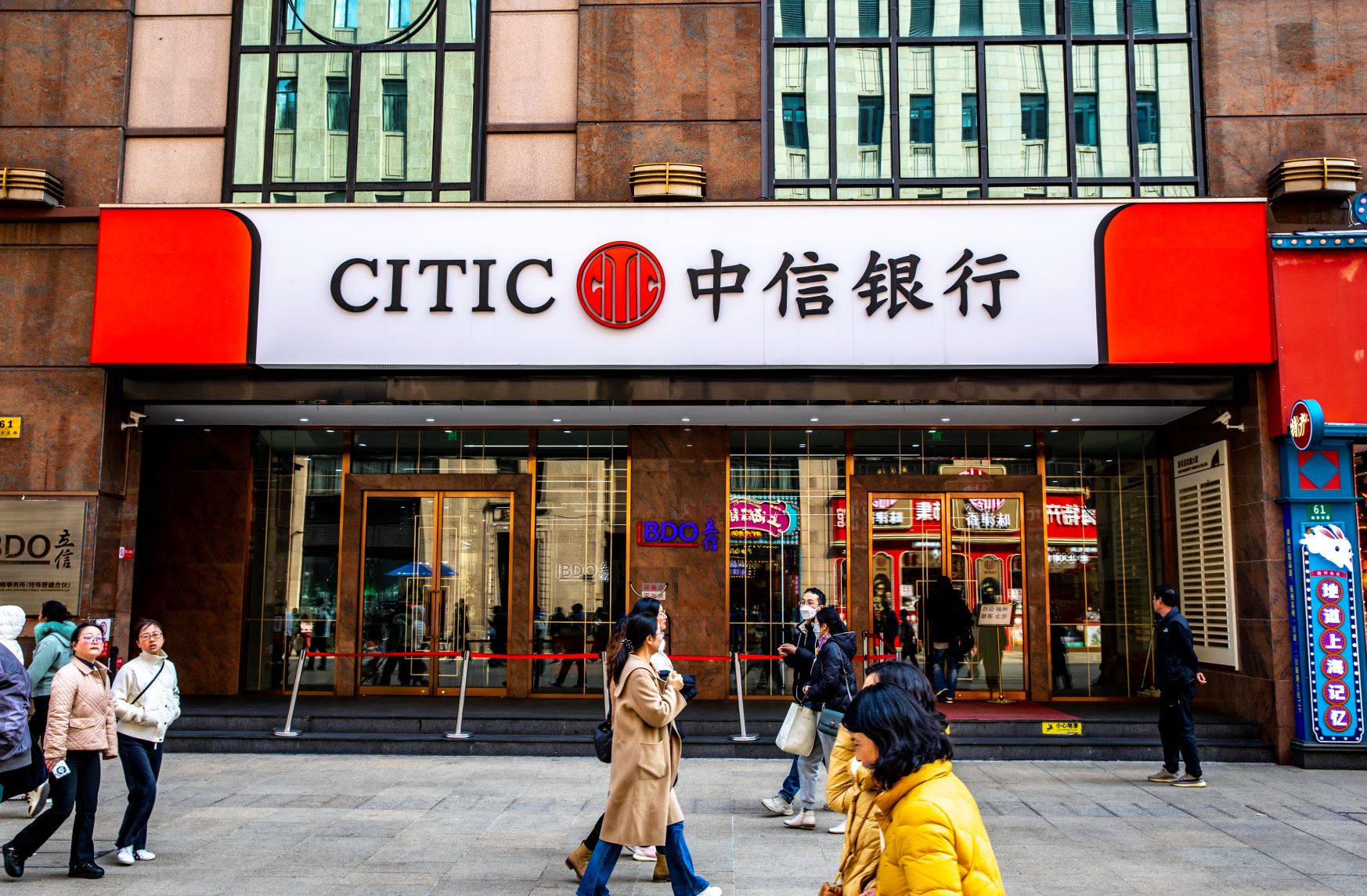
China CITIC Bank's wealth management business has also performed steadily. The bank reported retail AUM, including market value, of 5.88 trillion yuan, up 9.81 percent from the end of last year, with its personal customer base exceeding 158 million. It has also stepped up efforts in corporate wealth management, strengthening cooperation with leading wealth management companies, securities firms and fund managers. By the end of the third quarter, its corporate wealth management business had reached 497.5 billion yuan, up 43.61 percent from the end of the previous year.
Dong Ximiao, executive director of the Shanghai Institution for Finance and Development, said the continued narrowing of commercial banks' net interest margins in recent years has put their profitability under considerable pressure, and wealth management is emerging as an important avenue for optimizing banks' earnings structures.
"Signals from banks' recent earnings briefings suggest that wealth management has been elevated to a strategic priority. Several banks said they intend to capitalize on the shift in household wealth allocation away from savings toward a more diversified range of assets, while further developing customer-centric wealth management services," Dong said.
As household asset allocation preferences have evolved in recent years, more funds have flowed into wealth management products, mutual funds and insurance products. Banks have accordingly shifted their focus toward expanding AUM to boost fee-based income and reshape their retail business models around wealth management. Their operating philosophy is moving from simply making loans to serving customers.
Xu Xueming, vice-president of Postal Savings Bank of China, said at the bank's 2026 interim results briefing that wealth management represents a new avenue for breaking through in retail banking. PSBC has identified the development of a second growth curve in non-interest income as a key objective of its business transformation.
Wang Pengbo, chief analyst at market consultancy Botong Analysys, said Chinese banks' AUM growth has moved beyond the era of rapid expansion driven by pricing incentives and entered a new phase focused on customers' long-term asset allocation needs, asset retention and customer loyalty.
At present, large State-owned commercial banks, nationwide joint-stock commercial lenders and leading regional banks are all stepping up investment in wealth management. Their priorities include optimizing AUM structures, refining customer segmentation and management across the entire client base, strengthening private banking services, and developing distinctive wealth management brands and offerings. These efforts involve sustained investment in funding, technology systems and professional talent, Wang said.
"The focus of competition in the wealth management industry has shifted from customer acquisition and value-added benefits to broader capabilities in asset-class research and portfolio management," said Zeng Gang, director of the Tianfu Liyan Financial Research Institute.
Some smaller banks are pursuing differentiated strategies by focusing on niche segments, such as local entrepreneurs and family trusts, thereby avoiding direct competition with nationwide banks in the area of investment research capabilities, Zeng added.
ALSO READ: China to step up financial oversight moves
Tian Lihui, a finance professor at Nankai University, suggested that banks strengthen their macroeconomic analysis and ability to select high-quality products across the market to improve asset allocation. They should also increase the proportion of complex products and customized services in their offerings. On the customer service front, banks should deepen segmented customer management, use digital technologies to gain more precise insights into client needs, and build stronger links between lending and wealth management services.
Tian said leading banking institutions have largely completed the transition from selling products to managing customer relationships, leveraging their advantages in customer bases, product offerings and digital operations to generate returns. Smaller banks, however, face greater challenges. Their distribution businesses typically have low margins, while investment research and compliance costs are difficult to reduce. Homogeneous competition has further squeezed commissions, and many smaller institutions also lag in professional talent and technology investment.
For smaller banks, Tian argued, the priority should not be to maximize the scale of their wealth management businesses, but to capitalize on local advantages and cultivate stable, underserved customer segments in county-level markets. They should move beyond product distribution toward advisory services and use their local relationships and established trust to retain customers.
Contact the writers at jiangxueqing@chinadaily.com.cn
