

Cultural spaces offer a platform for exchange ahead of APEC gathering
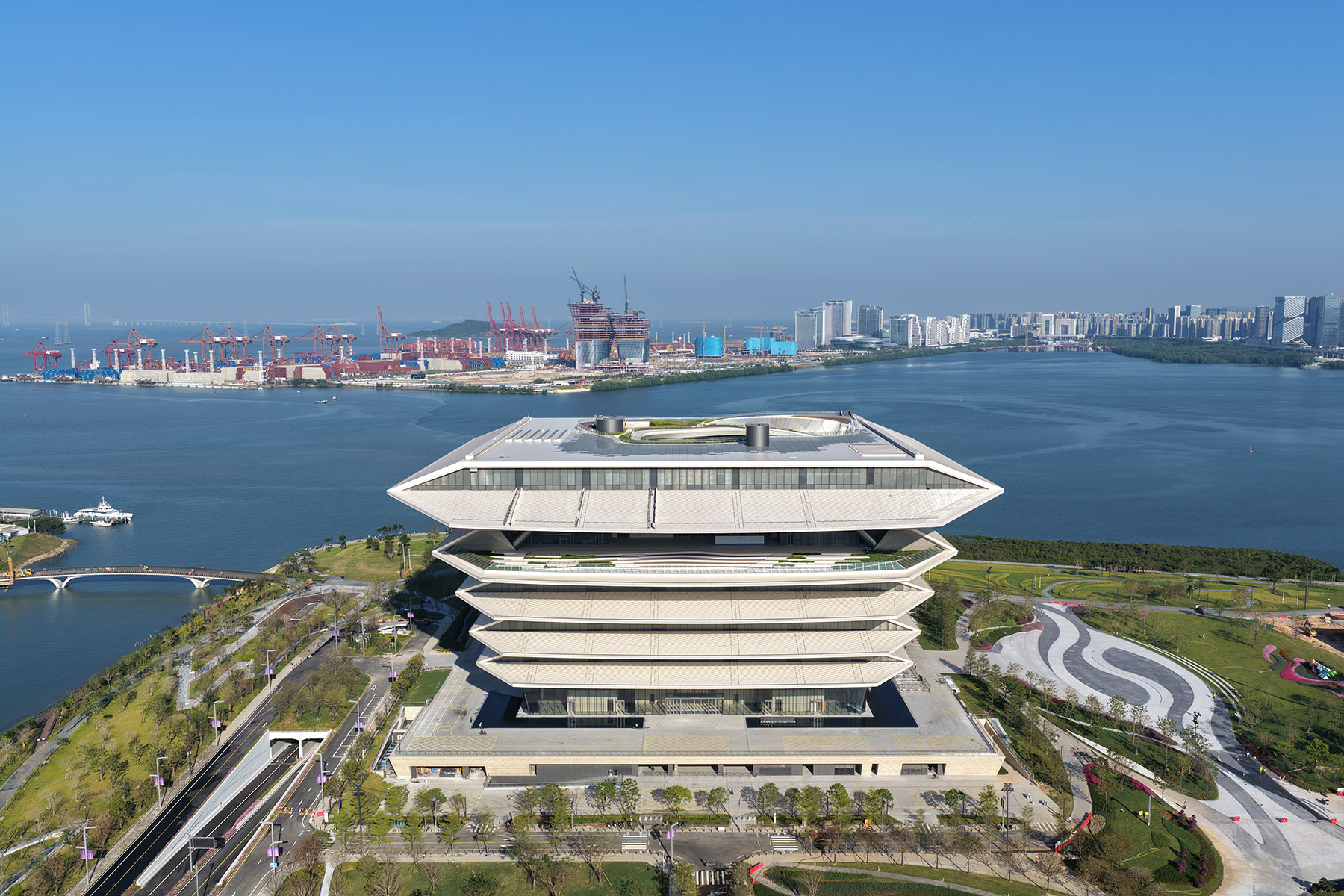
Shenzhen, the host city of the upcoming APEC Economic Leaders' Meeting, is drawing global attention for more than its reputation as a tech powerhouse. Several major, long-planned cultural landmarks have opened in quick succession over the past two years, challenging the long-held perception that Shenzhen excels in innovation yet lacks cultural depth.
These new venues embody the city's dual-driven development of technology and the humanities, fostering integration rather than separation between the two spheres.
For Shenzhen as the APEC host, this cultural cluster not only expands public access to cultural resources for local residents but offers a platform for Asia-Pacific-wide cultural exchange, local officials said.
READ MORE: Shenzhen ready to welcome Asia-Pacific leaders
Qianhai Museum, the latest addition to these landmarks, kicked off trial operations on Oct 30. A joint initiative between the Shenzhen government and the National Museum of China, it debuted with four flagship exhibitions displaying more than 3,000 cultural relics. The displays weave a sweeping narrative tracing Chinese civilization from its earliest origins through to echoes of the present day.
The building itself stands as a major exhibit. Its fifth floor features a nearly 5,000-square-meter column-free hall paired with an open-air atrium garden, affording Shenzhen's one-of-a-kind sunset view.
At the heart of Qianhai's emerging cultural zone, the museum connects to 17.2 hectares of surrounding public space, including Qianhai Stone Park and Qianwan Park. Together they form an interconnected cultural landmark precinct that has fast become a popular weekend destination among city dwellers.
In Guangming Science City, the Shenzhen International Museum of Art comprises two ark-like buildings placed side by side, an architectural allusion to exchanges between Eastern and Western civilizations. Its facilities include digital galleries and bonded warehouse exhibition halls.
Next door sits the Shenzhen Science and Technology Museum. This close physical proximity puts art and science in immediate dialogue, a spatial embodiment of Shenzhen's commitment to bridging the two domains.
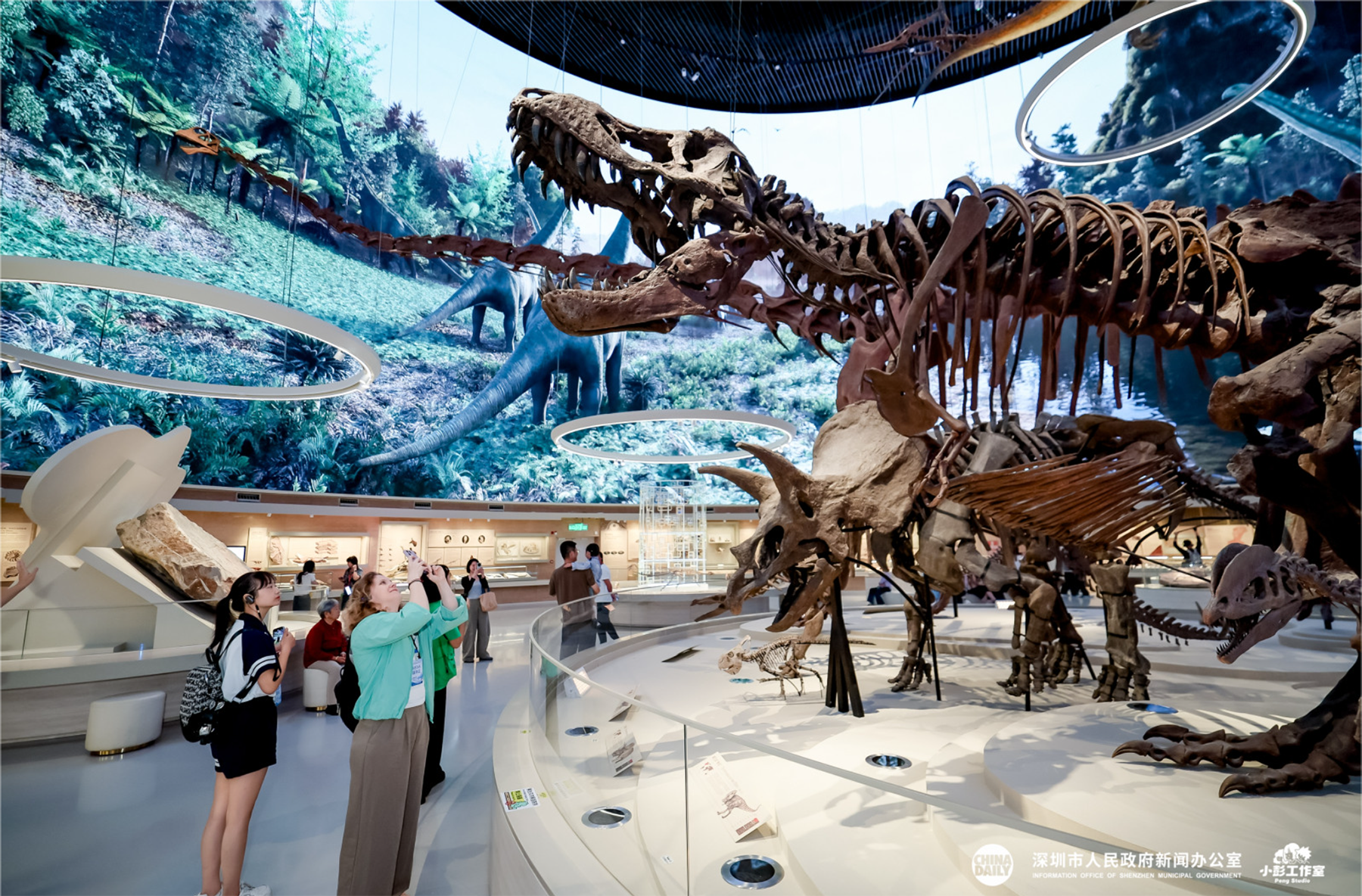
In Pingshan district lies the river delta-shaped Shenzhen Natural History Museum, the largest comprehensive natural history museum in South China. Unlike conventional static displays, its star attractions are two lifelike bionic dinosaurs — a Tyrannosaurus rex and a Triceratops.
Rather than executing pre-scripted, repetitive movement loops, the two dinosaurs operate via a closed-loop system of perception, interpretation, decision-making and action. Their breathing, blinking, head turns and low-pitched roars respond to real-time surroundings, bringing prehistoric creatures to life.
Technology-driven innovation in cultural services extends well beyond museum walls. The new Shenzhen Cultural Center — China's largest cultural center measured by single building floor area, is conceived as a "cultural ark".
Under one roof, it brings together performances, exhibitions, training programs, reading resources, creative products and intangible cultural heritage displays, aiming to set a national benchmark for smart, digitally enabled public cultural facilities.
Visitors can don headsets to experience an extended-reality immersive show themed on Sanxingdui, transporting them into the ancient Shu civilization. A 3D digital avatar acts as a gallery guide, while a digital twin-based control system manages facility operations.
These digital tools reimagine traditional culture for younger audiences and exemplify Shenzhen's push to expand high-quality public cultural offerings.
Nicknamed the "knowledge cube", the North Venue of Shenzhen Library hosts a massive underground automated book storage system beneath its six-story-tall shelving stacks. Stacker cranes and rail-guided shuttles zip through the storage vaults to deliver books to patrons, reversing the traditional reader-seeks-book model. Requested items can reach readers in less than 10 minutes.
A visitor from the United States observed that using technology to boost cultural accessibility and bring reading to broader audiences demonstrates how the city can balance technological prowess with humanistic warmth.
During the 14th Five-Year Plan (2021-25), Shenzhen added more than 1.1 million sq m of public cultural facility space, and the number of cultural venues of all kinds surpassed 1,800.
Successive openings of museums, art galleries, libraries, arts complexes and book-retail hubs have furnished the city with powerful new assets. The new venues showcase its cultural heritage, highlight the appeal of the Guangdong-Hong Kong-Macao Greater Bay Area, and facilitate global cultural dialogue.
ALSO READ: Shenzhen International Museum of Art to open Saturday
"Siting major cultural venues in core urban areas represents a strategic investment in the city's long-term competitiveness," said Guo Wanda, executive vice-president of the China Development Institute. As Shenzhen's industries advance toward high-end, innovation-led growth, this cluster of cultural landmarks will help the city attract and keep vital talent, he added.
With much of its physical cultural infrastructure now in place, Shenzhen is crafting a new urban narrative — one defined by the intertwined growth of technology and the humanities.
Open-access cultural spaces meet residents' day-to-day cultural needs. At the same time, amid the APEC meetings, they provide a platform for telling China's stories and advancing mutual learning among Asia-Pacific civilizations. The result is a modern metropolis that displays both its innovative dynamism and rich cultural depth.
Contact the writers at haonan@chinadaily.com.cn
