

Songyang immerses travelers in a slow life grounded in tradition, surrounded by an untouched and vibrant culture
For Kyle Obermann, an environmental photographer from the United States, Zhejiang province's Songyang county redefined what hiking in China meant for him.
"Hiking through the ancient villages of the county was wonderfully cathartic and rejuvenating. I loved the old camphor trees that many of the villages have nurtured and lived under for centuries," he said.
There, he saw an entirely different side of China — a slow life grounded in tradition.
"The well-preserved and restored traditional earthen and wooden architecture of the homes was a welcome and healing sight after spending too much time in New York or other big cities of the world," he added.
Songyang's history as an administrative division goes back some 1,800 years. Seventy-eight traditional villages survive there, many retaining their original layouts, ancestral halls, bridges and earthen homes.
For travelers, this experience offers something rare in China. Villages feel genuinely inhabited, rather than being heavily commercialized attractions built specifically for tourists.
For Wu Xi, a 38-year-old from Shanghai, quietness is the attraction. About a month ago, Wu visited Pingtian and Xikeng villages of Songyang with his mother, having already seen the better-known Chenjiapu and Yangjiatang villages on earlier trips.
In Pingtian, he found a village with an artistic atmosphere: old houses had been turned into calligraphy exhibition spaces featuring local artists. "I saw only about 10 tourists in the entire village," he said.
The village is halfway up a hillside, where elderly residents sit by their doors and chat. "I prefer less-developed places," he added.
Yangjiatang, however, left the strongest impression. Wu visited the village last year with friends and ate at a Qing Dynasty (1644-1911) farmhouse complete with wooden partitions, dim old lamps and a small courtyard.
"It felt like a home from the 1980s or 1990s — but clean and tidy," he said. There was no menu. They simply asked for what they wanted, ordering dishes such as chili stir-fried pork.
"It didn't feel like a restaurant. It felt like eating in a local family's home, like going back to childhood."
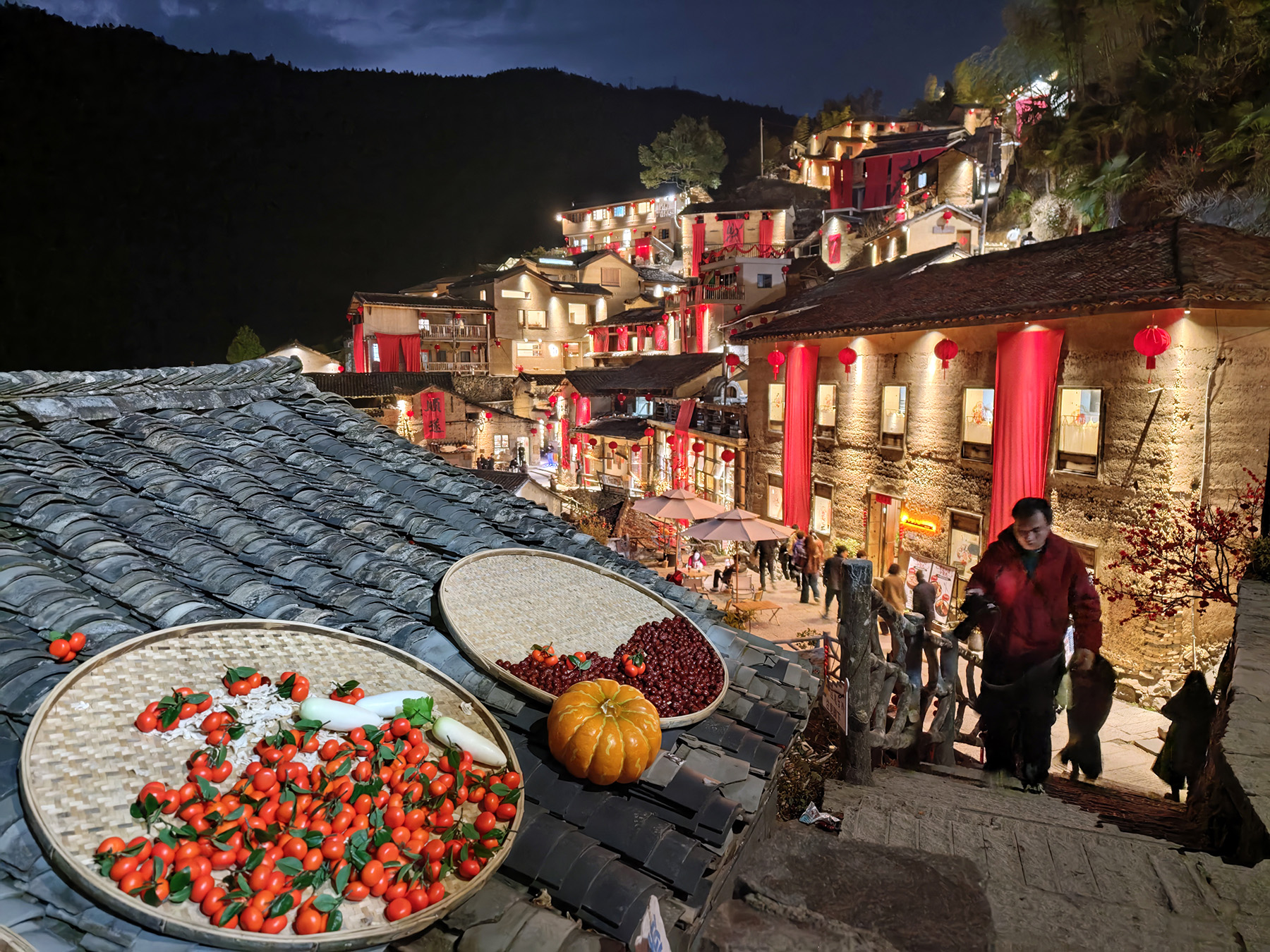
Built around 1655, Yangjiatang is one of the most dramatic villages. Dozens of Qing Dynasty houses climb the slope in uneven tiers, asymmetrical yet harmonious. At dusk, the last glimmers of sunlight turn the rammed-earth walls to a deep golden hue, making the entire hillside village glow for moments.
What keeps Songyang's villages authentic is that people still live and work in them.
ALSO READ: Rural areas taste commercial success
That approach is something Wu Haiyan, director of the county's bureau of culture, radio, television, tourism and sports, put simply: "What we are trying to build is a Songyang where people can find an ideal way of life and still see the nostalgic image of the China they remember."
The villages also have their own distinct characteristics. Chenjiapu offers striking natural views. Perched on a cliffside, the village offers views of clouds drifting through the valley below.
Yangjiatang, meanwhile, has a richer cultural heritage and more concentrated and intact clusters of old buildings, requiring a more cautious approach to preservation.
Youtian serves as a cultural hub. It features a global translator residency program, bringing translators and cultural figures to give lectures and hold discussions at the village hall.
Some of the villages can be visited consecutively by car in a day. Many guesthouses are converted century-old earthen houses, which are authentic outside and comfortable inside.
Contact the writers at lihongyang@chinadaily.com.cn
