

A new book explores how listening across cultural boundaries can help young artists find their place in the world, Chen Nan reports.
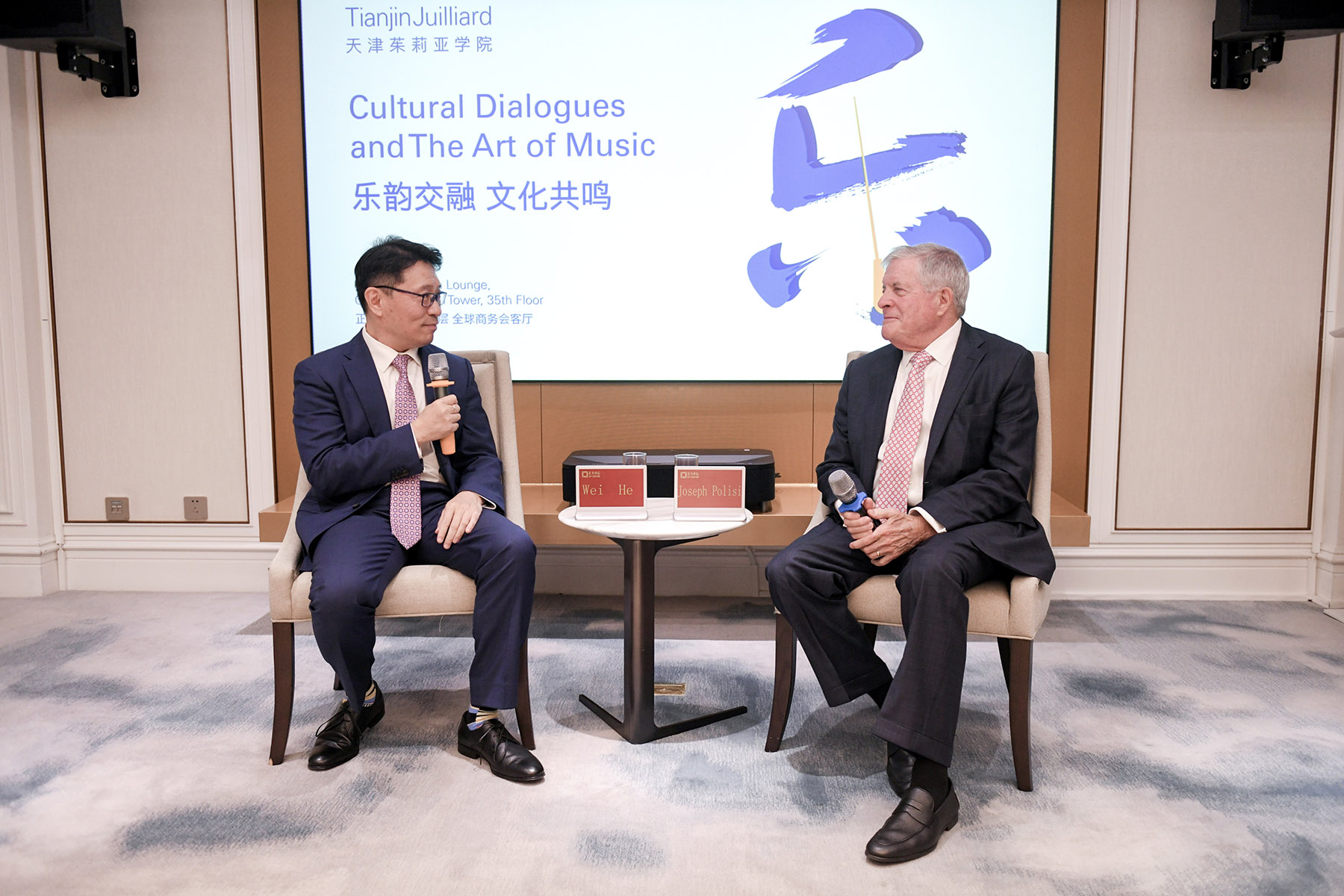
When musicians from different countries sit down to play chamber music together, they do more than follow a score. They listen, negotiate, disagree and find a way forward.
For Joseph W Polisi, president emeritus of The Juilliard School in New York and chairman of the board of Tianjin Juilliard School, this process offers lessons far beyond music. "Listening is the foundation of understanding," he says. "You seek to understand before seeking agreement."
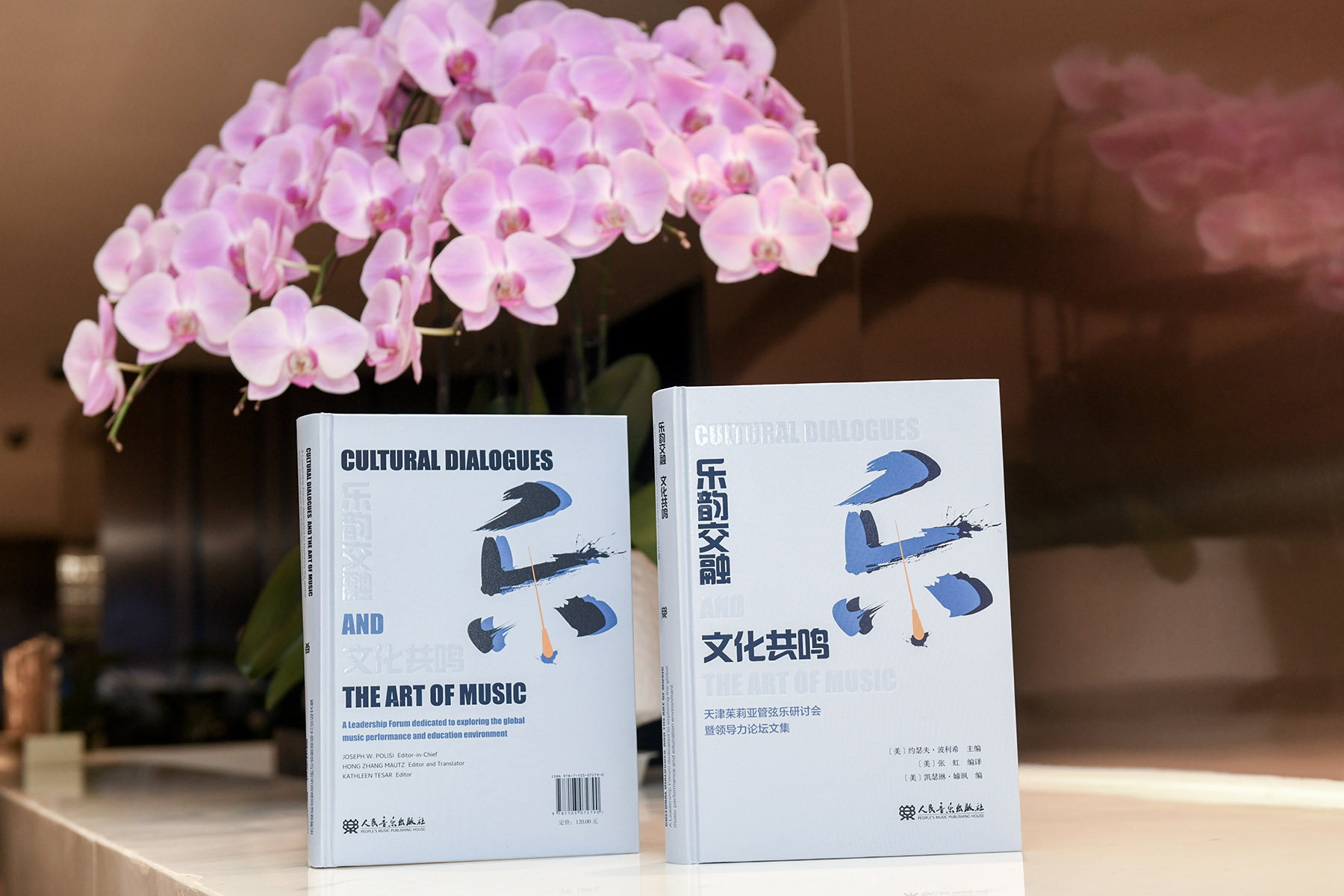
This idea runs through Cultural Dialogues and the Art of Music, a new bilingual book edited by Polisi and published by People's Music Publishing House.
Launched in Beijing on Oct 19, the volume brings together insights from international music educators, performers and institutional leaders on the future of classical music, the challenges facing music education and the role of cultural exchange.
READ MORE: Juilliard Tianjin puts education and talent ahead of tuition
The volume grew out of a leadership forum hosted by Tianjin Juilliard in May 2025, which brought together representatives from 30 leading music schools and institutions worldwide. Alongside keynote speeches and discussions, it features chapters on Tianjin Juilliard's history, orchestra building, Western art music and the development of contemporary Chinese music.
For Polisi, the aim was not simply to preserve a collection of speeches, but to capture a broader conversation about the future of music education. The book also examines emerging challenges, including artificial intelligence, and concludes with what he calls "proposing a quiet revolution" — a vision for how music institutions can rethink their responsibilities to artists and society.
That vision has taken shape at Tianjin Juilliard, the first overseas branch campus of The Juilliard School and China's first arts institution to award US-accredited master's degrees in music.
The original ambition was to bring Juilliard's tradition of musical excellence to China while working with local partners. Six years after the school began operating, Polisi says, it has remained true to that goal while expanding in ways he had not initially anticipated.
Its programs now extend beyond graduate training and concert-hall performances to include educational opportunities for children and teenagers, as well as collaborations with conservatories, professional orchestras and musicians across China.
For Polisi, the experience shows what cultural exchange can achieve when it moves beyond presenting one country's artistic traditions to engaging deeply with another.
Although Tianjin Juilliard operates as an English-speaking international school, it also offers students opportunities to learn about Chinese musical instruments, compositions and traditions. Visiting composers can immerse themselves in these traditions and incorporate them into new works.
"People often say music is a universal language," Polisi says. "It is, but not in a simplistic way."
Music does not eliminate differences, he says. Instead, it creates a setting in which people learn to work through them. Students from different countries may not share a spoken language, but rehearsing together gives them another way to communicate.
Learning Mandarin, adapting to different ways of thinking and understanding the distinct working cultures of Chinese and American orchestras are all part of the experience. Rather than being obstacles to avoid, these differences can help musicians broaden their perspectives.
He Wei, CEO and artistic director of Tianjin Juilliard and the school's first dean, shares the belief that musical training should prepare students for more than technical mastery.
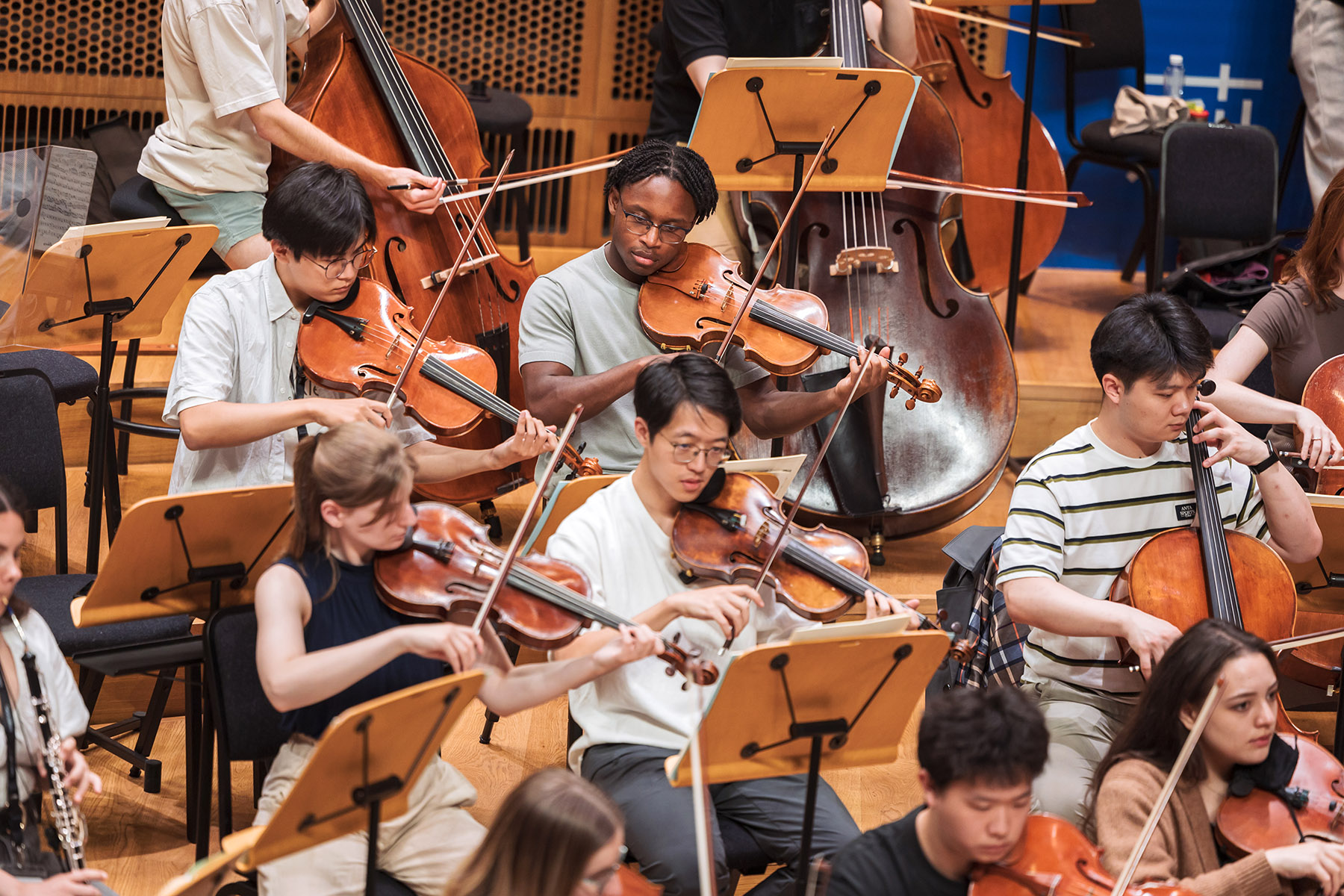
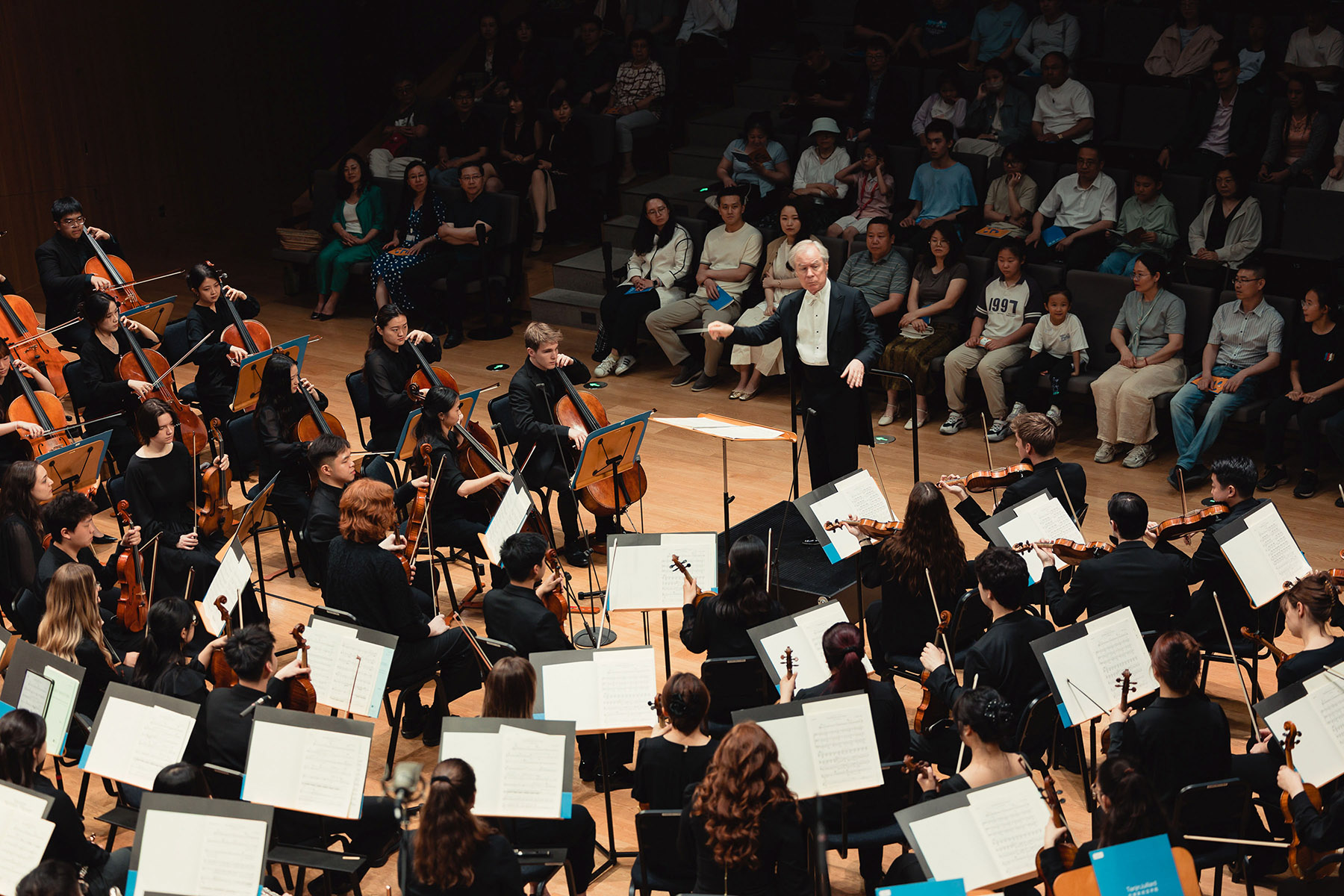
He points to the NextGen Symphony, an international ensemble formed for last year's leadership forum, as an example. Bringing together young musicians from leading conservatories and music schools across Asia, Europe, and North America, the ensemble had just five days to prepare a demanding program for two concerts in Tianjin and Beijing.
The project demonstrated the possibilities of intensive collaboration among young musicians from different backgrounds, turning cultural exchange into a shared artistic experience.
At Tianjin Juilliard, the graduate program offers specializations in orchestral studies, chamber music studies, collaborative piano and composition. Students learn to listen and work across disciplines, developing skills essential to professional life.
The results are reflected in their careers. Since the school began operating in 2020, its graduate program has produced 185 master's graduates across five cohorts, nearly 40 percent of whom have joined professional orchestras in China and abroad.
Among them is Chen Tongxin, a 2024 graduate who is now the principal harpist of the China National Symphony Orchestra. At the book launch, she performed alongside her former teacher, harpist Li-Ya Huang, in a program featuring works by Carlos Salzedo, Manuel de Falla and Claude Debussy.
Chen says the school's rigorous orchestral training gave her a strong foundation, while courses in chamber music and music entrepreneurship broadened her experience and outlook.
For young musicians, Polisi believes, such versatility is increasingly important. Technical mastery remains essential, but graduates must also find new ways to bring art to audiences and build sustainable careers.
"You are not just a technician," he says. "You need to be entrepreneurial, to imagine new ways to bring art to life."
This need becomes particularly pressing in an age of AI, when technology can increasingly perform tasks once considered uniquely human. Yet Polisi believes the conversations, collaboration and emotional bonds formed between musicians remain central to artistic life.
"AI cannot replace human artistic connection," he says.
Polisi led The Juilliard School in New York from 1984 to 2018, the longest presidential tenure in its history. He first brought the Juilliard Orchestra to China in 1987. Looking back on the country's rapid development over the decades, he sees considerable potential for China to play a leading role in classical music.
"I firmly believe that the future of classical music is in China," he says, predicting that the country will become one of the world's major centers for the art form over the next 50 years.
ALSO READ: Preserving the future of music
For Tianjin Juilliard, the ambition is not simply to reproduce an American institution in China, but to build a place where different musical traditions can inform one another. He Wei says the school's success should ultimately be measured by whether its students can continue learning, collaborating and contributing wherever their careers take them.
The book also places this vision within a broader discussion of music's social responsibility. Clive Gillinson, executive and artistic director of Carnegie Hall, contributes a chapter on music education, arguing that access to music should extend beyond concert halls and elite institutions.
"The greatest music belongs to and should be accessible to everyone," Gillinson says, adding that this belief carries a responsibility to the communities in which music organizations operate.
He recalls that when the London Symphony Orchestra established its music education program 37 years ago, it was among the first orchestras worldwide to do so. Today, he says, music education has become a commitment shared by orchestras and performing arts institutions around the world.
Contact the writer at chennan@chinadaily.com.cn
