

Historic facades, futuristic towers and revitalized industrial sites frame a vibrant waterfront where heritage, recreation and urban life converge, He Qi reports in Shanghai.
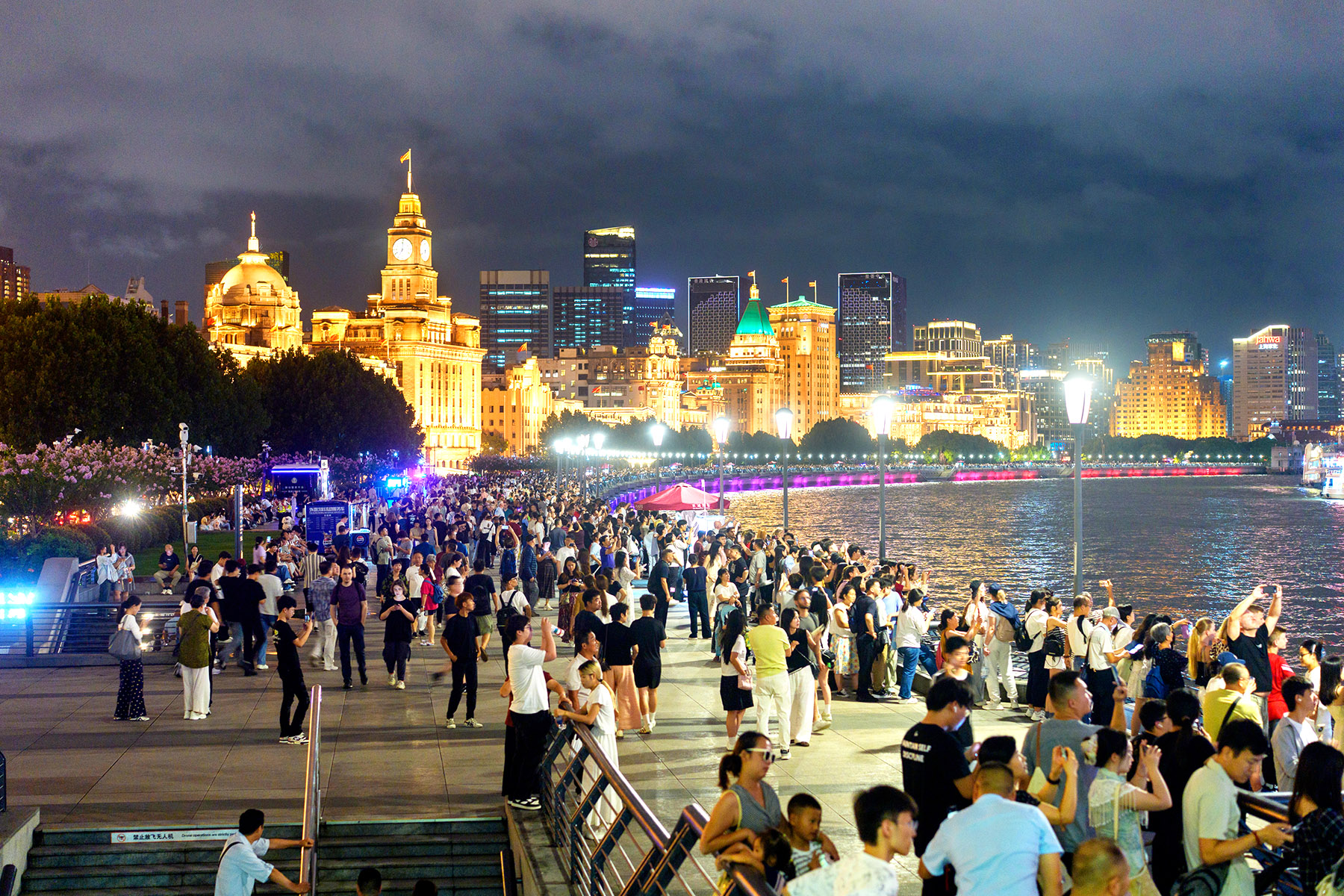
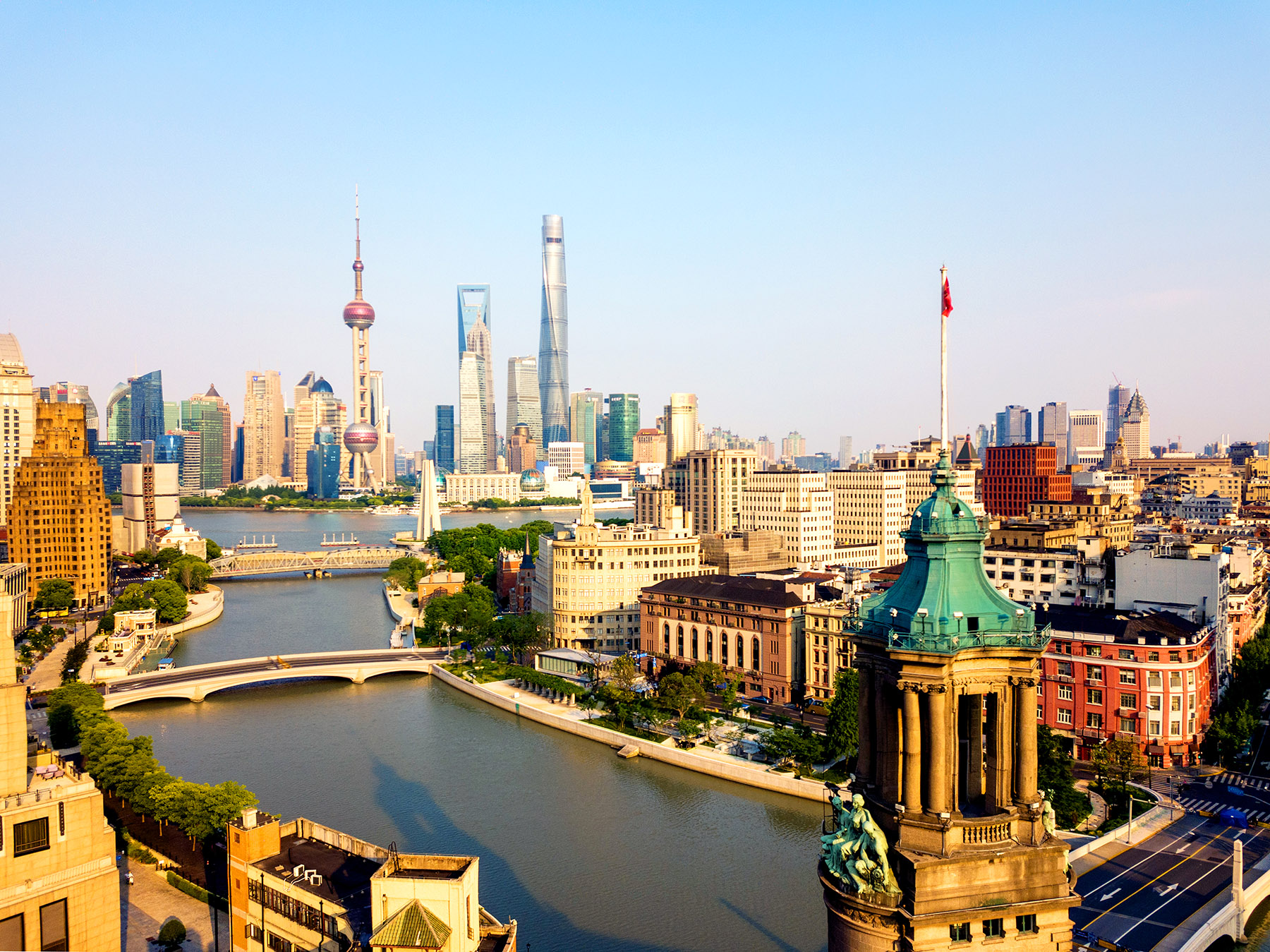
The Huangpu River divides Shanghai in two — and, in a sense, divides time itself. On the west bank, the Bund's century-old facades preserve the memory of a city that opened to the world in 1843; on the east bank, Lujiazui's towers reach for tomorrow's skyline.
Farther upstream, around the preserved cranes and oil tanks of Xuhui, another rhythm has taken hold: runners, dog walkers and campers have made an old industrial riverfront part of everyday life.
READ MORE: In the mood for wandering
Once a dividing line and a point of departure, the Huangpu's banks are being reshaped today — no longer scenery to be admired from behind railings, but a living waterfront for running, dog walking, coffee breaks, sports, and light shows. History and the future face each other across the water; contrast and convergence unfold at once — two Shanghais, one river.
The past and present
The Bund's modern history began along the river.
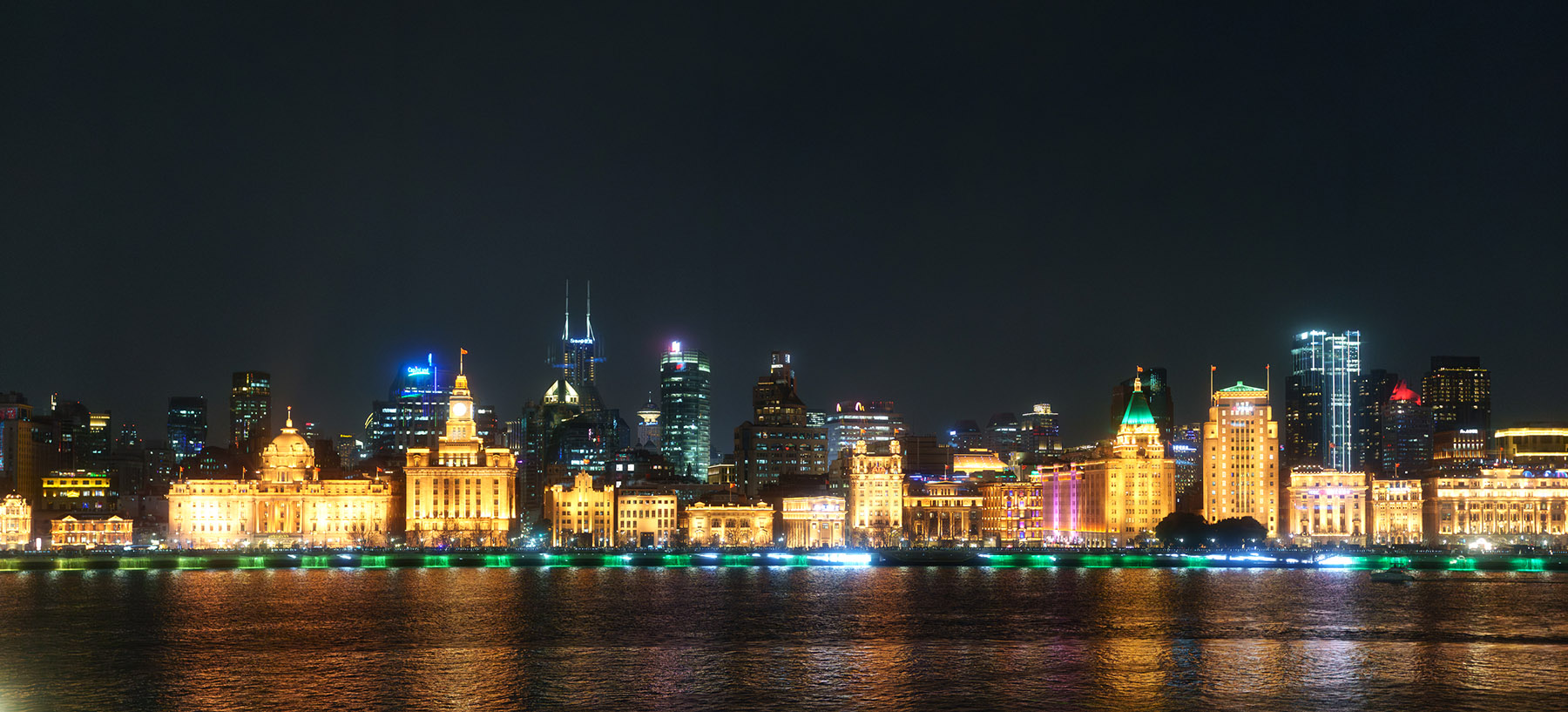
After Shanghai opened to foreign trade in 1843, trading houses, banks, customs offices, and consulates first took root here. Along nearly 2 kilometers of riverfront, Gothic, Baroque and neoclassical facades stand side by side, earning the stretch its twin nicknames — "Gallery of World Architecture" and "Wall Street in the East" — and its designation as a national cultural heritage site.
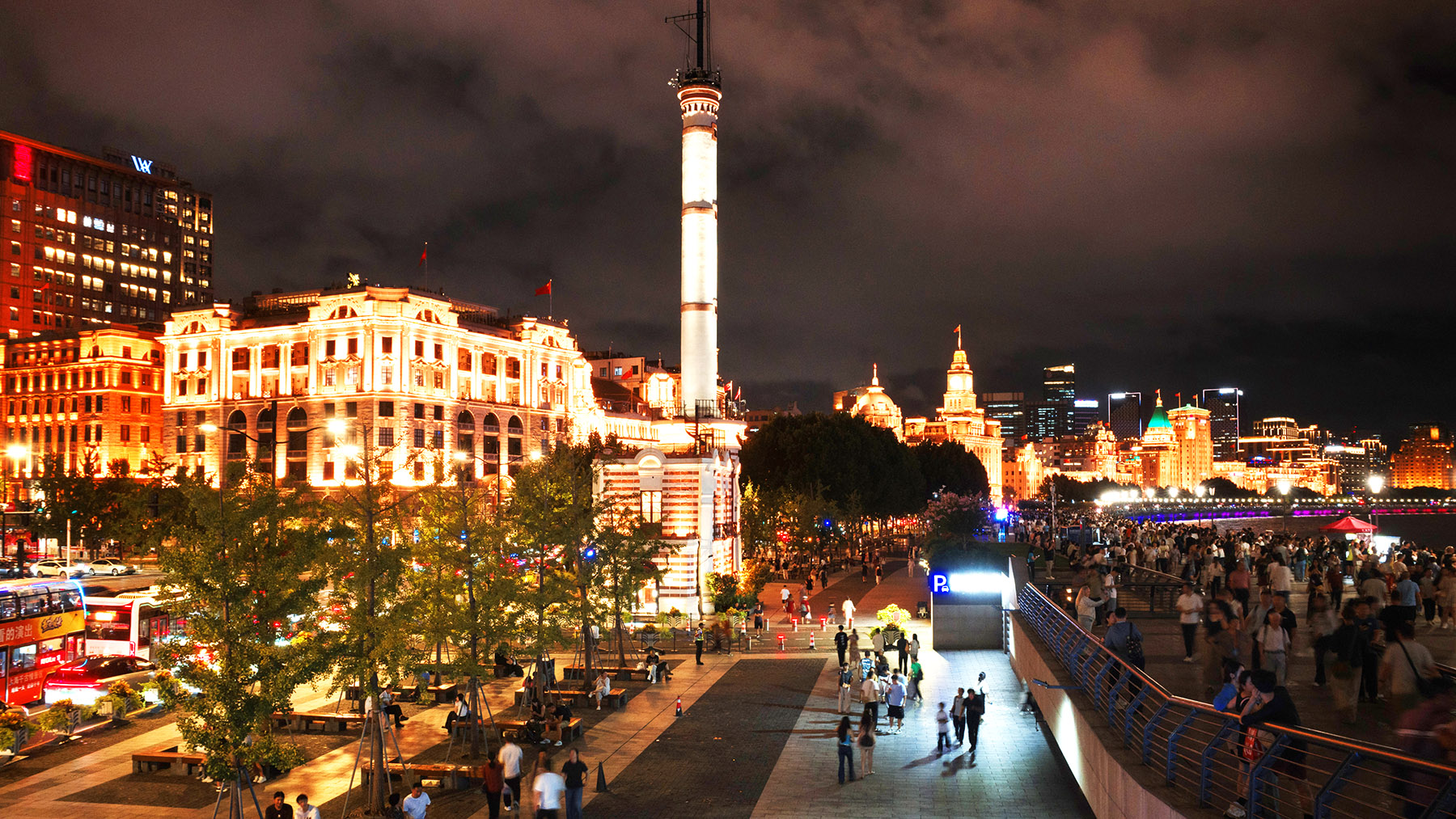
A walk from Nanjing East Road to the Bund traces a century of commerce: the street, once the liveliest stretch of the bustling commercial heart of Shanghai's former foreign settlement, now blends century-old brands with global flagship stores.
The historical buildings have never left the stage — jazz still plays nightly at the Fairmont Peace Hotel, and the Customs House bell still marks the hour. The third Shanghai International Light Festival, which ended on Oct 16 after a monthlong run, projected animations onto the facades of Rockbund, a heritage district at the Bund's northern end.
"Somewhere that is so traditional but also so technologically advanced … It seems to us like the future," says Millen Sandhu, a university student from Vancouver, Canada, watching the lights on the Bund.
Across the river lies another Shanghai.
Since Pudong's development drive began in 1990, Lujiazui has transformed from farmland and shipyards into China's financial hub. The 632-meter-high Shanghai Tower now crowns the skyline, flanked by Jin Mao Tower and the Shanghai World Financial Center. Across the river, century-old buildings and soaring skyscrapers face each other in Shanghai's most iconic dialogue across time. Worlds apart in style, they frame the same city.
That blend of contrasts also shows up in everyday life in Lujiazui. In mid-October, the Lujiazui coffee festival brought more than 390 brands from five continents to Lujiazui Central Green — from Amazonian Geisha beans from Peru to stone-ground, hand-brewed coffee from Nujiang Lisu autonomous prefecture in Yunnan province and Eastern-style blends from Changsha's Chayanyuese (Modern China Tea Shop).
According to a report by Fudan University's Big Data Laboratory of Consumer Market on the festival's impact over the past decade, attendance has grown from 12,000 to more than 150,000 per edition, while the number of participating brands has risen from 24 to more than 390 — putting the event among the world's leading urban coffee festivals.
For overseas roasters, Shanghai is the gateway to China.
Kael Buttermann, founder of Peru's Shan-Kay, chose the event as his brand's first stop in China: "We saw huge market potential in China, so we picked this coffee festival as our very first stop."
Oskar Garberg, the Swedish barista champion behind Standout Coffee, says, "I love how the community here is so big, and there are so many people. It's really nice to see how it's so different from what we have in Europe."
Domestic brands are infusing coffee with an Eastern identity.
"Coffee is an imported product from the West. Yet after it arrived here, we hope to blend it with Eastern elements and turn it into something local," says Liu Qiaofang, public affairs representative for Changsha-based chain Chayanyuese.
A city that thrives
Beyond the aroma of coffee, the Huangpu River's deeper, more enduring character lies in the rhythms of everyday life.
Farther upstream along the Xuhui waterfront, an industrial stretch once lined with Longhua Airport, Beipiao Coal Wharf and factories has been transformed. Its cranes and oil tanks have been preserved and integrated into art museums and public spaces.
Along the 8.4-km open waterfront, running, cycling and pedestrian paths wind side by side, interspersed with skate parks, climbing walls and lawns. For many Shanghai residents, there is no need to seek out tourist attractions — an after-work jog or an afternoon picnic with friends on the lawn has become part of everyday life.
This relaxed atmosphere extends to pet owners, too. The area is known as Shanghai's go-to destination for dog walking.
More than 70 percent of tenants at the West Bund Dream Center are pet-friendly. D&L Pets Park features a rooftop playground with river views, while riverside cafes serve special goat milk treats for dogs. Leashed dogs, passersby stopping to pet them, and puppies frolicking on the lawn add a warm, gentle buzz to the waterfront.
Mahmoud Soliman, an Egyptian lecturer at Shanghai International Studies University, has lived in Shanghai for years. Every evening after work, he walks his dog along the river.
For him, the most touching aspect of the waterfront is not the scenery but how it has evolved.
"The city keeps changing to fit the way we live," he says.
"Where industry once rusted, everyday life now flourishes. The best riverside spaces are reserved for everyone who lives earnestly. In the breeze along Xuhui's waterfront lies the small, ordinary happiness."
Building on this foundation of everyday life, major sporting events have also taken root along the river.
ALSO READ: Relocated villagers scaling new heights
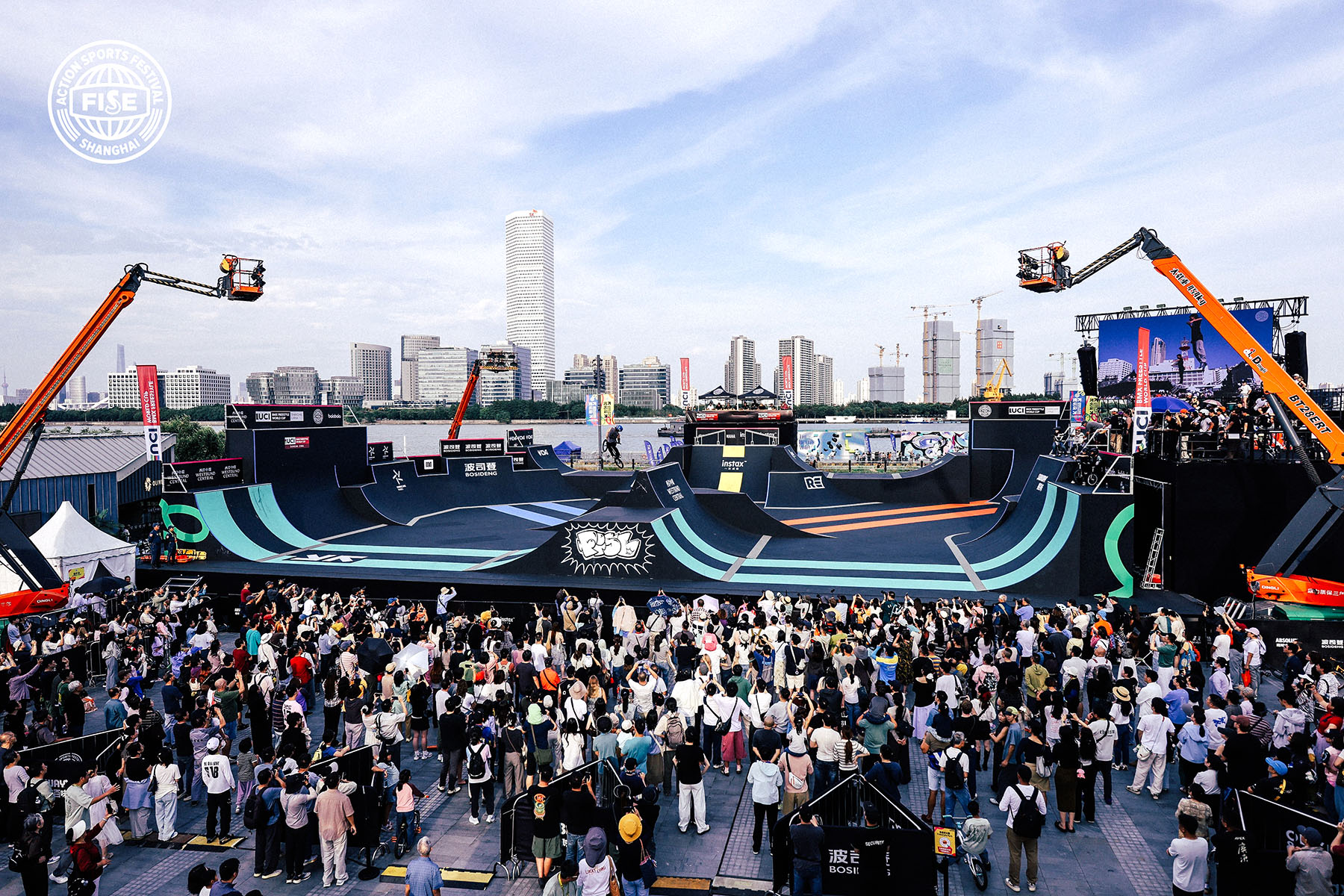
In mid-October, the FISE World Series Shanghai returned to the Xuhui waterfront for the third consecutive year. Open to the public free of charge for the first time, the 180,000-square-meter riverside venue drew 400,000 visits over four days, up about 50 percent from a year earlier.
The 2026 Shanghai Marathon scheduled for December is expected to see 30,000 runners set off from the Bund, passing Nanjing Road, Xintiandi and the Huangpu waterfront.
From the Bund's century-old Customs House bell to Lujiazui's skyline and the joggers and dog leashes of the West Bund, both banks of the Huangpu are moving in the same direction — returning the finest waterfront spaces to everyday life and leaving the best of Shanghai to its people.
The river remains the same, but life along its banks grows brighter with each passing day.
Contact the writer at heqi@chinadaily.com.cn
