

International students retrace steps, learn of soldiers' connections with people, sacrifices
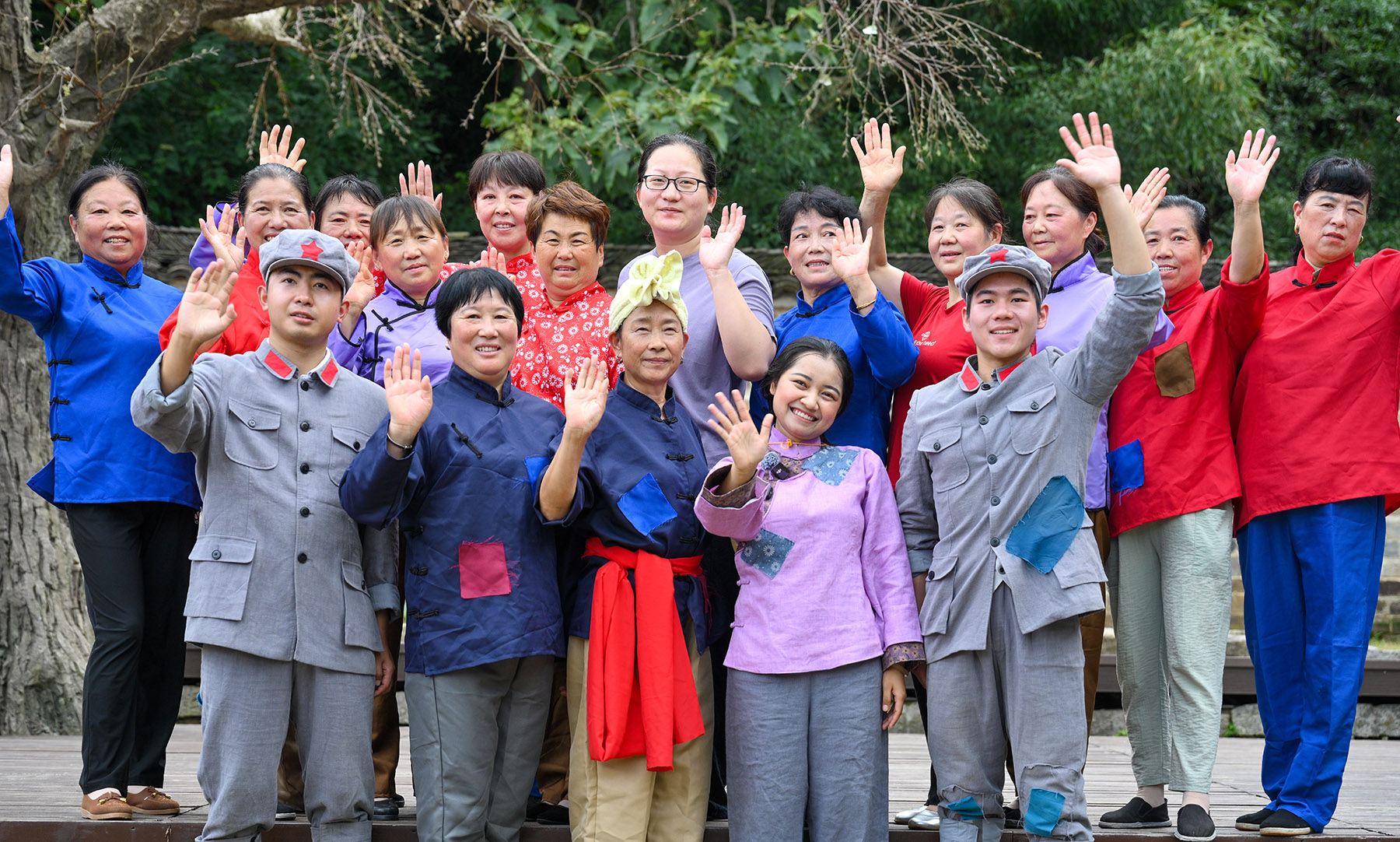
Under the blazing July sun in Tucheng, Guizhou province, 27-year-old Bangladeshi student Md Risat Abdullah stepped into the Chishui River with his teammates to build a makeshift floating bridge from wooden planks, ropes and other materials. They were recreating a daring crossing made by Red Army soldiers more than 90 years ago during the Long March (1934-36).
"The planks were unstable on the water. It was hard to keep my balance even after a few steps, let alone to run," Risat said.
In January 1935, under enemy fire, Red Army soldiers worked through the night to build a bridge using wooden panels taken from doors lent by local residents. Carrying their weapons, they ran across the swaying walkway above the cold water.
ALSO READ: Story of the halved quilt carries Long March spirit
Standing on a similar makeshift bridge, Risat understood it was more than a military initiative.
"The soldiers relied on the villagers' planks to carry them across. The villagers offered doors from their own homes because they believed the army was fighting for a better future," he said.
"The crossing taught me not only about history, but also about the bond between the army and the people."
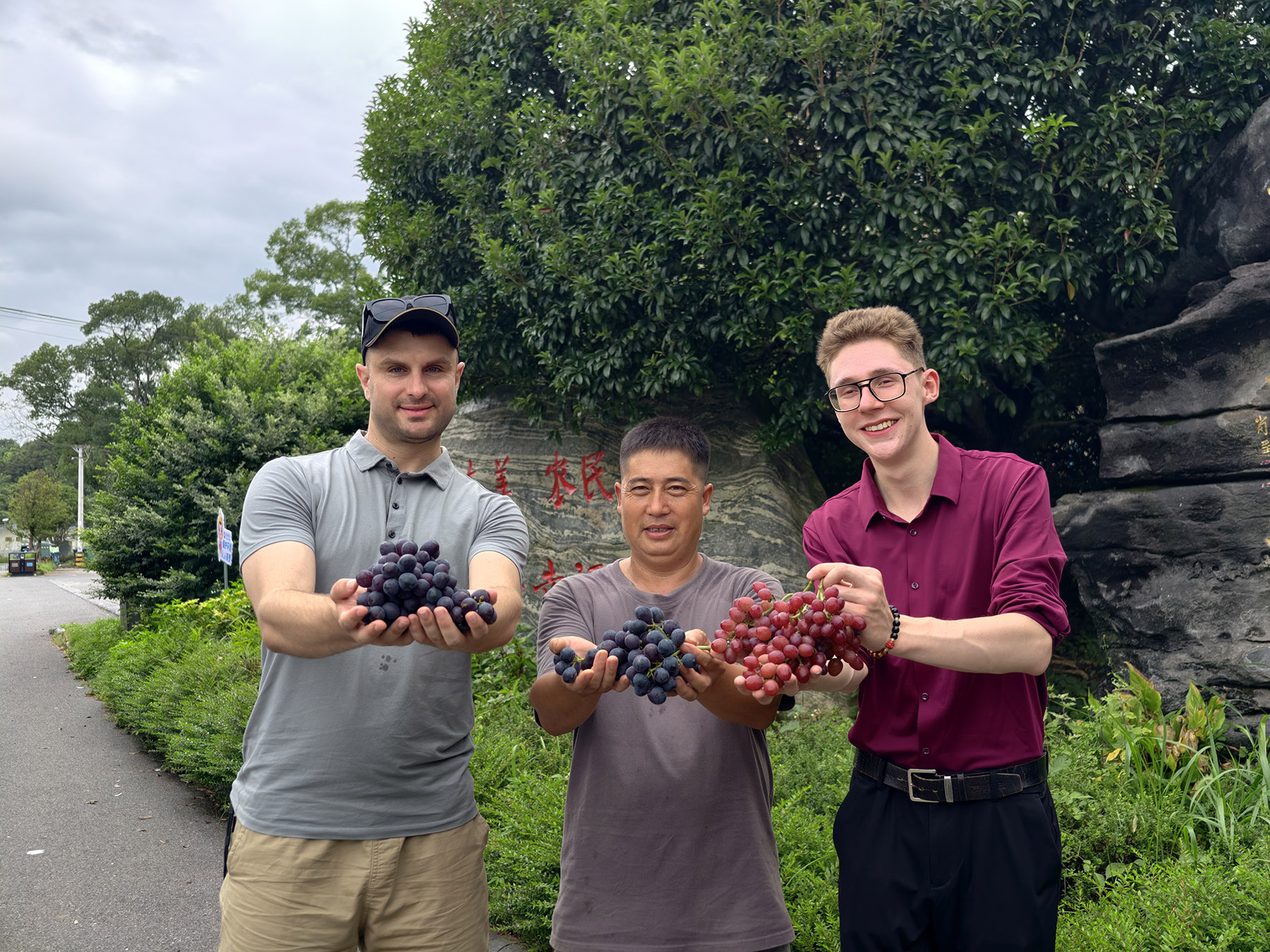
The experience of Risat, an international student at Huazhong University of Science and Technology in Wuhan, Hubei province, was part of a broader effort to revisit the Long March, marking the 90th anniversary of its victory. This summer, he joined journalism students from universities in 15 provincial-level regions to visit 23 historic river crossings along the route. Many of the rivers are now spanned by modern bridges.
The group included international students from six countries, whose perspectives added a cross-cultural dimension to the exploration of the Long March and its enduring influence on China.
"Ninety years ago, American journalist Edgar Snow risked his life to tell the world the story of the Long March. Today, we invite international students to bring their own perspectives to the journey and discover a China they may not have seen before," said Zhou Chengsi, an associate professor at the School of Journalism and Communication of Wuhan University, one of the event organizers.
American student Aaron Kyle Schrag-Toso, 36, said the trip brought Snow's experience into sharper focus. Schrag-Toso had portrayed the United States journalist in a university drama earlier this year at Wuhan University, and retracing the route gave him fresh insight into Snow's work.
"Like him, I was witnessing those remarkable events as a foreigner," he said. "I came to understand not only his role in documenting history, but also the stories he worked so hard to share with the world."
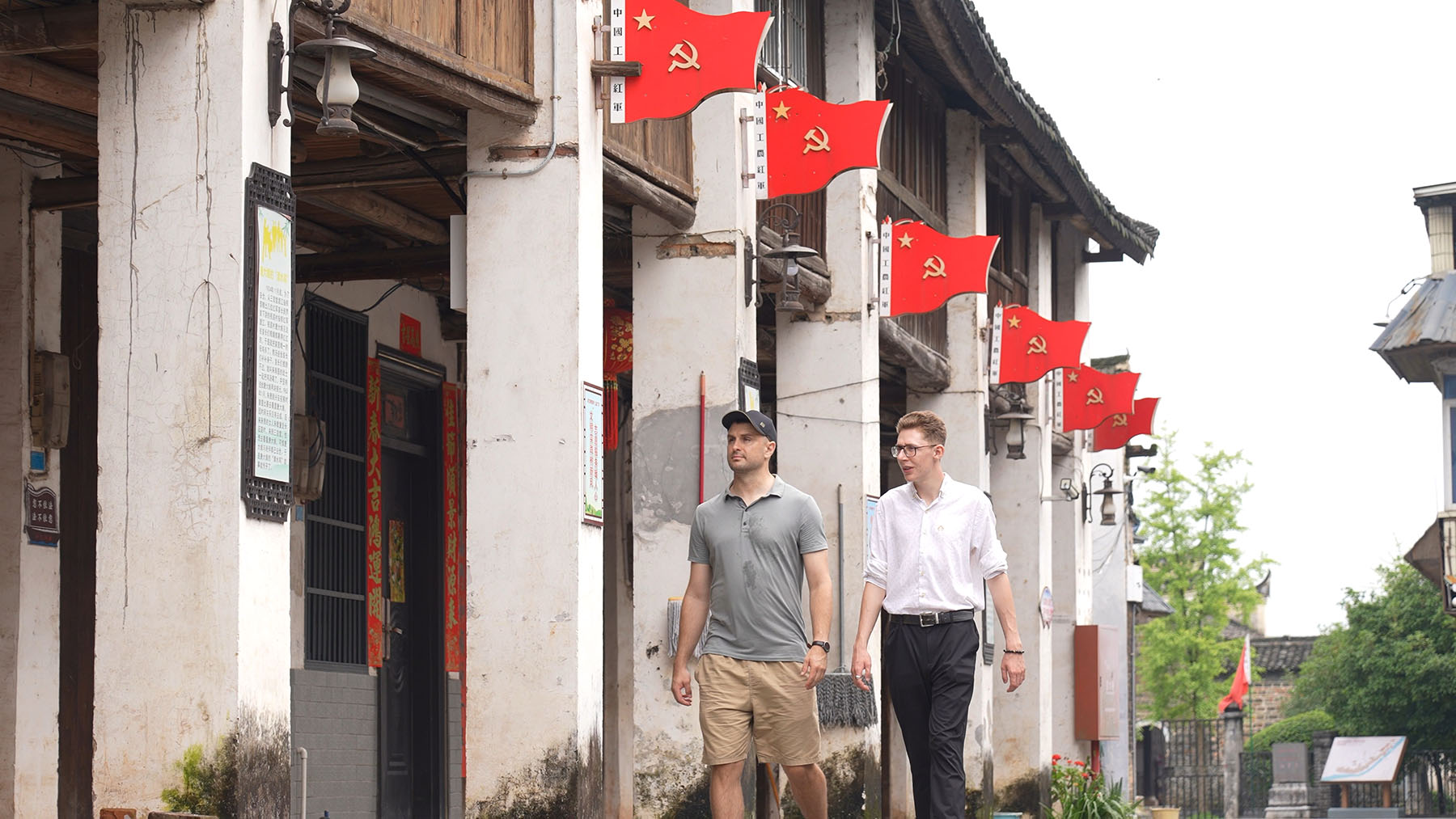
Elih Gideon Nuechter, a 23-year-old German student at Wuhan University, said the journey put into perspective the lives and losses behind the history of the Long March.
In Yudu, Jiangxi province, where the Long March began in 1934, he met a 108-year-old woman whose husband, a Red Army soldier, never returned from the march. In Xing'an county, Guangxi Zhuang autonomous region, Nuechter heard about a man who spent much of his life searching for where his grandfather had died during the march. He eventually found his grandfather's name recorded at Xing'an's martyrs' memorial park.
"These stories resonate across countries because they speak of love, family, waiting and sacrifice," Nuechter said. "Great stories often begin with ordinary people and their sincere hearts."
Siu Nay H'Nhung, a 21-year-old Vietnamese student enrolled at Zhongnan University of Economics and Law, said human connection was embodied in a small wooden bird she learned the story of in Hubei province.
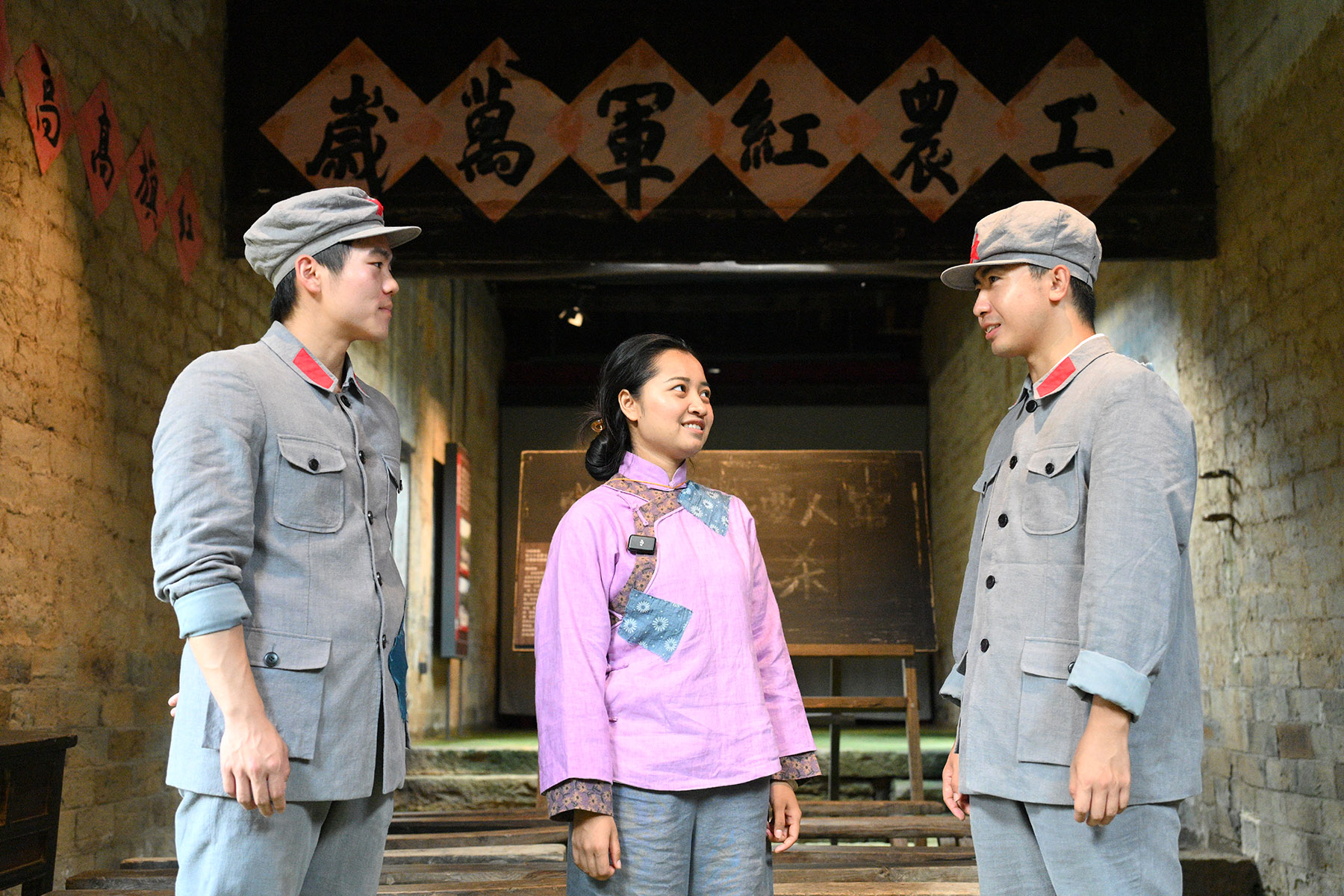
According to local accounts, a Red Army soldier carved the bird to thank a villager who had cared for him after he was wounded. They agreed to use it as a token to recognize each other after the revolution succeeded. The villager kept his promise, and three generations of his family passed down the bird, although the soldier died in the war.
"These stories are remembered not only for what happened, but also for the emotions and beliefs they carry," she said.
The accounts of ordinary people caught up in the Long March also struck a chord with Risat, reminding him of Bangladesh's 1971 Liberation War. He had heard stories of villagers sheltering fighters, boatmen ferrying people across rivers under gunfire and families sharing what little rice they had with those caught up in the conflict.
"China's Long March belongs to its own history. But ordinary people's willingness to endure hardship for the sake of future generations is not unique to any one country," he said. "The spirit of the Long March can travel around the world."
Yet the journey showed the students not only what people had endured, but also how places shaped by that history have changed.
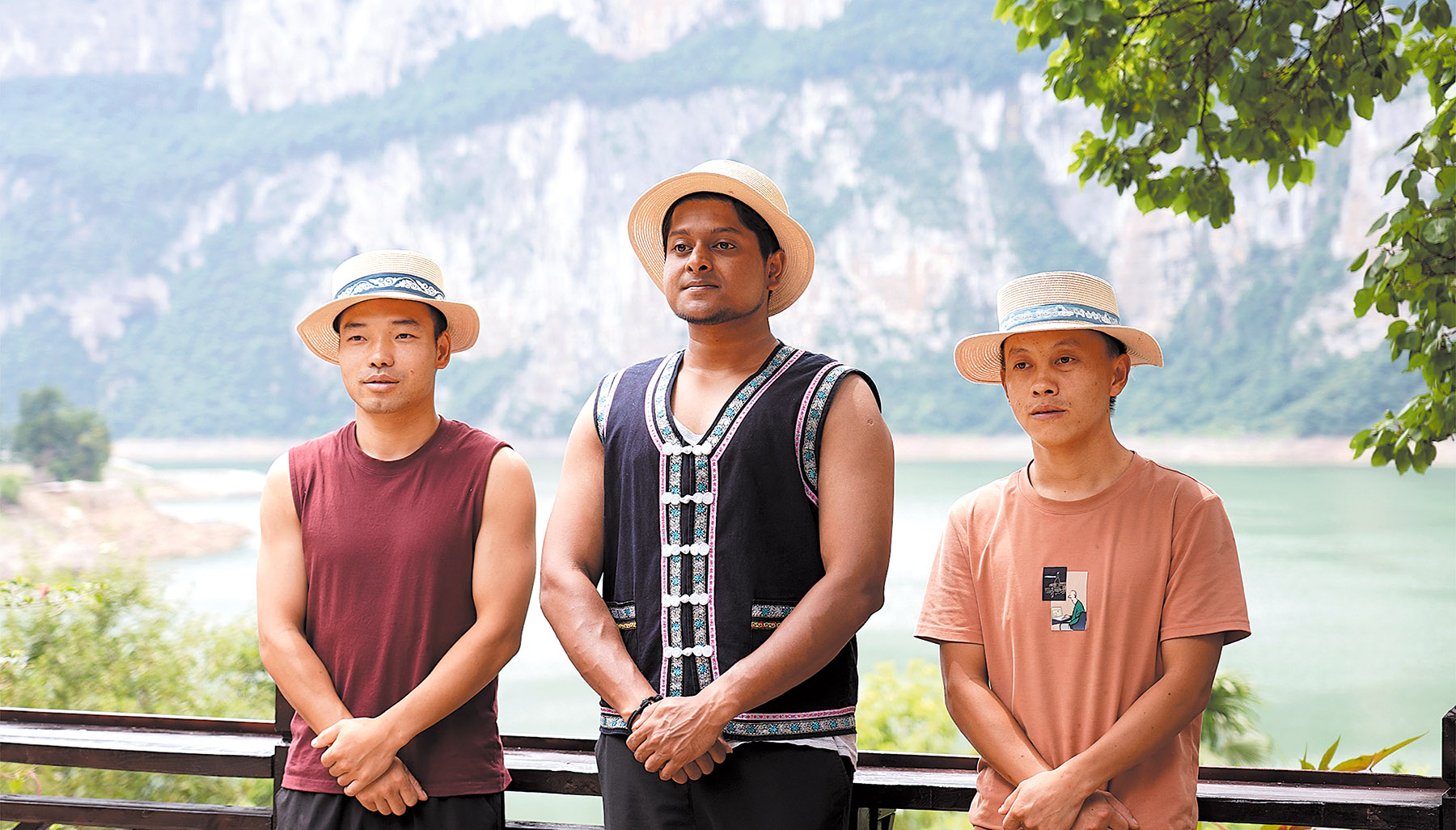
Nuechter visited modern farms and factories along the route. In Xing'an county, he learned that about 110 metric tons of citrus are shipped to Russia by China-Europe freight trains each day, reaching Moscow in around 15 days.
"From the old trails of the past to today's freight trains, I can see that the Long March is not just a chapter in China's history. It is also a story about courage, development and the future," he said.
By the Yudu River, Schrag-Toso looked at the high-rises on the opposite bank, reflecting on the sacrifices behind China's transformation.
ALSO READ: Revolutionary spirit lives on in a new generation
"I felt that the effort of earlier generations had not been in vain. The China we see today was built step by step through their dedication," he said.
In Tucheng, Risat saw modern bridges that connect communities where soldiers once relied on makeshift bridges. Residents told him the bridges had made it easier to commute to work, run businesses and transport produce to distant markets.
For him, the contrast was embodied in the bridge he had struggled to cross — and the modern spans around him.
"These bridges link the Red Army of 90 years ago with people today, while also bringing people around the world closer to the Long March. They allow foreigners like me to experience it in a real and deeply human way," he said.
Contact the writers at mengwenjie@i21st.cn
