

Spirit of ping-pong diplomacy lives on as US, China embrace pickleball as new path to foster friendship
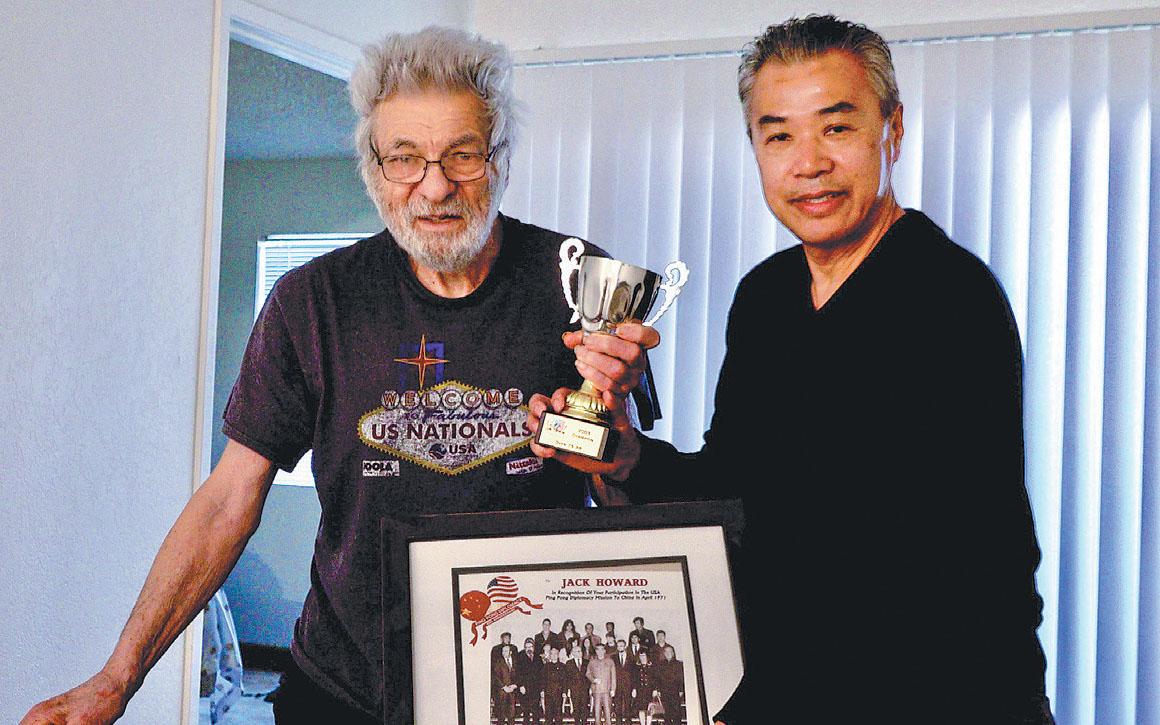
On the wall of Jack Howard’s modest bedroom hung a framed photograph he treasured above all others. Taken in April 1971, it captured Chinese Premier Zhou Enlai standing with the visiting United States table tennis delegation in Beijing. Howard, then captain and coach of the US team, stood quietly in the upper right corner.
Above the image was a simple dedication:
“In Recognition of Your Participation in the USA Ping-Pong Diplomacy Mission to China in April 1971.”
Nearly half a century later, that photograph remained more than a keepsake. It was a reminder that a small white ball had helped open one of the most consequential chapters in modern China-US relations.
“I have never regretted being a table tennis player ever,” Howard told Peter Gao, president of the American Chinese Athlete Association, or ACAA, during a visit to his Las Vegas, Nevada home in March 2019.
“When I was in my 20s, I was good at a lot of sports,” Howard recalled. “There was no money, very little money, and no glory. But that was my choice, and I want to tell you I am glad I made it.”
At the time, Howard could never have imagined that his decision would one day place him inside a diplomatic breakthrough.
As captain and coach of the US delegation at the 31st World Table Tennis Championships in Nagoya, Japan, in 1971, Howard led the US team after it received an unexpected invitation from China.
The invitation followed a widely remembered encounter between US player Glenn Cowan and Chinese champion Zhuang Zedong during the championships, when Zhuang approached Cowan on a team bus and offered him a gift. USA Table Tennis says photographs of their interaction quickly became symbols of goodwill between two countries then separated by deep political tensions.
On April 10 that year, the US team crossed into China. The visit came after more than two decades of estrangement between the two countries and soon became known as Ping-Pong Diplomacy. During a reception in Beijing on April 14, Zhou told members of the US team that their visit had “opened a new page” in relations between the Chinese and American peoples, according to historical records maintained by the US State Department.
“It was a whole new start for diplomacy between the United States and China,” Howard later recalled.
The US State Department’s Office of the Historian describes Ping-Pong Diplomacy as giving a public face to the broader rapprochement that preceded President Richard Nixon’s visit to China in 1972.
When Howard returned to China in 2006 for the 35th anniversary of Ping-Pong Diplomacy, he was asked what had changed since his first visit.
“In 1971, the best players in the world were the Chinese players. Now, the best players in the world are still the Chinese,” he said.
“The reason,” he added, “is because they are constantly analyzing how they can improve.”
Howard died in Las Vegas in 2020 at age 85, but those who knew him believe his legacy extends well beyond table tennis.
“I was fortunate to visit him and preserve his memories on video,” Gao told China Daily.
“Our association has never forgotten the pioneers who helped open the door for sports exchanges between the United States and China.”
The ACAA, whose members include retired Olympians, world champions and former professional athletes, has continued to organize youth, university and professional sports exchanges, Gao said.
Fifty-five years after the historic visit, the spirit of Ping-Pong Diplomacy continues to resonate.
In April 2026, members of the original 1971 American delegation returned to China for anniversary events, joining former Chinese national team players and a new generation of USA Table Tennis athletes. USA Table Tennis said the 21-member delegation traveled to Beijing, Shijiazhuang, Nanjing and Shanghai from April 6 to 15. Original US participants Judy Hoarfrost, Olga Soltesz and Connie Sweeris joined former Chinese players including Zheng Minzhi and Liang Geliang.
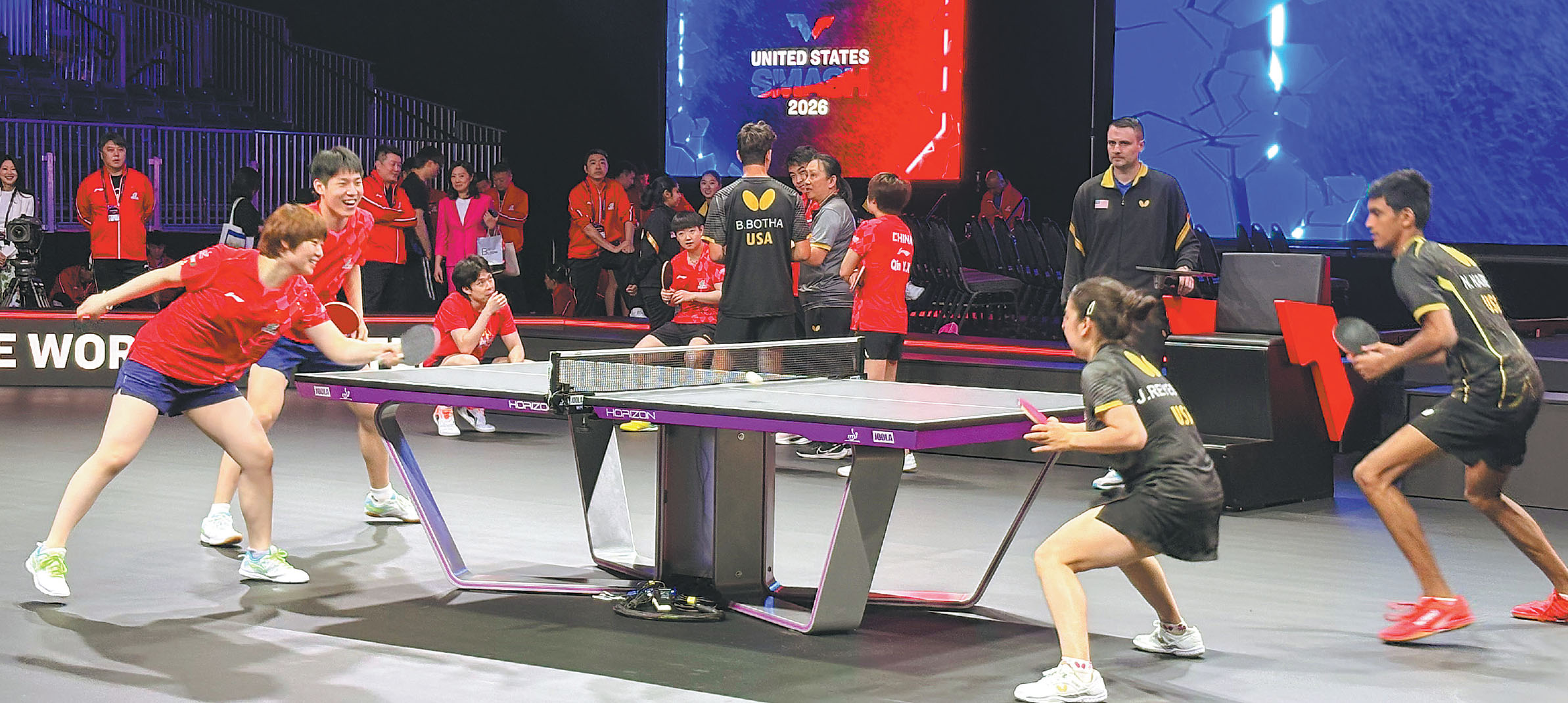
The exchanges continued in Southern California at WTT US Smash 2026 held at the Ontario Convention Center. Chinese and US players took part in cross-national doubles partnerships and other exchanges during the tournament, extending the spirit of Ping-Pong Diplomacy to a new generation of athletes.
He Xiao, secretary-general of the Chinese Table Tennis Association, said exchanges between the two countries have continued to evolve over the past 55 years.
“From reciprocal visits and joint training to cross-national doubles partnerships and today’s campus exchanges, generations of players have carried forward this friendship that transcends national boundaries,” he said.
Following the WTT US Smash tournament, members of the Chinese National Table Tennis Team visited La Salle College Preparatory in Pasadena, California where leading players took part in exhibition matches with students and shared the history of Ping-Pong Diplomacy with a new generation.
Perry Martin, president of La Salle College Preparatory, said the day’s significance reached far beyond athletics.
“Our students are not simply watching an exhibition,” Martin said. “They are witnessing how sports can become diplomacy, how respect can become friendship, and how a school can become a bridge between nations.”
Today, another paddle sport is carrying part of that legacy forward.
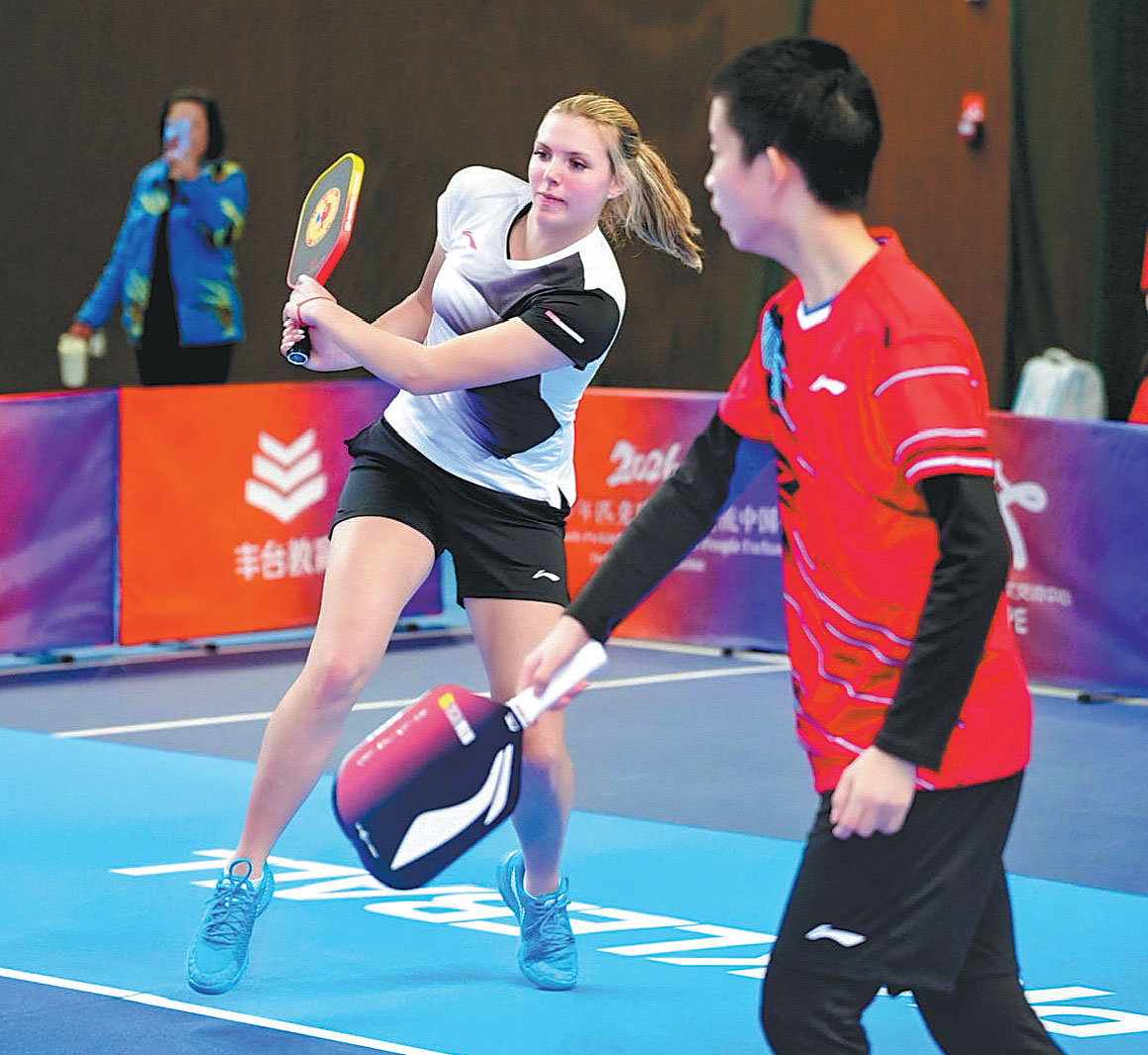
Pickleball, born in the United States and rapidly expanding internationally, is increasingly being used as a platform for youth exchange between China and the US.
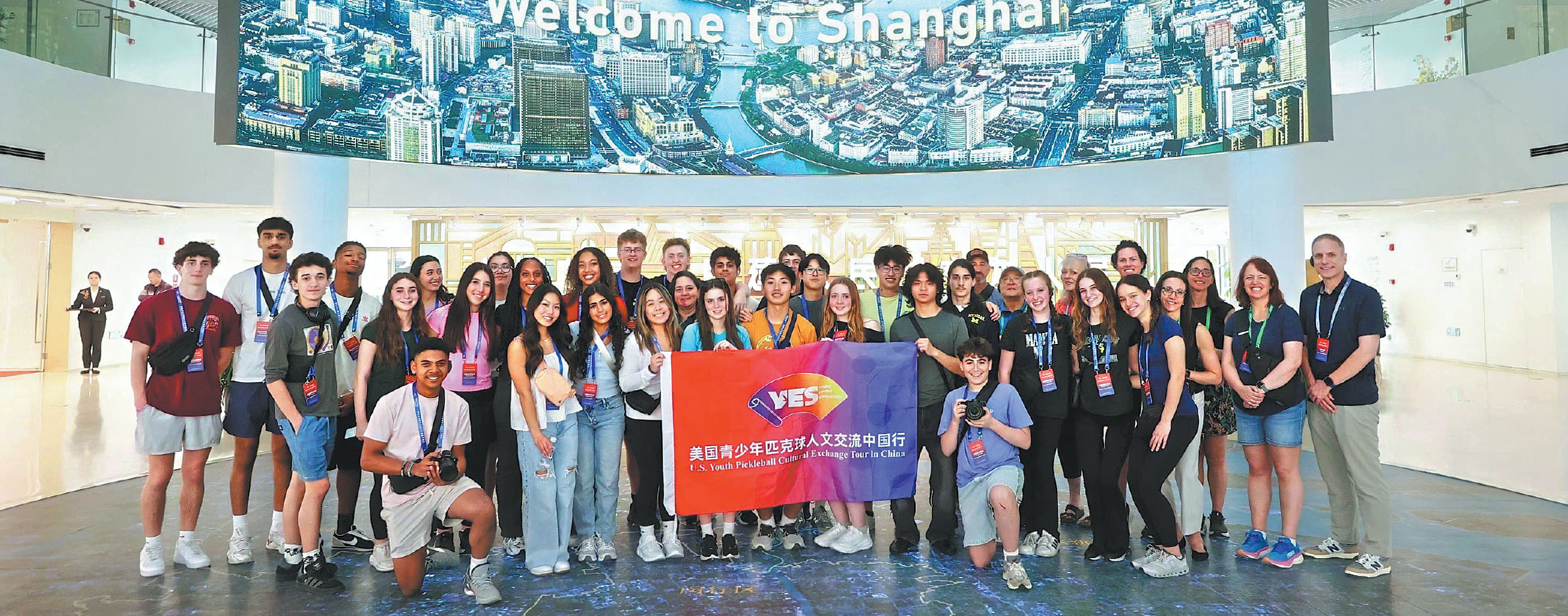
In April 2025, a delegation of 31 Montgomery County Public Schools (MCPS) students from Maryland traveled to Shanghai, Shenzhen and Beijing for a pickleball and cultural exchange, taking part in friendly matches, school visits and other cultural activities. Chinese students later visited Maryland, making the exchange reciprocal.
Following the April trip, MCPS System-wide Athletics Director Jeff Sullivan and members of the delegation wrote a letter to Chinese President Xi Jinping about their experiences. Xi replied in July, saying he was pleased that pickleball had become “a new bond for youth exchanges” and expressing hope that the students would contribute to greater friendship between the two peoples.
MCPS continued the initiative in 2026 with another round of youth, sports and cultural exchanges between China and the US.
In May, the Chinese Embassy in Washington hosted “The Night of Pickleball & the Premiere of China Trip Documentary”, bringing together students, teachers and families involved in the exchanges.
Chinese Ambassador Xie Feng said Xi’s initiative to invite 50,000 young Americans to China for exchange and study over five years had reached its target two and a half years ahead of schedule.
“From ping-pong to pickleball, the paddles have changed. But our peoples’ shared wish for friendship remains as strong as ever,” Xie said.
Sullivan said the program’s impact could be seen in the relationships formed among students during the exchanges.
He said the exchanges also gave students a more direct understanding of China beyond what they had previously encountered through media.
Danya Sadim, a 17-year-old student at Winston Churchill High School who traveled to China with the Maryland delegation, described the trip as one of the most memorable experiences of her life.
“It was really about sharing our cultures,” she said. “Talking with Chinese students, seeing the scenery, experiencing Spring Festival — it was beautiful.”
Coach Stacy Azizirad said one moment stood out above the others.
“When I learned that an American student would partner with a Chinese student, that was really special,” she said. “It wasn’t US versus China. It was about connection.”
Sadie Reilly, a USA Pickleball ambassador in New Jersey, believes pickleball possesses many of the same qualities that made table tennis an effective bridge.
“Just as Ping-Pong Diplomacy opened doors through sport, pickleball has the potential to create new connections between the United States and China through friendly competition, coaching exchanges, youth programs, club visits, and cultural exchange,” Reilly said.
Lin Di, founder of ID Sports and a former member of China’s national tennis team, believes pickleball’s accessibility and social nature can create more opportunities for grassroots exchange.
He added that during a recent trip to Ningbo, Zhejiang province, they organized an exhibition tournament to share the sport with local players and promote grassroots exchange.
Lin’s sports academy is planning a 20-court pickleball facility in Irvine, California, and hopes to expand cooperation with partners in China through training programs and tournaments.
“I hope that once the facility is completed, it will not only offer training services but also host tournaments at various levels,” Lin said. “I aim to collaborate with partners in China to create a hub for exchange that connects everyone from grassroots players to national-team athletes.”
Contact the writers at renali@chinadailyusa.com
