

State visit yields eight deliverables and understandings for Sino-US relations, boosts outlook for stability
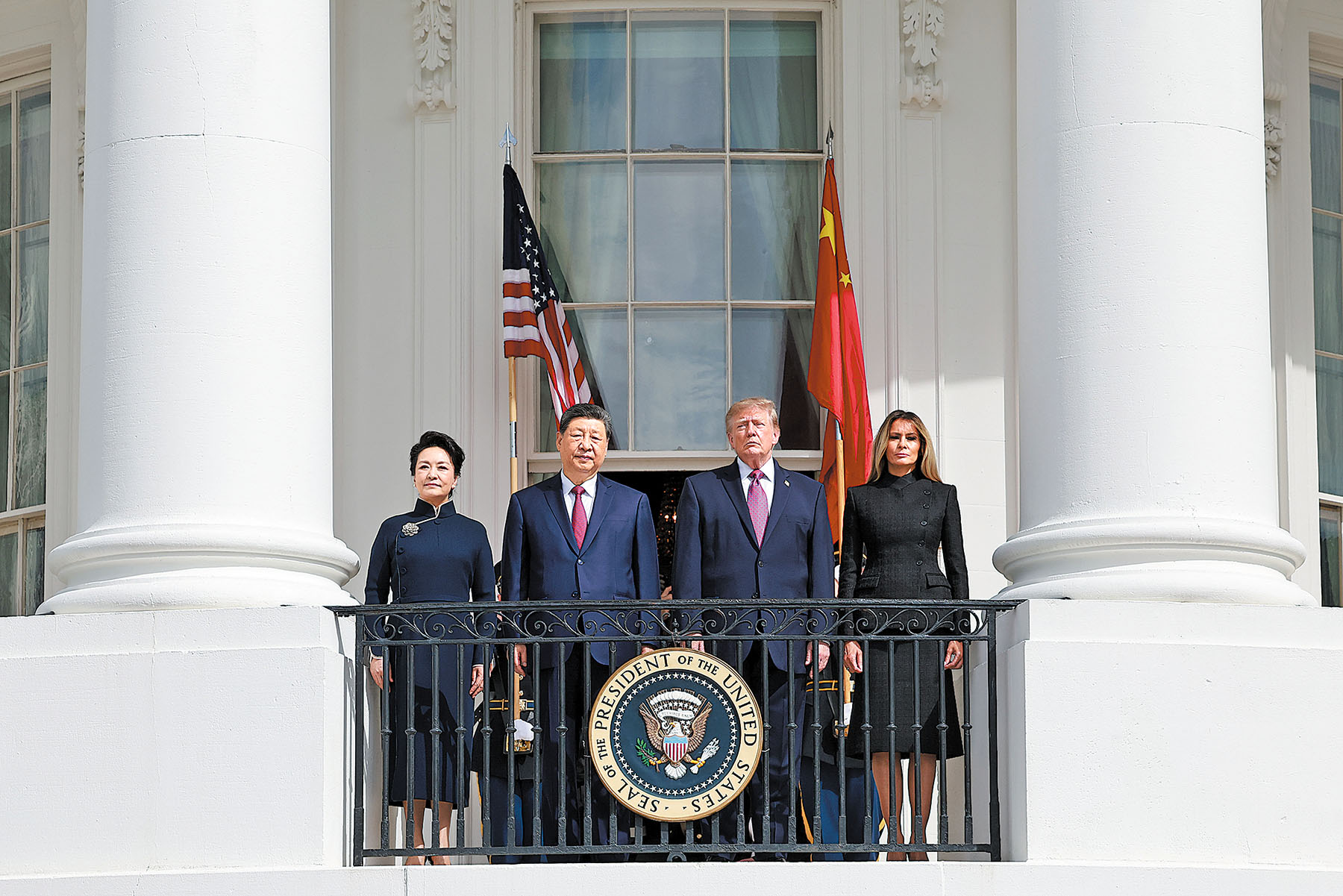
President Xi Jinping returned to Beijing on Sept 26 after a journey across the Pacific that yielded eight deliverables and understandings between China and the United States, ranging from reciprocal tariff reductions and an artificial intelligence (AI) dialogue to counternarcotics cooperation and giant panda exchanges.
During a news briefing in Washington, DC, upon conclusion of the trip, Foreign Minister Wang Yi described the three-day US state visit of Xi as “historic and of landmark significance”.
It built on the momentum of Xi’s meeting with US President Donald Trump in Beijing in May and led to new progress in a constructive relationship of strategic stability between the world’s two largest economies, Wang said.
A central political outcome was the leaders’ agreement to build “a constructive China-US relationship of strategic stability on the basis of respect, fairness and reciprocity”, Wang said, noting that it further enriched the substance of the vision they set out in Beijing.
Respect means respecting each other’s sovereignty and territorial integrity, respecting each country’s choice of social system and development path, and respecting the other side’s core interests and major concerns, Wang said.
Fairness, Wang continued, means pursuing mutually beneficial cooperation and handling differences through consultation, rejecting a zero-sum game in which one side’s gain comes at the expense of the other, and not seeking unilateral absolute advantage.
Reciprocity means that the two countries are equal in sovereignty, that neither side stands above the other, that neither engages in hegemonic nor bullying behavior, that each side’s concerns are addressed on an equal basis, and that cooperation across various fields develops in a balanced manner, Wang said.
Head-of-state diplomacy has anchored the relationship, Wang said. Since Trump returned to office, the two presidents have met three times, spoken by telephone five times and exchanged letters on multiple occasions, developing a pattern of interaction based on mutual respect and sincerity, he said.
During a tea chat at the White House on Sept 25, Xi said the future of China-US relations is bright, and that it reflects the trend of history, although the road ahead is often winding with difficulties and challenges.
Trump described the visit as “very, very productive”, according to media reports.
“A lot of very positive things happened,” he said. “Great things for both countries.”
Wang said the leaders agreed that political and diplomatic channels should play a coordinating role, while their militaries should maintain regular dialogue, and departments responsible for trade, finance, law enforcement and people-to-people exchanges should strengthen their contacts.
According to the list of eight deliverables and understandings released by the Chinese side, the two heads of state endorsed the work of the bilateral economic and trade consultation mechanism and instructed their teams to implement the latest results.
These included establishing and taking forward the Board of Trade and other mechanisms, an arrangement for $30 billion in reciprocal tariff reductions, and an extension of the outcomes of the earlier economic and trade consultations held in Kuala Lumpur.
Wang said that the new joint arrangement reached before the visit also covered an investment board and an agricultural working group.
The measures would help stabilize economic ties and market confidence, benefiting businesses, ordinary people and the global economy, Wang said.
During his talks with Trump, Xi said that cooperation is a two-way street: a stable China-US economic and trade relationship requires both expanding the list of cooperation and shortening the list of problems.
“Three meetings between the two leaders in less than a year is a positive sign,” said Gene Seroka, executive director of the Port of Los Angeles, noting that continued dialogue could help businesses make long-term decisions.
“Businesses and supply chains are looking for greater stability in trade policy so they can plan with longer time horizons,” he said.
In the US, Xi announced that China would invite 100,000 US youngsters to visit for exchanges and studies over the next five years.
Wang said the announcement followed the completion — two and a half years ahead of schedule — of the earlier initiative to welcome 50,000 US youngsters within five years.
Xi also announced that the giant pandas Ping Ping and Fu Shuang were coming to Zoo Atlanta. The pandas arrived in Atlanta on Sept 27.
Wang said China-US relations need both engagement between the heads of state and closer connections between ordinary people, with broader opportunities for cooperation in education, culture, tourism, sports, and youth exchanges.
Wang said the global significance of China-US relations had become more pronounced amid international turbulence and uncertainty. Constructive interaction between the two countries is indispensable to addressing global challenges and easing tensions in regional hotspots, he said.
Speaking at the arrival ceremony at the White House, Xi said that while China-US cooperation may not solve every problem in the world, many world problems would be hard to solve without it.
The two sides agreed to establish a China-US AI Dialogue covering the technology’s risks and benefits, with the next exchange scheduled for November, and a bilateral communication channel for AI incidents.
In his talks with Trump, Xi called for continued dialogue to prevent AI misuse and abuse, keep the technology under human control, and ensure that it serves human progress.
Arthur Dong, a professor at Georgetown University’s McDonough School of Business in Washington, DC, said the two countries’ decisions have consequences well beyond their borders.
“The potential for global stability or instability very much resides in the hands of these two leaders,” he said.
Peter T. C. Chang, a research associate at the Malaysia-China Friendship Association, said it is “positive news for the global community” that China and the US can work together.
Mehmood Ul Hassan Khan, president of the Center for Knowledge and Public Policy in Pakistan, also highlighted the global significance of the two countries. China and the US are both permanent members of the United Nations Security Council, together account for more than 40 percent of global GDP in nominal terms, and are home to more than 20 percent of the world’s population.
Abdulaziz Alshaabani, a researcher at the Al Riyadh Center for Political and Strategic Studies in Saudi Arabia, noted that the summit offered a promising path for China-US relations, and that it can encourage regional actors to turn to diplomacy as the most viable means of resolving crises.
Beyond bilateral gains, the summit also offered a powerful global example that disputes can be contained through diplomacy, said Rasha Al Joundy, a senior researcher at the Dubai Public Policy Research Centre in the United Arab Emirates.
The meeting sent an encouraging signal to Middle Eastern countries to pursue negotiation over confrontation in addressing regional crises, Al Joundy said.
Benjarong Suwankiri, deputy managing director of the Stock Exchange of Thailand, said cooperation between the world’s two largest economies will benefit both ASEAN and the global economy, particularly amid disruptions caused by climate change and the rapid development of AI.
Shakeel Ahmad Ramay, CEO of the Asian Institute of Eco-Civilization Research and Development in Pakistan, said Trump’s warm reception of Xi during the Chinese president’s state visit sent a “significant message” to the global community.
Irfan Shahzad Takalvi, founder of the Eurasian Century Institute, a think tank based in Islamabad, said President Xi had gone the extra mile by extending a hand of friendship and offering cooperation.
Xu Yifan in Washington, Belinda Robinson and Zhang Minlu in New York, and Yang Wanli in Bangkok contributed to this story.
Contact the writers at mojingxi@chinadaily.com.cn
