

US film producer captures China’s development journey across 30 years of documentary footage
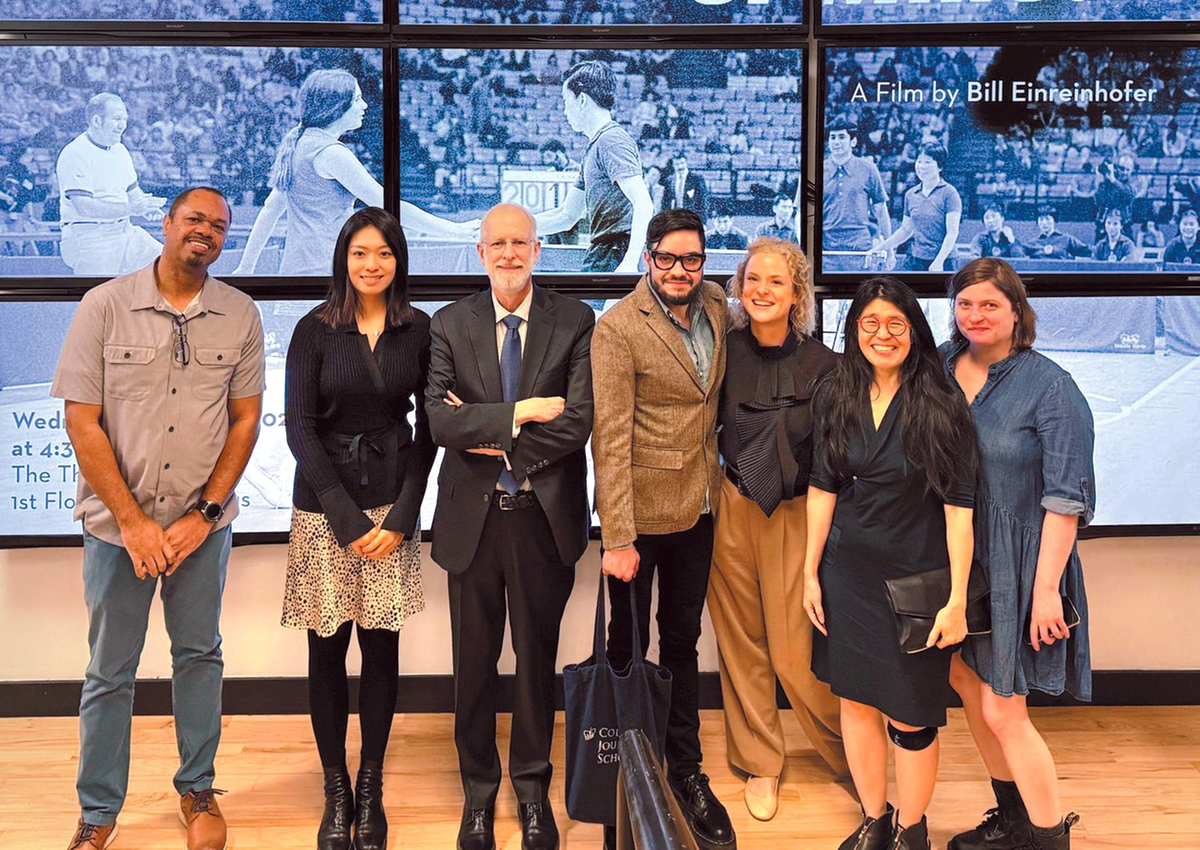
American documentary producer Bill Einreinhofer’s love of film began early while in high school. He admitted that his incredible career spanning five decades capturing life through a lens has given him a charmed existence, and one where he still enjoys the art of making documentaries and has been fortunate enough to travel the world and meet people from a variety of cultures, including China.
Einreinhofer, 74, from Rutherford, New Jersey began his career in the late 1970s after graduating with a history degree from Saint Peter’s University in New Jersey in 1974 and earning a master’s degree from the University of Wisconsin-Madison. He is chair emeritus of the Broadcast Journalism department at the New York Film Academy and heads a company called Paradox Communications. He has also taught students in Asia.
The three-time Emmy Award-winning television and documentary filmmaker joined WNET as a production assistant in October 1976. He produced his first WNET documentary in the spring of 1977. He has developed and produced programming and news for PBS, CBS, ABC, Discovery and HBO. His documentary films on China run the gamut, delighting audiences with moments and unique storytelling about history, people, places and moments.
In an exclusive interview with China Daily in New York, the filmmaker shared his approach to his work and the lessons he had learned as an American doing work in and about China for over 30 years.
“You know, one of the great challenges in working on stories about China is you have 5,000 years of history,” he said. “And even in a documentary, you only have a limited amount of time. So, it’s trying to grant one particular area, one particular person, one particular era, to explore.”
His work on China taught him how to work across cultures, a valuable lesson that he said anyone can embrace at any level.
“Frankly, I think the best American ambassadors to China are those Americans who go and visit China,” he said. “And the best Chinese diplomats, when it comes to the United States, are Chinese visitors who come to the United States, who meet Americans and can quickly dispel a lot of the strange, false stories they may have heard.”
His enormous body of work means that he has one of the largest privately held libraries of footage about China in North America, he said.
Looking back to the start, he explained that in the early 1990s, he decided to do a program about the Chinese space program. He got lucky as it was “fresh territory” and not a topic that was widely known by American audiences at the time. But it was challenging because he did not know anybody in China.
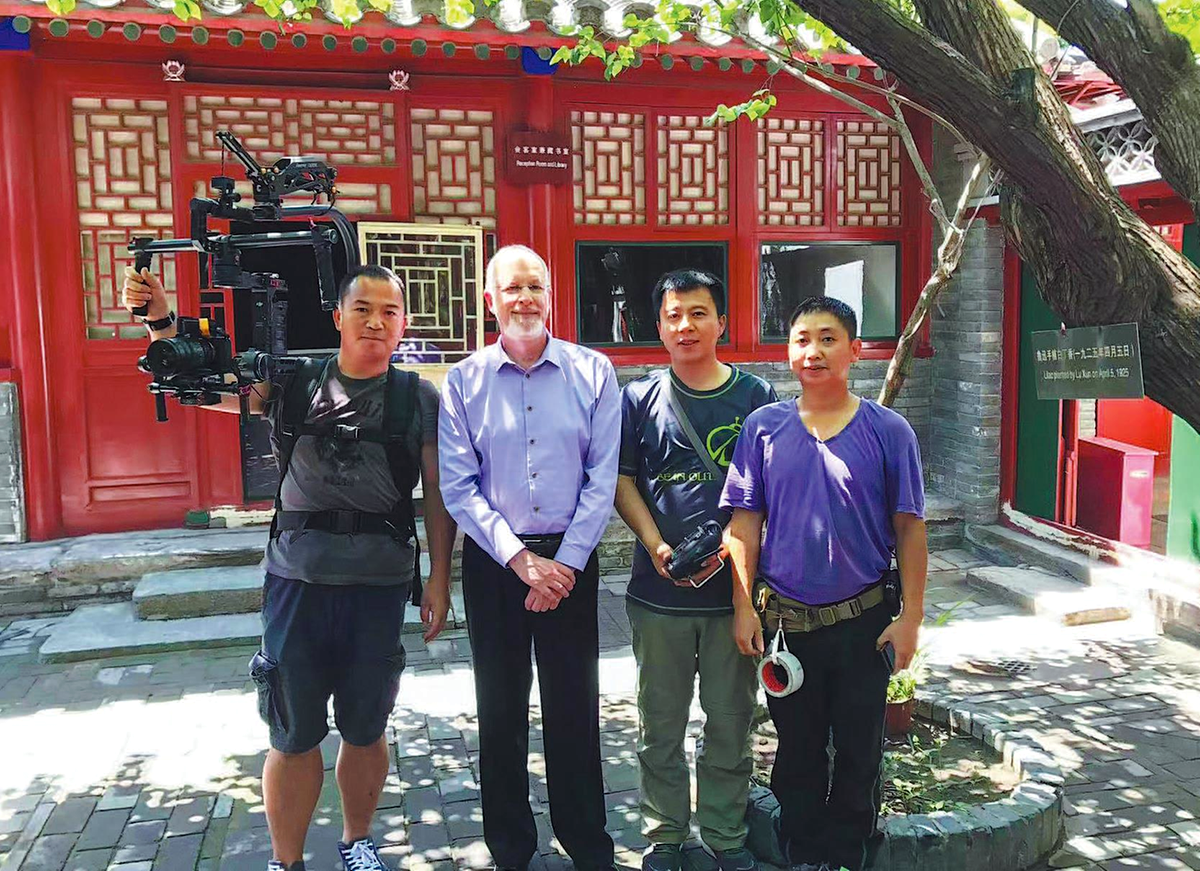
Fortunately, he had an intern, a postgraduate student from New York University’s School of Journalism who was on sabbatical, but was a reporter for CCTV. Einreinhofer was able to use the student’s contacts, go to China, get the story, come back and make the film and put it on public TV. He added that he likes to find hidden stories that are not in the news, or that people do not know about what it is like to live in China.
He first visited Beijing in 1989 to work on Innovation, the long-running PBS science, health and technology series that he conceived and executive produced.
After that shoot, he recalled: “I thought, ‘well, okay, that’s it when it comes to China’. But what I discovered was that, because I worked there, people would come to me, clients would come to me and they said ‘look, we need something done in China. You’ve been there before, we’re going to send you’.”
Today, his long list of documentary films includes China Now: To Get Rich Is Glorious; So Very Far From Home; The Hidden China; Shanghai 1937: Where World War II Began; and Unsettled History: America, China and the Doolittle Tokyo Raid.
Your Serve or Mine, his 2025 documentary, was about the history of Ping-Pong Diplomacy in the 1970s that helped lay the groundwork for the normalization of US-China relations. The era demonstrated the power of personal contact between people to build bridges.
“Today some commentators say that the relationship between America and China is bad. Well, I remember when there was no relationship at all. So, in that sense, it’s definitely an improvement. I think the key is listening to understand what is being said, because sometimes that goes beyond the words.”
He recalled fondly what he dubbed the “incredible accident” involving American ping-pong player Glenn Cowan at the 1971 World Table Tennis Championship in Nagoya, Japan.
He missed his team bus and mistakenly boarded the Chinese national team’s bus. And even though he did not speak Chinese and the Chinese athletes did not speak English, the three-time world champion ping-pong player Zhuang Zedong found a way to communicate with him through an interpreter.
When Cowan got off the bus at the competition, he was seen smiling and shaking hands with Zhuang, who had presented him with a Yellow Mountain silk weaving art piece on April 4, 1971.
“Well, this is news,” Einreinhofer remembered people thinking at the time. Journalists took countless photos of the two players and those images were widely circulated worldwide.
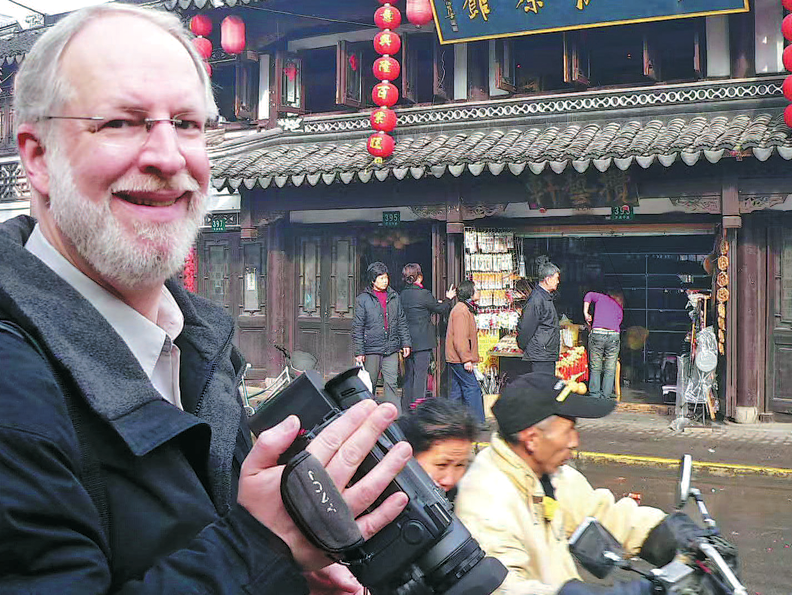
After the US accepted an invitation to travel to China and play exhibition matches against the Chinese team, it put in motion the start of the two countries beginning to connect and speak to each other. It was a big step forward, as there were no diplomatic ties and few contacts between the US and China after 1949.
“In the early 1970s, that was an era when, yes, America and China had no relationship, period,” he added. “And in public, there was this profound disagreement about virtually everything. But what the public didn’t know, in fact, what many people in the government didn’t know, is that the leadership in China and the leadership in the United States really wanted to talk to each other, but they couldn’t find a way to do it.”
US president Richard Nixon’s historic trip to China in February 1972 made him the first sitting US president to travel there. Along with Henry Kissinger, then assistant to the president for national security affairs, Nixon met Chairman Mao Zedong and Premier Zhou Enlai, a major step toward normalization between the two nations.
“Personally, I believe in the importance of people-to-people diplomacy,” Einreinhofer said. “They provide a back channel, if you will, for communication, for things you can’t necessarily say in front of the cameras, under the bright lights. Ideas you can try out, questions that may be a little forward.
“And as much as I think it is important for our leaders to meet, I would hope that the leaders also have an opportunity to meet some of their fellow countrymen who have been to this other place, who have specialized in this other place, to hear the story they have to tell, because there is wisdom in those stories, and often it helps us look beyond the very real differences that we have,” he said.
During his many trips to China, Einreinhofer said he was struck by people’s kindness after his day-to-day filming stopped.
“There’s a famous old saying, which I cannot say in Mandarin, but basically says that it’s wonderful to be able to greet a friend from afar.
“And, so, time and time again, I was that friend from afar and people I was working with, people who I covered, they’d invite me into their homes. They’d take me out to dinner because as Chinese, they felt this responsibility to be welcoming.”
His large body of work is now archived by The University of Southern California and is called the Bill Einreinhofer China Archive.
Hosted by USC’s East Asian Library, the vast collection includes more than 1,000 digital videos, text files, images and audio. The material is available for use by students, researchers and the public.
“As much as I like to think of myself as youthful, the fact of the matter is at 74, I am not,” he said candidly. “And over the course of over three decades, I put together what turned out to be one of the largest privately held libraries of Chinese footage about China in North America.”
Contact the writers at belindarobinson@chinadailyusa.com
