

Friends from afar share their Mid-Autumn Festival experiences and unifying power of celebrations
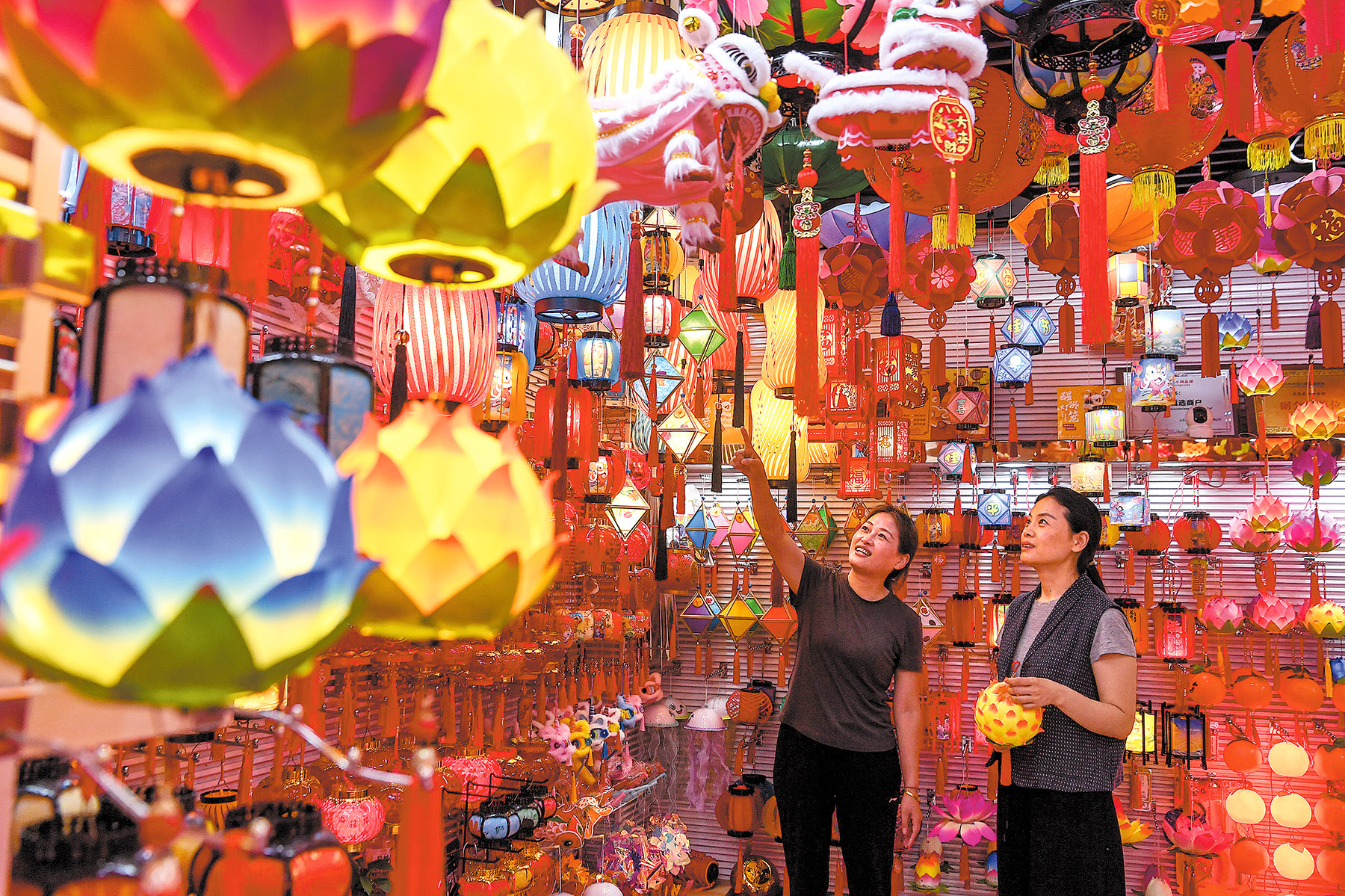
Mid-Autumn Festival is a Chinese celebration to be shared by everyone under the sun — and, especially, the moon.
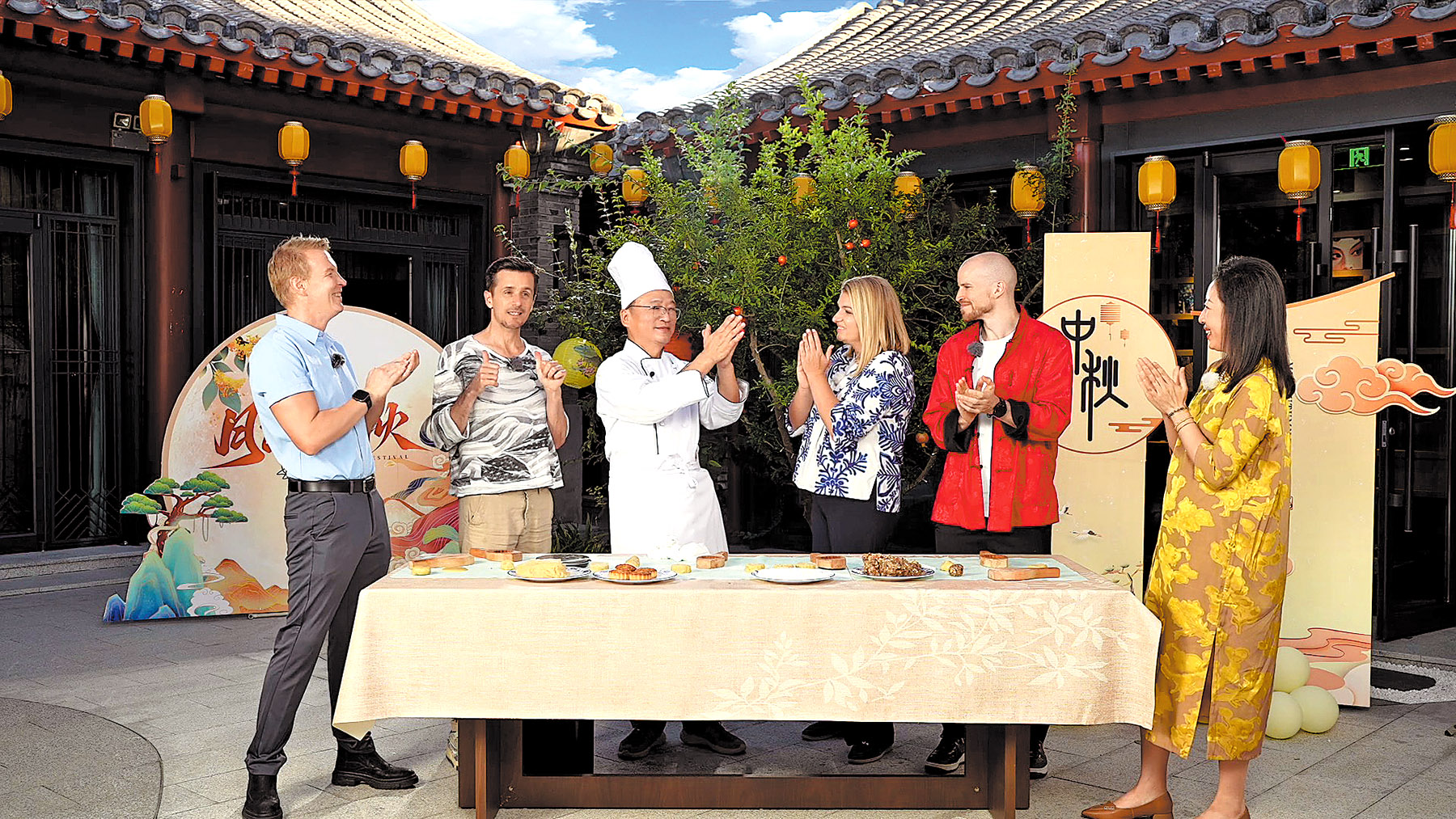
This sentiment was celebrated by storytellers and scholars from five countries and four continents at a recent Embracing Cultures salon that China Daily hosted in Beijing ahead of Mid-Autumn Festival, which fell on Sept 25.
Participants discussed the meanings of the festival and its motifs. They recited poems from China and their respective homelands; sang the 1970s Chinese pop song The Moon Represents My Heart to ukulele accompaniment; and made “eight-treasure” tijiang mooncakes — northern China-style mooncakes with firm, crumbly crust — under the tutelage of a master artisan from the time-honored Daoxiangcun bakery.
University of International Business and Economics associate professor Pella Karpathiotaki explained that her homeland, Greece, celebrates the August Full Moon Festival. Archaeological sites stay open after dark, museums are free, and concerts are staged around the country.
“People come out and … spend some time together,” she said. “It’s really nice.”
But they cherish the moon beyond this festival, she explained.
“It also has to do with the cycle of life and family and nature. All of these are related to Greek mythology, and also to modern Greece. The moon is related also to a kind of secret wisdom, and with the moon we never feel alone,” she said.
“It’s like a friend who follows us everywhere. The moon also carries messages to our loved ones. So, Greek people really love the moon. We spend many nights outdoors to look at the moon, and discuss with the moon, and try to find the solutions to our problems.”
Antoine Bunel — a popular media personality and self-described “foodie with a mission” from France — recalled spending his first Mid-Autumn holiday in China enjoying the festival’s signature pastry by the waterfront in the port city of Qingdao, Shandong province.
“We shared the mooncakes. You could hear the sound of the waves. We spent the whole night under the full moon,” he recalled.
“It was the first time I felt so connected to China.”
Australian martial artist Troy Sandford also highlighted connection as a unifying theme.
“Sometimes, when I look at the moon, I imagine the people I love around the world, and I’m not there with them. But if they are looking at the moon at the same time that I’m looking at the moon, we are together.”
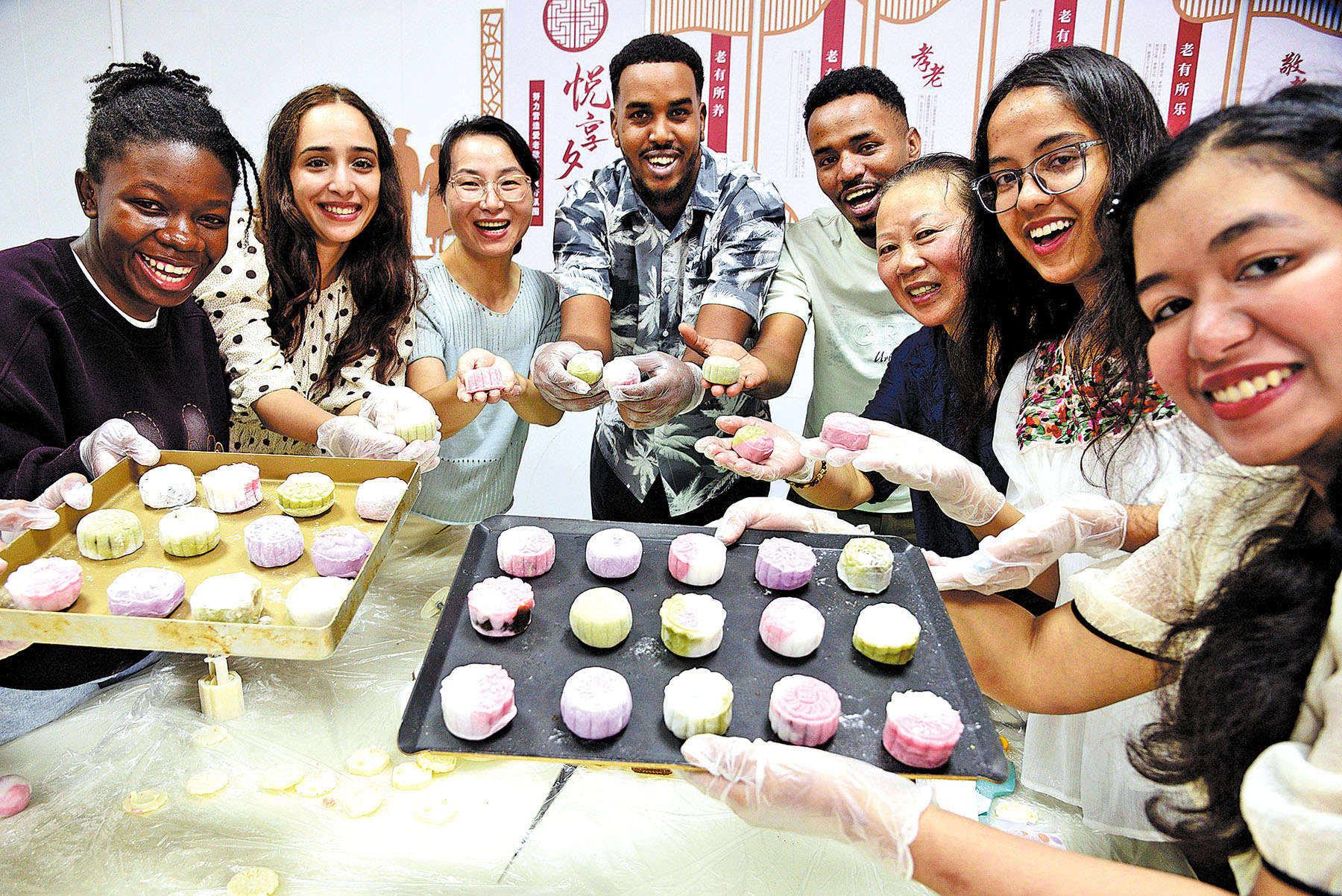
Sandford, who also works in film and video, employed a martial arts metaphor to explain the ethos behind mooncakes.
“In martial arts, we say that how you do one thing is how you do everything,” he said.
“So, how you speak, how you design — look at the beautiful art of the pastry behind this mooncake. This is incredible!”
He contrasted it with his native Australia.
“Maybe in our culture, we will make a cake, and the cake looks good — it tastes beautiful — but we don’t have such decorative elements inside our pastries as this. And everyone around China will share this.”
He said his homeland does not have any festival related to the moon, but he has “beautiful memories” of the Chinese Mid-Autumn Festival in Sydney’s Chinatown.
Bunel pointed out that France also does not have its own moon-related festival but likewise has people who celebrate the Chinese festival.
“It is a sort of fever that really spreads across the whole country — even the whole world,” Bunel said.
“I’m French. Thanksgiving is an American celebration, but we celebrate it in France. I see no reason why the citizens of the world just couldn’t enjoy any festival from anywhere, right? It’s just that there is no bad reason to party or to celebrate,” he continued.
“Life is hard. We work. We have to do all those things, right? So, why not have a little bit of extra fun and delicious food and socialize with friends? I absolutely encourage anyone anywhere to go and celebrate the Chinese festivals and discover the food culture.”
Karpathiotaki said festivals can serve as a “bridge between different cultures”.
“We can sit at the same table. We can share food. We can discuss. And it seems like we say: ‘I’m from here; you’re from there; but tonight we are together’,” she said.
“Sometimes we don’t understand the background of the festival, but we can understand the feeling.”
Sandford said China is the perfect place for him to live and grow as a person. He wants to integrate, stay long-term, and embrace the Chinese work ethic.
“China is where I feel really at home spiritually, because I like to work hard,” he said.
“I like to be around other people who are working hard. I like to do industrious things. But there is a balance in life that must be maintained. And if you are working yourself crazy all the time, then crazy things are going to happen.”
Sandford said that in Australia, public holidays like Christmas and Boxing Day last one day. In China, by contrast, some festivals stretch for three, four, five days — even a week or two.
“As hard as the Chinese work, they also really like to relax and have their downtime,” he said.
“Martial artists — we do the same. We exercise, we train hard, but then we balance that out with meditation. We balance it out with music. There must be a balance.”
Bunel recalled learning the Chinese word for “moon” when he was in Chongqing in 2008.
He was picking up a handful of words at a time from a little book and writing them down with a pen.
One day, he wanted to talk about the moon, and realized he did not know the word for it.
So, he played with the words he did know, trying to make himself understood.
What he came up with was this: “I said, ‘the sun’s girlfriend’. Half of the Chinese were very puzzled, and half of them got it.
“In life, you do have to be creative sometimes, and never be stuck. When you don’t know something, you have to play with what you know to figure out a way. And often, like a puzzle, your mistakes will actually generate conversation, will generate laughter, will generate interest.
“So, be humble. Be brave. Be creative. Be joyful in your learning. It will lead to amazing encounters and discoveries.”
The guests also suggested destinations for people who hope to take the Mid-Autumn and adjacent National Day Golden Week holidays as opportunities to travel in China.
“I feel the magic of Mid-Autumn Festival is strongest here,” Sandford said, referring to Beijing.
“Perhaps it’s just because the seasonal beauty of autumn is the most obvious in northern China. I feel it to be very strong here.”
Karpathiotaki suggested Qingdao, which she says reminds her of her home in Crete.
“The culture and the hospitality of the people there are very unique. They invited me to their home. They shared with me whatever they had. I felt really good. I felt like (I was) at home.”
Bunel said he believes travelers should consider not only tourist attractions but also local cuisine.
“For example, if you’re into pandas and you like spicy food, then of course, Sichuan (province) is a great place. If you’re looking for soft food and want to relax, Fujian province has delicious food — it’s not so spicy, and most of it is very fresh ginger and seafood. If you’re into lamb and beef, and you’re into history, go to Xi’an (Shaanxi province). And (Xi’an’s) night market is an absolute must, along with the Terracotta Warriors.”
But beyond specific Chinese destinations, salon participants agreed that wherever you are and wherever you go, we are all part of the same world, under the same moon.
Mid-Autumn Festival offers not only a chance to celebrate the season but also to look up at the heavens, into our hearts and into one another’s, too.
Contact the writers at erik_nilsson@chinadaily.com.cn
