

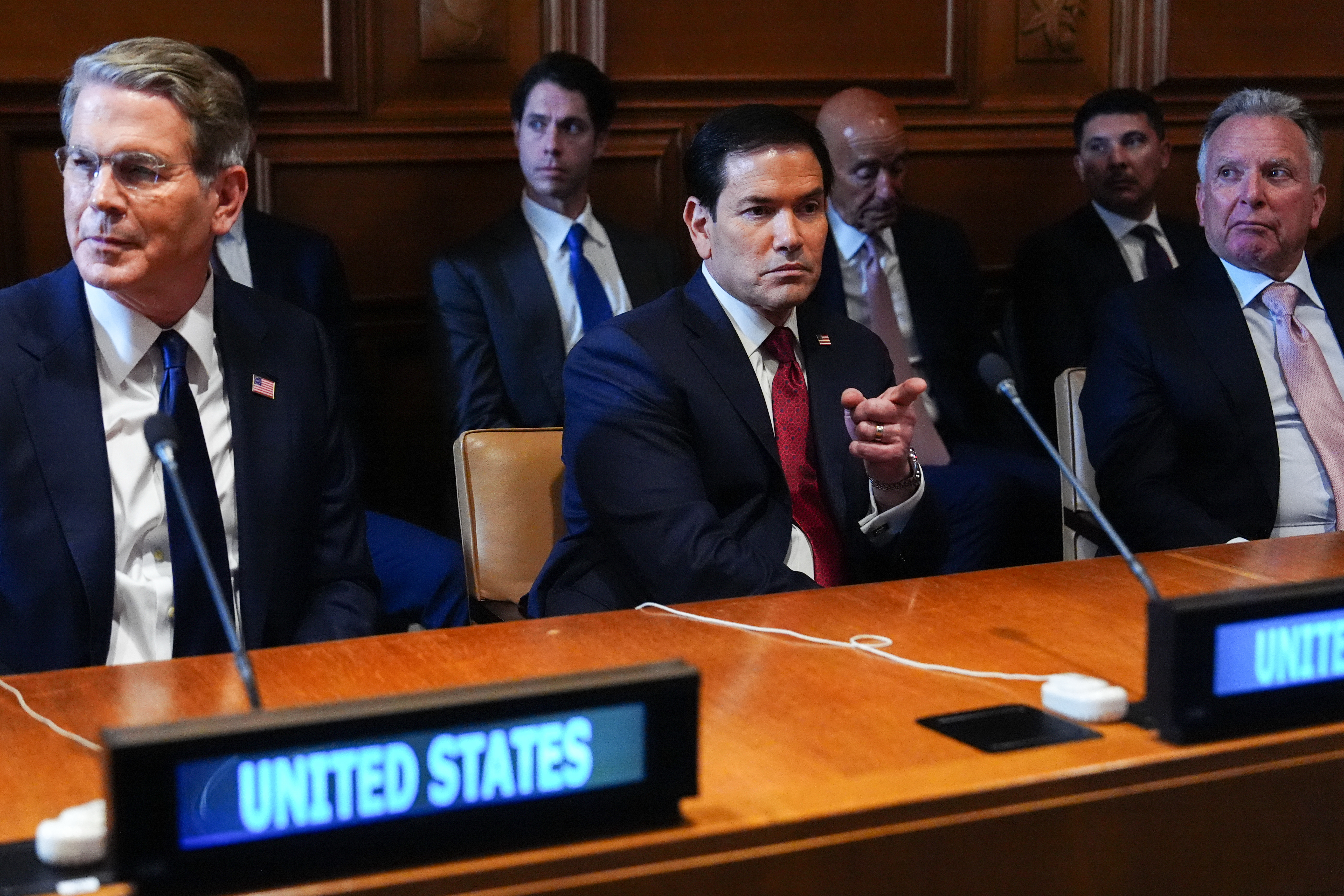
WASHINGTON/TEHRAN/MOSCOW ― US President Donald Trump said Tuesday that his special envoys, Steve Witkoff and Jared Kushner, held three-hour talks with Iranian officials on the sidelines of the UN General Debate in New York.
"It was a very good meeting," Trump told reporters, adding "I can't imagine why they wouldn't want to do it," referring to the possibility of a US-Iran deal. "It's potential greatness or obliteration. It's two choices."
Iranian President Masoud Pezeshkian and Foreign Minister Seyed Abbas Araghchi were in New York to attend UN meetings.
Iran 'conveys decisive positions'
Araghchi on Tuesday conveyed the country's "decisive positions" regarding the reopening of the Strait of Hormuz to the US, state-run IRIB news agency reported.
Citing its exclusive source, the IRIB said Iran's positions were relayed to the US side in a meeting between Araghchi and Witkoff on the sidelines of the 81st session of the United Nations General Assembly.
According to the report, among Iran's conditions for the waterway's reopening are lifting the US naval blockade, releasing frozen Iranian assets, and ending the war in the region on all fronts.
Trump 'open' to Iran meeting
Meanwhile, Trump is open to meeting Pezeshkian or other Iranian officials on the sidelines of the United Nations General Assembly, US Secretary of State Marco Rubio said Tuesday.
"I think the president is open to a meeting with him or anybody," Rubio said in an interview with Fox News when asked whether Trump would meet Pezeshkian.
"Whether something productive will come out of it, it's harder to tell because the ultimate decision-maker in Iran is the supreme leader," Rubio added.
ALSO READ: IRGC: Iran to change war's ‘geography’ if under new ‘invasion’
In a separate interview with NBC's "Today" on Tuesday, Rubio reiterated that Washington was open to talks with the Iranian delegation, but said no meeting had been scheduled.
"I don't think anything is scheduled at this point," he said, adding that a meeting would be worthwhile "if it has the prospects of leading to something positive and ultimately achieving the goal of what this is all about, and that is the fact that Iran can never have a nuclear weapon."
Technological infrastructure to make missiles
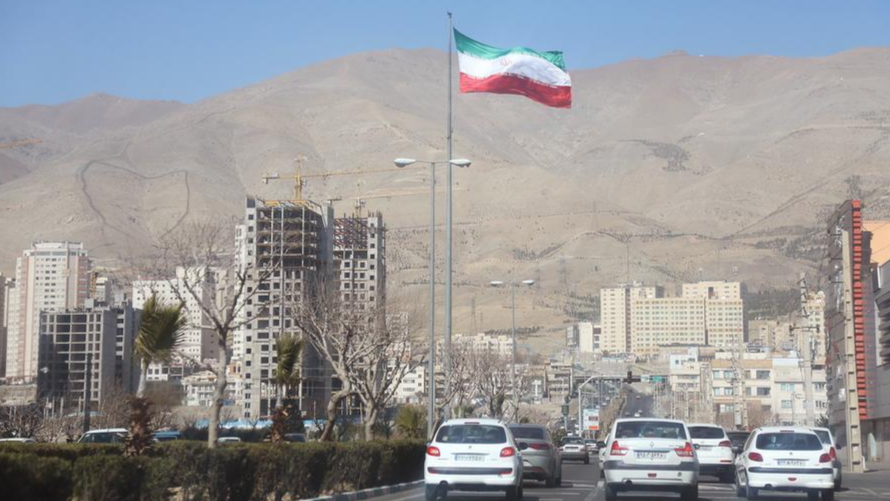
Iran's Islamic Revolutionary Guard Corps (IRGC) announced on Tuesday that the country possesses the technological infrastructure to make missiles with significantly longer ranges.
IRGC spokesman Hossein Mohebbi made the announcement in an interview with the official news agency IRNA, stressing that a political decision needs to be made within the country regarding the production of such missiles.
Mohebbi noted that in any confrontation, Iran will unveil new weapons with new ranges, precision and destructive power, emphasizing that battlefield is the best place to test new weapons.
He said Iran recently tested a new missile on an aircraft carrier and a warship both belonging to the US, adding the missile hit the aircraft carrier, which was within a range of 500 km.
Mohebbi explained that the strike did not disable the US aircraft carrier, but caused damage to it, saying Iran maintains that the strike inflicted casualties, although the US did not announce that.
Putin, Saudi crown prince discuss ME crisis
Russian President Vladimir Putin and Saudi Crown Prince and Prime Minister Mohammed bin Salman Al Saud held a phone conversation on Tuesday, stressing that political and diplomatic efforts are the only path to defuse the ongoing crisis across the Middle East.
During the talks, the two leaders exchanged views on multiple regional issues, with a focus on the situation in the Persian Gulf, the Kremlin said in an official statement.
The statement underscores that sustained political and diplomatic engagement is indispensable for stabilizing the lingering crisis, while fully accommodating the legitimate interests of all parties concerned.
In light of the deteriorating military and geopolitical conditions in Yemen, the two sides reaffirmed the urgency of an early ceasefire and the need to create enabling conditions for constructive intra-Yemeni dialogue under United Nations auspices, according to the Kremlin.
The leaders also highlighted the significance of ensuring safe and unimpeded maritime passage through key regional international waterways, including the Bab el-Mandeb Strait and the Strait of Hormuz.
Both sides expressed satisfaction with the robust state of bilateral cooperation across political, trade and economic, and humanitarian fields. They also pledged to maintain multi-level exchanges and continuous diplomatic contacts.
