

Event to gauge progress of broader strategy to build nation into sports 'powerhouse'
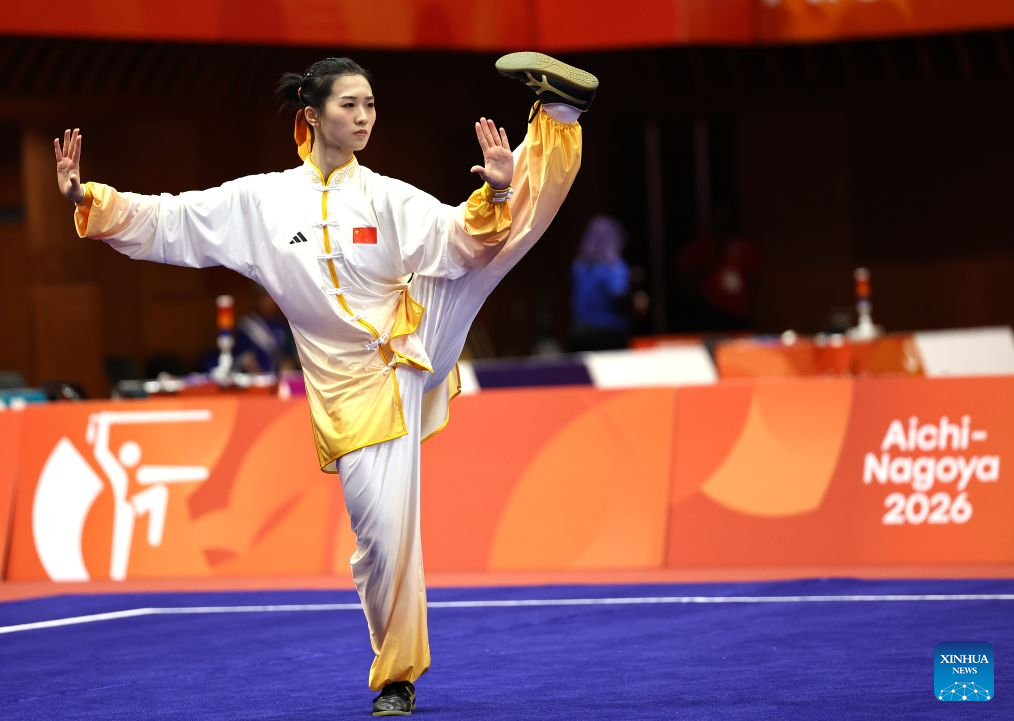
China has topped the medal table at the Asian Games on 11 consecutive occasions. While they are aiming for 12 in a row at the Aichi-Nagoya Asian Games, the success of their campaign in Japan will not be judged solely by the final tally of gold medals.
As the competition unfolds, the Games will test whether China can turn dominance in its traditional strongholds into a broader and more balanced sporting strength. That means building greater depth in athletics, swimming and aquatic sports, and seeking improvement in football, basketball and volleyball.
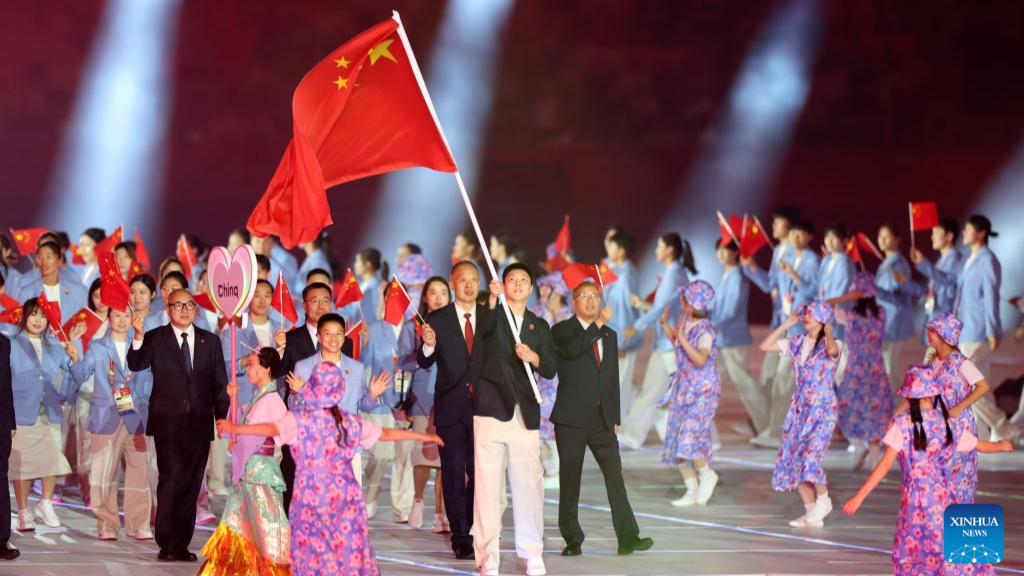
China has sent 815 athletes as part of its 1,274-member delegation to compete in 38 sports and 369 events. The athletes have an average age of 24, and 548 of them — nearly two-thirds of the team — are making their Asian Games debuts, placing generational renewal at the heart of the campaign.
The Aichi-Nagoya Asian Games, which run from Sept 19 to Oct 4, will also offer a good indication of how the country's competitiveness in a broad range of sports is evolving in the run-up to the 2028 Summer Olympics in Los Angeles.
The framework for that assessment is the "633" strategy set out in the 15th Five-Year Plan (2026-30) for sports development, released by the General Administration of Sport of China in July. Sports administrators' stated goal is to build the country into a sports powerhouse.
ALSO READ: China aims to achieve leading sporting nation status by 2030
The 633 plan places 12 sports into three categories. They are the six traditional strengths — diving, gymnastics, weightlifting, shooting, table tennis and badminton; three foundational sports — athletics, swimming and water sports; and the three major ball sports — football, basketball and volleyball.
At a State Council Information Office news conference in Beijing on Sept 3, Gao Zhidan, minister of the General Administration of Sport of China, said the country would "promote the comprehensive and balanced development of competitive sports". This, he said, requires a strategic shift from "making breakthroughs in key areas" to "comprehensive development" centered on the 633 sports during the five-year period.
The Aichi-Nagoya Games provide a snapshot of that transition, with different sports facing different questions — from maintaining established advantages and renewing talent to expanding the competitive base and rebuilding strength in the three major ball sports.
Consolidating strengths
The plan calls for China to consolidate the foundations of its six traditional powerhouse sports and continue world-class standards. Yet each sport faces a different challenge in Nagoya.
For diving and table tennis, the immediate question is whether China's commanding position in both sports can be maintained.
Olympic champions Chen Yiwen, Chen Yuxi and Wang Zongyuan head China's diving team. China swept all 10 diving gold medals at the Hangzhou Asian Games and will again seek a clean sweep in Nagoya, while the development of the next generation of divers will also be closely watched.
China's table tennis team features Olympic champions Sun Yingsha, Wang Manyu and Wang Chuqin, all of whom are competing at their third Asian Games.
"The three Olympic champions pass on their experience to the seven young players, while the younger ones bring passion and drive to inspire the Olympic medalists," team head coach Qin Zhijian said.
With Japan and the Republic of Korea among their main rivals, China will seek to maintain its overall advantage while also seeing how younger players handle a packed schedule and high-pressure matches.
Coach Qin said the Chinese table tennis team had to maintain a positive mindset when facing challenges at different stages, "getting stronger when facing stronger opponents". "We will go all out for gold in all seven events at the Asian Games," he said.
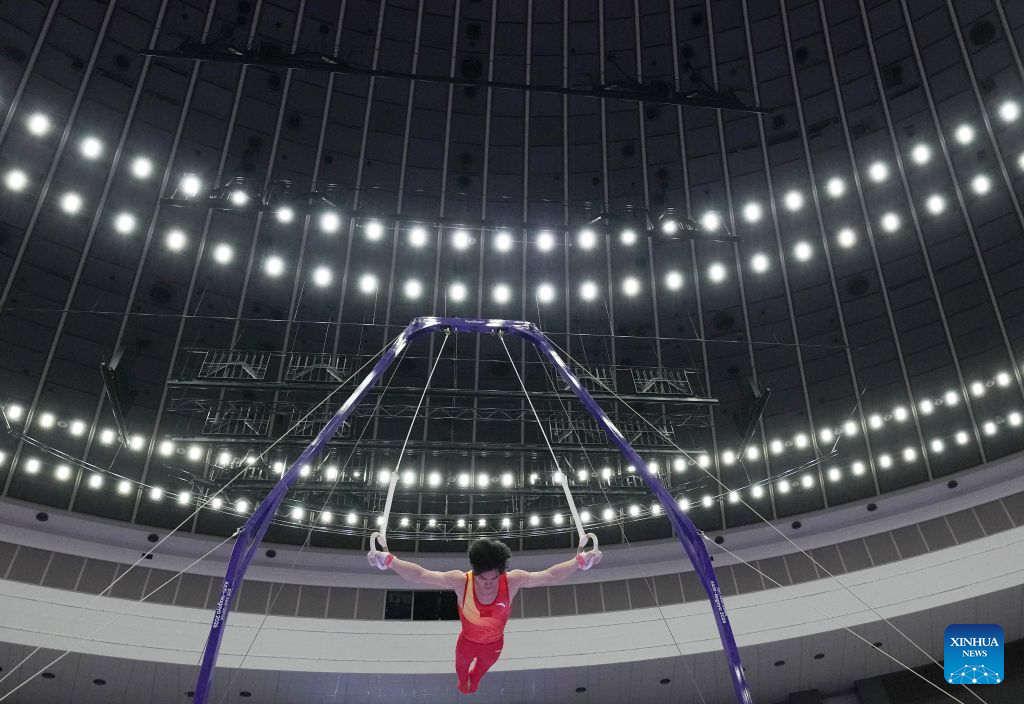
Gymnastics, shooting and badminton also face pressure from the growing strength of Asian rivals. Teams from Japan and the Republic of Korea have continued to improve in recent years, forcing China to defend its traditional advantages while responding to stronger competition in team events, individual disciplines and youth development.
In weightlifting, a new weight-class system has been introduced for the Los Angeles Olympics, making the Nagoya Games the first major multisport event under the revised structure. Of China's 10 weightlifters, eight have never previously competed at a major multisport event. The younger athletes will have to adapt to the new weight classes and rules while handling the pressure of a major international competition.
Widening base
Athletics, swimming and water sports have a large number of events and strong competition, making them important indicators of the depth of China's sports system.
The new sports development plan calls for stronger talent pipelines and improved training, competition preparation, management and support systems in the three sports.
China has sent 72 athletics competitors, the largest sport delegation within the Chinese contingent.
Women's throwing events are among the key medal targets. Eighteen-year-old Yan Ziyi threw 71.74 meters in the women's javelin this year, setting an Asian record, and is expected to challenge for gold in Nagoya.
In the women's hammer throw, Zhao Jie and Zhang Jiale are two medal contenders, while world-class discus thrower Feng Bin will seek to defend her title.
In the track events, 17-year-old Chen Yujie is making her Asian Games debut. She recently lowered the Asian junior record in the women's 100 meters to 11.08 seconds and will compete in the 100m, 200m and relay events. The emergence of young athletes reflects China's effort to develop strength across a broader range of disciplines.
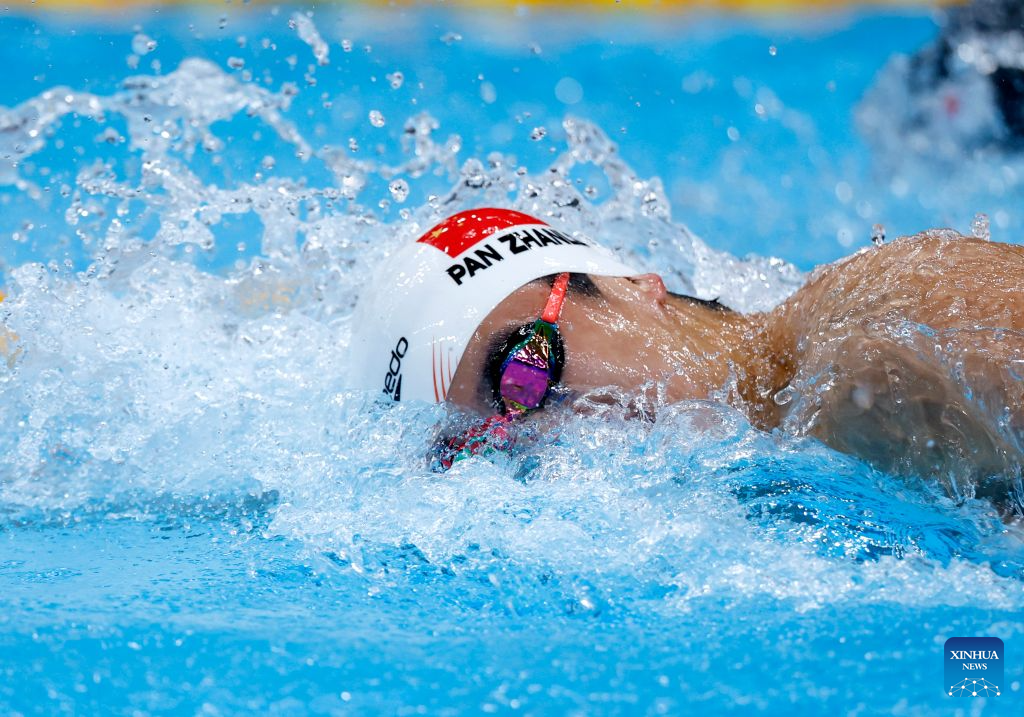
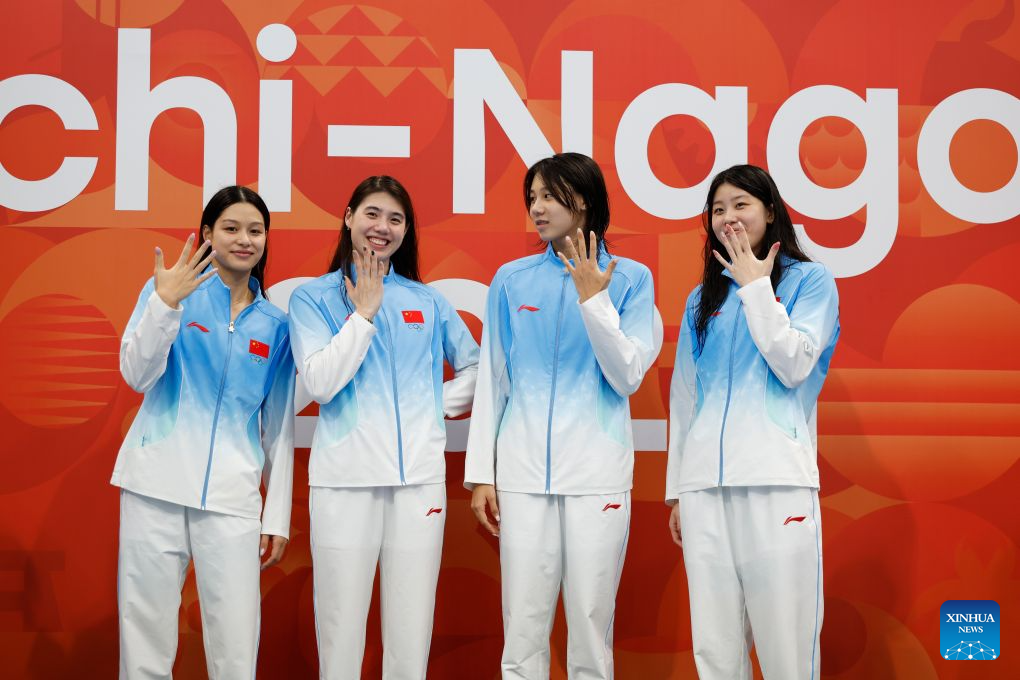
In swimming, another foundational sport, a total of 41 gold medals are at stake at the Games, with China sending 44 swimmers. Olympic champions Wang Shun, Zhang Yufei and Pan Zhanle are among the team's leading medal contenders, while young swimmers Yu Zidi and Zhang Zhanshuo are expected to make major breakthroughs.
Yu immediately provided one of the clearest signs of that generational transition on the opening day of the swimming program. Aged just 13, she won the women's 200m butterfly in 2:05.08 seconds, breaking the Asian Games record, while teammate Chang Mohan took silver.
ALSO READ: Asian Games: China's Yu Zidi, 13, sets swimming Asian record
Other aquatic sports also provide fresh avenues for expanding China's medal-winning potential. China is strong in multiple rowing events, while canoe sprint and canoe slalom will also provide medal prospects. Yang Siqi will seek the first Asian Games gold medal in surfing.
Bouncing back
Compared with individual sports, football, basketball and volleyball provide a tougher test of the progress made in youth development systems, professional leagues, training quality and team culture. They are also among the most closely watched sports in the 633 strategy.
Gao has said the revitalization of the three major ball sports "is the expectation of the people and also a key focus of the sports authorities".
He also singled out the women's volleyball team, and the hope it would "rebuild confidence at the Asian Games, regain the trust of people across the country, fight back at the Asian Games and take the lead in the revitalization of the three major ball sports".
China's women's volleyball team arrived in Nagoya after losing 3-2 to Thailand in the final of the Asian Championship and missing out on direct qualification for the Los Angeles Olympics.
Player Wang Mengjie said: "Actually, I think the experience of failure can touch us more deeply. It allows this team to recognize what we need most right now, and I hope we can grow quickly."
Seeking to defend its Asian Games title, China beat Thailand 3-2 in the semifinal on Monday to reach the final, giving the team a timely boost as it works to rebuild confidence and develop greater cohesion within the squad.
China's men's basketball team provided a more immediate indication of the difficulty of the challenge ahead. After losing 77-97 to hosts Japan in the semifinal, China then fell 70-79 to Iran in the bronze-medal match on Sept 20, finishing fourth.
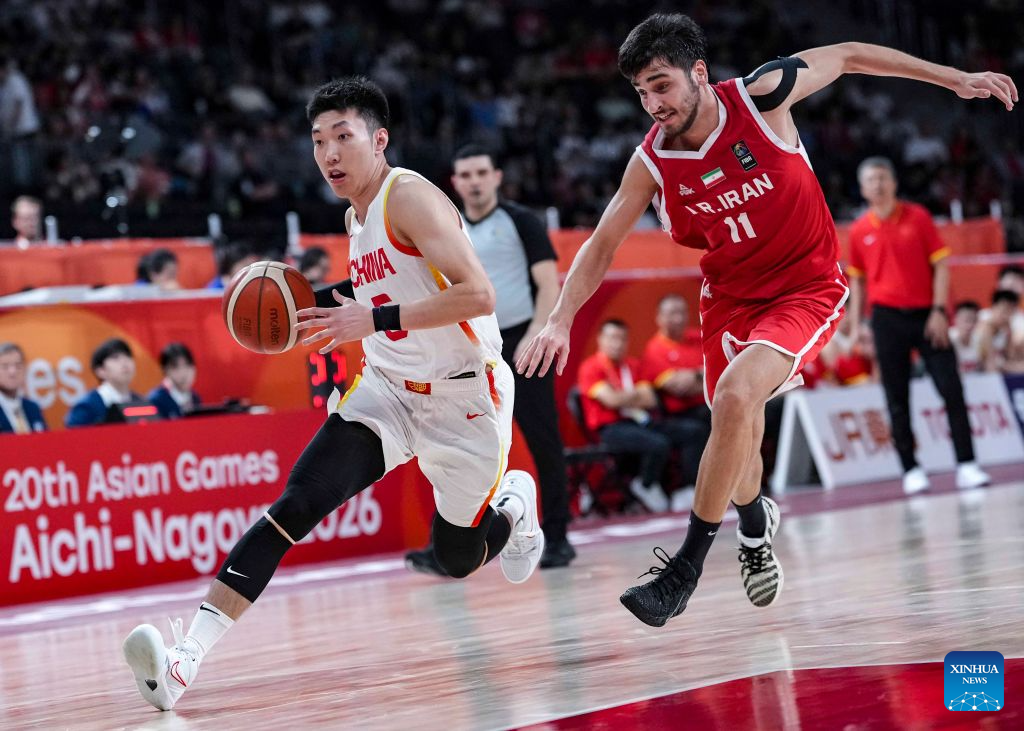
The Nagoya campaign exposed a number of issues that the team will need to analyze and address as it looks to improve its overall competitiveness.
"The level of basketball across Asia is improving. Teams in both East Asia and West Asia are making progress," head coach Guo Shiqiang said.
"But compared with European teams and the world's top teams, we still have some gaps in individual ability, game intensity and physical confrontations," he said.
ALSO READ: Asian Games: China storms opening day with golds, world record, swimming dominance
China's women's basketball team is seeking a third consecutive Asian Games title, although star players Han Xu and Li Yueru are not on the roster. Nineteen-year-old Zhang Ziyu has attracted considerable attention, while the host Japan remains a major rival. China will look for a winning edge through team defense, outside shooting and tactical adjustments.
Results in football must likewise be viewed in the context of rebuilding and talent development.
China's women's team has retained core players including Wang Shuang, Zhang Linyan and Wu Haiyan while bringing in more young talent, using the Asian Games to develop tactical cohesion and assess newcomers ahead of the 2027 Women's World Cup.
China's men's team is built around the squad that finished runner-up at this year's AFC U23 Asian Cup, supplemented by three older players — Wu Xi, Zhang Yuning and Zhu Chenjie.
After opening their campaign with a 2-1 victory over the Democratic People's Republic of Korea, China drew 0-0 with Iran in their second group match.
The two matches provided an early test of how the young squad can translate individual ability into consistent team performance, while gaining valuable experience as the team continues its rebuilding process.
Gao previously summarized the development direction of the 633 sports as "consolidating strengths, expanding the competitive base, reinforcing the foundations and making breakthroughs in key areas".
The Nagoya Asian Games will offer a concentrated test of that approach in the coming weeks.
Contact the writer at liyingxue@chinadaily.com.cn
