

Hong Kong has entered a new phase of development.
 The clearest signal came on Sept 16 when Chief Executive John Lee Ka-chiu unveiled the Hong Kong Special Administrative Region’s first five-year plan along with the 2026 Policy Address. The two documents are more than another set of government plans. Taken together, they mark a significant new stage in the implementation of “one country, two systems” and in the way Hong Kong charts its future.
For decades, Hong Kong's policy-making has largely operated on an annual cycle. The inaugural five-year plan introduces a longer horizon. It sets out broad directions for the city's development from 2026 to 2030, covering economic development, technological advancement, livelihood improvement and governance. The Policy Address, in turn, translates those directions into policies and concrete measures.
This gives Hong Kong something it has often lacked -- a greater degree of continuity and predictability in policy making. That matters at a time when the world is becoming more volatile and technological change is accelerating. Hong Kong’s close alignment with the national 15th Five-Year Plan (2026-30) gives the SAR access not only to a broad strategic vision, but also to the resources, markets and technological capabilities of the world’s second-largest economy. It provides an anchor for long-term development without requiring Hong Kong to stand still when circumstances change.
Indeed, alignment should not be confused with rigid conformity.
The development of the space economy offers a telling example. As Hong Kong has gained a better understanding of the technological advances driving the nation’s rapidly expanding space sector, it has become clearer how the city can contribute. The 2026 Policy Address, therefore, goes beyond broad support for the sector and identifies more specific opportunities in deep-space exploration and commercial aerospace. Hong Kong may not build the rockets, but it can provide Chinese mainland aerospace companies with sophisticated legal, financial and professional services and help them reach international markets.
That is precisely where Hong Kong’s value lies -- not in trying to replicate what the mainland does best, but in finding where its own strengths can complement the mainland's capabilities.
The same principle applies to industrial policy.
A more active role for government does not mean replacing the market. On the contrary, the success of Hong Kong’s new industrial strategy will ultimately depend on private-sector participation and investment. To accelerate the development of technology hubs in the Northern Metropolis, the SAR government has established three companies to streamline participation by the private sector and facilitate co-investment.
The planned university towns offer another example. The government intends to set aside up to 1,000 hectares of land in San Tin, Hung Shui Kiu and Ta Kwu Ling for university development. But the government cannot manufacture world-class universities by administrative decree. Universities themselves will have to bid for the land, attract partners and investors, and turn the proposed integration of research, education and industry into viable institutions.
This is a different model of government -- setting direction, creating conditions and mobilizing resources, while leaving considerable room for markets and institutions to determine what works.It is also a model made more feasible by Hong Kong’s changing political and institutional environment. The government now has greater scope to take a long-term view, consult on policy choices and implement decisions without the same pressures that can encourage short-term political calculation. The test, of course, is whether this greater capacity for action will be matched by rigorous consultation, transparency and accountability.
The headline priorities are already familiar: strengthening Hong Kong’s four traditional and emerging centers of international finance, maritime and aviation services, international trade, and innovation and technology; while developing the city as a hub for high-caliber talent.
But some of the most consequential elements of the Policy Address may be less conspicuous.
Consider the accelerating integration of the Guangdong-Hong Kong-Macao Greater Bay Area. Its significance extends well beyond easier movement of people and goods. Hong Kong will increasingly become part of mainland industrial and technological value chains, opening opportunities in areas ranging from sustainable aviation fuel to advanced manufacturing. At the same time, technologies developed and deployed on the mainland can be adapted for Hong Kong, potentially reducing costs and improving the efficiency of public services.
The mainland’s experience in this area is impossible to ignore. The mainland has moved remarkably quickly in applying new technologies to the management of densely populated cities, climate-resilient infrastructure and disaster prevention and response. Artificial intelligence, in particular, is being deployed at scale in urban management.
Hong Kong is now seeking to draw on that experience through the proposed “AI City Brain” -- an integrated system intended to improve the way the city manages its infrastructure and public services.
Other seemingly technical measures could prove equally significant, such as closer cross-boundary cooperation in fire services, improvements to the 999 emergency call system and stronger district governance. Individually, these may appear mundane. Collectively, they point toward a more technologically enabled and integrated approach to managing a modern metropolis.
Learning from the mainland in these areas should not be mistaken for a diminution of Hong Kong’s importance. Quite the opposite.
The five-year plan and the Policy Address make clear that Hong Kong retains functions that are difficult for mainland cities to replicate. Its international financial system, global networks, common-law framework, professional services and long-established connections with international markets give it a distinctive role in the nation’s development.
Hong Kong remains particularly important to the internationalization of the renminbi, the development of the mainland’s financial architecture and the expansion of mainland enterprises overseas. Its geographical position also gives it a natural role as a bridge to the Belt and Road Initiative economies and the rapidly growing markets of the Association of Southeast Asian Nations.
The deeper message of the first five-year plan, therefore, is not that Hong Kong is being asked to become more like the mainland. It is being asked to become more deeply integrated with rapid national development while making better use of what makes Hong Kong distinctive.
That requires a change in mindset as much as a change in policy.
For years, Hong Kong’s debate about its future has too often been framed as a choice between preserving the city’s traditional advantages and embracing the opportunities of the mainland’s development. The five-year plan suggests a different proposition: The two can reinforce each other.
Beijing has provided Hong Kong with a clearer long-term framework and a broader vision of where the national economy is heading. The SAR now has to demonstrate that it can turn that vision into its own opportunities.
The plan sets the direction. The real story begins with what Hong Kong does with it.
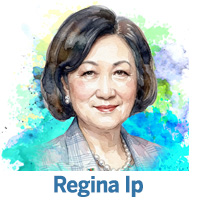
The author is convenor of the Executive Council of the Hong Kong Special Administrative Region.
The views do not necessarily reflect those of China Daily.
