

Von der Leyen proposes associate membership for Ottawa in speech
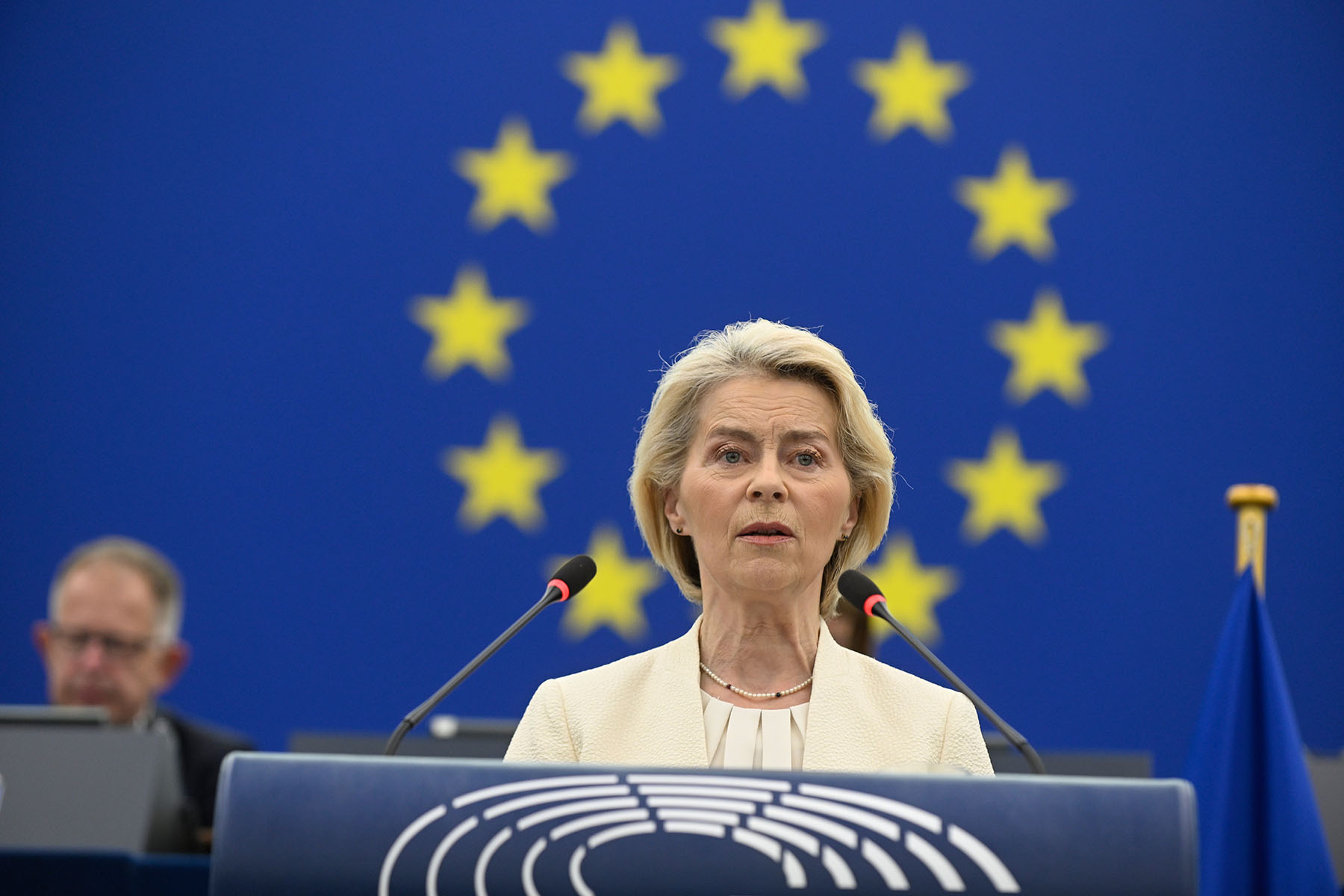
European Commission President Ursula von der Leyen on Wednesday proposed opening the door for Canada to become the first "associate member" of the European Union, as she unveiled plans for closer security cooperation and stricter bans on children's social media use.
In her annual State of the Union address to the European Parliament in Strasbourg, France, von der Leyen said the EU and Canada would seek to upgrade their ties from the Comprehensive Economic and Trade Agreement to an "Alliance for the Future", covering manufacturing, technology, defense, the Arctic, energy, critical minerals and artificial intelligence.
"I would like to work with you on opening the door for Canada to be the first associate member of the EU," she told Canadian Prime Minister Mark Carney, who attended the address.
"We see the world with the same eyes: from AI to climate change, from the Arctic to geopolitics," she said, adding that she wants to bring the relationship with Canada to "the highest level possible".
READ MORE: US-Canada trade tensions escalate as Trump tightens tariffs
Von der Leyen also proposed what she called "Europe's own Article 4", modeled on NATO's consultation mechanism, under which EU member states will convene when one country believes its territory is under threat.
She further proposed creating a European Security Council involving EU leaders and partners including Canada, Norway, Ukraine and Britain.
The State of the Union address sets out the commission president's priorities for the EU for the coming year and is the centerpiece of the European Parliament's four-day plenary session, which opened on Monday.
Among her audience is Carney, who is the first foreign head of government to attend the European Commission president's State of the Union address.
Carney will address the European Parliament on Thursday, outlining his vision for "a unique alliance" between Canada and Europe.
Such a move would be sure to be noticed by the government of the US, whose relationships with both the EU and Canada have become increasingly strained recently.
Von der Leyen was keen to point out, however, that such a partnership would not be at the expense of existing relationships, adding "this is a partnership not against anyone else".
"Partnerships are a strategic choice for Europe," she said. "But they also respond to the fracture in the international rules-based system," she added.
Unity stressed
Von der Leyen also spoke of the importance of unity between European nations when confronted with "an openly hostile world".
"A territorial war of aggression is raging on our continent; others have erupted nearby. A fight for industrial capacities is shaping global competition. And a battle of narratives is seeking to weaken confidence in Europe," she said.
She also mentioned non-EU member states Ukraine and Greenland when saying how Europe "is better able to defend itself than ever before", without naming the United States, and spoke of attempts to "drive a wedge between us, sometimes from the outside and too often from the inside".
She proposed creating a European Security Council that could bring together the EU and partners such as Canada, Britain and Norway and establishing an "emergency security protocol" to allow EU members to trigger discussions to respond to crises.
ALSO READ: EU unveils 200m euro Greenland investment package
Von der Leyen identified climate change and AI as two great challenges that could define Europe's future, and said that the EU wanted to talk to the world's leading AI labs about "how we can support ongoing industry efforts to pace the frontier", and said it would work with partners including Canada and the United Kingdom on the issue.
She promised a new "heat wave plan" in the aftermath of Europe's baking hot summer, which saw widespread forest fires across the continent, and also pledged the EU's "strongest-ever support to Ukraine" during the coming winter.
The top official also proposed on Wednesday banning children under 13 across the 27-nation bloc from using social media sites and imposing limits for older teens on accessing the platforms.
Von der Leyen said that under her proposal, "mini accounts" chaperoned by guardians would be granted to children aged 13-15, with limits on features and the amount of time they can be accessed.
Xinhua and agencies contributed to this story.
Contact the writers at julian@mail.chinadailyuk.com
