

Amid Hubei's black rice fields, young researchers are bringing scientific ideas while discovering the enduring value of farmers' traditional wisdom.
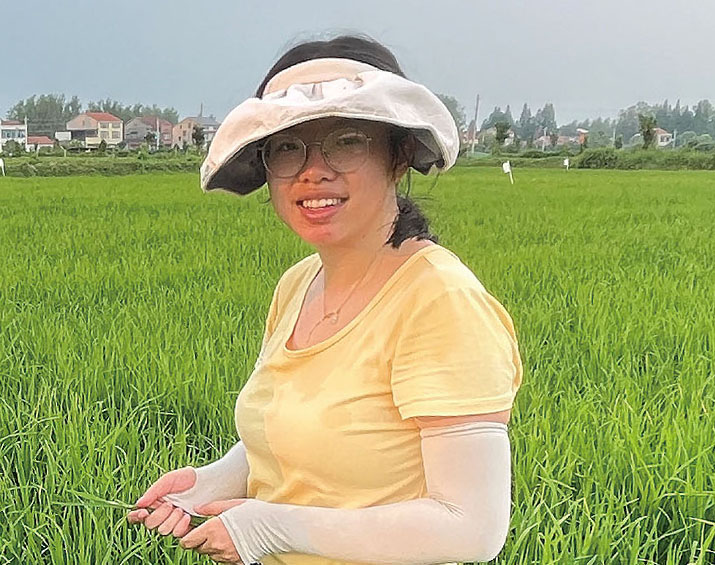
In Xingguang village, Hubei province, grows a special black rice that is sweeter and chewier than ordinary rice. Every time 27-year-old Xie Meiqi tastes it, she remembers the days she spent nurturing the rice in the village's fields.
Xie, from Shaoyang in Hunan province, is a student at Huazhong Agricultural University (HZAU). Over the past six years, she has made annual two-month trips to the village, helping refine the cultivation of black rice. At the heart of her research is the very farming system that nurtures the crop — the "rice-duck-crayfish" model.
Each March, crayfish are introduced into the paddies, where their waste enriches the soil. Rice seedlings are planted in June as the crayfish are harvested, giving farmers their first income of the season.
As the rice grows, farmers release ducks into the paddies to feed on weeds and insects, while their droppings provide additional nutrients until the October harvest.
"I came here to learn how this model really works," Xie said. "Behind it lies the Chinese agricultural wisdom of living in harmony with nature."
With that in mind, Xie went from house to house talking with farmers and joined them in the fields. But the deeper she looked, the more she realized that beneath this seemingly well-functioning model, a tricky problem lurked.
Rethinking habits
In the field, Xie gently parted curled rice leaves with her hands and found semi-translucent, caterpillar-like pests known as "rice leaf folders" scattered across them. Tracing the stalk downward, she found another pest, the striped stem borer (Chilo suppressalis). She quickly realized that pest infestations posed a serious threat to the "rice-duck-crayfish" model.
"What makes pest control in Xingguang village tricky is the mix of pest species, whose patterns shift with the weather and are hard to predict," she said.
Unable to forecast these pest patterns, local villagers had tended to go to two extremes: they either used less pesticide to protect the crayfish, at the expense of rice quality, or over-sprayed in the hope of wiping out pests completely.
For Xie, a young agricultural worker committed to sustainability, environmentally harmful over-spraying was the greater concern.
"Overusing pesticides damages the ecosystem. It is a very outdated farming mindset," Xie noted, adding that she wanted to introduce the villagers to "greener agriculture".
Yet changing the farmers' long-held habits was no easy task.
At first, she went door to door explaining how pesticides could be used more selectively. Her youth, together with the standard Mandarin that marked her as an outsider in a village where many residents spoke the local dialect, made it difficult to earn farmers' trust.
Gradually, she learned to communicate with them on their own terms. Instead of presenting pest-control data, she took a sweep net into the fields and showed farmers what she collected. The net contained not only crop pests, but also natural predators such as spiders.
Seeing the evidence firsthand helped villagers understand that indiscriminate pesticide use could disrupt the ecological balance by killing beneficial species as well as pests.
Some began asking about more targeted pest-control methods, giving Xie the chance to recommend a "green pest control" approach — fewer pesticide applications, supplemented by pheromone traps and the release of natural predators. Her method allowed rice, ducks and crayfish to grow safely without harming one another, while also protecting the local environment.
The approach has since been widely adopted in Xingguang. For Xie, the experience also offered lessons no classroom could provide.
"Here, I learned that young agricultural workers don't just tackle scientific challenges — they also need to understand farmers' concerns and put themselves in their shoes," Xie remarked.
Vaccinating fields
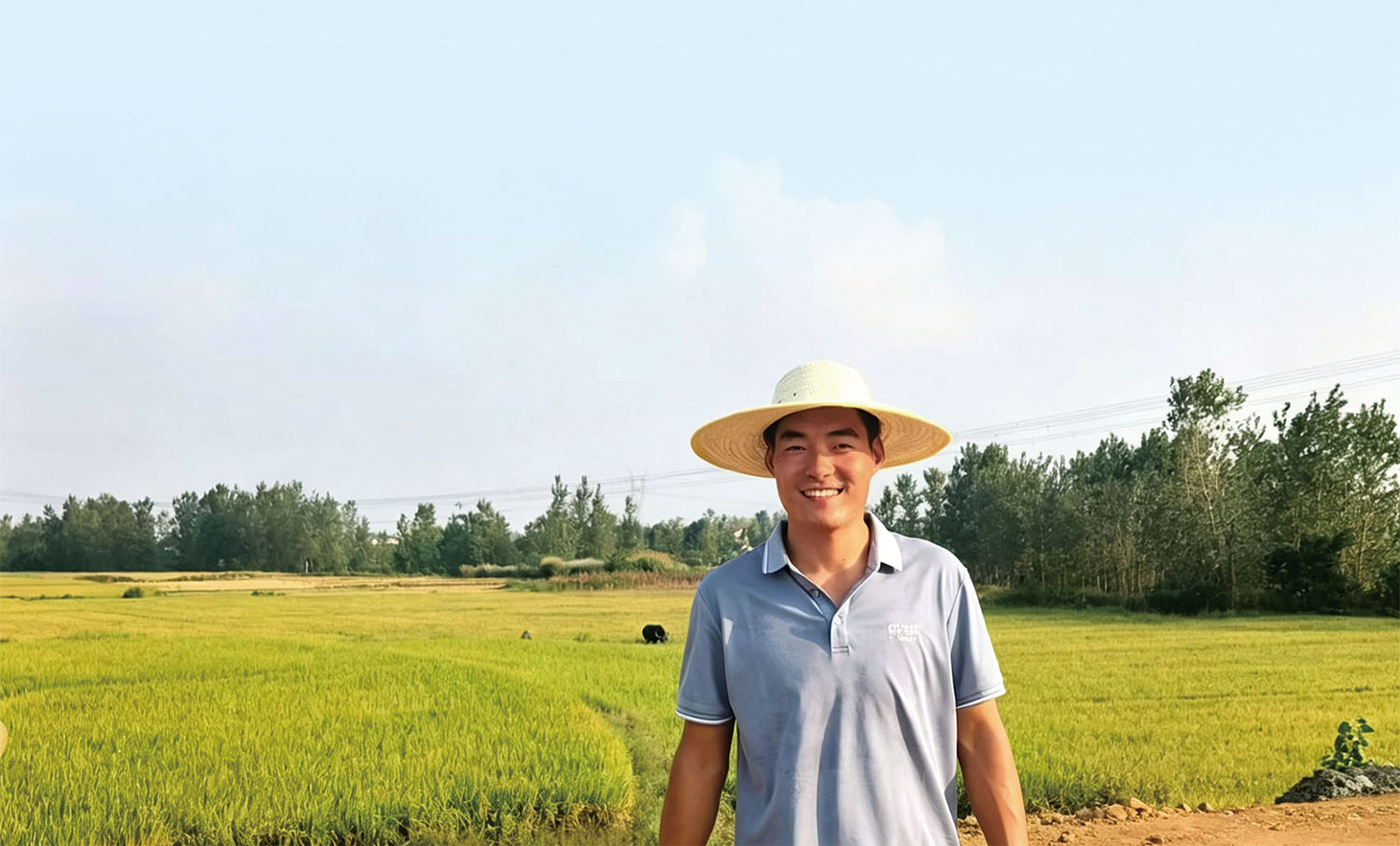
Xie is not the only young agricultural researcher bringing new ideas to Xingguang. Zhou Zhi, 29, a fellow student at HZAU, has been promoting a microbial "plant vaccine" treatment in the village since 2021.
The "plant vaccine" was developed by Professor Jiang Daohong's team at HZAU. Zhou, a core member of the team, explained that rather than relying on external pest control, the new technology boosts the rice plant's own immunity.
"It works like a cat hunting mice. The moment the pathogen begins to stir inside the plant, the vaccine is ready to 'grab' it," Zhou said.
Applying it was simple. During a demonstration for villagers, Zhou poured the liquid treatment over rice seeds and mixed them. A single treatment is designed to provide lasting protection as the seedlings grow.
It is also affordable, costing about 45 yuan ($6.71) per hectare of rice.
But to farmers accustomed to conventional crop-protection products, a technology that was both simple and inexpensive initially sounded too good to be true.
Even Yang Zhengwu, head of a local cooperative and a farmer known for being open to modern agricultural methods, had doubts.
"Back then, I had never heard of a vaccine for plants — let alone believed it could be a one-and-done solution," Yang said. Still, he set aside about 0.3 hectares for Zhou to conduct a trial.
The rice in the test plot grew visibly greener and stronger than that in a nearby conventionally treated field. The plant vaccine has since been applied to about 13 hectares of farmland in the village.
"These young agricultural workers are reshaping the countryside," Yang noted. He has also become a bridge between the students and local farmers, helping villagers embrace new agricultural practices while welcoming more university students to conduct research in Xingguang.
More than 200 HZAU students, including Xie and Zhou, have visited the village over the years, contributing to everything from cultivation to the marketing of its signature black rice.
The rice is known as "Huamoxiang", with "mo" meaning "ink" in Chinese.
"To me, the name suggests that the rice has been nourished by the 'ink' of HZAU students," Yang said. "It is a metaphor for how their knowledge has helped the rice grow better."
Learning, however, is not a one-way endeavour. As students bring modern agricultural knowledge to the countryside, the village offers them the wisdom of traditional farming in return.
Xie remembers being struck by farmers' understanding of the seasons, soil and water when she first arrived. Without a thermometer, some could judge growing conditions simply by feeling the water temperature with their hands. Decades in the fields had also turned them into "human calendars", able to tell instinctively when it was time to plant.
"It taught me that a real agricultural worker needs more than what can be learned from books," she said. "You have to put your feet in the mud and learn to listen to nature."
Zhou, too, has developed a stronger sense of pride in being part of a new generation working in agriculture.
After his experience there, he brought the plant vaccine back to his home village in Nanyang, Henan province. He drew on the insights he had gained from working with farmers in Xingguang to promote green agriculture and gradually became the local villagers' go-to farming adviser.
"Seeing farmers gather around me with questions makes me incredibly proud," Zhou said. "It convinced me that studying agriculture was the right choice, because it allows me to truly give something back to my hometown."
Contact the writers at liyuche@i21st.cn
