

Warming to affect patterns of freezing and thawing, weakening mountainsides
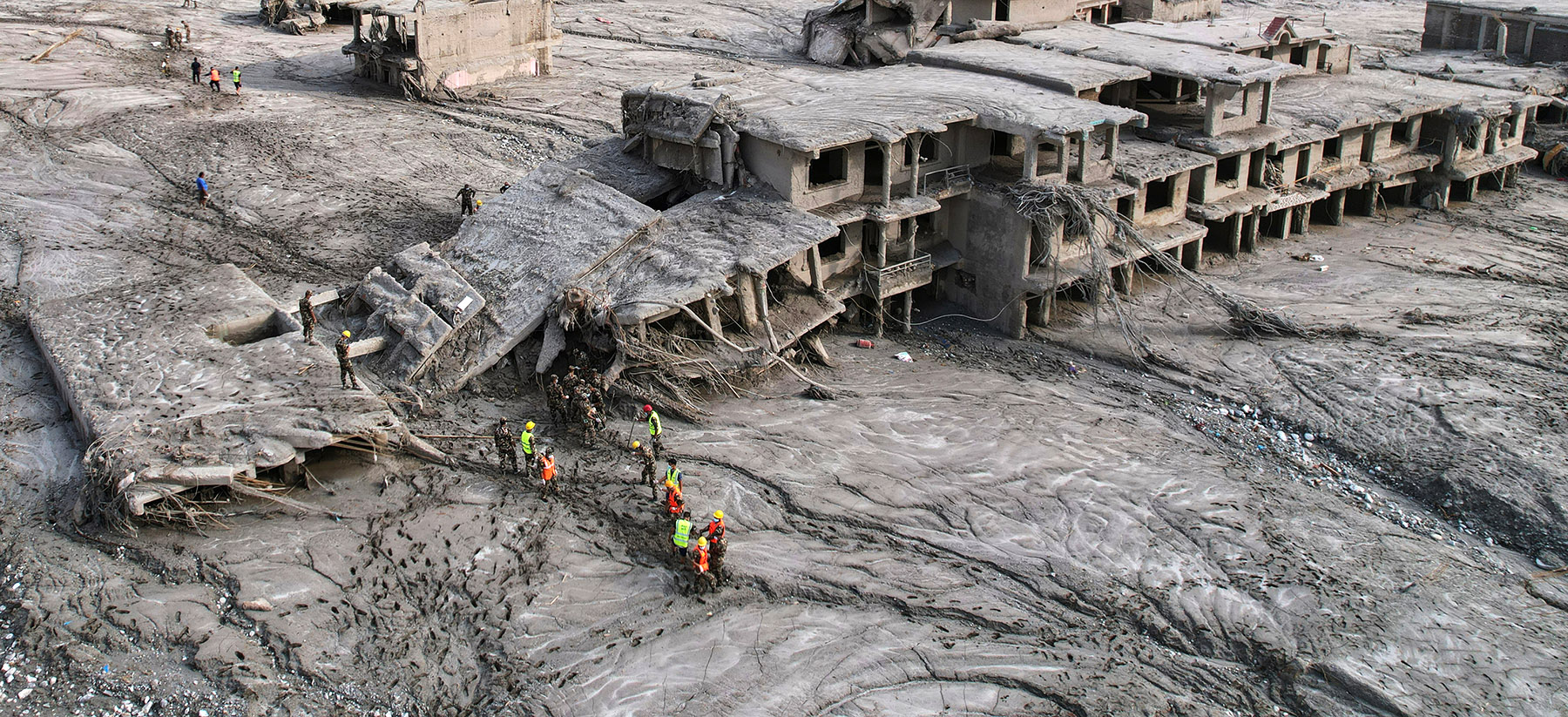
Rescue teams continued searching for survivors on Sunday after a devastating glacier-triggered flood swept through the China-Nepal border region, while experts warn that a combination of interacting hazards in a warming Himalayan environment could make such disasters increasingly difficult to predict.
The disaster struck on Wednesday after a high-altitude glacier collapse on the Nepali side sent a massive volume of rock and ice into a river, triggering a fast-moving mudslide and flooding downstream.
The United States Geological Survey determined on Wednesday that glacial collapse and debris flow caused subsequent catastrophic impacts downstream.
READ MORE: Authorities: 781 dead, 2,502 still missing in mudslide disaster in Nepal
Benjamin Horton, dean of the School of Energy and Environment at the City University of Hong Kong, said the disaster in Nepal could be an example of a "compound event" in which different hazards interact to produce a more complex and damaging disaster.
The cascading effect was what made climate-driven changes in high mountain regions particularly concerning, he told Reuters.
Simon Cox, chief scientist at the Mountains to Sea program at Earth Sciences New Zealand, told Reuters that climate change is "generating conditions that can destabilize high-mountain rock and ice".
That could make collapses and cascading hazards of the kind seen last week more frequent, Cox said.
Experts have cautioned against describing climate change as the sole, immediate trigger for Wednesday's collapse, but said rising temperatures and melting glaciers probably played a role.
Warming can reduce ice support on steep slopes, boost meltwater, and alter patterns of freezing, thawing and rainfall, which can weaken mountainsides and make large collapses more likely in some locations, Cox said.
Dorothy Heinrich, a researcher at the University of Reading in England, told Agence France-Presse that such floods are among the hazards posed by a warming planet in the region.
"There is high confidence of more heat waves, glacial retreat, permafrost reduction, these sorts of things that can drive things like landslides and glacial outburst floods," Heinrich said.
Limits revealed
In addition, experts said the speed at which the disaster unfolded highlights the limits of conventional flood warning systems.
Hatim Sharif, a hydrologist at the University of Texas at San Antonio, told AFP that what struck him was the absence of rainfall beforehand.
"That defeats essentially every operational flood warning system in the world," he said.
By the time the mud flow becomes visible, it is too late to escape on foot or by vehicle, Sharif said, because mud and water moving at high-speed form a lethal combination "like liquid concrete".
ALSO READ: Rescue teams intensify searches in Gyirong
"Running will not help," he said, estimating that the only option is to climb at least 6 meters up a hill.
A possible long-term remedy would be river level gauges that relay changes to authorities in real time, giving residents 20 to 30 minutes of warning, Sharif said.
However, the immediate danger has not disappeared.
The barrier lake above the mudslide-hit region has basically drained, forming a flowing state of the river channel, China's Ministry of Water Resources said on Sunday, citing drone footage and reports from emergency response teams.
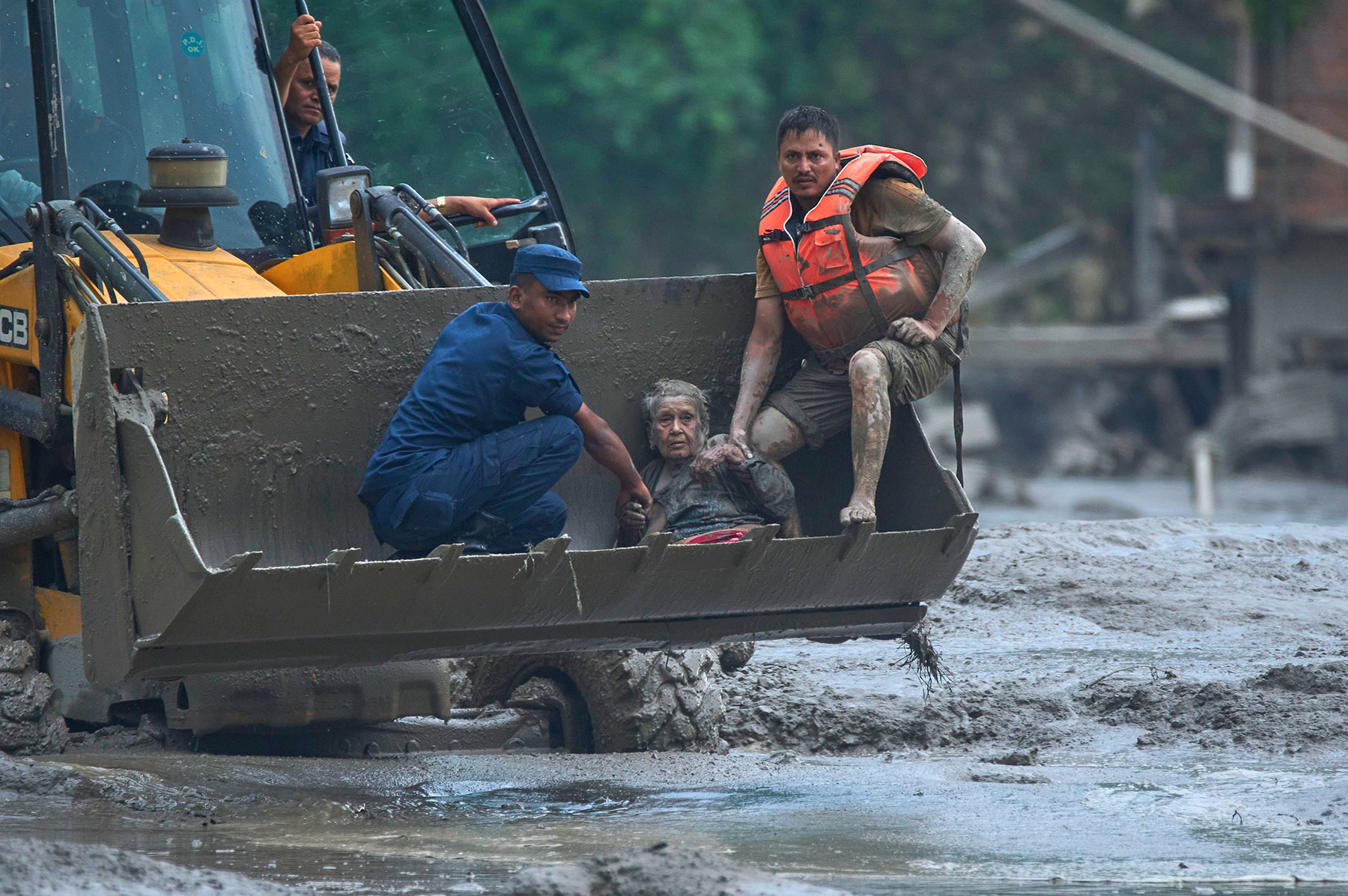
Rescuers were pushing deeper into the disaster-hit area, while authorities worked to clear damaged roads and maintain emergency communications.
Agencies and Xinhua contributed to this story.
Contact the writers at gaoyang@chinadailyusa.com
