

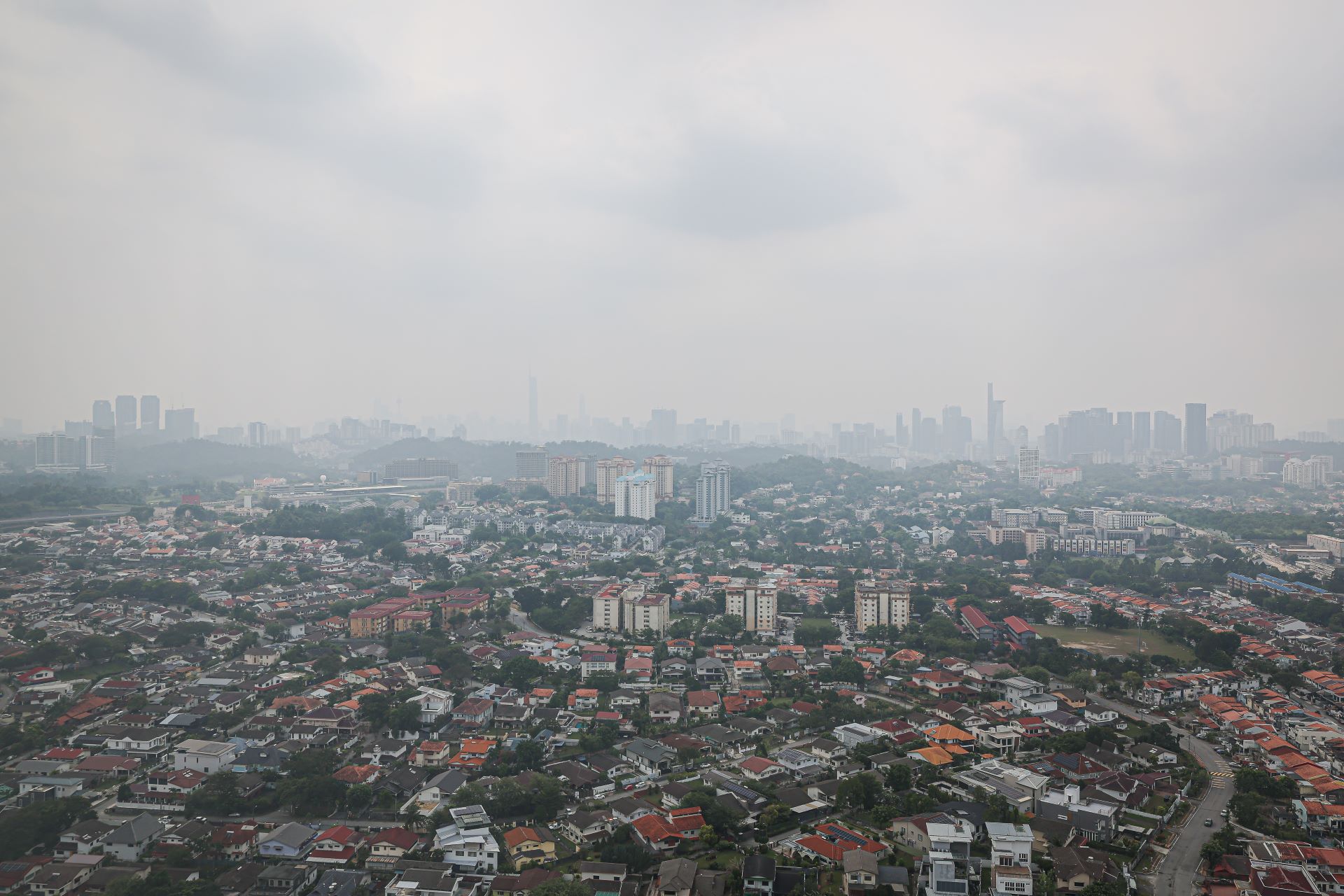
Acrid haze from Indonesian forest fires pushed air pollution to unhealthy levels across parts of Southeast Asia, prompting school cancellations and official warnings for millions of residents to stay indoors, according to Bloomberg.
Air quality ranged from “very unhealthy” to “hazardous” in parts of the Philippines and much of Borneo, according to Swiss monitor IQAir, as authorities stepped up their responses to a worsening cross-border crisis.
Some farm workers in Indonesia were being drafted into firefighting efforts, said Agam Fatchurrochman, a sustainability stakeholder-relations official at the Indonesian Palm Oil Association. “Some harvesting has been disrupted, as companies have assigned some of their workers and staff to help prevent fires from spreading,” he said, adding that palm fruit growth could also be affected by smoke and reduced sunlight.
ALSO READ: Singapore warns of haze risk as regional hotspots rise
While forest fires are a seasonal occurrence across Southeast Asia, prolonged dryness and hotter temperatures brought by the El Niño weather pattern have heightened the risk of more widespread and longer-lasting emergencies this year. The number of fire hotspots in Indonesia spiked to nearly 10,000 last month, 10 times more than in the last two years, and more than 200,000 hectares have been scorched so far this year, according to official data.
“The ongoing haze situation in Indonesia and Malaysia is a major concern,” said David Ng, a senior trader at IcebergX Sdn, referring to the world’s two biggest palm producers. “Drier conditions will affect yields in the medium term,” he said, adding that disruptions to operations and workers’ hours would all translate to reduced output.
The potential hit to supplies of the world’s most widely used vegetable oil could boost prices that are already near two-year highs. Benchmark palm futures rose as much as 2.4 percent to 5,013 ringgit a ton in Kuala Lumpur on Tuesday, building on gains stemming from weather risks, and rising biofuel demand in the face of high crude prices arising from the war in the Middle East.
ALSO READ: Southeast Asia haze risk rises as Indonesia’s fire hotspots jump
Malaysia’s Sarawak state on Borneo — the island that the country shares with Indonesia and Brunei — was poised to close offices and undertake cloud seeding in response to the worsening conditions. For several days, state capital Kuching has ranked as having the world’s worst air quality, according to IQAir.
“Should an emergency be declared, all offices as well as public and private sectors in the affected areas will be closed, with only essential services allowed to operate,” Sarawak’s deputy premier, Douglas Uggah Embas, was quoted as saying by The Edge Malaysia.
Cloud seeding operations in the state — known for its palm plantations, hydroelectric plants, and oil and gas operations — were scheduled for Sept 3-5 to replenish reservoirs that were seeing low water levels due to prolonged dryness, Malaysian newspaper the New Straits Times reported.
READ MORE: Indonesia’s forest fires surge as El Nino raises drought risks
Meanwhile, Quezon City, the most populous city in the Philippines capital region, canceled in-person public school classes on Tuesday because of the haze. “The public is advised to limit prolonged outdoor activities, especially those sensitive to air pollution,” the country’s Environmental Management Bureau said on Facebook. It also urged residents to stay indoors and to wear masks outdoors.
Indonesia has deployed thousands of firefighters on the ground in Kalimantan, as well as aircraft to “waterbomb” the blazes from above, Rizal Irawan, deputy for environmental law enforcement at the Ministry of Environment, was quoted as saying by Antara news agency.
Air pollution has also hit hazardous levels in the Indonesian part of Borneo as well as cities on Sumatra island, disrupting day-to-day activities and businesses. School classes have moved online, while residents are shortening time spent outdoors. Shops and ride-hailing drivers have also reported weaker demand as people stay at home, and dozens of flights have been canceled or delayed due to low visibility, according to local media reports.
