

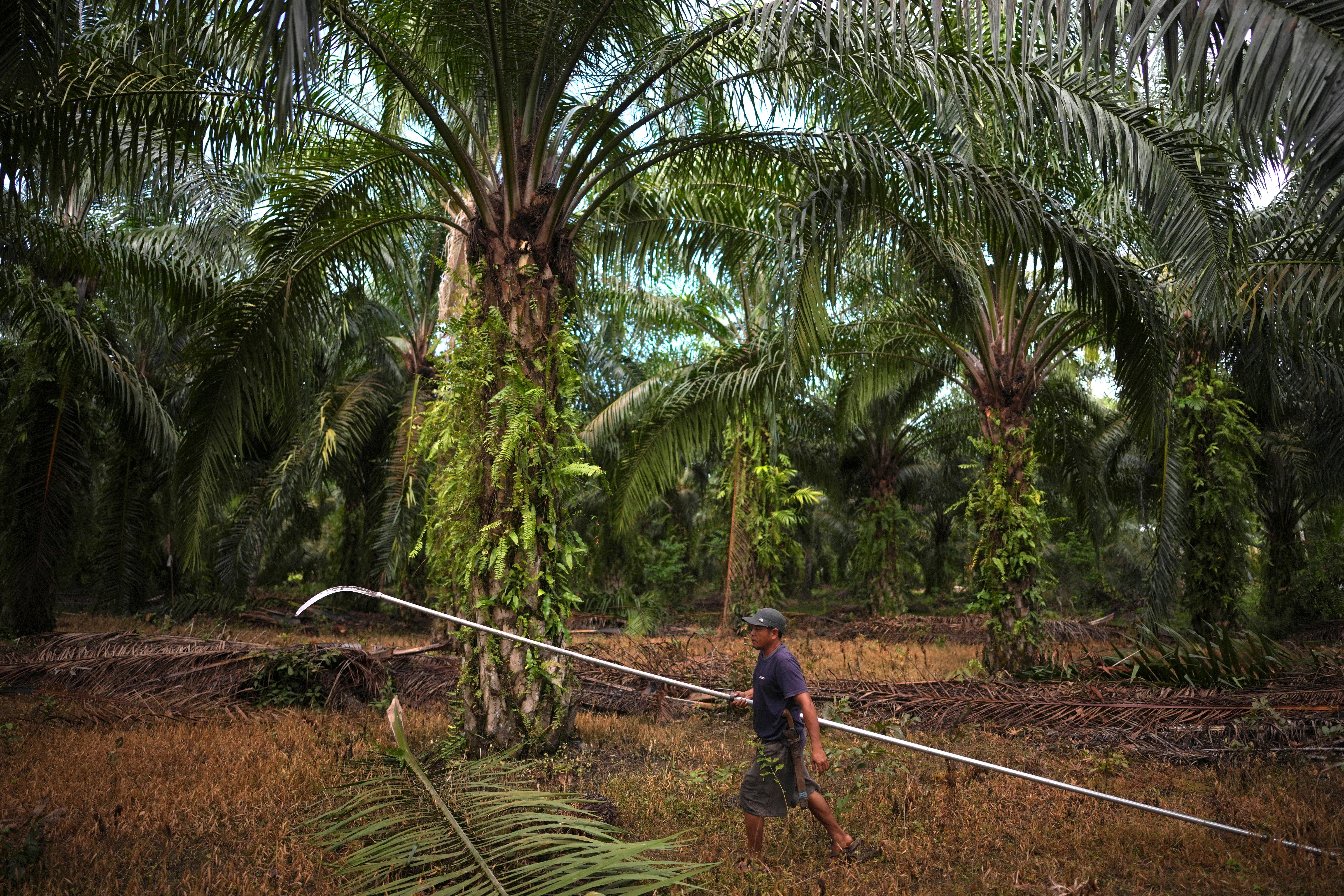
Indonesia’s palm oil production may shrink by up to 3 million tons next year due to the severe El Niño weather forecast for the coming months, according to an industry estimate, adding to upward pressure on prices.
The decline is smaller than a previous forecast, but could still dent output by the equivalent of roughly 5 percent of this year’s total, according to the Indonesian Palm Oil Association, known as Gapki. It sees 2026 production being similar to last year’s, when it reached 56.6 million tons.
The country’s farmers are already struggling to apply fertilizer due to hot and dry conditions, and the impact of this will become visible in next year’s harvest, Gapki chairman Eddy Martono said in an interview.
“Production may still decline but probably by around 3 million tons next year,” he said. This has been revised down from 4-5 million tons on reports of some plantation regions receiving rainfall, but El Niño conditions are setting in across most places, he added.
ALSO READ: Bracing for El Nino
The reduction in supply from the world’s biggest producer will compound pressure on the global palm market, which is already expected to tighten as Indonesia keeps more oil onshore for its expanded biodiesel mandate that is set to be implemented fully in October.
“Supply for domestic use is prioritized, so there will be no problems with that,” Martono said earlier this week, according to local media. “What will decline is export volumes.”
READ MORE: Is El Nino's economic risk too hot to handle?
Gapki’s revised output estimate for 2027 was pushing benchmark palm oil prices higher, said Sathia Varqa, a senior analyst at Fastmarkets Palm Oil Analytics.
Futures for November delivery rose as much as 1.2 percent before paring slightly to trade at 4,859 ringgit per ton at 1:05 pm in Kuala Lumpur. Prices have declined more than 3 percent since hitting a 20-month high hit last week.
