

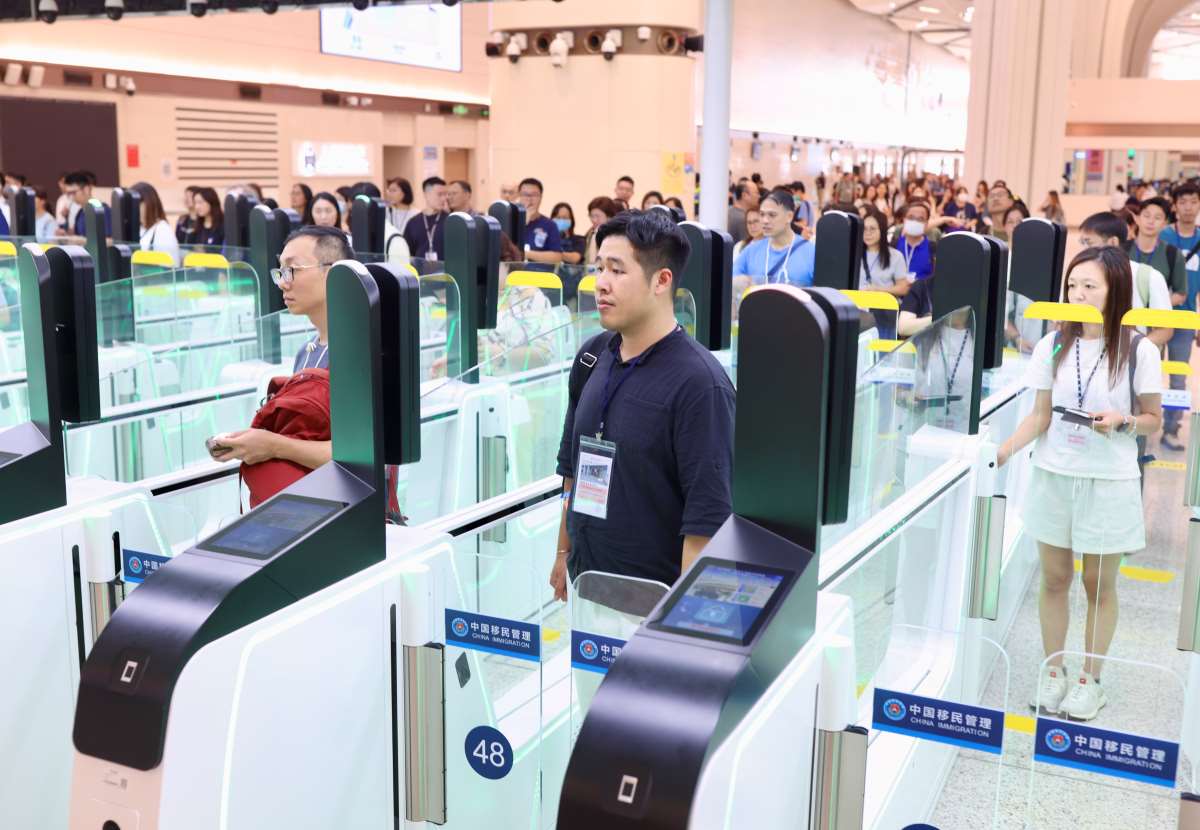
Shenzhen and Hong Kong on Saturday carried out the largest stress test to date at the redeveloped Huanggang Port, involving about 20,000 civil servants and 1,000 vehicle trips, to comprehensively test customs clearance and emergency response capabilities during peak hours.
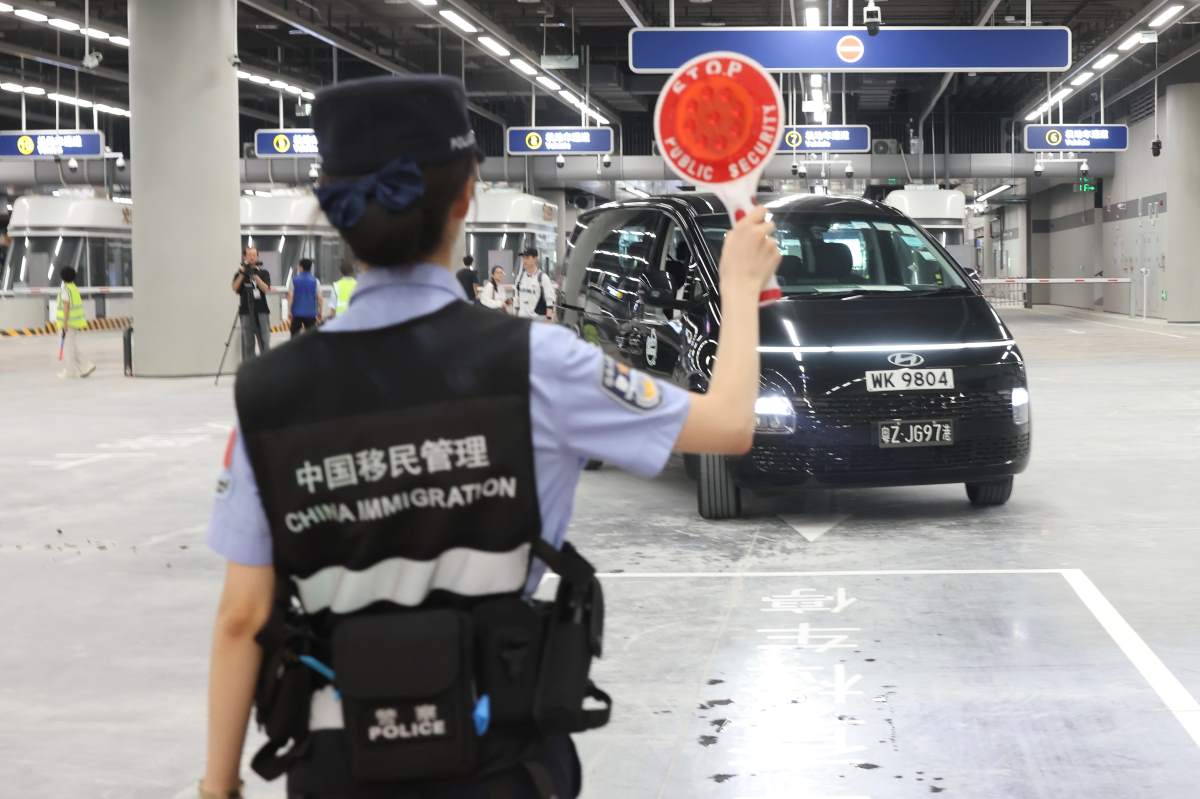
For the first time, 230 boundary crossing turnstiles and 28 one-stop vehicle lanes at the new facility underwent large-scale field testing. Tests on the Shenzhen side of the revamped port focused primarily on the mechanism for tiered and segmented crowd control, the handling capacity of security scanners, and vehicle inspection procedures.
During tests on security scanners, passenger flow was simulated to rise to 3,300 trips per hour, with a brief period of overpressure, evaluating the peak processing efficiency of three sets of machines and the upper capacity limit in the queuing areas.
IN PICTURES: Preparation for launch
The one-stop vehicle lanes integrate inspection functions across five departments in Shenzhen and the Hong Kong Special Administrative Region, handling customs, immigration, border control, and health and quarantine separately. This reduced the vehicle inspection time to slightly more than a minute for each vehicle, according to an on-site port employee in charge of the operation.
Besides passenger and vehicle flow management, the latest exercise also included handling a wide range of unexpected contingencies, such as emergency medical assistance, disputes involving commuters, dealing with suspected smugglers and vehicles, and vehicle breakdowns.
RELATED ARTICLES
- It’s all systems go at rebuilt Huanggang Port’s first stress test
- 5,000 join 2nd large-scale drill at Huanggang Port Hong Kong Port Area
- HKSAR, Shenzhen sign deal on Huanggang port colocation arrangement
- HKSAR authorized partial jurisdiction over new Huanggang port
To facilitate the port’s operation, various types of robots will be deployed to perform functions like patrolling, cleaning and providing information. Patrol robots can operate 24 hours daily and intelligently detect more than 40 types of risky behaviors, such as people falling, fire or smoke, travelers carrying weapons and smoking.
Liu Weixiang, director of the Shenzhen Municipal People’s Government Office of Port Entry and Exit, said that overall, the exercise has achieved the desired results. The Shenzhen and Hong Kong authorities will carefully review and refine their plans to ensure that the final preparations ahead of Huanggang Port’s opening are smooth and can meet the highest standards.
Throughout the afternoon, test participants and vehicles continuously crossed the boundary at the new port to assess its readiness at each stage of the clearance process.
Kevin Lam, who took part in the drill, said he was particularly impressed by the port’s collaborative passenger inspection mode which cut the commuter clearance time from half an hour to about five minutes.
Besides Futian and Luohu ports, he said Huanggang would likely be his third choice of a checkpoint to enter the Chinese mainland. Lam said he visits Shenzhen often for the food, and the 24-hour new facility will be very convenient for him to return to the SAR in the evening.
Considering the hot weather and large crowds, he hopes the port’s temperature could be lowered slightly to create a more comfortable environment for travelers.
Another participant, who gave his surname as Jiang, highlighted the port’s large capacity and high-tech design. He said once the connecting subway line and other supporting transport services on the Hong Kong side are fully in place, he would be more inclined to choose Huanggang than Futian Port, given its shorter clearance time.
Contact the writer at bingcun@chinadailyhk.com
