

Over 15 years, researchers have turned repeated tests and failures into a systematic approach to saving fragile relics, reports Bai Shuhao in Chengde, Hebei.
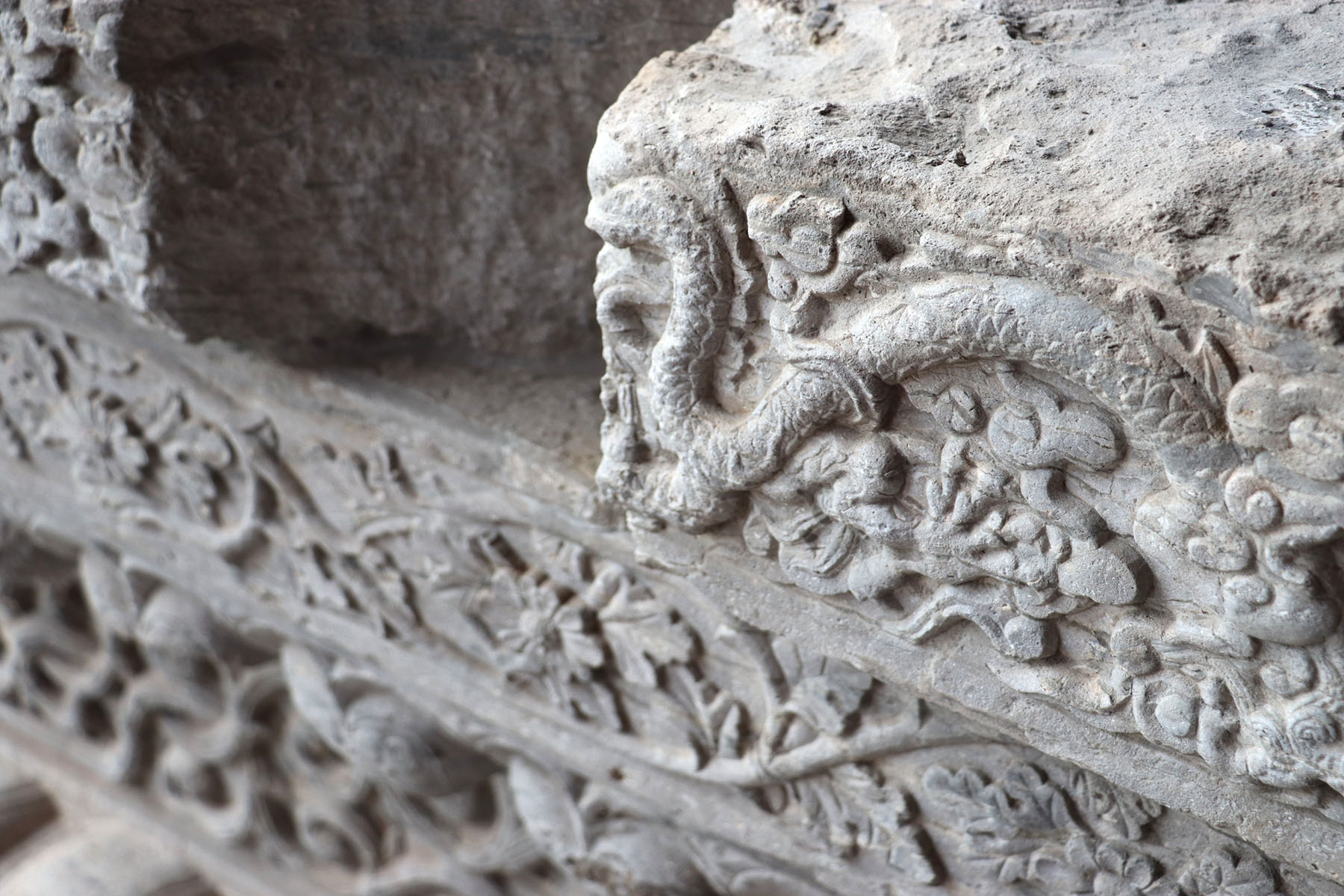
Whether in science or art, people tend to favor stories of sudden inspiration: an element discovered by chance or a flash of insight that gives birth to a masterpiece. But most of the time, things do not happen that way.
At least, that is not how it happened in Chengde, Hebei province, where a team of stone restorers has spent the past 15 years rescuing hundreds of cultural relics. Their work has rarely offered a definitive solution. Instead, it has been a long struggle against time, marked by experiments, failures and more experiments, as they search for ways for relics to coexist with the forces that are slowly destroying them.
What they have built in the process is not a single breakthrough, but a body of experience: an approach that can be tested, repeated, and passed on.
An unsolved problem
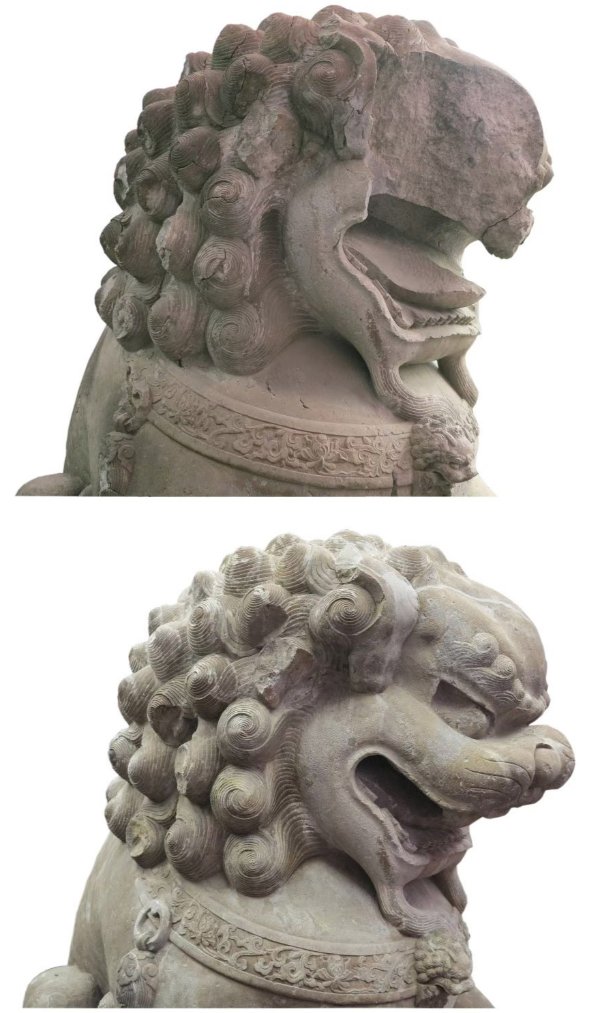
In 2011, when Li Li arrived in Chengde, about a three-hour drive from Beijing, she stood beneath an exquisite glazed pagoda and looked at its cracked stone base. Her mind went blank.
Chengde was once home to the Qing Dynasty (1644-1911) imperial court's summer retreat. The city is known for the Mountain Resort, built as an imperial summer residence, and a group of surrounding temples. The site was inscribed on UNESCO's World Heritage List in 1994.
Li, then a researcher who had just joined the China Academy of Cultural Heritage, was not responsible for preserving the grand buildings themselves. Her task was to protect the less conspicuous stonework that supported and surrounded them: pedestals, statues, steles, and other stone elements.
Stone, by conventional wisdom, should be among the easier materials to preserve. It is hard and heavy, built to withstand wind and rain. Its apparent permanence is precisely why people have relied on it for centuries.
But the craftsmen who worked here 300 years ago could not have known what their locally sourced stone would eventually endure.
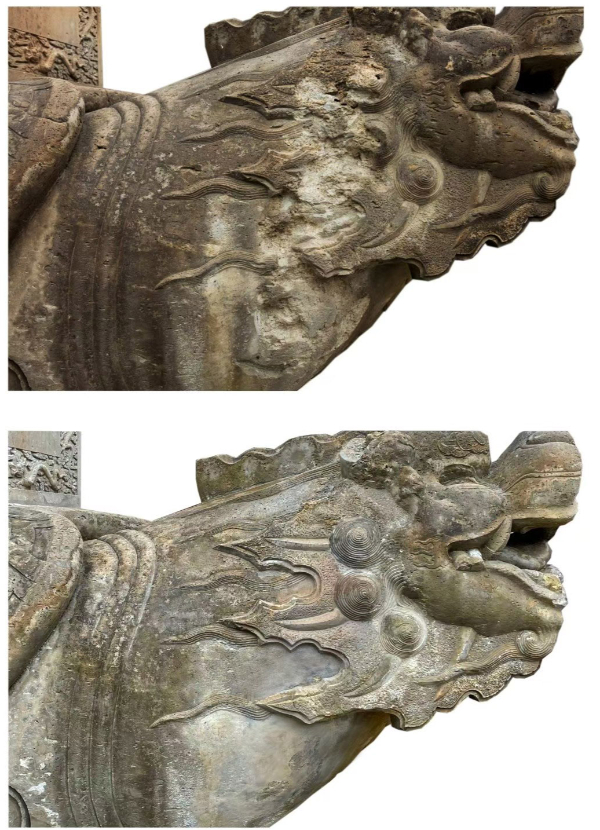
The rock is a fragile volcanic material known as tuff. It contains salt-bearing minerals, is highly porous, and readily absorbs water.
Temperatures in Chengde can reach 40 C in summer and fall to around — 20 C near the ground in winter. The repeated cycle of freezing and thawing causes the stone to split into thin layers.
"Tuff is much less dense than marble or white marble," says Chen Dong, chief engineer at the Chengde Municipal Cultural Relics Bureau.
He compares the stone to a millefeuille, with layers constantly peeling away. Sometimes, he says, "You barely touch it, and it crumbles."
That was only one problem. The stones had also been battered by wind and rain, suffering from missing sections, sanding, hollowing, and other forms of damage.
Before the China Academy of Cultural Heritage took on the project, Chengde had invited experts from around the world to examine the problem, including specialists from the Getty Conservation Institute in the United States. "They all shook their heads and said it was too difficult, that there was no solution," Chen recalls.
The difficulty was partly rooted in the unusual properties of the stone. Tuff of this kind is rarely found outside northern China. Li and her colleagues traveled across the country looking for comparable examples, but found no other site with the same pattern of cracking. "We were starting from zero," Li says. "We had no idea where the road would lead. As the person in charge of the project, I didn't know where to begin."
In the early years, the team rented a small one-story house halfway up a mountain near a temple where they were working. It served as a laboratory, meeting room, dormitory, and kitchen. They painted the house blue. "Blue represents hope," Li says.
Repairing by trial and error
It was during those difficult years, from 2011 to 2015, that Li's team began making progress in developing conservation materials.
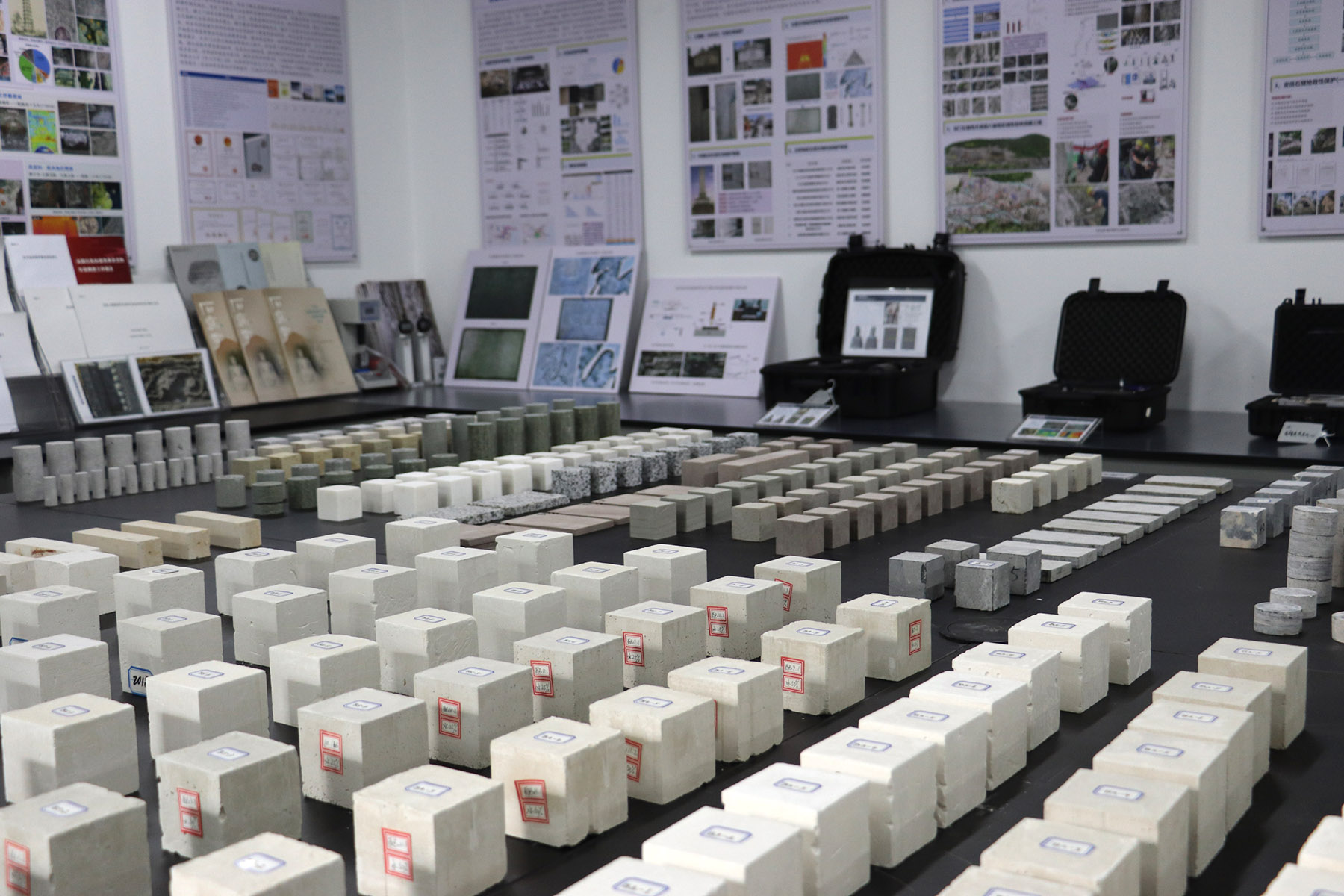
The process was painstaking. Researchers first tested materials under simulated environmental conditions in the laboratory, making sure they would not damage the relics. Only then did they conduct small-scale experiments on the actual stone.
A single test sample might need to be observed for two years. A material could pass laboratory tests and appear ready for use, only to expand after its first winter. Meltwater from snow would seep into the stone as temperatures rose, exposing weaknesses that laboratory tests had missed.
"What's even more frustrating is that a material might survive the first winter, and crack in the second," Li says. When that happened, the researchers went back to the beginning. The cycle repeated so many times that Li could no longer count the failed experiments.
In 2012, drawing on techniques passed down by earlier generations of craftsmen, the team settled on a traditional lime-based material whose main component is calcium carbonate. Similar materials have been found at archaeological sites dating back more than 5,000 years.
But identifying the core material was only the beginning. The researchers still had to repeatedly test firing temperatures and experiment with additional ingredients to determine how the material would interact with different relics.
"No material can be called a once-and-for-all solution," says Xu Dong, who joined the Chengde team after graduating from university in 2012.
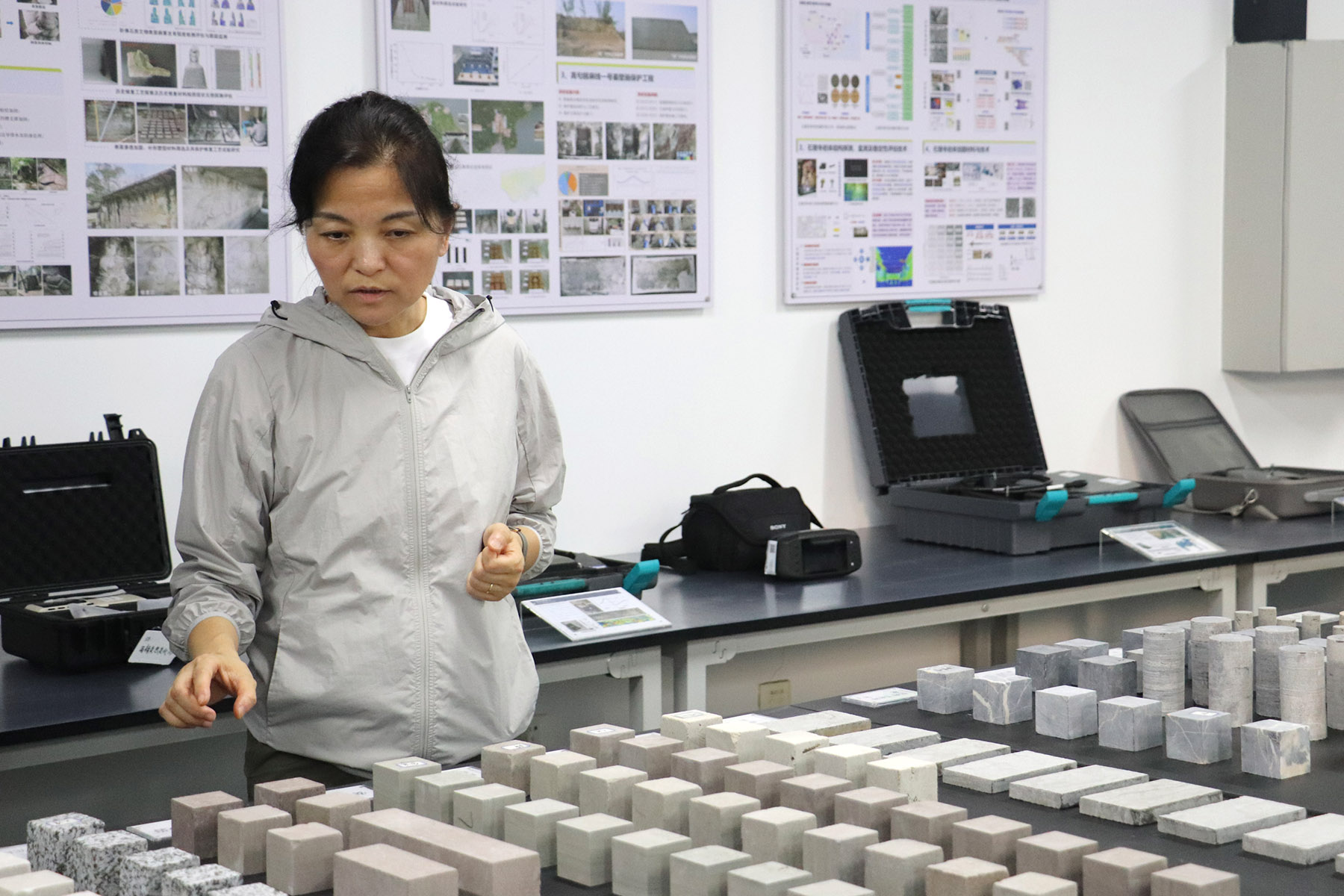
Even on the same relic, conditions could vary. A surface exposed to direct sunlight could experience greater temperature swings and deteriorate differently from a shaded side.
Repairing a carved stone dragon about 50 centimeters long can require five different color samples, says Wang Ziyi, who joined the team in 2014.
Xu and Wang were not simply researchers selecting materials. They also worked directly on the relics, carving patterns and carrying out repairs themselves. In their daily work, scientific research and hands-on conservation occupied roughly equal portions of their time.
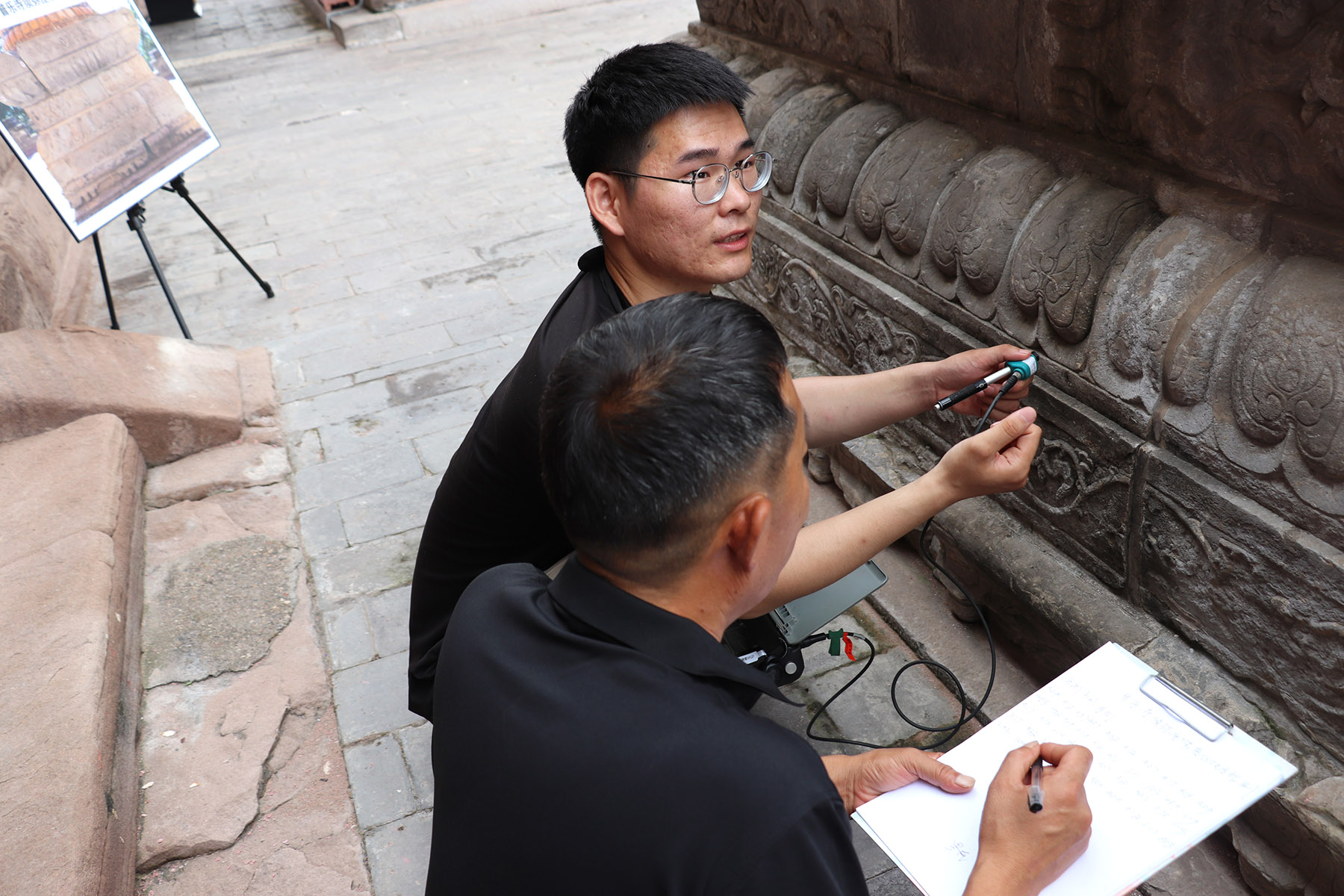
To this day, the team continues to conduct thousands of experiments to find suitable materials and conservation methods. It has developed a systematic approach that includes cleaning and dust removal, desalination, preliminary consolidation, anchoring, grouting, pattern repair, and color matching.
In 2015, the former director of the Getty Conservation Institute visited Chengde. After seeing the damage, he expressed surprise. For Li, however, the significance of the comment was not simply the authority behind it. "It represented a voice," she says.
The team now has more than 50 members, with specialists drawn from fields ranging from science to art. Since 2011, it has worked on 15 stone conservation projects in Chengde, rescuing hundreds of valuable relics and developing more than 10 patented technologies and materials.
The team calls its approach the "Chengde experience". It rests on three principles: putting preliminary research first and carrying scientific research through the entire conservation process; integrating research, design, field conservation, and monitoring; and using technology and interdisciplinary collaboration to strengthen heritage conservation. The team has also moved beyond stone, applying what it learned to murals and other forms of heritage across China.
Finding a rhythm
As one of the younger members of the team, Xu remembers that her first assignment was a 63.9-square-meter stone staircase panel at Puren Temple, tucked away in the mountains. The panel, known as a danbi stone, was carved with two dragons playing with a pearl. Years of deterioration had left the dragons almost unrecognizable.
Three months later, when Xu and her colleagues had brought the two dragons back into view, she experienced her first real sense of accomplishment as a restorer.
The temple was not open to tourists. Only a handful of restorers and other workers were stationed there. In summer, mosquitoes swarmed through the mountains. Sometimes one would crawl near Xu's ear and she would barely notice. She was too absorbed in the work.
A worker once passed by and asked her: As a young woman spending every day alone at a temple, didn't she find it boring? "Everyone thinks differently," Xu says. "I can get close to the relics. I can turn something damaged into something whole. I think that's satisfying."
To Xu, conservation is a race against nature. Sometimes a restoration can look successful, only to begin powdering away after weeks of rain. To a visitor, the relic may appear barely repaired. But for the experts, it may have already undergone an intense rescue effort.
Yet, rain is not always the enemy.
After completing the stone conservation projects in Chengde, the team turned to paper murals inside a stupa in the Mountain Resort. Xu moved her work into the tower.
When rain fell and the wind picked up, she could hear the bells hanging from the eaves. The sound of rain mingled with the soft chime of the bells, and she felt calm.
Xu says that, in the end, the work is made up of ordinary, even mundane tasks. What matters is finding a little enjoyment in them, along with a sense of accomplishment.
Contact the writer at baishuhao@chinadaily.com.cn
