

China's massive parcel logistics industry embraces tech in race for efficiency
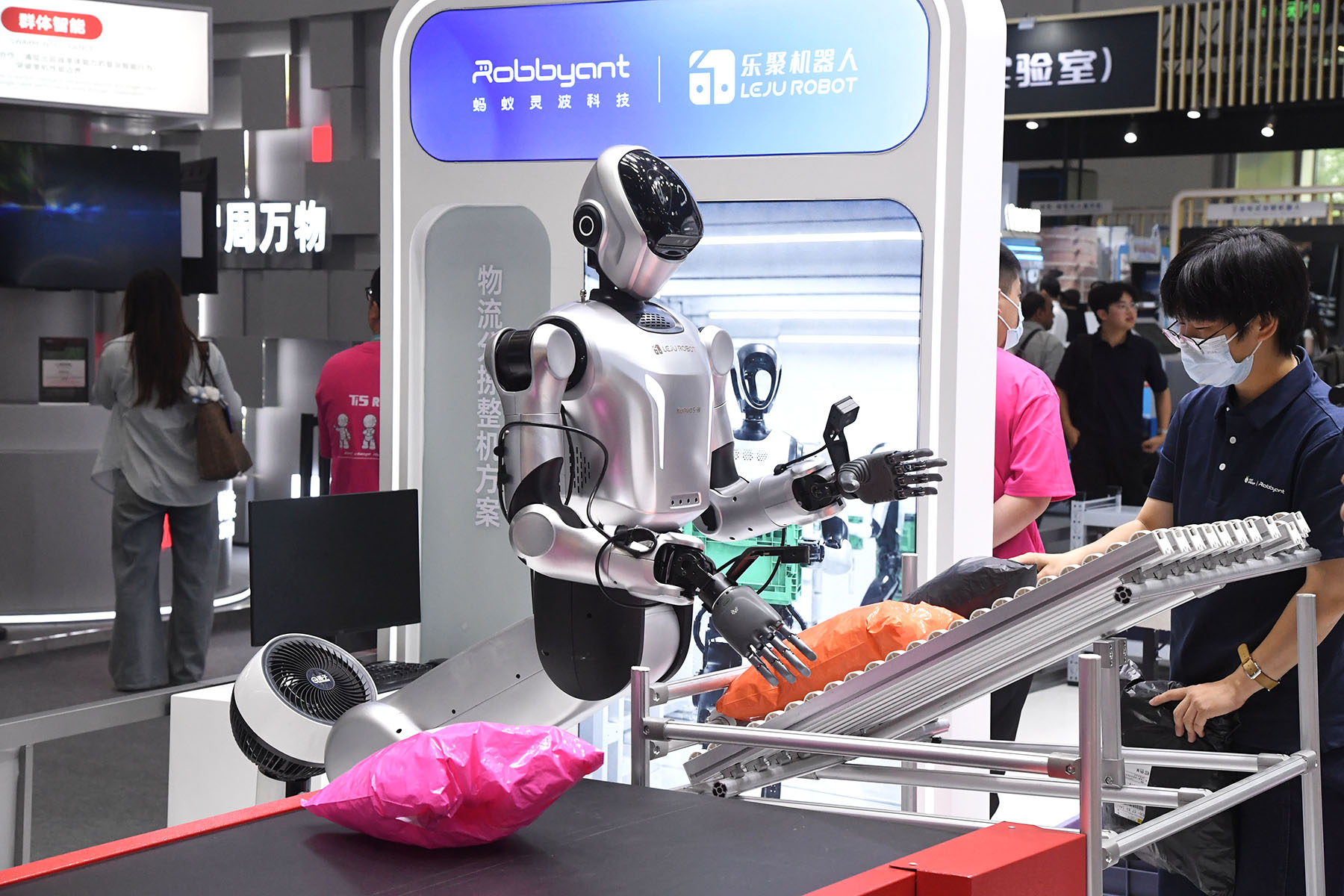
At a busy parcel sorting center in Guangzhou, Guangdong province, a humanoid robot works alongside human colleagues on a sorting line, repeatedly picking up packages and feeding them into the system. On a large screen overlooking the floor, its output is displayed directly against performance figures for human workers.
It does not tire, but for now, it remains slower and far more expensive than an experienced human operator.
Eight of these humanoid units have undergone trial runs at the center since March, capable of feeding as many as 1,200 parcels an hour into the sorting system, said He Yong, deputy director of China Post's Jianggao mail processing center.
Yet while eye-catching, the machines represent a technology still in its rough experimental phase — a high-tech snapshot of the transformation unfolding across China's logistics landscape.
READ MORE: From AI to drones, firms deliver industry of future
By 2030, annual express delivery volume is expected to reach 270 billion items, according to the country's postal industry development plan for the 15th Five-Year Plan (2026-30) period.
After decades of explosive, volume-driven growth powered by the expansion of e-commerce, China's express delivery sector has reached a structural turning point. Volume is no longer the metric that matters most.
Handling over 100 billion parcels in the first half of the year alone, logistics giants can no longer survive simply by adding handling capacity, and so have shifted their focus to operational efficiency and unit-cost reduction.
Companies are increasingly turning to artificial intelligence, robotics, autonomous vehicles and digital management systems to improve the efficiency and resilience of one of the world's largest logistics networks.
Test bed at scale
According to the postal sector's current Five-Year Plan, China aims for an 88 percent full-automation rate across large-scale processing centers.
In Guangdong, which processes approximately 22 percent of the national parcel volume, automation is expanding rapidly. Automated guided vehicles traverse warehouse floors, while 820 autonomous delivery vehicles and 247 drones operate across urban routes.
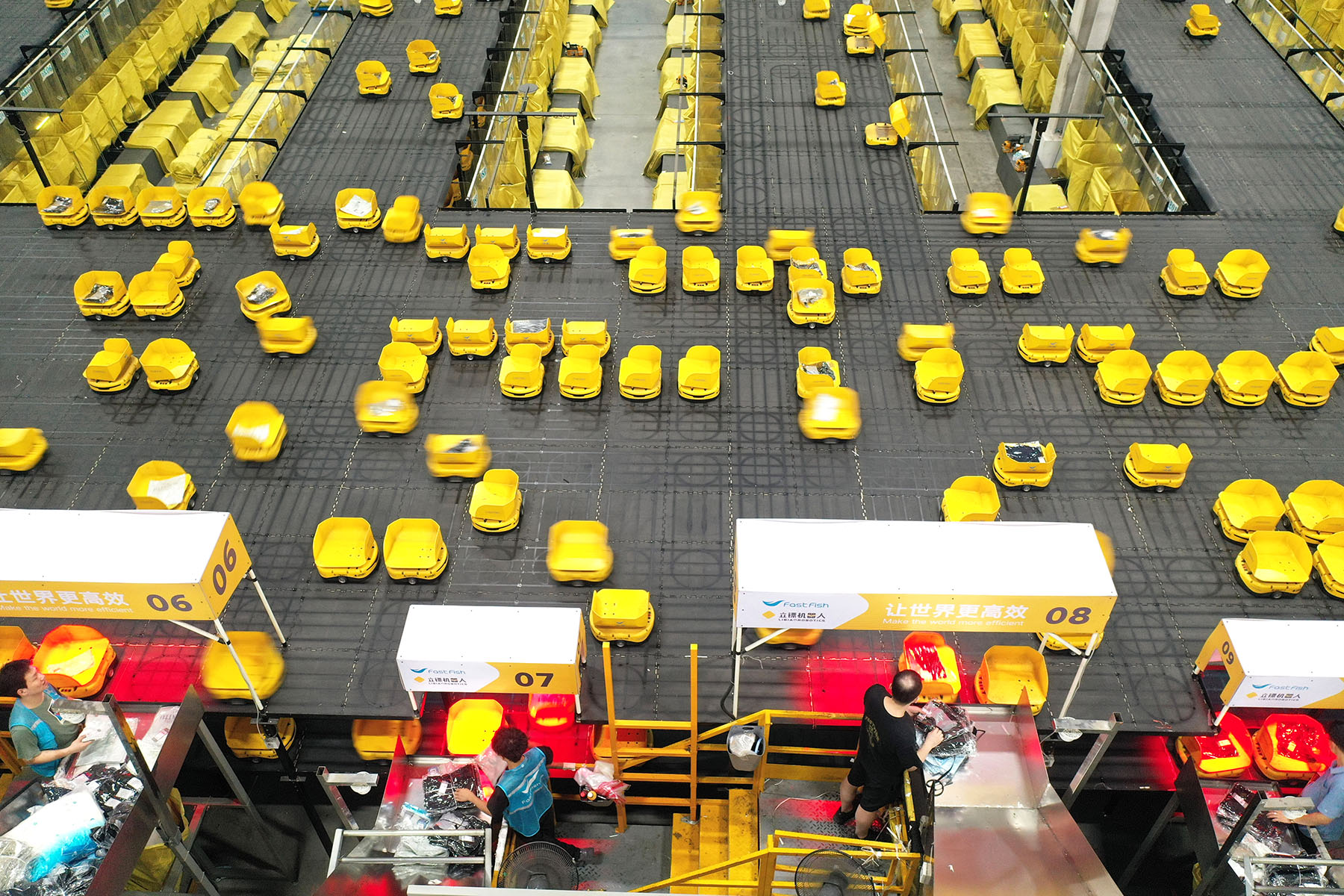
At large processing centers in Guangzhou, automation has moved well beyond conventional conveyor belts.
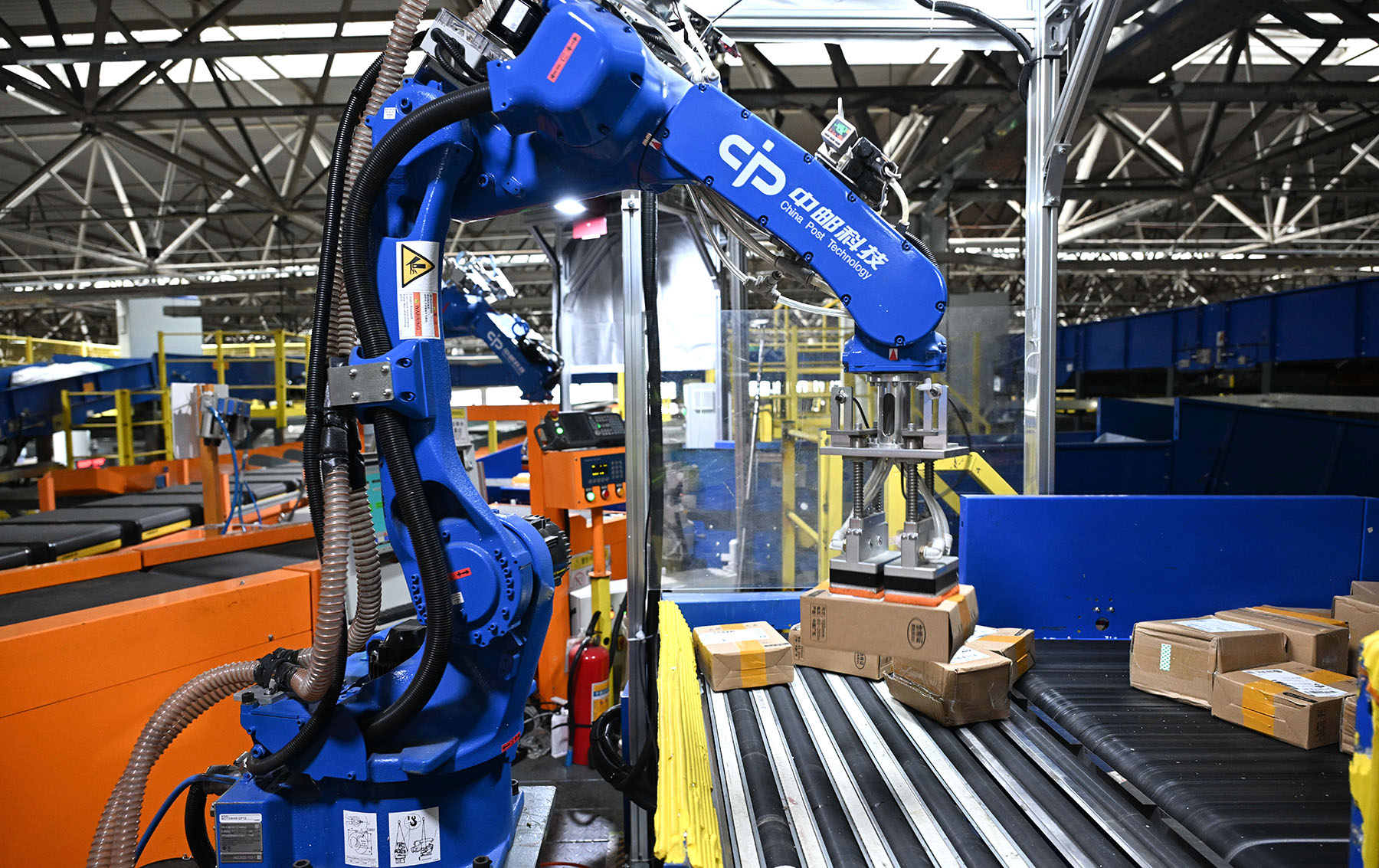
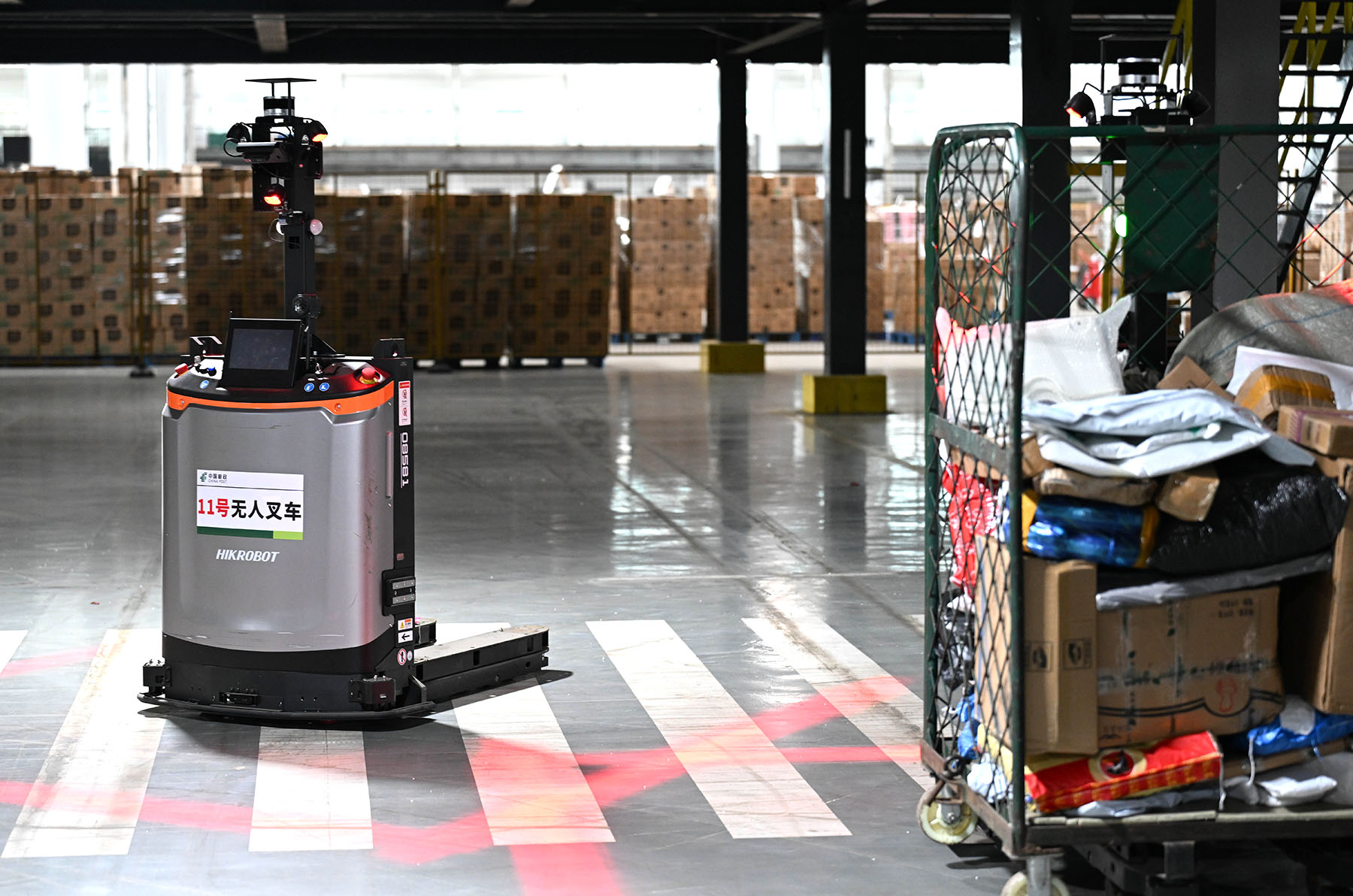
Robotic arms feed parcels into sorting systems, automated guided vehicles move cages and pallets across processing floors, while software increasingly monitors parcel flows and adjusts equipment in real time.
One digital system, for example, monitors congestion across sorting lines and automatically adjusts their operating speeds when traffic begins to build. At one processing center, sorting-line jams during the night shift fell from more than 20 a month to just one after the system was introduced, according to He.
Another trial system uses three-dimensional sensing to measure how much space remains inside trucks, check whether parcels are loaded properly and alert workers as vehicles approach loading bays. The center said it has cut waiting time between successive vehicles by about 20 percent.
Such changes point to an important evolution in logistics technology. Earlier automation largely focused on replacing a particular manual task with a machine. Increasingly, digital systems are being used to detect problems, adjust operations and coordinate equipment across an entire processing center.
Real-world problems
The same shift is taking place among logistics technology suppliers.
At Guangzhou-based Genye Technology, engineers have developed a three-dimensional sorting system aimed at two persistent problems in warehousing — long picking routes and limited floor space.
"Warehouse pickers used to spend much of their time walking back and forth between shelves. When orders surged, they were constantly on their feet, while labor and space costs kept rising," said Zuo Wen, general manager of the company's innovation business center.
"We developed the 3D sorting wall precisely to address those practical problems on the front line."
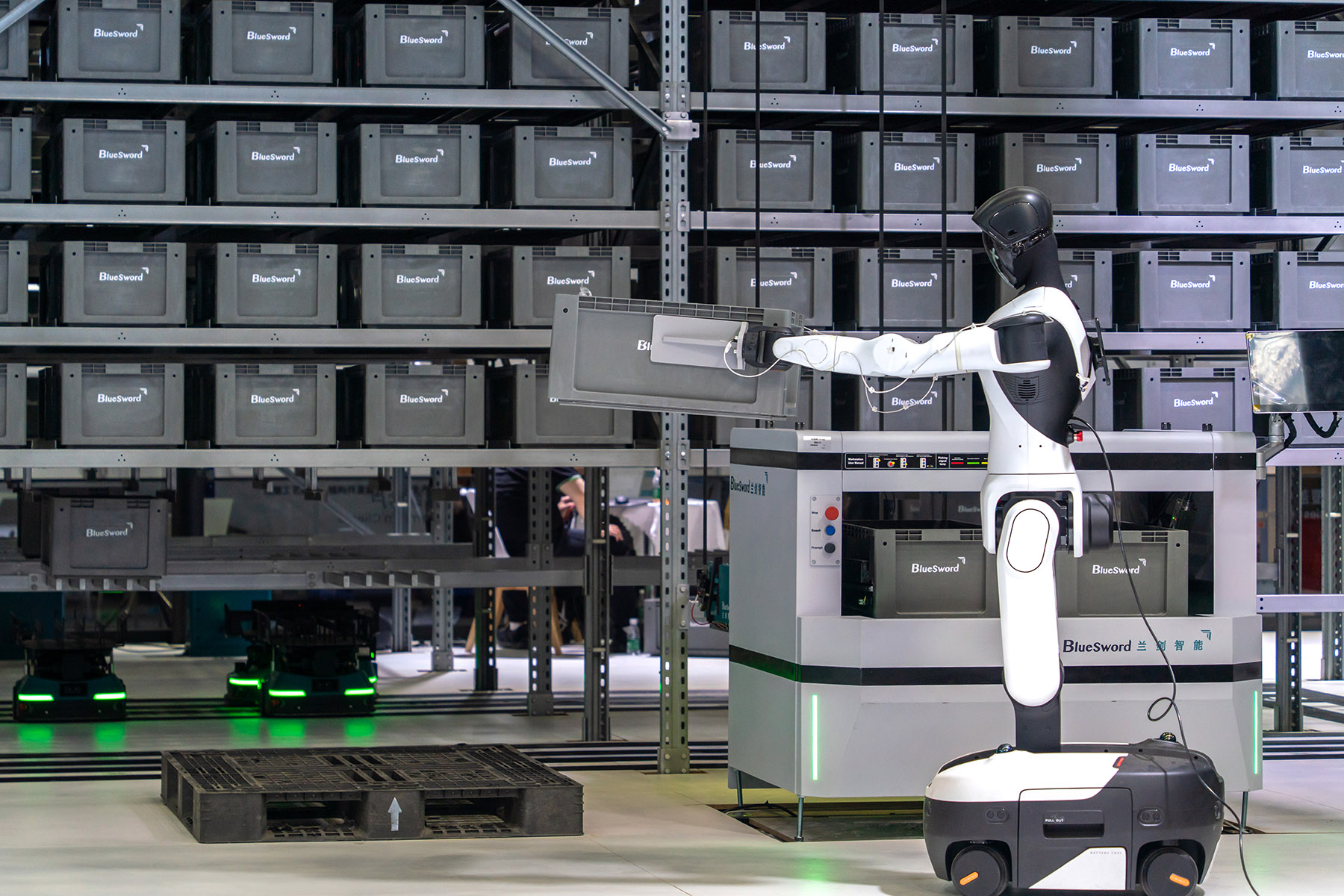
Instead of spreading sorting destinations across a large horizontal area, the system uses AI vision to identify items and scheduling software to direct them to vertically arranged compartments, allowing more sorting positions to be packed into a smaller footprint.
Genye said its larger systems can process up to 20,000 items an hour while taking up roughly half the space of conventional layouts.
The example illustrates how logistics technology is increasingly being designed around specific operational bottlenecks rather than automation for its own sake.
That technology is also moving out of warehouses and processing centers.
In Foshan, also in Guangdong, autonomous delivery vehicles are being tested on routes connecting express outlets, parcel stations and other logistics nodes. The city currently has 124 postal and express delivery autonomous vehicles involved in road testing across 219 routes, according to the Foshan Postal Administration.
Some companies are also experimenting with shared autonomous transport, allowing retailers and other small businesses to summon unmanned vehicles when they need to move goods rather than purchasing vehicles themselves.
The model points to a wider possibility of autonomous vehicles eventually becoming flexible urban logistics capacity rather than equipment dedicated to a single company.
National push
The postal industry's 15th Five-Year Plan calls for China to "actively develop smart postal services" and significantly increase digitalization across the delivery process. It also calls for wider use of artificial intelligence in customer service, operations, transport, collection and delivery, safety, management and warehousing, as well as upgrades to sorting, loading, transport and other equipment.
Hu Kai, spokesman for the State Post Bureau of China and director-general of its department of policies and regulations, said the sector would promote the "broad and deep integration" of AI with postal and express delivery services, accelerating applications ranging from intelligent transport and warehousing to operations and last-mile delivery.
Chen Kai, deputy head of the State Post Bureau, also said the sector will seek to extract greater value from industry data, strengthen the use of AI and develop low-altitude delivery logistics.
The push comes as the industry itself enters a different stage of development.
During the previous five-year period, China's express delivery volume rose from more than 80 billion parcels a year to nearly 200 billion, while postal industry revenue increased from 1.1 trillion yuan to 1.8 trillion yuan, according to the bureau.
The new planning period places greater emphasis on quality and efficiency rather than expansion alone.
That makes technologies such as AI, robotics and autonomous transport important not simply because they are novel, but because relatively small efficiency gains can be multiplied across an enormous network.
Human cost
For an industry that is estimated to employ as many as 8 million people, this tech-forward efficiency drive carries potentially profound consequences.
Despite this, automation does not necessarily mean removing people completely.
Parcel handling remains difficult to fully automate. Packages come in different shapes, materials and weights, while soft bags and irregular parcels can still pose problems for machines. When equipment encounters an exception, human workers often step in.
At some processing centers, the result is a gradual change in job roles rather than straightforward replacement. Workers who once spent much of their shifts repeatedly feeding parcels or moving heavy loads are increasingly taking on equipment inspection, system monitoring and exception handling.
"We don't blindly pursue full automation in one step," said He from the Jianggao center. "What matters is human-machine collaboration that actually fits the operation."
The humanoid robots in Guangzhou are themselves still being tested rather than deployed as a finished substitute for human workers.
ALSO READ: China sets a new record in express delivery
Their potential advantage may ultimately lie less in performing one repetitive task faster than a specialized robotic arm, and more in whether they can learn different tasks and operate in workspaces originally designed for people.
That remains to be proven commercially.
Costs, reliability, safety, data interoperability and the ability to operate through demand peaks will determine whether many of today's trials become standard equipment. For autonomous delivery vehicles, regulation and road access will be equally important as deployment expands.
The next stage of China's parcel industry's technological transition will therefore be less about putting more futuristic machines on display and more about whether robots, vehicles, software and workers can operate effectively as one system.
The humanoid robot stands out on the Guangzhou sorting floor, but the bigger story is taking place around it — in the algorithms directing parcels, the machines moving them and a logistics network learning how to make better use of its enormous scale.
Contact the writers at luowangshu@chinadaily.com.cn
