

Record heat waves sweeping Europe have added impetus to the ‘Made-in-China’ label, with cooling-off brands fanning innovative technology into European households at record-high levels. Jenny Wang reports.
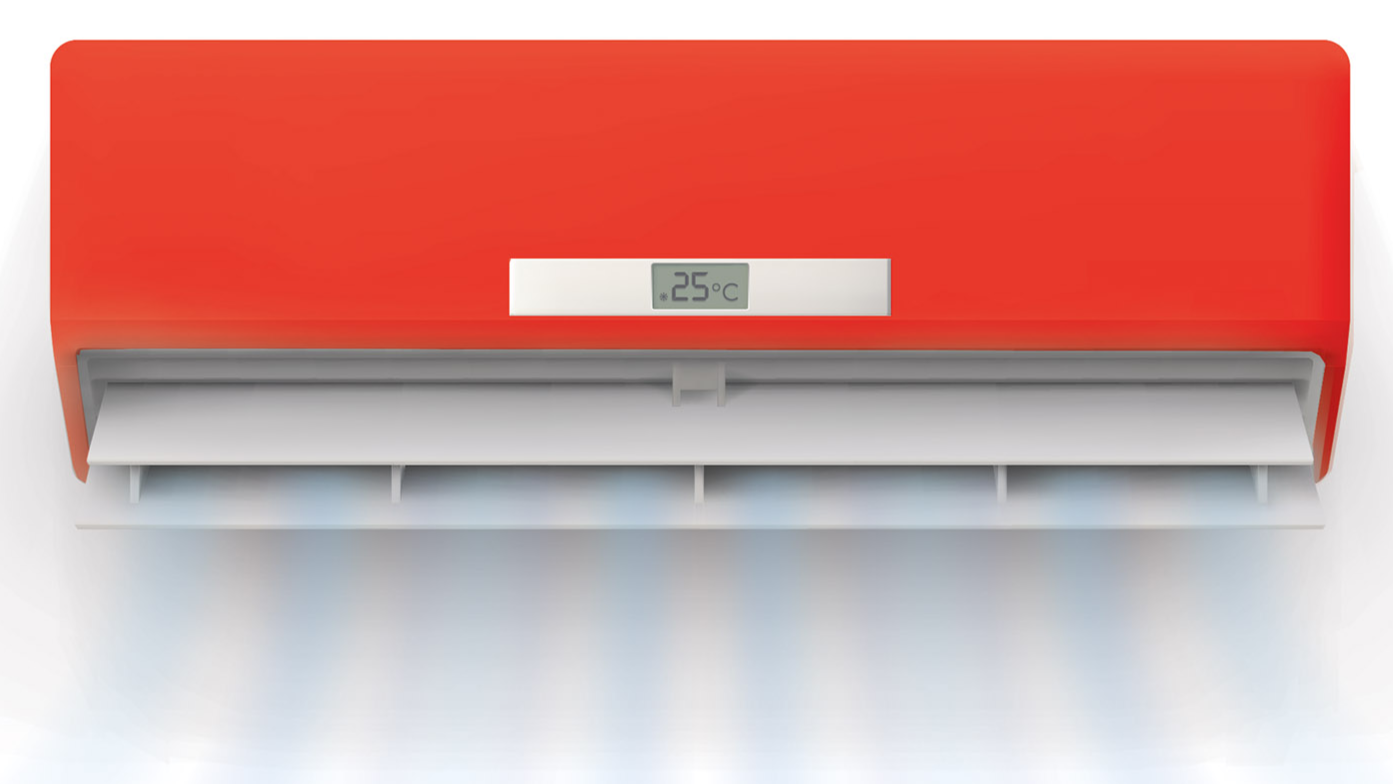
Searing temperatures across Europe this summer have been unrelenting, triggering an unprecedented scramble to cool off.
Record-breaking heat waves in the region have spawned a financial bonanza for Chinese air-conditioning brands, with sales of key manufacturers having gone up by more than 70 percent. Online and brick-and-mortar retailers are also struggling to keep pace with demand.
Demand boosts sales
Midea Group, based in Foshan, Guangdong province and one of the world’s biggest electrical appliances producers, is among the chief beneficiaries. The company said sales through its German e-commerce channels had climbed 37 percent year-on-year in May this year, while shipments to Spain and France had surged 108 percent.
The strong market response boosted investor confidence, lifting Midea’s H-shares on the Hong Kong bourse by over 16 percent to HK$97.60 by early August from its late-June price.
READ MORE: Cool innovation: Made-in-China appliances chill Europe's heatwave
The boom is equally reflected in China’s export figures. According to China’s General Administration of Customs, exports of air conditioners to the European Union had jumped 43.2 percent year-on-year in the first half of this year, hitting a record $3.76 billion. Exports of portable air conditioners alone had increased by more than 42 percent, highlighting Chinese innovation’s growing role in meeting Europe’s acute demand for accessible cooling solutions.
Preference for China-made air conditioners is rooted in a distinctly European challenge — cooling homes, traditionally, has neither been simple nor affordable.
In many European countries, installing a conventional split-unit system can involve significant financial and administrative burdens. Homeowners have to put up with exorbitant installation costs, while residents of flats, leasehold properties, conservation areas and historically protected buildings may face multiple layers of approval.
Dorian Olivier, a lawyer living near Paris and who is familiar with urban planning regulations, says the hurdles can be considerable. “Installing an exterior air-conditioning unit that could alter the appearance of a protected building is subject to red tape. Coupled with the fact that installers are profiting from insatiable demand, prices can quickly go through the roof.”
In the United Kingdom, planning permission alone can add substantial costs, with applications costing 548 pounds ($738) for a single dwelling and 1,083 pounds for developments involving two or more dwellings. Flats face even stricter curbs under permitted development rules, including a 0.6 cubic meters volume limit for external air-conditioning units. Noise assessments and architectural drawings could cost very much higher.
Despite significant investment of time and money, approval is not guaranteed. Such practical obstacles help explain the growing popularity of portable split systems that eliminate many regulatory hurdles and installation costs associated with traditional air-conditioning.
Europeans are not strangers to Midea’s PortaSplit model. The brand was named as one of Time magazine’s “Best Inventions of 2025”, recognized as a game-changing solution as climate change continues to drive demand for cooling worldwide.
The model alone has sold more than 60,000 units within six months this year, with full-year European sales expected to reach 200,000 to 300,000 units. Its appeal lies in its simplicity. The system requires no drilling, no professional installation, and is compatible with most European window types.
“PortaSplit combines strong cooling performance, high energy efficiency and quiet operation, attracting many new users who previously did not have fixed air-conditioning systems. It offers a sustainable solution for European customers,” explains Cathy Xiong, sales director of Midea RAC, Europe region.
She says Midea’s product development is driven by extensive localization. The company works closely with its European teams to study consumer behavior, incorporates local feedback into every design cycle and conducts field tests in real households before launching each new generation of products.
Innovation drives growth
European consumers are increasingly going for energy efficiency, convenience and intelligent features.
“In recent years, products equipped with artificial intelligence-powered energy-saving technologies have seen strong growth momentum in Europe,” says Xiong. “We believe consumers aren’t simply buying an air conditioner, but embracing a greener, smarter and more efficient way of living.”
The European heat wave has also fuelled a sharp increase in demand for international forwarding services.
According to Henry Peng, manager of Shenzhen Yunqi International Logistics, the demand for shipping air conditioners and other cooling products from China to Europe had “grown from virtually nothing” prior to 2026.
Previously, the company mainly handled ice pillows, fans and air coolers, with only limited numbers of air conditioners transported by sea. Since early June, however, enquiries have mounted, prompting the launch of dedicated China-Europe truck and airfreight routes. “Sea shipping, which takes 50 to 60 days, can no longer meet market demand,” says Peng.
Customers are increasingly turning to truck freight, which takes 25 to 30 days, or airfreight that can deliver goods within seven to 12 days. The UK, France, Germany, Italy and Spain have emerged as the main destinations.
Cross-border forwarding company Sealionscn has started a dedicated airfreight service for air conditioners, reducing delivery times to eight to 14 days. “Airfreight orders began picking up rapidly from late June to early July, and we’re now shipping more than 10 units per week,” says manager Don Zhang.
According to Zhang, Midea, Chigo, Hisense and Airmate are among the most sought-after brands, largely because their portable models generally weigh less than 30 kilograms.
Yunqi and Sealionscn have seen rising demand from overseas consumers purchasing directly through Chinese e-commerce platforms like Taobao, JD and Pinduoduo before arranging international forwarding.
“Clothing, electronics and daily necessities remain the most popular categories, we’re seeing more overseas consumers actively seeking Chinese products,” Peng says. “Cross-border forwarding from China to overseas markets has been picking up steadily, and we’re very optimistic about its future.”
The surge in demand for Chinese air conditioners reflects a broader transformation in global trade. China is no longer viewed merely as a low-cost manufacturing hub reliant on foreign technology, but as a major supplier of advanced products backed by proprietary innovation, intellectual property and sophisticated manufacturing capabilities.
The shift is evident in trade data.
ALSO READ: China's cool reply to heated air-con debate
According to Eurostat, the EU’s goods trade deficit with China reached 98 billion euros ($112.9 billion) in the first quarter of this year — its highest level since the third quarter of 2022, driven largely by imports of Chinese machinery, electrical equipment and vehicles. China was also the EU’s largest source of high-tech imports in 2024, accounting for 30 percent of extra-EU high-tech imports.
Olivier, who ultimately bought a German air-conditioning brand due to availability, says Chinese innovation is already embedded in everyday life. “I have some Chinese products — my robot vacuum is from Xiaomi, and my portable dishwasher is from another Chinese brand,” he says. “I definitely like Chinese innovations and tend to try a lot of new stuff. With innovation comes improvement for consumers, which is exciting.”
As Xiong notes, Midea’s ambition is not simply to export products, but to develop solutions tailored to local markets through its “local-for-local” approach.
The rush for Chinese air conditioners may have been sparked by an extraordinary heat wave, but it demonstrates a far deeper undercurrent — Chinese innovation-led designs are increasingly finding their way into European households.
The “Made-in-China” label is steadily giving way to one with far greater significance — “innovated in China”.
The writer is a freelance contributor to China Daily.
