

Move reflects company's confidence in nation's long-term industrial prospects
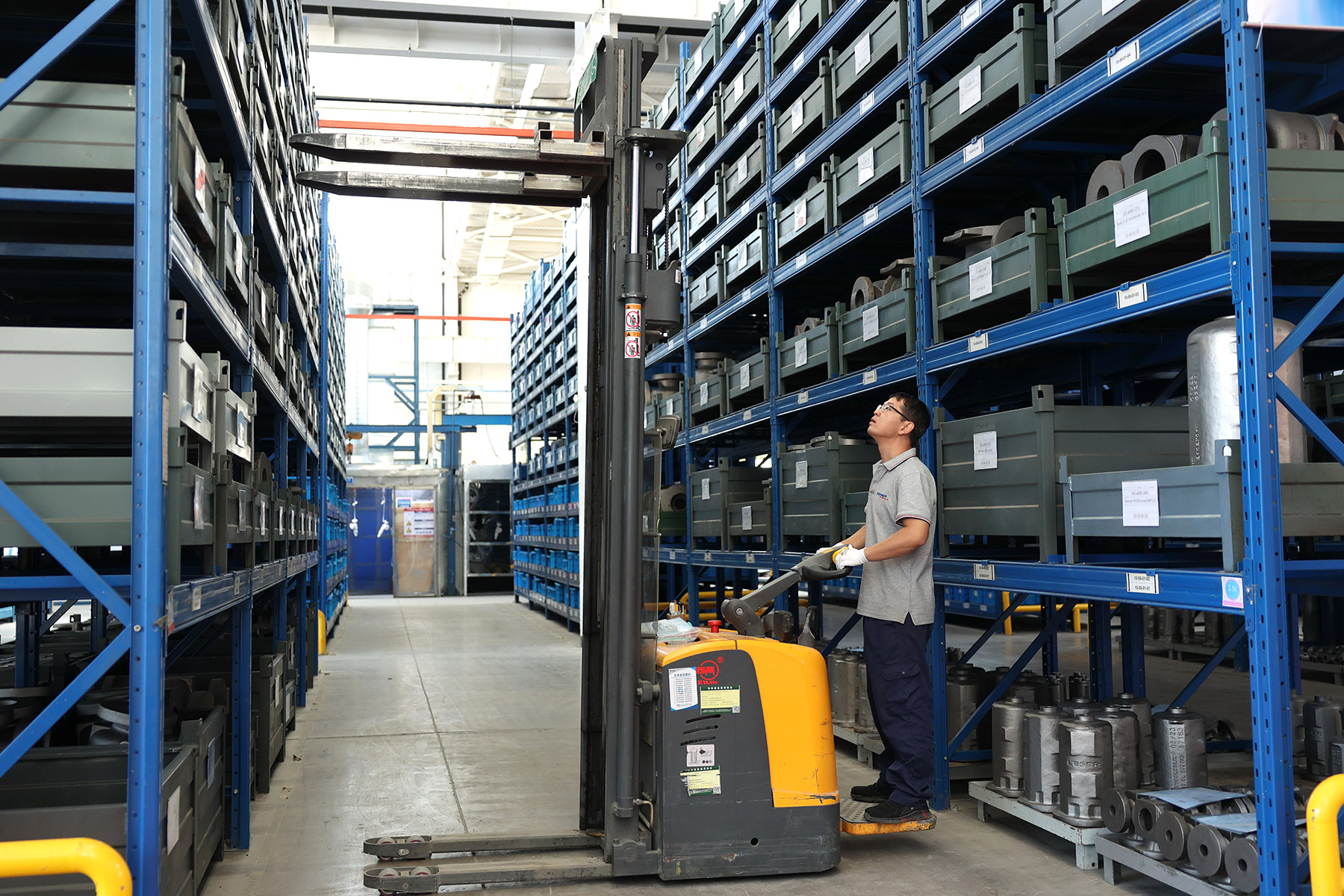
Leser GmbH & Co KG, a German manufacturer of industrial safety valves, will position China as one of its most important innovation and export hubs while giving its Chinese subsidiary greater operational autonomy under a new global strategy, said a senior executive.
The move underscores China's growing importance within the company's global network. Under its NextGen strategy, the company is giving mature subsidiaries greater autonomy while maintaining unified global standards, with China among the first entrusted with engineering, manufacturing and commercial operations.
Georg Leser, the company's sixth-generation successor, said the strategy aims to make the group operate faster and more efficiently while preserving the reliability and engineering standards that have defined the company for more than two centuries.
"China is now a fully empowered operating region," said Leser during a recent visit to China, noting that the Hamburg-headquartered group is moving away from its traditionally Germany-centric management model.
The move also reflects the company's confidence in China's long-term industrial prospects. Under the outline of the 15th Five-Year Plan (2026-30) for national economic and social development, China will promote green and low-carbon growth, upgrade traditional industries toward the mid-to-high end of the value chain, foster emerging industries and make forward-looking plans for industries of the future.
Rather than requiring constant oversight from Germany, the Tianjin-based subsidiary, which operates complete machining, assembly, testing and engineering capabilities, is now entrusted to make more decisions independently while maintaining the same global quality standards.
"We trust our China team to deliver the same quality as anywhere else in the world," he said. "The only thing we supervise is that our products meet the unified standards worldwide and are verifying this via our own test laboratory in Germany where all valves are undergoing the same type-testing procedure independently from their manufacturing location."
Leser said China has evolved from following international rules to increasingly shaping them, particularly in emerging sectors linked to clean energy and advanced shipbuilding.
That transformation is particularly evident in China's shipbuilding industry. China accounted for more than 80 percent of global new orders for bulk carriers, container ships and oil tankers in the first half of 2026. Green and low-carbon vessels have also become a key focus of the transformation and upgrading of China's shipbuilding industry, data from the Ministry of Industry and Information Technology showed.
Alongside its dominance in global shipbuilding, China is also playing a leading role in developing technical standards for next-generation marine fuels. Earlier this year, it introduced the world's first technical regulations for ammonia-fueled vessels.
Leser said such standards are likely to gain wider international adoption, highlighting China's growing influence in technology development and industrial innovation.
The transition toward cleaner shipping fuels is also creating new business opportunities for the German company, whose safety valves have already been specified for projects involving liquefied natural gas, methanol, ammonia and hydrogen technologies.
Digitalization has also become a strategic priority for Leser GmbH. The company supplied more than 2,300 safety valves and VDI 2770-compliant digital documentation for German chemical group BASF's integrated project in Zhanjiang, Guangdong province, its first such project in China.
"In the past, digital information was nice to have," he said. "Now it is becoming mandatory."
Rather than viewing China's technological advancement as a competitive threat, Leser GmbH considers itself a participant in the country's industrial upgrading.
Leser added that the company's global customer network enables Chinese engineering companies, shipyards and equipment manufacturers to access international markets because the company's products are already approved by many global end-users.
The German safety valve manufacturer also sees Southeast Asia as a key growth market and plans to leverage its China operations to improve delivery efficiency and better support customers as regional industrial investment and trade continue to expand.
Chen Jianwei, a researcher at the University of International Business and Economics in Beijing, said China's continuously improving industrial ecosystem — supported by stronger supply chains, advanced manufacturing capabilities and faster upgrading across entire value chains — is creating new business opportunities for multinational companies.
That trend is already being reflected in foreign companies' continued investment in China. Nearly 4,800 foreign-funded enterprises made additional investments in China between January and June, statistics from the Ministry of Commerce show.
Contact the writers at zhongnan@chinadaily.com.cn
