

Standard Chartered Bank (Hong Kong), the local arm of the global banking titan Standard Chartered Group, expressed optimism about business growth momentum in the second half of this year, focusing on strategic priorities such as renminbi internationalization, cross-border income, digital assets, and gold trading.
The United Kingdom-based banking group announced its first-half and second-quarter results last week, with the Hong Kong market remaining the largest income and profit contributor.
Profits before taxation from the Hong Kong market in the first half rose 13 percent year-on-year to $1.6 billion, with operating profits before impairment and taxation increasing by 9 percent and credit impairment down 24 percent during that period.
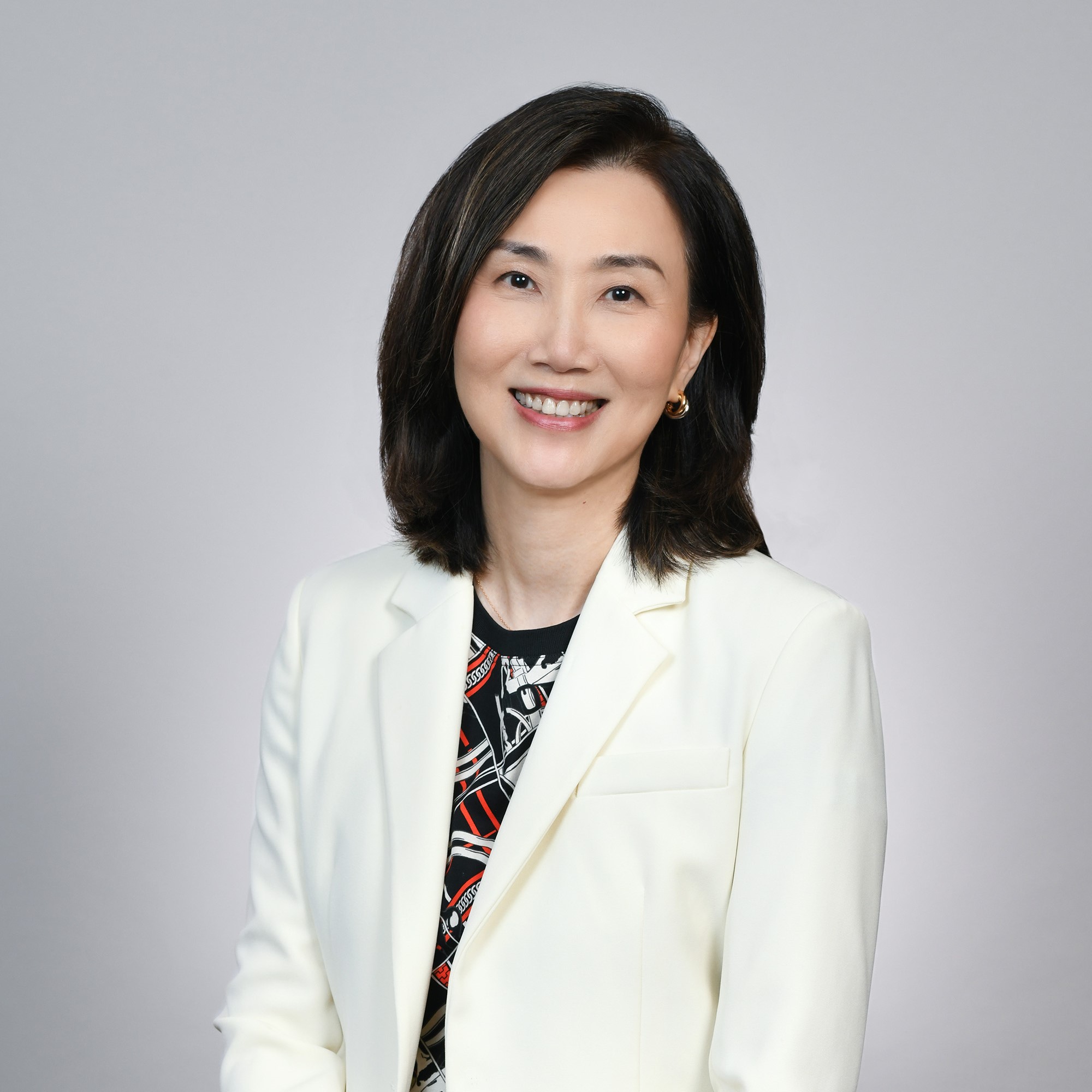
Mary Huen Wai-yi, CEO for Hong Kong and Greater China and North Asia at Standard Chartered Group, and executive director of Standard Chartered Bank (Hong Kong) Ltd, said the momentum of its loan business can be sustained in the second half, based on the four major growth areas — mortgage loans, trade finance, renminbi loans and wealth lending.
In the first half, the bank’s lending business achieved a broad-based 12 percent growth from a year ago.
First, the Hong Kong residential home market is posting a gradual recovery. Coupled with a stabilizing consumer market, this drives the demand for mortgage loans.
Second, the growth of Hong Kong exports and cross-border trade, driven by the artificial intelligence investment supercycle, is boosting the corporate need for trade finance and working capital.
“The city’s strong export performance creates business flows for the bank. When clients have greater balance sheets, they will have the demand for transaction banking services,” Huen said.
The third area of growth in the loan business relates to renminbi internationalization.
“As the offshore yuan liquidity pool in Hong Kong further deepens, companies can consider tapping yuan onshore rates for financing needs. Our renminbi-denominated loans have grown. By utilizing our networks, the bank can leverage Hong Kong to radiate yuan financing flows to overseas countries such as Southeast Asia, Africa and the Middle East,” Huen said.
Wealth lending has also increased alongside growing wealth management needs. Affluent income under the wealth and retail banking segment grew 28 percent annually in the first half.
Huen said the bank expects interest rates in the United States to remain stable, given an improving US economy and controlled inflation rate.
She said that stable US interest rates support an ongoing appetite for loans, although a modest rate hike remains possible.
Despite its minimal effects on the bank’s balance sheet, an interest-rate hike would still present challenges to the bank, Huen said. “Market competition on time deposits and the wealth management business is also keen.”
While Standard Chartered Bank (Hong Kong) expects traditional lending and the wealth management business to be robust and diversified in the second half, it is also targeting new opportunities based on four new growth drivers.
The first is the business potential arising from renminbi internationalization, as the Chinese mainland accelerates opening-up.
“Mainland and Hong Kong firms are actively pursuing overseas business expansion while overseas companies are venturing into the mainland market. This will bolster the demand for offshore yuan financing services,” Huen said.
Second, cross-border business activities are creating new growth drivers. In the first half of 2026, cross-border income under the corporate and investment banking segment increased 16 percent from a year ago.
For example, mainland companies expanding overseas are relying on the bank’s expertise in corporate treasury management, generating cross-border income for the bank.
“As we successfully help companies expand operations in one particular country, say Malaysia or Vietnam, these corporate clients still prefer to use our services there — even though we do not have a strong presence in these markets,” Huen said. “This creates network income for Standard Chartered Bank (Hong Kong).”
The third strategic priority is digital assets.
Anchorpoint Financial — a joint venture established by Standard Chartered Bank (Hong Kong), Hong Kong Telecommunications, and Animoca Brands — will announce the formal launch of the regulated Hong Kong dollar-backed stablecoin, HKD At Par (HKDAP), along with selected authorized distributors and use-case scenarios of the HKDAP, within this month.
In April, Anchorpoint Financial was one of the two companies granted a stablecoin issuer license by the Hong Kong Monetary Authority under the Stablecoins Ordinance, which came into effect in August 2025.
“Many of our corporate clients are eager to consult with us for formulating their digital asset deployment strategies. By addressing the pain points of cost efficiency and flexibility, the HKDAP can enable smooth cross-border settlement or tokenization of real-world assets that can support the real economy,” Huen said.
She also said the bank is proactively considering the construction of its first gold-storage warehouse in Hong Kong, as the city strives to develop a full value chain in gold trading services amid significant market demand.
Contact the writer at oswald@chinadailyhk.com
