

Beijing seeks global order rooted in equality, rule of law
We live in very dangerous times. Not since World War II have we seen such brutality and suffering as we are witnessing today.
The immense human suffering inflicted on the Palestinian people continues unabated. Recent United Nations reports have shown the deliberate targeting of children in Gaza and the West Bank. The conscience of the world seems to be numbed by the sheer scale of the humanitarian crisis.
This is now being extended to Lebanon.
In addition to the horrors in Gaza, we are seeing the expansion of the conflict in the region following the unprovoked attack by Israel and the United States on Iran. Thousands of innocent civilians have perished in those attacks, and billions of dollars in property turned to cinders. After days of uneasy calm, the situation has erupted again, with the US and Iran exchanging strikes.
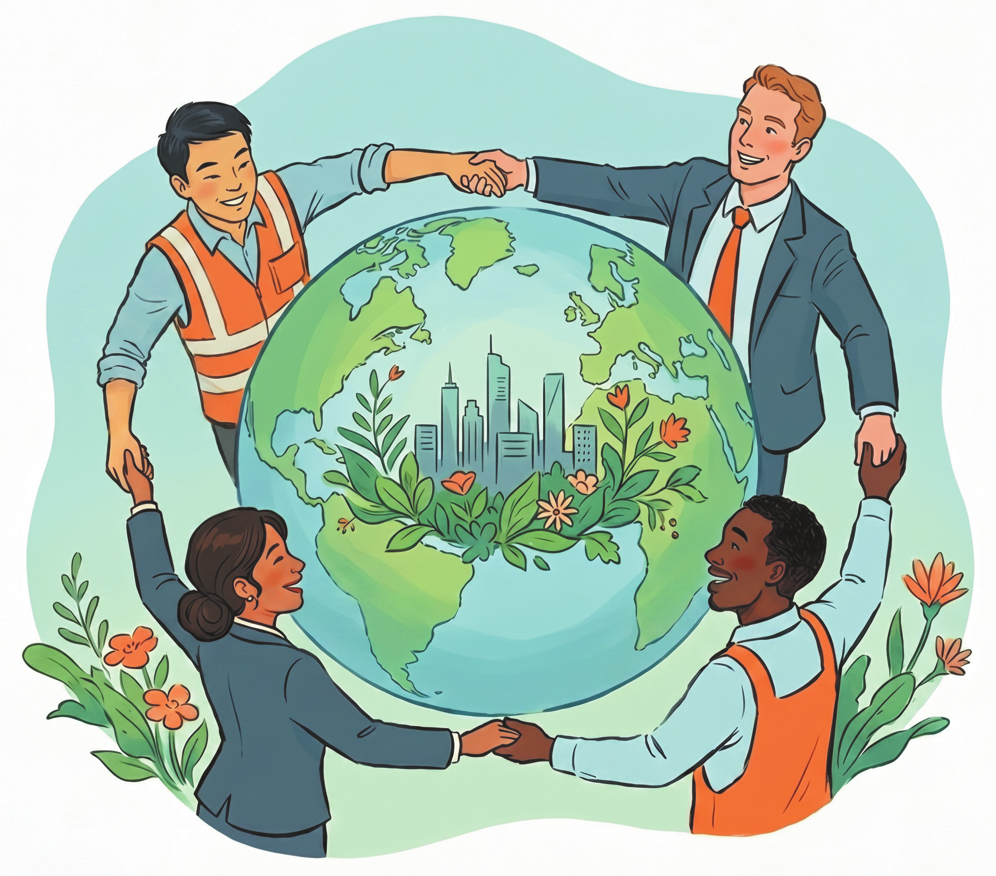
Amid all this, the People’s Republic of China has come forward with proposals to help steer international relations away from global disaster. These proposals are intended to chart a clear road toward just and lasting peace in the world. The idea is not simply peace, but enduring peace anchored by economic prosperity and global governance based on equality and the rule of law.
At the heart of the white paper “More Just and Equitable Global Governance: China’s Principles, Proposals and Actions”, released by China’s State Council Information Office in June, is a call to strengthen global institutions. This is an urgent demand since we have noticed what appear to be deliberate actions to weaken the UN and many of the global bodies linked to the UN that play very important roles in global governance.
China is working strenuously to promote the UN as the main global institution. It has been involved in every aspect of the global body’s work to foster peace in our world and to ensure justice for all. The nation has become the second-largest financial contributor to the UN, and it provides thousands of personnel for the UN’s peacekeeping missions.
Beijing has been advocating reform of the UN to reflect the changes that have taken place in the world since the organization was founded in 1945. This entails giving a more prominent role to former colonies that have joined the UN since they gained their independence.
China is a very strong advocate of respecting every country’s sovereignty and equality.
It is calling for the democratization of many institutions such as the International Monetary Fund and the World Bank. Historically, these bodies have disproportionately served the interests of developed nations, often imposing harsh structural adjustment measures on countries of the Global South.
China is not just voicing these calls; it is taking a leading role in the implementation of the proposals.
In this regard, it is advocating that the UN play a central role in forming “a global AI governance system with broad consensus to benefit all humanity”.
This is to ensure that no country is left behind.
China is also wary of how technology has been used in the past to enhance the military capabilities of countries. It has therefore made a very important suggestion to prevent the misuse of artificial intelligence in the military arena, attaching great importance to “preventing risks in the military applications of AI”.
It proposes that “all countries should adopt a prudent and responsible approach in the development and use of relevant technologies, to ensure that weapons remain under human control at all times to prevent an AI arms race”.
It is of vital importance to all mankind to ensure that these technologies serve humanity and are not monopolized by any country or group of countries to threaten and bully others.
Meanwhile, the Belt and Road Initiative that China launched in 2013 is proving to be very transformative.
Many countries have benefited from the infrastructure developments that have taken place in almost every part of the world. Those projects have helped to increase global production considerably and improve the connectivity between countries and continents.
China has also become a leading player in the latest scientific and technological revolution, as it is at the forefront of the development of many emerging technologies such as quantum computing, robotics and artificial intelligence.
In the past, the benefits of scientific and technological advancements were derived primarily by a few countries. They were used to enrich the elites within a few rich states.
From the perspective of the Global South, technological breakthroughs have become new tools for developed countries to maintain their economic dominance and suppress development aspirations elsewhere.
Now with China playing a more prominent role in global affairs, it is not only ensuring that its own people benefit from the ingenuity of its scientists and researchers, but it is also sharing the benefits with the rest of the world.
Through such path, China has become the most responsible member of the global community, and a beacon of hope for a world of peace, progress and prosperity.
The author is former president of Guyana.
The views do not necessarily reflect those of China Daily.
