

China men’s basketball team edges into next round of World Cup qualifiers but faces tough task
Ahard-fought revival, or a narrow escape?
The Chinese men’s basketball team’s survival by the skin of its teeth to squeeze into the next stage of the FIBA World Cup qualifiers has left fans with mixed feelings, while the squad’s apparent struggle to keep up with the modern game has raised concerns for its rebuild project.
Once the pride among all of China’s men’s collective ball-sports programs, the basketball team’s recent slump in international form, underlined by its failure to qualify for two consecutive Olympic Games, shows no sign of abating, as its seemingly bleak prospects for making it to next year’s FIBA showpiece ring even louder alarm bells.
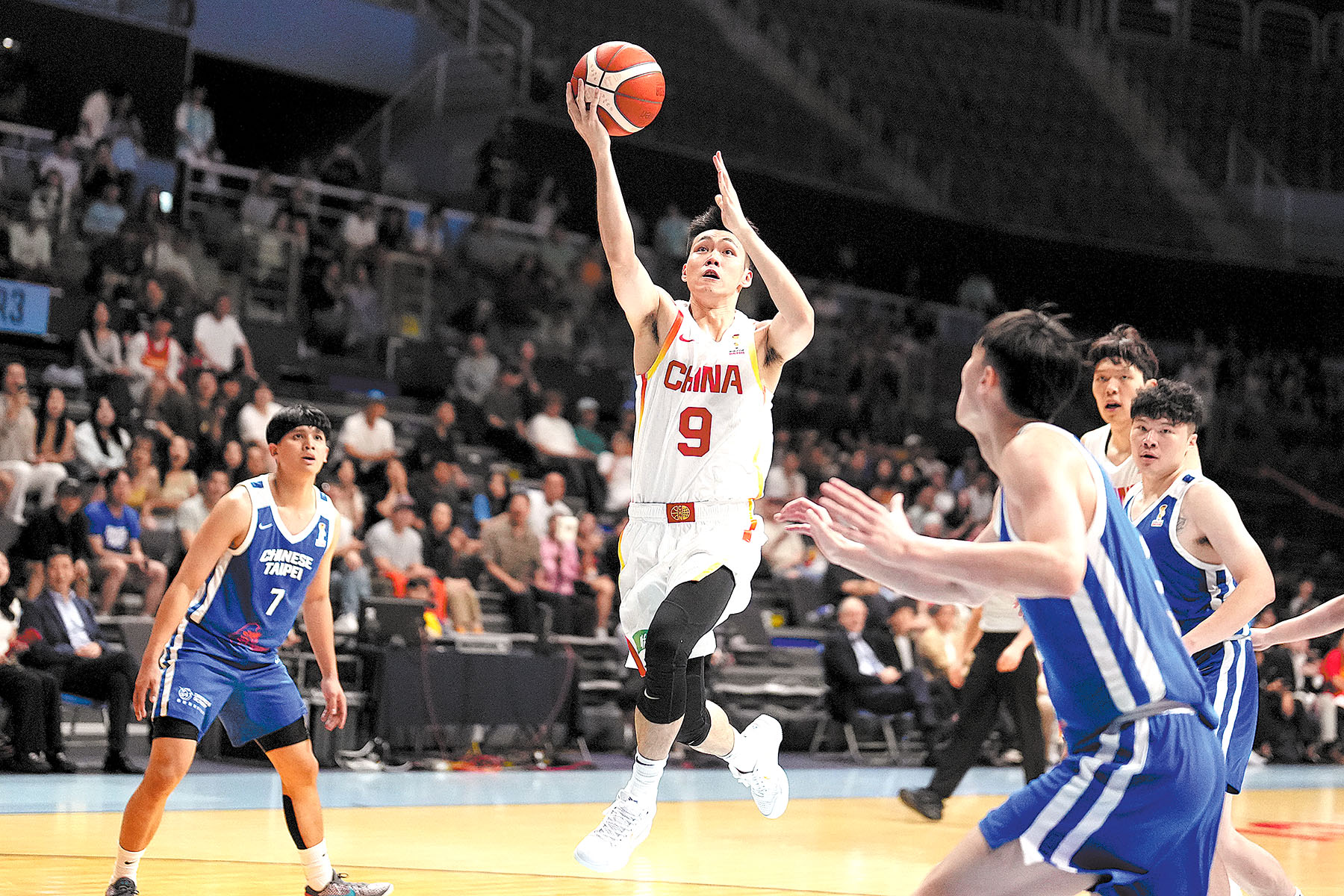
Featuring a young roster coached by Guo Shiqiang, Team China capped off the first stage of its Asian qualifiers with a 92-74 rout of Chinese Taipei on July 6 in the neutral host city of Goyang, South Korea, just squeaking into third place in the four-team Group B, behind leader Japan and runner-up South Korea, to make it into the next phase.
Nobody is getting carried away with its last-gasp win, though, with players, coaching staff, and fans dwelling on the sobering reality check provided by Team China’s three crushing defeats to South Korea and Japan in the earlier rounds, which laid bare the glaring gap between China’s comfort zone and the game that the whole world is playing.
As the fast-paced, sharp-shooting modern game, which requires quick transition and high intensity on both ends of the floor, prevails at the elite level in both the NBA and at FIBA tournaments, Team China’s traditional strength in the paint, bolstered by tall centers blessed with bulk, but lacking agility and mobility, has proved more of a liability than a point of pride on the continental stage in recent times.
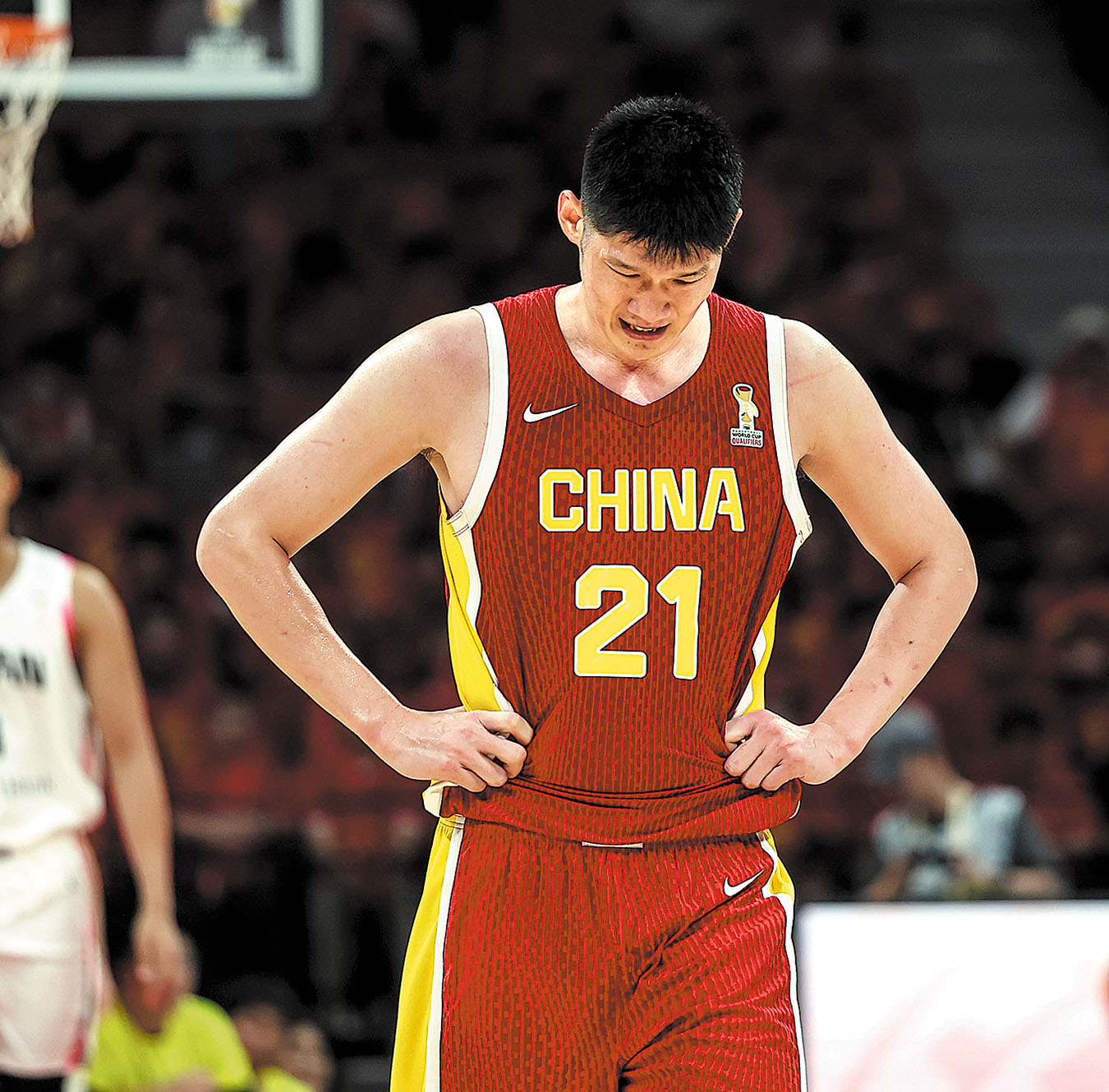
The team’s frustrating 73-92 home defeat to Japan in Shenyang on July 3, following its opening two losses to South Korea last year, first at home on Nov 28, and then on the road on Dec 1, all arrived in the same fashion — with China outrun and outgunned by opponents smaller in size, but much more efficient around the court — particularly in perimeter shooting and execution under pressure.
“Our team was made up of young players … They still have a long way to go to get used to the technicalities and mental pressure of international competitions at the elite level,” coach Guo said after his team’s 19-point loss to Japan on July 3, the largest deficit in the history of official FIBA meetings between the two countries.
“A tough loss like today is something that can happen once the pressure kicks in and their performance is affected. This is a tough lesson that they will learn from in the process of their development.”
Despite a towering presence in the paint, led by its NBA rookie, Portland Trail Blazers center Yang Hansen, and CBA All-Star Hu Jinqiu of the Zhejiang Lions, Team China struggled to keep up with the pace and intensity of its rival’s run-and-gun game, allowing the Akatsuki Japan to hit 12 three-pointers on 40 percent shooting beyond the arc in front of 8,000 red-clad Chinese fans at the Liaoning Indoor Stadium.
With generational talents like former NBA All-Star Yao Ming and his fellow ex-NBA big men Wang Zhizhi and Yi Jianlian no longer around, Team China is paying a heavy price for its reluctance to evolve with the game — mainly due to stagnant player development domestically when measured against international standards.
The last Olympic tournament featuring Team China was a decade ago, at Rio 2016, before the program missed out on Olympic qualification for the next two editions at Tokyo 2020 and Paris 2024 as a result of its poor showings at the 2019 and 2023 World Cups.
The quadrennial FIBA flagship tournament decides all direct Olympic qualification spots for each continent a year before the Olympics, making it the all-important pathway to the Games.
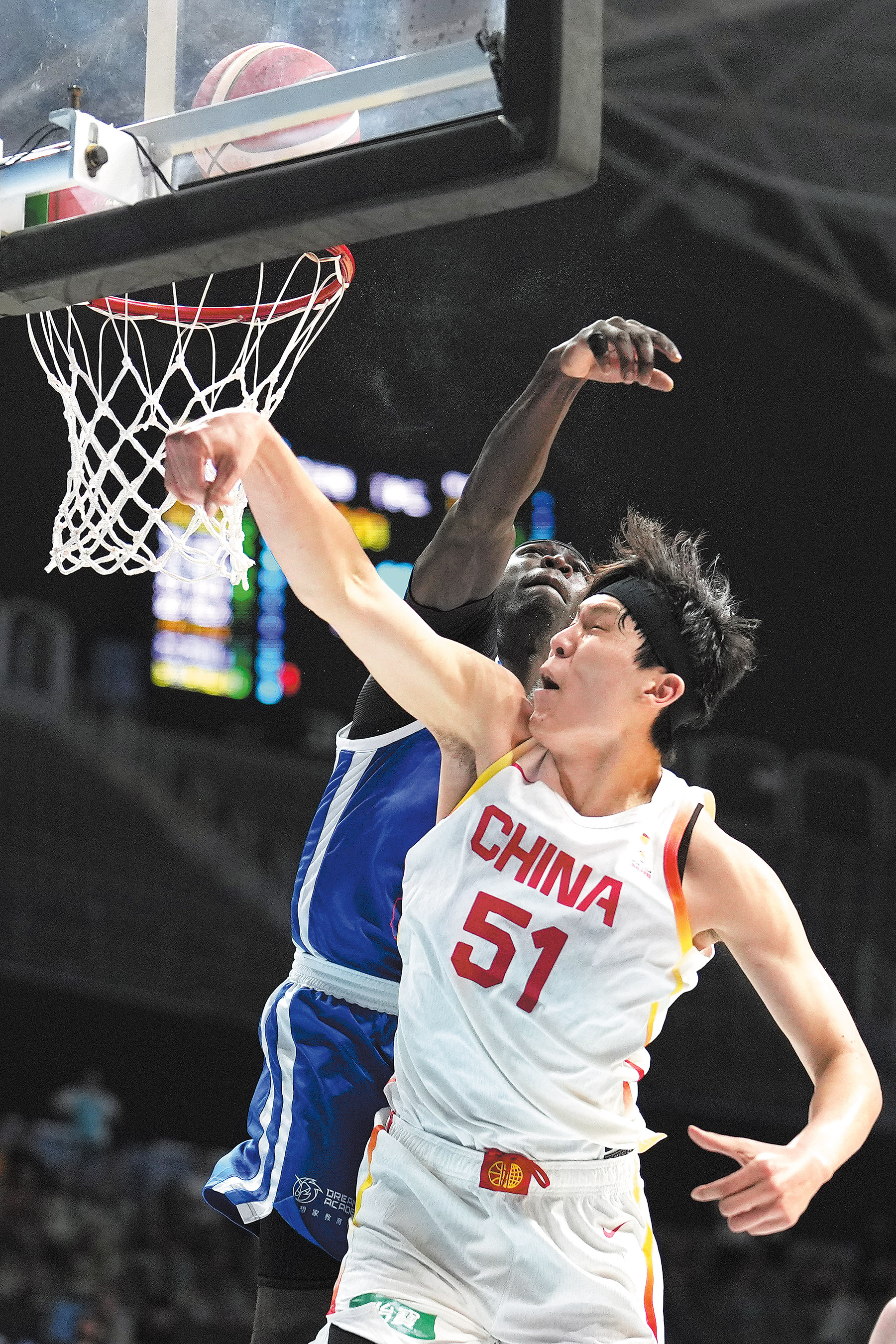
And in a country like China, which weighs Olympic success above all in its sports system, the basketball team sitting out a third straight Olympics would undoubtedly be considered a national disgrace among fans and administrators alike.
It is a worrying reality that is looming ever larger.
Carrying over its 3-3 win-loss record into the next phase of Asian World Cup qualifying starting in August, where China, South Korea, and Japan will be joined by Qatar, Saudi Arabia, and Lebanon in a new Group F, coach Guo’s men face what seems like a daunting task to secure another top-three finish.
China will only have six games, home-and-away against the three West Asian opponents, to clinch qualification for the FIBA showpiece in fall 2027.
Its unforgiving current record, compared to the five other contenders in the new group, and the lack of remaining chances in the next stage seem like an insurmountable hurdle to overcome.
The team will have to regroup quickly and put up a gutsier — and more versatile — fight when the qualifiers resume in late August, said captain Zhao Jiwei.
“This was a great confidence rebuild for us, just three days after a tough loss, which made me feel really proud of this whole team,” veteran guard Zhao said after leading the team to victory over Chinese Taipei on July 6.
China’s emerging play-making center Yang — who spent most of his rookie year in the NBA with the Trail Blazers’ G-League outfit and just turned 21 last month — echoed the skipper’s sentiment.
“For us, we will have to fight with 100 percent effort against every opponent in the second phase,” said the towering 2.16-meter center, who contributed 10 points and four rebounds on July 6.
“We need to stay confident in ourselves, but never underestimate anyone.”
Contact the writers at sunxiaochen@chinadaily.com.cn
