

Urbanites relocate to rural towns in Northeast China to enjoy pleasant summers and tranquil life
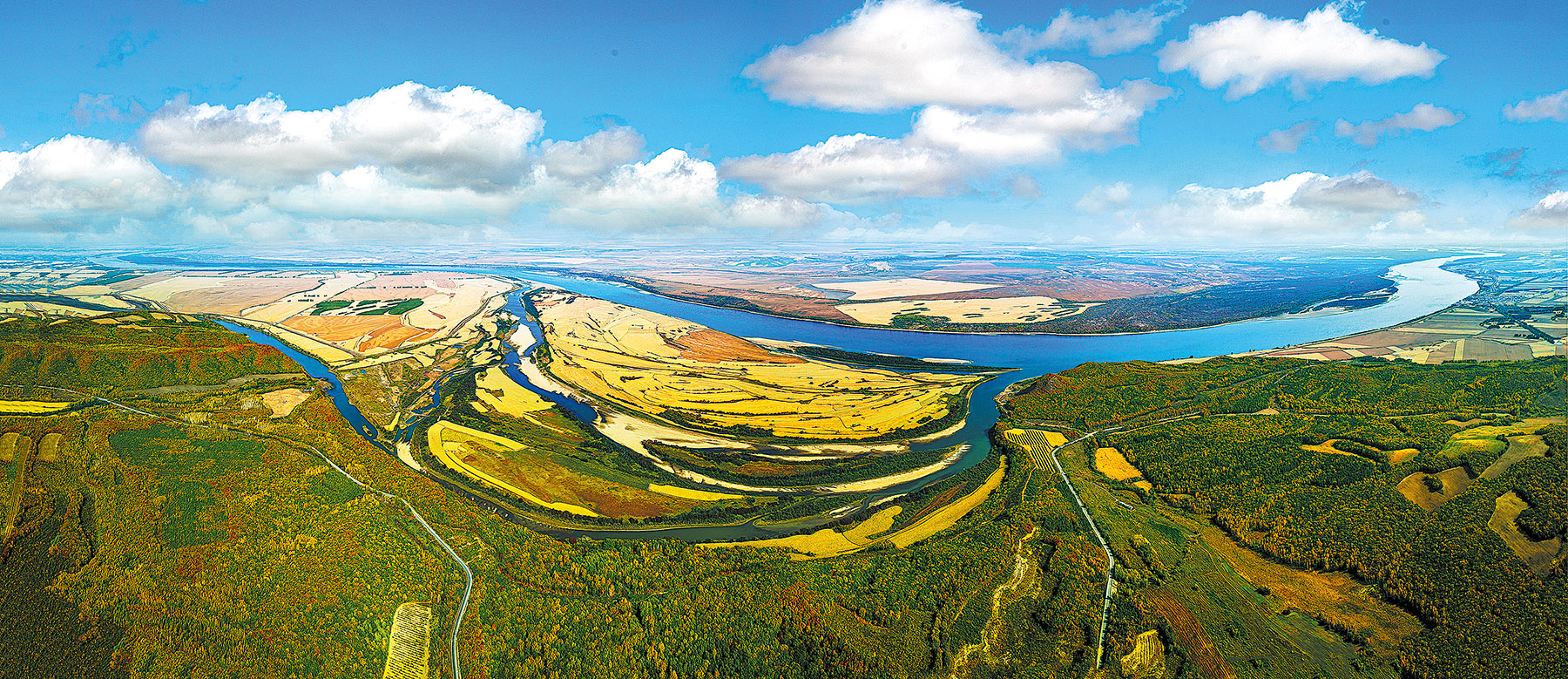
By the time Lyu Zuowei reached Bishui town in Northeast China’s Heilong-jiang province, he had driven more than 3,000 kilometers over four days.
The final 100 km of the journey that started in Wuhan, Hubei province, followed a country road into the Greater Hinggan Mountains.
At the entrance to Bishui, Huzhong district, he stopped the car and lowered the window. “I had never breathed air so fresh,” said 32-year-old Lyu. “It felt as if it went through my body and cleaned me out.”
The stillness was just as striking. The former forestry town is ringed by mountains, with the Huma River nearby. Its broad, orderly streets had been laid out when thousands of forestry workers and their families lived there, but many of its homes are now empty.
Lyu said it was so quiet he could almost hear a pin drop.
He had come in August 2024 to inspect a courtyard he had already bought online for 16,500 yuan ($2,440) without seeing it in person. Advertised on social media, it included an old brick house, a wooden shed, and a narrow vegetable plot.
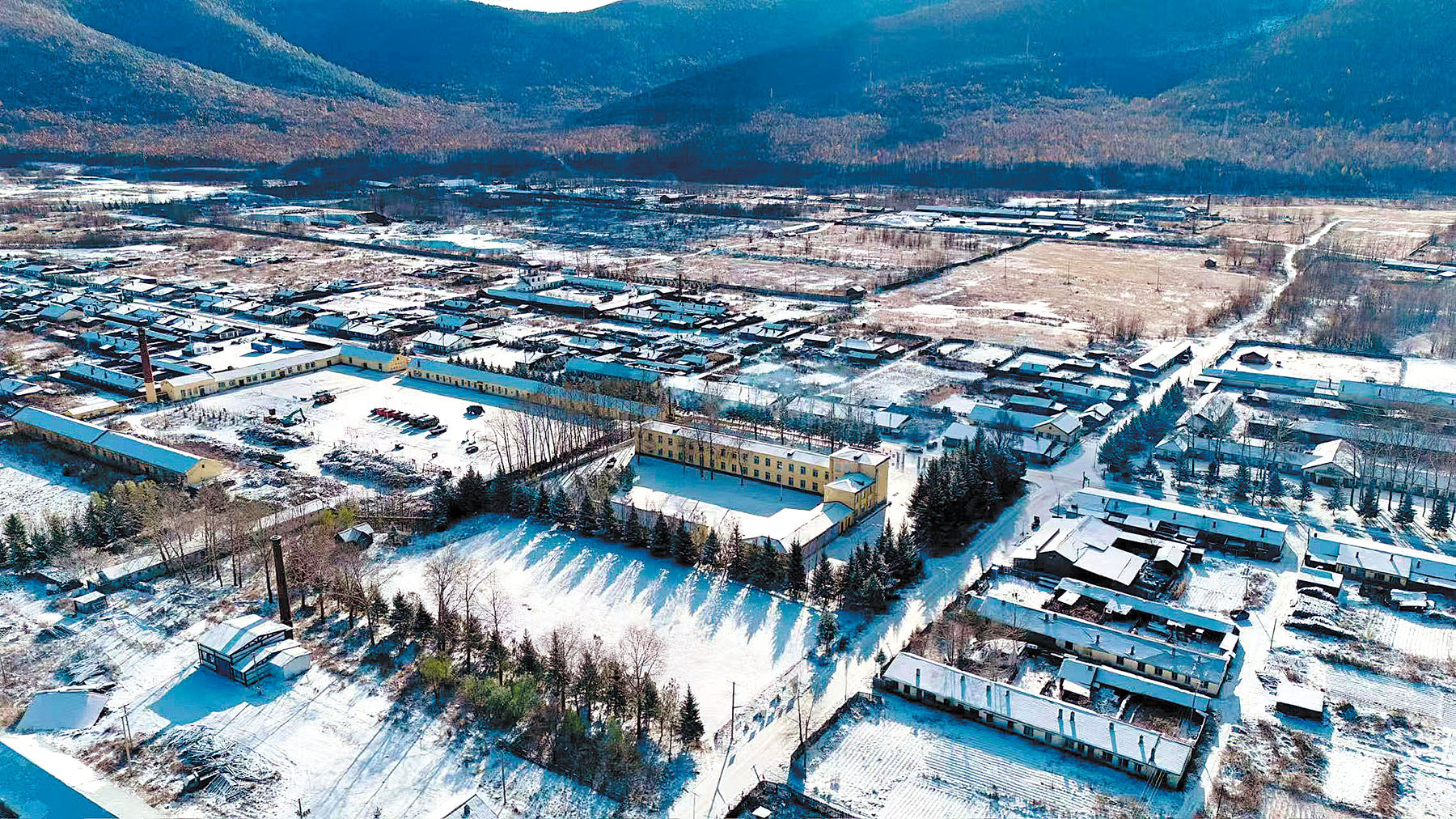
Lyu had recently left a publicity job with a State-owned construction company in Wuhan and was searching for a place to stay in the Greater Hinggan Mountains. He had read about the area in textbooks when he was a child, and had always wanted to go there.
He first thought of the place as a northern retreat — a place to visit when the summer was too hot and stay there before driving back to Wuhan.
But that first visit lingered in his mind.
In October of that year, when a detached courtyard house with a garage became available, he paid 40,000 yuan for it. The land covered more than 800 square meters. He later bought a third, row-style courtyard dwelling for another 40,000 yuan, bringing his total spending on the three properties to 96,500 yuan.
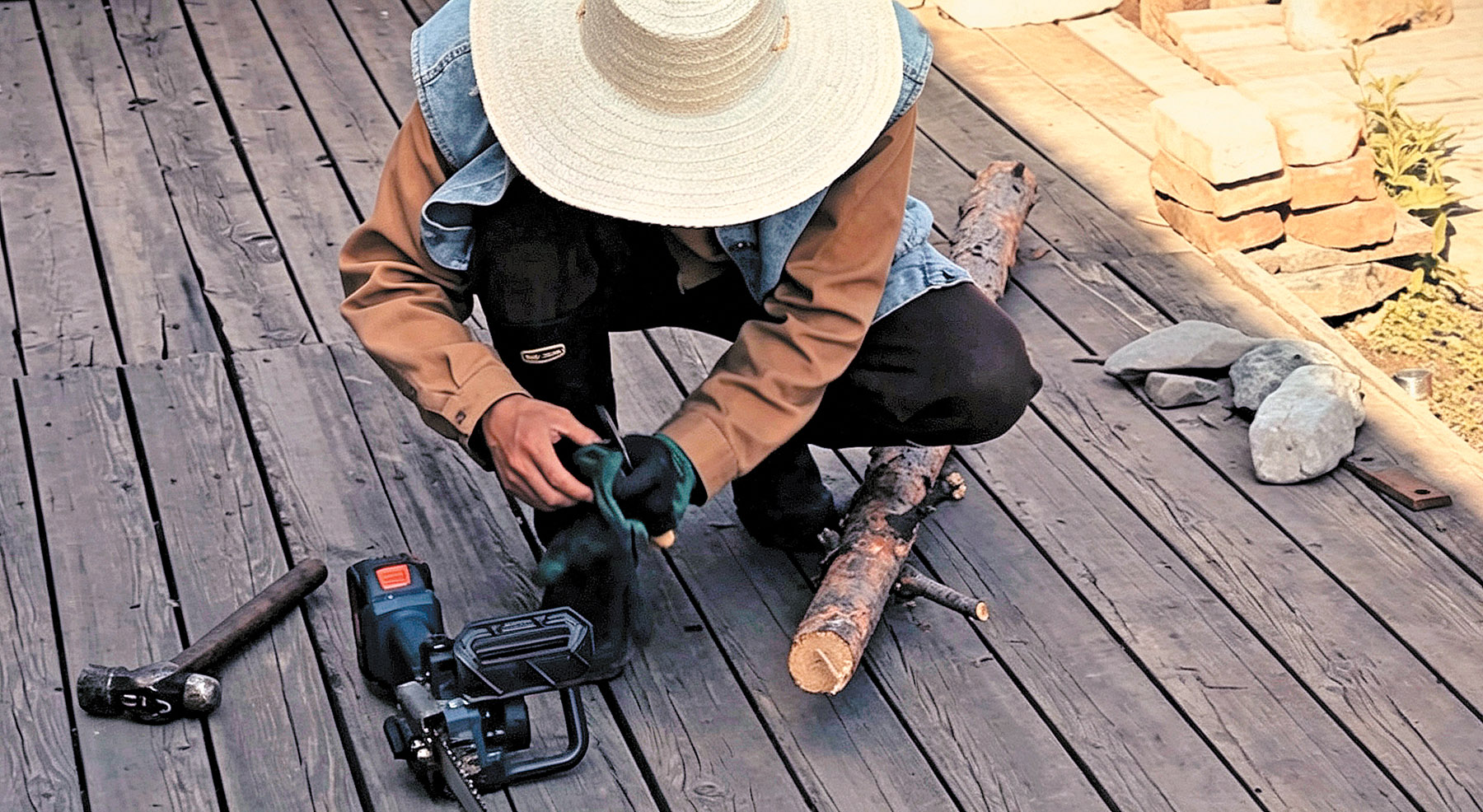
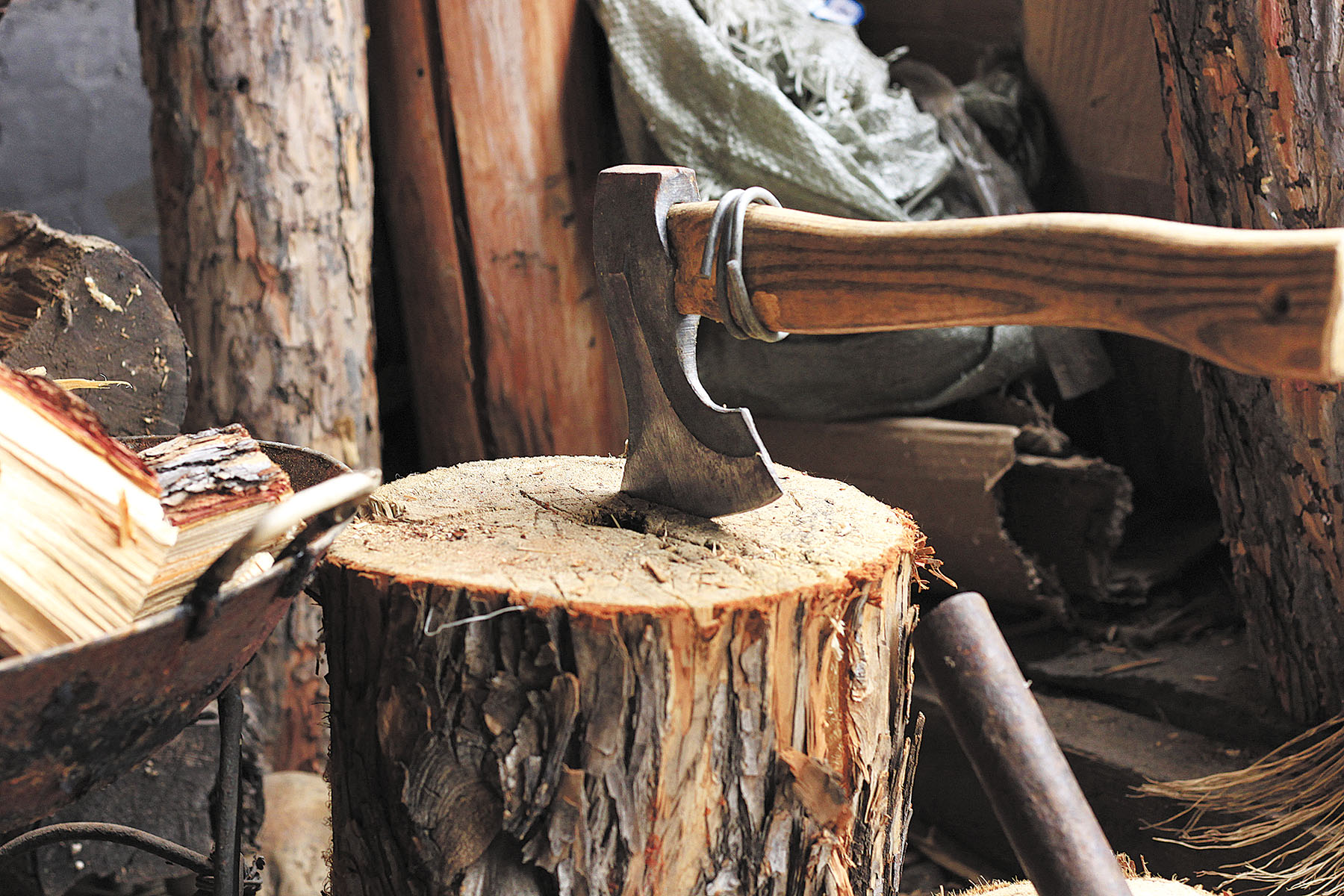
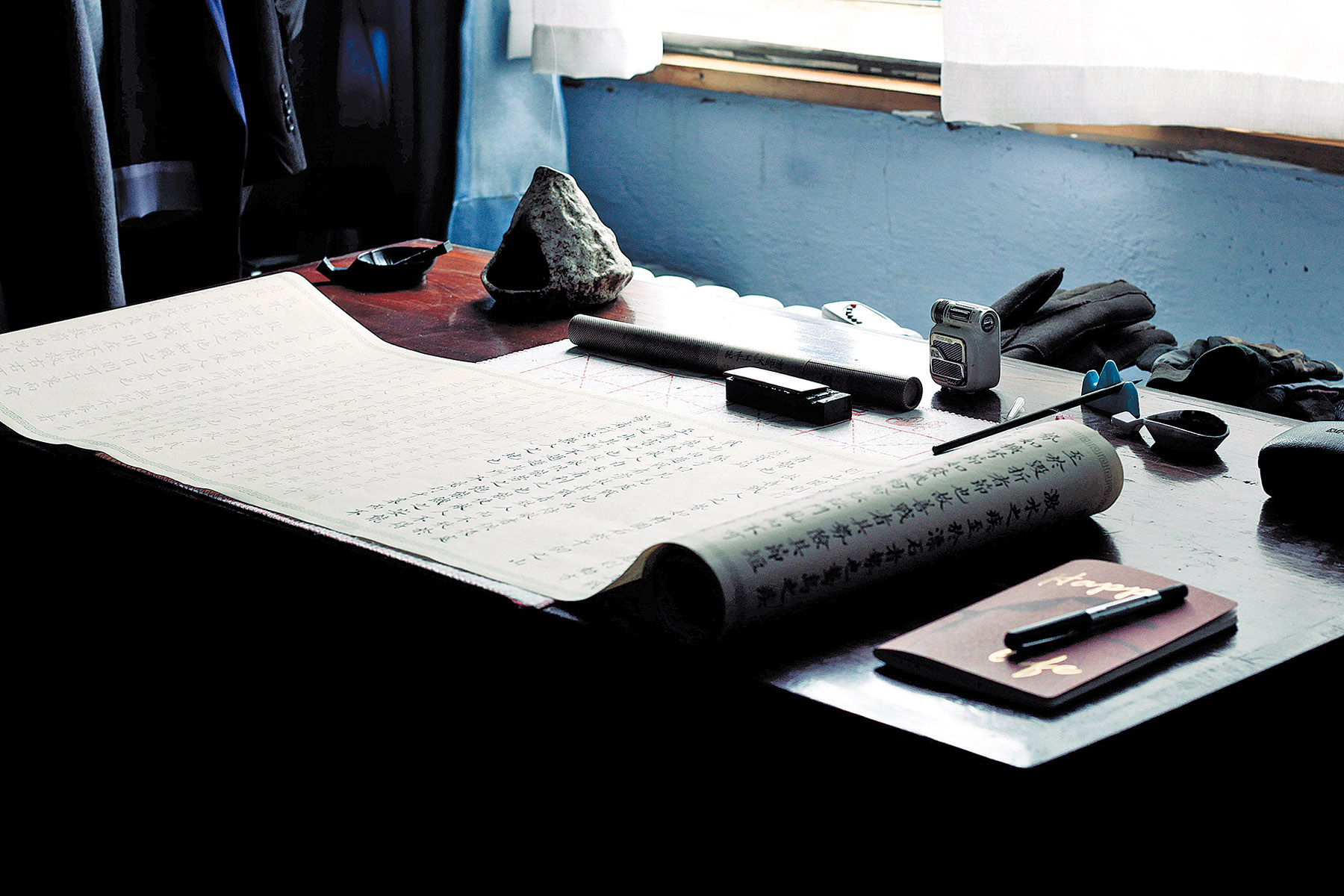
From July 2025, Lyu began spending longer periods in Bishui. On summer days, he sometimes rose before 4 am. He practiced tai chi and dance, wrote calligraphy, chopped firewood, cooked, tended the yard, and edited photographs and videos for his social media account.

Lyu, who studied dance at university and has always wanted to make it his career, said he felt like he was “actually living”.
“A house with a yard here is cheap and the environment is so good. I plan to live and stay here for a while,” he said. “I see this as a stage of my life — a time to adjust myself and think again about work and what kind of life I want.”
Lyu recently moved to Beijing looking for work, and a young woman is staying in one of his courtyard homes. She teaches Chinese online to students overseas and hopes to spend some time living in the region.
Although he is currently in Beijing, Lyu still feels that big-city life is not for him. In the longer term, he hopes to return to the Greater Hinggan Mountains and transform the courtyard homes he bought into a retreat combining cultural tourism, wellness and arts-based healing.
Lyu is part of a small but increasingly visible trend. In recent months, a growing number of social media posts have appeared about buying old homes in the Greater Hinggan Mountains.
Young people have shared stories about moving from major cities to Bishui and Yitulihe in the Inner Mongolia autonomous region, as well as their plans to renovate budget homes, tend vegetable plots and spend a season away from urban life.
In Yitulihe, outside buyers have been looking at low-priced apartments and courtyard homes for several years.
The dwellings in Bishui that caught Lyu’s eye were built to accommodate a different economy. Many date to the 1980s and 1990s, when logging supported settlements scattered across the mountains. As forestry production changed and workers retired or moved away, rows of houses were left unused.
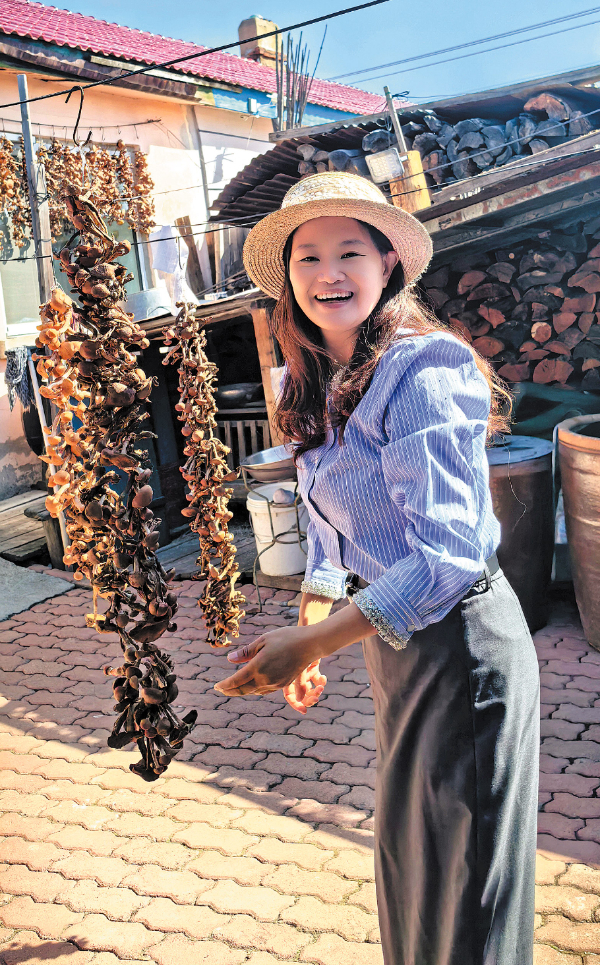
Pan Shiyu, who has lived in Bishui since arriving from Guangdong province in 2009, began helping meet the growing demand for such properties about five years ago. Sometimes she buys a home and sells it on, while other times she acts as an agent for sellers and buyers.
Her first purchase followed a meeting with an elderly couple preparing to join their children in Shanghai.
“They stood in front of the old house and were upset. They did not want to abandon it, but they could not stay,” Pan recalled. She bought the roughly 50-square-meter home for 5,000 yuan and later began acquiring other vacant properties, arranging ownership documents and matching them with buyers.
Pan said she has helped put more than 300 homes back into use. At first, most of the buyers were those approaching retirement. Over the past two years, more people in their 20s and 30s have made inquiries, she said.
“Some young people stay for a few months, some stay longer,” she said. “When they have rested and recharged, they set off again.”
The changing demographic is noticeable in Bixing community, Bishui.
Zhao Qingguang, head of the community residents’ committee, has worked there for more than 20 years.
He estimated that “nonlocal households” have risen from just over 10 to more than 30 today. The number could reach 50 or 60, if buyers who have not yet arrived are included, he said.
The community has about 500 to 600 households. During busy times, it has 700 to 800 residents, Zhao estimated. In winter, the population drops to about 300. Only a handful of nonlocals remain throughout the cold months.
The houses are inexpensive, but many lack indoor bathrooms and modern heating. To deal with the cold, residents burn firewood or install electric systems themselves.
“Heating is a real problem in winter,” Zhao said. “The winter here is long.”
However, many homebuyers renovate their courtyards and return in summer. Others discover that the distance, cold, or the daily work involved in maintaining the property and their desire for a comfortable existence are too much for them, and they put their homes back on the market.
It is not the first time that urbanites’ retreat to greener pastures and search for bargain homes has made headlines.
In 2019, Hegang, a former Heilongjiang coal city, went viral after apartments sold for tens of thousands of yuan. A 2024 media survey found at least 24 cities in 10 provincial-level regions in similar situations. More than half were in Northeast China.
Fuxin and Linghai in Liaoning province also attracted buyers to cheaper old apartments. Some settled permanently, while others kept jobs elsewhere and returned only occasionally.
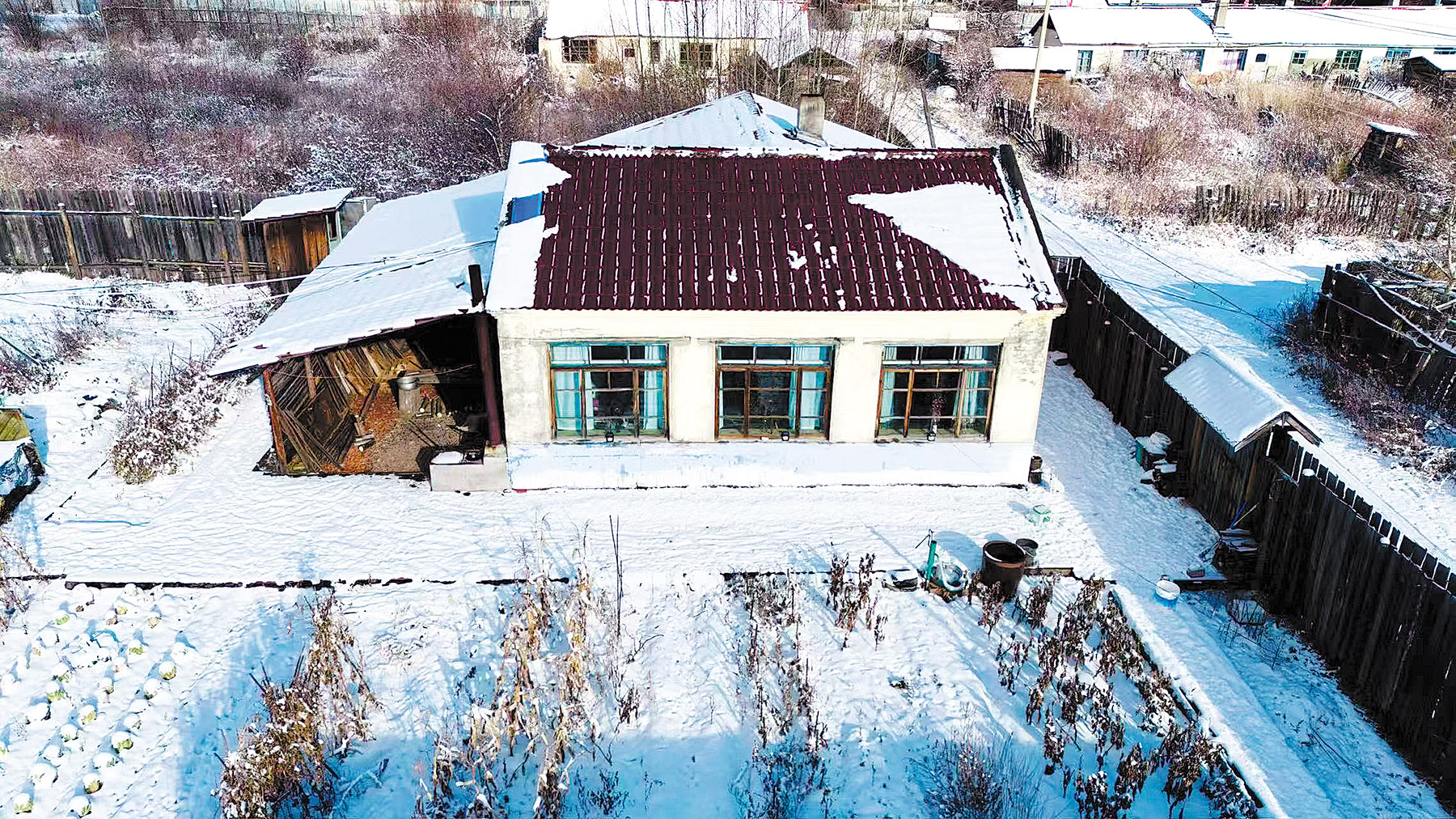
But the forest-town version of the migration to quieter locations offers something many bargain apartments do not: land. Bishui homes often include a courtyard, shed or vegetable plot. The low price buys shelter and the chance to plant vegetables, split firewood and organize life around manual work.
For Lyu, the yard is not purely decorative. He had tried to grow vegetables, adding another task to his routine of chopping wood, cooking and looking after the property.
Sun Jiashan, a researcher at the Academy of Chinese Culture, said improved transportation links, internet access and changing ideas about work have made it possible for more people to move around the country.
Remote work enables “geographical arbitrage”, that is, earning income tied to a large city while living more cheaply elsewhere, he said.
“Some can take a gap period in the Greater Hinggan Mountains and then return to a big city,” Sun said. “People no longer have to work in an office building or a cubicle.”
Retirees use the seasons as their compass.
Fan Xiuchun, 55, from Zhejiang province, paid a little more than 30,000 yuan for a house in 2023. She usually arrives in April, as the snow begins to melt, and stays until mid-September. Known as “China’s coldest town”, Huzhong averages 16 to 20 C in summer, while winter temperatures often fall below -40 C.
“The environment is excellent here. My sleep is better here. I spend the whole summer and then go back,” Fan said.
She lived and worked in Chong-qing for decades, and later spent a lot of time in Yunnan province.
Fan has a car in Bishui and treats the town as just one stop in a life divided among several places. Such an arrangement, she said, requires retirement income, savings or remote work.
“If you still have to struggle to make a living, this place is not very suitable,” she said. “There are not many job opportunities even for local people, let alone for outsiders.”
Last year Fan bought three more town houses in Huzhong district. She plans to take her family and friends there every summer to enjoy the cool weather.
Wang Jiayan is among the few outsiders who have made the move permanent. The 42-year-old from the Ningxia Hui autonomous region has lived in the area continuously for six years.
He bought his first house, without visiting it, for 15,000 yuan after seeing an advertisement on a short-video platform in 2020.
Wang supports himself with his savings. Once the house was bought, he said, daily living has cost very little.
He has kept his home close to its original state, preferring a wood-burning stove and doing manual chores to a modern renovation. In summer, he rises at 3 or 4 am and tends his vegetable garden. He is usually in bed before 9 pm.
Wang’s existence, however, is not solitary. “They treat me like a son,” he said of the older residents nearby.
The care and concern is mutual. Wang has a car and drives his neighbors to hospital when they need help. When he fell ill, they came to check on him — one household brought steamed buns, another carried dumplings.
“People are social animals,” Wang said. “Helping one another makes us happy.”
He has no plans to return to city life. “I will live here for good,” he said. “I like this place very much.”
Unlike most outsiders, Wang looks forward to the coldest months. He enjoys chopping wood and stoking the stove when the streets grow quiet.
“Winter is when it is quietest,” he said. “Burning firewood is where the warmth of everyday life comes from.”
By contrast, Fan plans to leave Bishui by mid-September and return south.
Most of the summer residents will also be gone, but Wang will remain. From his courtyard, he has watched the newcomers grow younger. Many tell him that work and competition in the cities have exhausted them.
Bishui’s low costs allow some to spend a summer, or even a year or two, outside their old routines — living differently, slowing down and thinking about what should come next. But family responsibilities and the need to earn an income eventually draw many away.
“Most young people cannot stay here for long,” Wang said. “Some come only in summer. Others stay for a year or two to regain their balance, but many eventually return to the cities.”
Contact the writers at zhaoruinan@chinadaily.com.cn
