

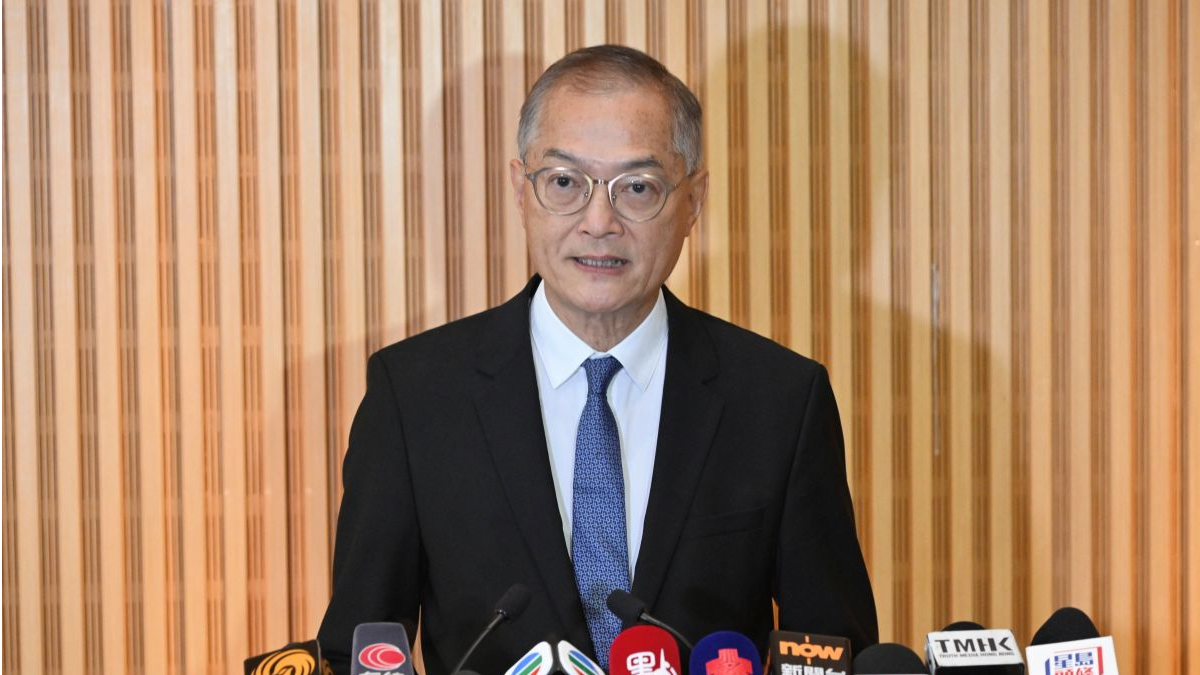
Hong Kong will review whether there’s scope to strengthen the reporting mechanism for reproductive technology incidents after a local fertility clinic delayed its disclosure of embryo sample mix-ups, which prompted regulatory action.
Secretary for Health Lo Chung-mau made the response on Wednesday following a disclosure by the Council on Human Reproductive Technology, which oversees in vitro fertilization, that a locally based clinic, HEAL Fertility, had mishandled embryo biopsy specimens from two patients.
According to the council, the incident came to light after a laboratory of the Chinese University of Hong Kong at Prince of Wales Hospital in Sha Tin found that the embryo biopsy specimens of two women submitted by the clinic had failed to match the genetic profiles of either patient during routine verification.
In the first case, laboratory tests had shown that six of seven embryo biopsy samples did not match the intended parents. The second case involved two samples, both of which were found to be unrelated to the parents concerned.
Although HEAL Fertility was aware of both incidents on May 26 and June 4, a preliminary investigation by officials revealed that the clinic had never informed the Department of Health.
ALSO READ: HK proposes amendments to enhance medical complaints-handling process
The clinic concerned did not report the matter to the CHRT until June 17 – a time lapse that has turned the spotlight not only on the clinic’s conduct, but also on the adequacy of the official disclosure discipline and reporting timeline for such incidents.
Lo said he agreed that the incident’s notification lag was “not very ideal”.
The Department of Health’s Office for Regulation of Private Healthcare Facilities, after having received the council’s referral on July 3, said the incident, which involves the erroneous identification of patient biopsy samples, meets the definition of a “serious untoward event” that must be reported to the authorities within 24 hours as per the Code of Practice for Day Medical Centres.
HEAL Fertility’s delayed notification, the office said, constitutes a contravention, adding that a regulatory notice had been issued requiring the clinic to submit an investigation report within four weeks to explain what caused the incidents and what remedial action it would take.
READ MORE: HK smoking rate hits new low, AI-assisted counselling begins
Lo noted that the CHRT had carried out several rounds of investigation after the clinic’s June 17 notification.
The Department of Health has moved promptly to follow up on the matter and handed the case to the police on Monday. A police spokesman said no arrests have been made so far.
Lo pledged that the authorities would await separate reports from the police, the CHRT and the clinic itself before deciding what procedural improvements are needed.
HEAL Fertility apologized to the clients involved on Tuesday night, saying it has formed an internal task force to review its procedures and make improvements wherever necessary.
The clinic said patients who are worried about the identity of its specimens could ask for genetic testing for verification purposes.
Fourteen of the clinic’s 17 services have been suspended so far, with only three storage-related offerings still in place.
Legislator Nixie Lam, who became a mother through assisted fertility, said the mix-up was “shocking”. The episodes exposed a troubling gap in oversight of the fertility industry’s tardiness in reporting incidents, and this made it clear that the related regulatory apparatus remains a work in progress, she added.
Proper management of embryo biopsy samples, Lam said, is “intrinsically tied” to the fertility expectations and vital rights and interests of many households, calling the incident “grave in nature” and “not to be taken lightly”.
Lam added that the error had been spotted in time by CUHK’s laboratory, which had been running simultaneous checks on embryo conditions and parental identity.
She praised such cross-checking as “key” to the safe delivery of infertility treatments and called on all assisted-reproduction providers across Hong Kong to adopt the practice as standard procedure.
Chan Hoi-yan, another legislator, noted that the sample confusion, if it had escaped detection, could have adversely affected fetal development or led to miscarriage — risks she deemed “clearly serious untoward events” requiring accountability.
She described as “unacceptable” the time lag between the center’s receipt of abnormal sample reports in mid-May and, again, in early June, while the Department of Health was not informed of the situation until July 3.
If HEAL Fertility had taken immediate remedial action when the first incident emerged in mid-May, the second episode might have been avoided, Chan said.
Contact the writer at wanqing@chinadailyhk.com
