


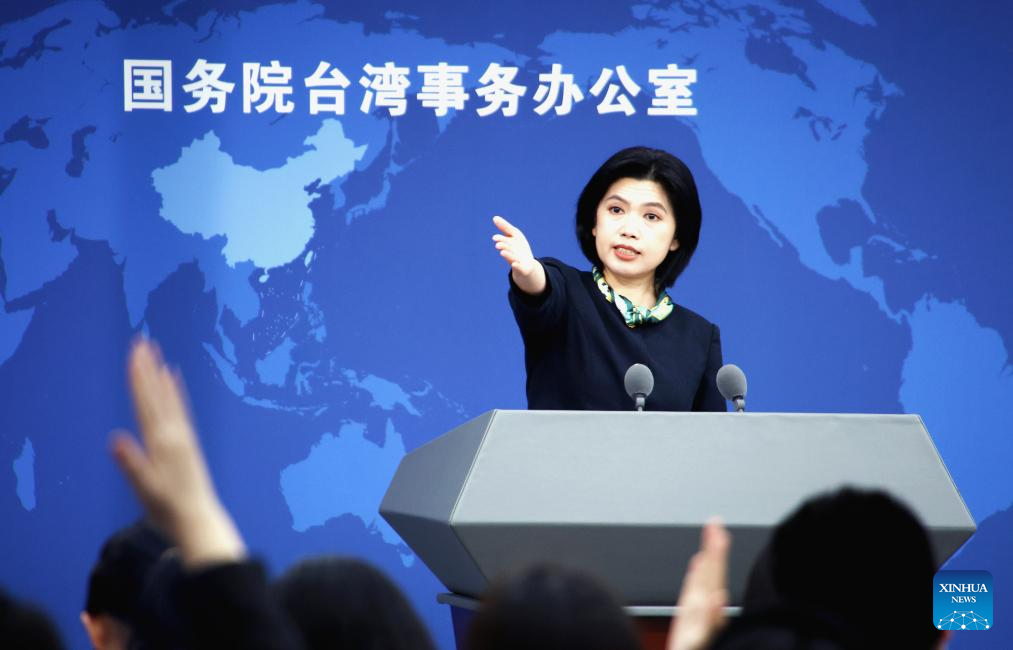
The Democratic Progressive Party authorities' rejection of applications by tourism operators from Shanghai and Fujian to visit Taiwan for route inspection trips is political manipulation and creates artificial barriers to cross-Strait tourism exchanges, Zhu Fenglian, spokeswoman for the Taiwan Affairs Office of the State Council, said on Thursday.
Zhu made the remarks at a regular news conference after tourism groups and operators on the island voiced opposition to the rejection. They urged the DPP authorities to reduce political interference, allow tourism exchanges to move ahead first, and leave room for easing cross-Strait relations.
Zhu said promoting the resumption of travel to Taiwan by residents from Shanghai and Fujian is a positive step that responds to mainstream public opinion in Taiwan and helps promote the peaceful development of cross-Strait relations.
Route inspection trips are a common practice in the tourism industry, she said. Such visits are intended to coordinate accommodation, dining, scenic spots and reception procedures, and are purely non-governmental and business-related exchanges.
However, the DPP authorities unilaterally set prior consultation through the Taiwan Strait Tourism Association and the Association for Tourism Exchange Across the Taiwan Straits as a precondition and directly rejected the applications, Zhu said.
"This is typical political manipulation and artificial obstruction," she said.
The call from Taiwan's tourism sector for "less political manipulation and letting tourism go first" fully reflects the industry's dissatisfaction with and opposition to the DPP authorities' deliberate politicization of cross-Strait tourism, Zhu said.
ALSO READ: Taiwan's tourism industry calls for early resumption of cross-Strait travel
It also shows that the authorities have ignored the operating difficulties facing tourism businesses on the island and the livelihood needs of ordinary people, she added.
Zhu said the mainland has always upheld the idea that people on both sides of the Taiwan Strait are one family, and has continued to release goodwill by promoting the resumption of mainland residents' travel to Taiwan.
Since 2024, the mainland has successively resumed travel by Fujian and Shanghai residents to Jinmen and Matsu, she said.
If the DPP authorities truly care about the livelihoods of tourism operators, they should lift restrictions on mainland residents traveling to Taiwan as soon as possible, Zhu said.
June 28 this year marked the 15th anniversary of the launch of individual travel by mainland residents to Taiwan. Some opinion on the island has said tourism is a form of wordless connection and one of the best ways to achieve mutual benefit across the Strait, as closer interaction can help reduce differences while individual travel brings business opportunities and expands demand in Taiwan's market.
Zhu said tourism is both an encounter with scenery and a meeting between people. Group tours and individual travel to Taiwan can bring visitors to Taiwan's cultural and tourism industries, stimulate local consumption and promote mutual understanding between compatriots on both sides of the Strait, she said.
"This is a good thing that benefits both sides, and the tourism industry on the island is full of expectations," she said.
Zhu said the mainland warmly welcomes people from both sides to visit each other and travel together.
READ MORE: DPP snubs mainland cooperation package
The two sides share connected landscapes and the same cultural roots, she said, expressing hope that more compatriots across the Strait will travel and exchange, deepen their bonds and bring each other psychologically closer.
