

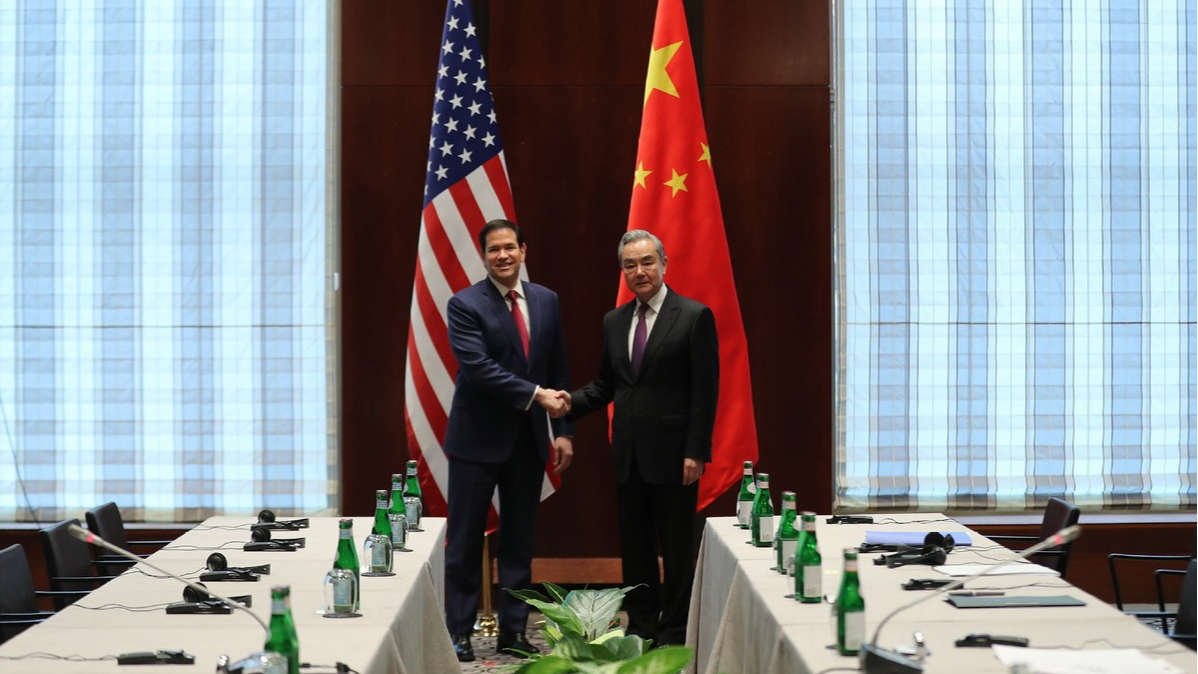
Foreign Minister Wang Yi has said that China and the United States should extend the cooperation list and create more positive agendas, while shortening the list of problems and managing various risks and hidden dangers, as the two countries work to build a constructive China-US relationship of strategic stability.
Wang made the remarks on Tuesday during a phone call with US Secretary of State Marco Rubio.
The Taiwan question has a bearing on the overall China-US relationship, Wang said, expressing the hope that the US side will handle Taiwan-related affairs with utmost caution.
ALSO READ: China, US to discuss reciprocal tariff cuts under trade council
In May, President Xi Jinping
During the meeting, Xi said "constructive strategic stability" means positive stability with cooperation as the mainstay, healthy stability with competition within proper limits, constant stability with manageable differences and lasting stability with expectable peace.
In the phone conversation, Wang told Rubio that building such a relationship is what the two peoples desire and what the international community expects, and it also serves the fundamental interests of both countries.
ALSO READ: China is not optional, say US firms in USCBC survey
The two sides should remove disruptions, overcome obstacles and move firmly in this right direction, he added.
Noting that building a constructive China-US relationship of strategic stability is not a slogan, Wang said that it requires concrete action, efforts in the same direction and sustained work over time.
He called on the two sides to uphold the spirit of equality, respect and mutual benefit, and translate the important common understandings reached by the two heads of state into specific policies and concrete measures.
READ MORE: China and the US jointly crack down on transnational drug smuggling case
Both sides agreed that the phone call between the two foreign ministers was positive and constructive, according to a press release by China's Foreign Ministry. They agreed to jointly implement the important common understandings reached by the two heads of state and continue to maintain communication in flexible ways.
President Trump made a three-day historic and landmark state visit to China in May, the first by a US president in almost nine years and his second visit to China as president following his November 2017 trip.
The two heads of state also reached important common understandings on keeping economic and trade ties stable, expanding practical cooperation in various fields, properly addressing each other's concerns, and enhancing communication and coordination on international and regional issues.
