

Since its birth in 1921, the Communist Party of China (CPC) has made some spectacular achievements. This should be clear to anyone who is open-minded. Under the CPC’s leadership, China has not only achieved spectacular growth for decades — and has avoided negative growth for every year since 1976 — but also has greatly improved water and air quality for the entire nation, as well as the ecological environment both on land and in the sea.
 Like any political party, the CPC always faces both internal and external problems. Before the People’s Republic of China was established in 1949, the CPC had to face both the invasion of foreign powers and a civil war. Even after the republic was established, China had to face much hardship because of sanctions and blockades led by the United States. The CPC had zero experience in government when it took power and stumbled from time to time. But it has kept learning, buttressed by many devoted party members whose mission in life was to rejuvenate the nation.
In 2010, Brian Bridges in the Department of Political Science at Lingnan University and I published a book, Public Governance in Asia and the Limits of Electoral Democracy. I have seen two critical reviews that disagreed with our central thesis — that mechanisms to prevent power abuse are much more important than how a government is born. The critics were clearly unhappy with our focus on substantive democracy and our doubts about electoral democracy. A reviewer recently wrote: “Because the authors simply can’t envision how interest group politics in procedural democracies promote the public interest, they tend to view one-party autocracies committed to the public interest as preferable on democratic grounds because they further the representative individual’s interest.”
Clearly, the reviewer presumes that a one-party-led system is by definition an “autocracy”, and that the “procedural democracies” would naturally promote the public interest. However, the reviewer is right in saying that the case studies on different countries offered in the book do not directly support the thesis presented in the theoretical chapters. However, an open-minded reader will see that most case studies do throw light on the limits of electoral democracy. For example, one chapter addressed “Democracy, Governance, and Regime Cycling in Thailand”; another chapter was “From Marcos to Arroyo — What Went Wrong for Democracy in the Philippines?” Another chapter on India from 1990-2003 included these lines: “This electoral instability led to problems with program implementation and caused a high degree of concern in the private sector and the organized community in the state.”
CPC members are often reminded that they must not forget the Party’s original intent, which is to serve the people. This guiding principle is what connects one leadership to the next. China has enjoyed a peaceful and smooth transition from leadership to leadership, and policy continuity means one leadership will follow through with what has not been accomplished. An example is poverty eradication, which extends over decades
The Cambridge Dictionary contains this definition for autocracy: “Government by a single person or small group that has unlimited power or authority, or the power or authority of such a person or group.” In China, no one has unlimited power or authority to do whatever he likes. There are significant constraints to government power and to the power of government officials. The ranking in Absence of Corruption in the World Justice Project Rule of Law Index shows that China placed far above India, which has been called the world’s largest democracy. In 2025, China ranked 55 out of 143, much higher than India’s 99. In Civil Justice, China ranked 70, much higher than India’s 114. In Criminal Justice, China ranked 72, versus India’s 89. In China, all are equal before the law. In China, even Politburo members have been charged with violations of the law and Party discipline. These statistics show that China under the CPC is not an autocracy. Even senior members in the leadership are held accountable.
All humans are subject to human weaknesses. Exactly because of this, constraints on powers are indeed very important. In a speech at the third plenary session of the 20th CPC Central Commission for Discipline Inspection in 2024, President Xi Jinping reiterated a key principle in public governance. He listed “not daring to be corrupt, unable to be corrupt, and not wanting to be corrupt” as key requirements for the new journey of the anticorruption struggle, stressing that nurturing this culture represents “an important strategy for comprehensively and strictly governing the Party in the new era”. Even more importantly, with the “The Thought of Three Represents” written into China’s Constitution, all Party members have to commit themselves to promoting China’s economic development, advancing China’s culture of enlightenment, and contributing to the public interest. With the scientific outlook of development also written into China’s Constitution, there is no room for arrogance. The Party is determined to do what is necessary to best serve the country.
Many people do not realize that culture is in itself an important constraint on government power. Sincerity and honesty to oneself is deeply ingrained in Chinese culture. That does not mean every Party member is marked by this culture. It just means that in every generation, there are many sincere-hearted people who will make huge sacrifices in their mission to serve the country. CPC members are often reminded that they must not forget the Party’s original intent, which is to serve the people. This guiding principle is what connects one leadership to the next. China has enjoyed a peaceful and smooth transition from leadership to leadership, and policy continuity means one leadership will follow through with what has not been accomplished. An example is poverty eradication, which extends over decades.
The Chinese leadership has become more and more enlightened, and is no longer beholden to old dogmas. While as early as the 1960s many Party members already preferred a more pragmatic approach to governing the country, Deng Xiaoping was the first to say no to the dictum of “Never forget the struggle between the two pathways” (socialist versus capitalist). The Chinese people are grateful to have an enlightened leadership that follows through with the Party’s original intent, studying various capitalist ways scientifically, and taking advantage of them when they are of value.
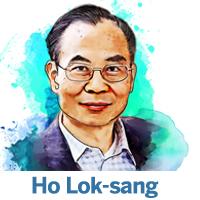
The author is an honorary research fellow at the Pan Sutong Shanghai-Hong Kong Economic Policy Research Institute, Lingnan University, and an adjunct professor at the Academy for Applied Policy Studies and Education Futures, the Education University of Hong Kong.
The views do not necessarily reflect those of China Daily.
