

Massive five-year project set to revamp city infrastructure, public spaces
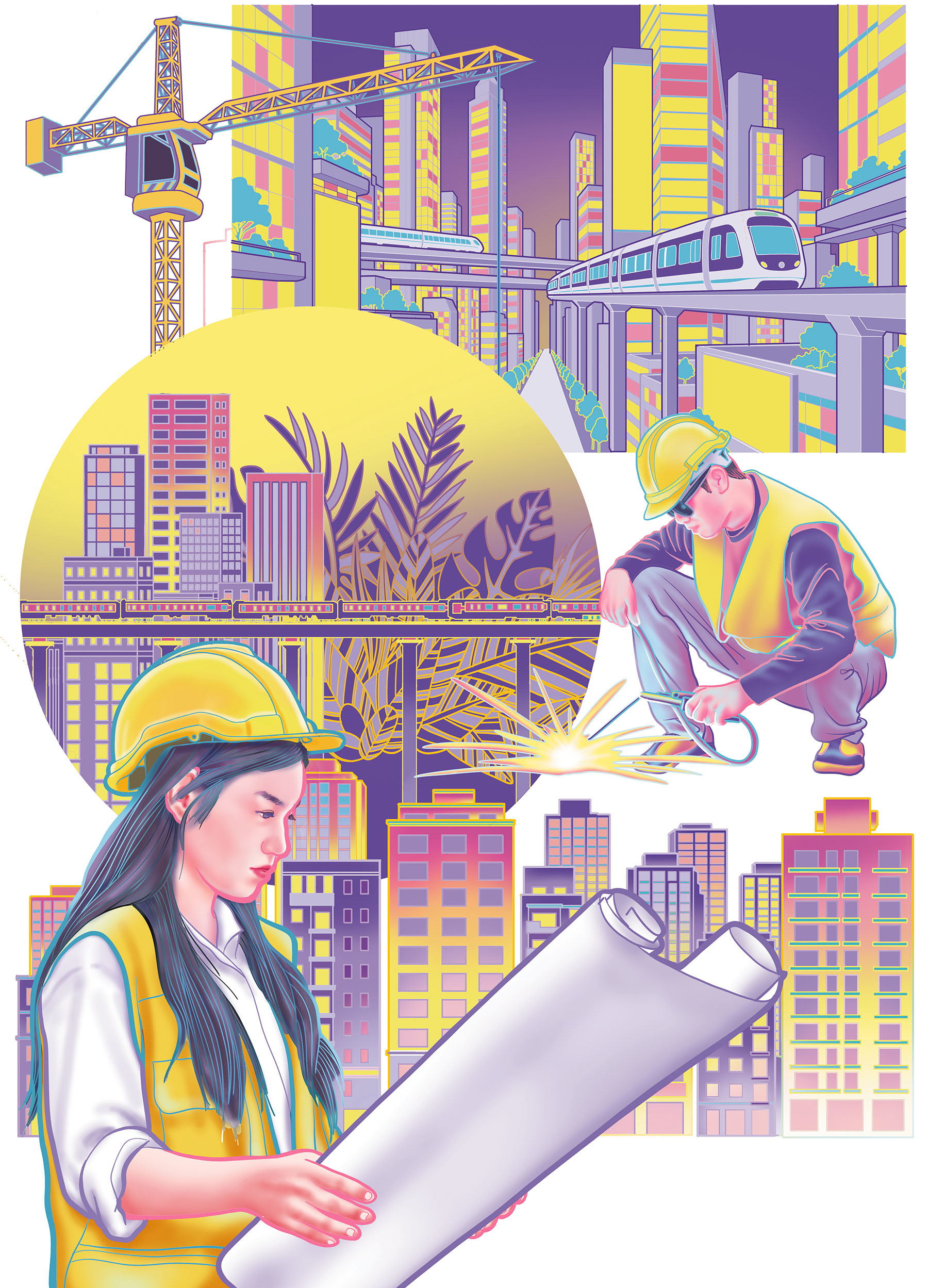
China has launched its first-ever five-year plan dedicated entirely to urban renewal, triggering a capital blitz estimated to be in the trillions of yuan to overhaul cities and to improve livability, safety and daily convenience.
The landmark blueprint, issued by the State Council on May 28 for the 15th Five-Year Plan (2026-30), shifts the national focus away from soaring skyscrapers and sprawling new suburban districts. Instead, with China's urbanization rate exceeding 67 percent and the traditional real estate market facing a cyclical slowdown, the government is pivoting toward a top-down, systematic regeneration of existing urban spaces.
The refocus will see projects such as the installation of elevators in old residential compounds, parks fitted with digital displays tracking residents' evening jogs, and old industrial sites converted into indoor-outdoor shopping complexes.
READ MORE: China spends big on urban renewal in 2025
The plan is structured around six pillars: cultivating new growth drivers, creating high-quality living spaces, advancing green and low-carbon development, strengthening urban resilience, enriching cultural life and improving urban governance.
By 2030, the plan mandates that China will have made solid progress in urban renewal, delivering tangible outcomes in the transition to a new model for urban development and construction, and fostering a higher quality of life for city residents. This will include the upgrading of 365,000 kilometers of aging underground pipelines — a subterranean overhaul requiring an estimated 5 trillion yuan ($738 billion) — alongside the renewal of 115,000 old residential communities, 4,000 urban villages, and 500,000 dilapidated houses.
By 2035, the plan envisions that the institutional framework for urban renewal will be more robust and refined, with urban development achieving remarkable outcomes. The overarching aim is to have basically built, across the nation, modern, people-centered cities that are innovative, livable, beautiful, resilient, culturally vibrant and smart, the plan says.
"The core breakthrough of this plan is the shift toward a holistic, top-down approach," said Zhang Xueliang, executive dean of Shanghai University of Finance and Economics' Institute for Yangtze River Delta and Yangtze River Economic Belt Development. "In the past, urban projects were often operated in isolation — a road built here, pipes replaced there. This initiative, however, is structured as an integrated framework with multiple specialized sections, forming a practical and measurable system for implementation."
A distinct shift is also occurring in the development paradigm itself, Zhang said.
"We are transitioning from the era of large-scale greenfield construction to a new stage focused on the revitalization and refined management of existing urban spaces," he said. "Urban development is no longer indefinite outward expansion, but rather targeted renovation and revitalization within the current urban fabric."
He stressed that the five-year plan "represents a key move to redefine the foundational logic of how our cities develop and renew".
The new plan builds on substantial achievements made during the 14th Five-Year Plan (2021-25) period. For example, during that time, more than 240,000 old residential communities were renovated, benefiting over 110 million residents.
To drive forward urban renewal initiatives, the central government has kept rolling out fiscal subsidies to eligible cities since 2024. In late May this year, the Ministry of Finance and the Ministry of Housing and Urban-Rural Development selected 15 cities, including Jincheng in Shanxi province, Changchun in Jilin province, Wuxi in Jiangsu province and Quanzhou in Fujian province.
Subsidies are tiered by region in terms of maximum amounts: up to 800 million yuan for eligible cities in eastern China, 1 billion yuan for those in central areas, and 1.2 billion yuan for western regions. This year, the funding will be earmarked for two priority tasks: establishing flagship demonstration zones and refining the institutional frameworks that support urban renewal practices.
According to a report by Xinhua News Agency subsidiary China Economic Information Service, industry projections estimate that the total investment scale related to urban renewal over the next five years is likely to reach 15 to 20 trillion yuan. This substantial capital will be drawn from a diversified mix of sources, including government funding, special bonds, social capital and, in smaller projects, contributions from residents.
Yan Yuejin, deputy head of the Shanghai-based E-House China R&D Institute, told China Economic Information Service that urban renewal has entered a full-speed development phase, which will not only fuel high-quality urban growth, but also unlock enormous opportunities for the real economy and capital markets.
Yan said he expects that urban renewal will directly drive the growth of upstream and downstream industries, such as construction, building materials, engineering machinery, and planning and design.
A China Securities research report indicated that high-quality urban renewal demands advanced standards for developing premium residential properties, livable urban spaces, and convenient surrounding amenities, and that real estate developers with strong product capabilities and presence in major cities are well-positioned to play a pivotal role in high-standard urban renewal initiatives.
However, industry insiders have cautioned that the plan should not be misinterpreted as a stimulus for the conventional real estate sector.
Shi Jing, an analyst at Shanghai-based real estate information provider CRIC, said that estimates linking the plan to a new round of housing price hikes are groundless, because the bulk of investment will be channeled into infrastructure upgrading and public service improvement, rather than large-scale resettlement projects or new commercial housing development.
Such investment initiatives aim to tackle deep-seated, long-term urban challenges — such as chronic urban problems, deficits in public welfare and the need for greater safety and resilience, rather than serving as a countermeasure to the property market's cyclical downturn, Shi wrote in a research report.
Zhang, from Shanghai University of Finance and Economics, said he believes that the greatest business opportunities over the next five years will no longer lie in traditional real estate development, but in emerging fields. These include comprehensive building upkeep, the integrated management of aging neighborhoods and industrial blocks, intelligent upgrading of critical infrastructure, and community-based services that prioritize support for the elderly, children and other vulnerable groups, he said.
ALSO READ: New strategy to revitalize Chinese cities
He emphasized that the plan's core principle is unequivocal — urban renewal must be people-centered, not merely a physical overhaul of space. "All the quantitative targets for housing, community and pipeline renovation ultimately serve to safeguard the safety and well-being of millions of households," he added.
For instance, renovating old residential compounds should go far beyond cosmetic work such as repainting exterior walls and replacing windows. Supporting amenities and services — including property management, elderly care centers, childcare facilities and community canteens — must be added simultaneously.
Furthermore, he noted that merely leasing out a repurposed industrial building does not equate to truly bringing it back to life; that only happens when public services — such as healthcare, cultural spaces and sports facilities — are integrated, creating mutual gains that enhance both asset value and social welfare.
Contact the writers at jihaisheng@chinadaily.com.cn
