

Chinese boys team's prestigious international victory reflects new talent-spotting philosophy
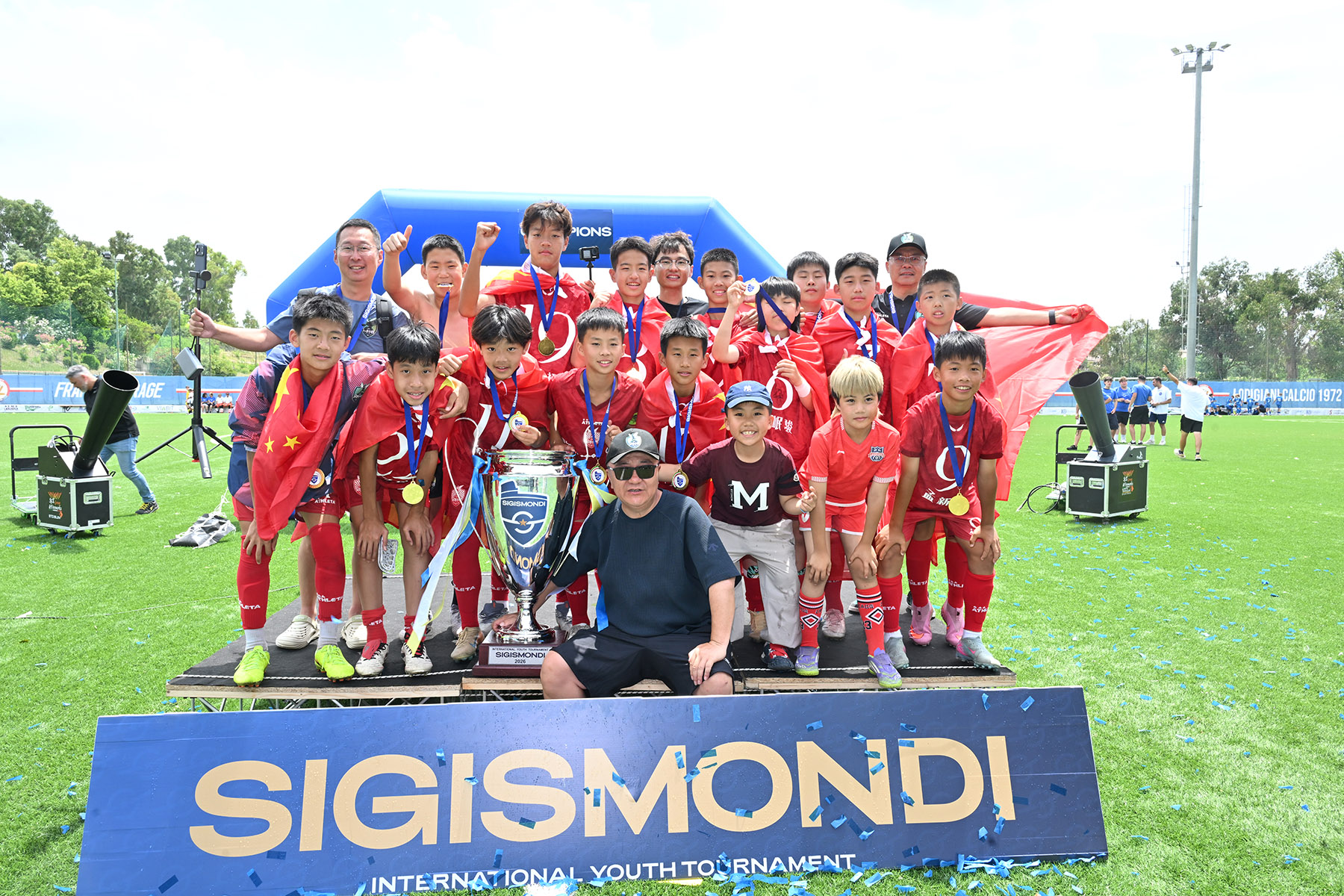
The 2026 FIFA World Cup is underway, and while the Chinese men's national soccer team may not be in contention for the trophy, a group of young players has offered a glimpse of a possible bright future.
On June 2 in Turin, Italy, a Chinese boys' U12 team defeated the academy side of English Premier League club Everton 5-4 in a penalty shoot-out to claim the Sigismondi Cup. The tournament, often described in youth soccer circles as a "mini World Cup", featured 48 youth teams from around the world, including academies from major European clubs.
The Chinese side completed a perfect run, winning all seven of their matches, scoring 20 goals and conceding just one on their way to the title. They became the first Asian team to win the tournament.
When the decisive moment arrived in the final, 12-year-old Meng Xinyi from Nanjing, Jiangsu province, stepped up for the fifth penalty.
He began his run-up, struck the ball cleanly, and sent it into the corner. As the ball hit the net and the shoot-out ended 5-4, he tore off his jersey, threw it in the air, and did a backflip in celebration.
READ MORE: CFA forges path for talent to blossom abroad
Supporters in the stands erupted. On the opposite side, the young players from Everton stood frozen, hands on their heads, watching the trophy slip away.
"I was very nervous walking up," Xinyi said later. "But I also told myself I had to trust my instincts. When the ball went in, it felt incredible."
His approach to taking penalties is simple and built on self-belief. "No matter how the goalkeeper tries to distract you, if your first instinct is to shoot a certain side, you must trust it," he said.
The team, known as China Football Boy 2014, delivered a flawless campaign in Italy.
Behind the celebrations, however, lies a broader question about the development of Chinese soccer. Youth training has long faced challenges in consistently producing elite talent.
That landscape is now beginning to shift, as grassroots "wild route" initiatives expand alongside official efforts to support structured overseas development. While their approaches differ, both are contributing to a more diversified pathway for talent development.
Behind the backflip
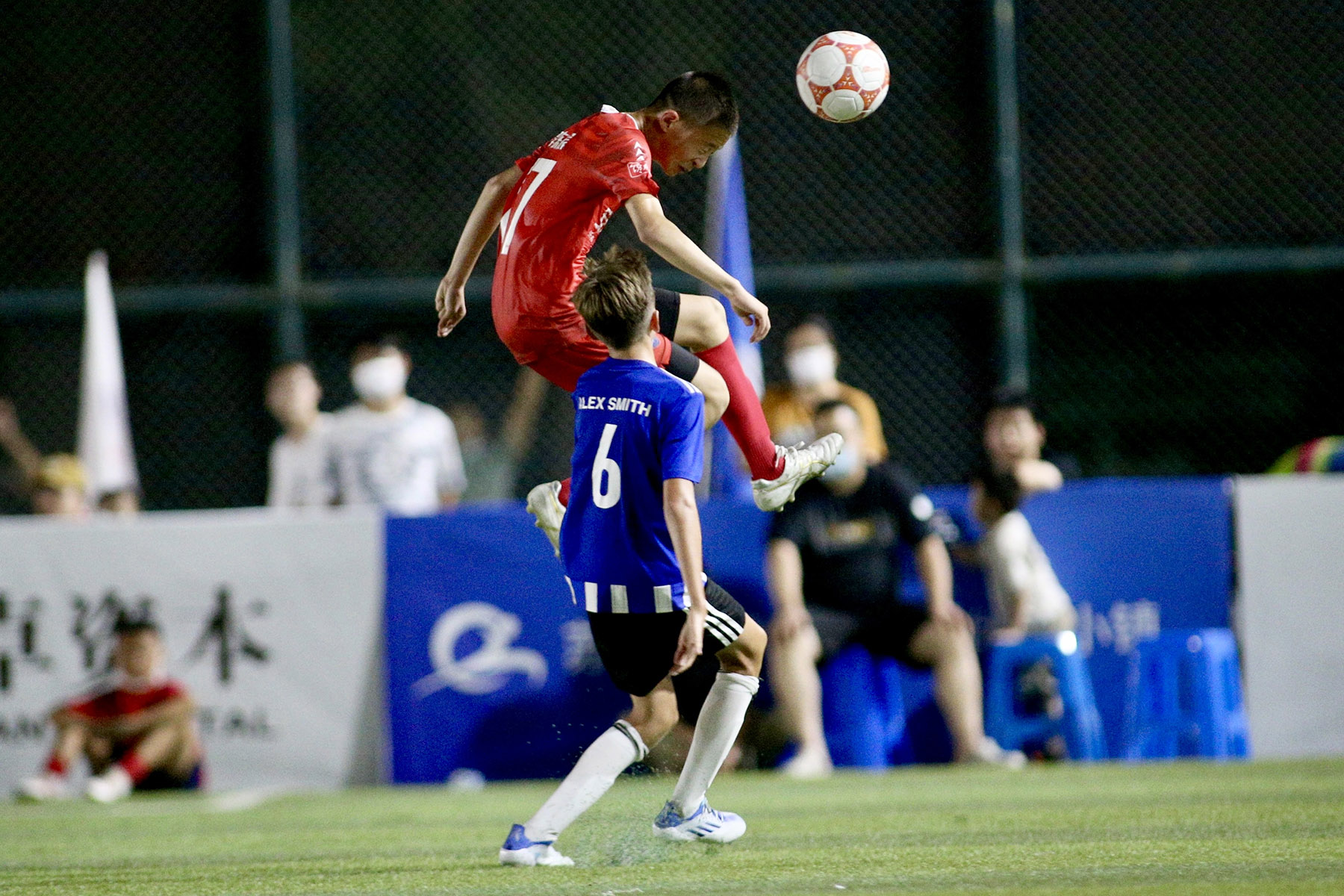
Xinyi's acrobatic celebration was not accidental.
Before focusing on soccer, he spent more than a year training in martial arts while in kindergarten, developing flexibility and explosive strength. He later discovered soccer in primary school and quickly showed aptitude for the game.
By the time he joined his school team in Nanjing Gulou No 1 Central Primary School, soccer had already become part of his daily rhythm. He would finish homework during breaks so he could train after school.
Asked what soccer means to him, Xinyi's answer is straightforward."Happiness," he said. "Because soccer allows me to express myself and push myself fully. Even when we are behind, I always believe we can come back."
His ambition is equally clear. "I want to become a professional player and contribute to Chinese soccer in the future."
Connecting players like Xinyi across China is a widely discussed and sometimes controversial figure in Chinese soccer development circles — the former journalist and commentator Dong Lu, and his grassroots initiative known as the "Chinese Football Boy" program.
In a recent online dialogue with veteran broadcaster Shui Junyi, Dong described his approach candidly as belonging to the "wild route"-a term often used to distinguish informal grassroots development from institutional systems.
He argues that talent is not "manufactured" in a traditional sense. "What matters is not who trains you, but who discovers you, guides you, and gives you a platform," he said. "Talent is revealed, not manufactured."
In 2017, Dong became involved in youth soccer development full-time. Since then, he has organized youngsters from across China to attend weekend and holiday training camps, and frequently taken them to international competitions.
Dong said total investment in the project has exceeded 58 million yuan ($8.58 million) over nine years, with free training provided to participating children.
Xinyi's father, Meng Qinghua, said the opportunity given to his son had transformed the boy's life.
"Without Dong Lu, there would be no Meng Xinyi today," he said. "He gave the child the chance to play internationally, and he never charged a fee."
Dong's philosophy places strong emphasis on exposure to competition. Unlike traditional youth systems that often prioritize training over results, he argues that Chinese soccer suffers from what he calls a "habitual acceptance of losing".
"In Chinese soccer, the real scarcity is hope," he said. "If we do not win, there is no attention, no momentum. But victory is essential because it creates belief."
Trial by fire
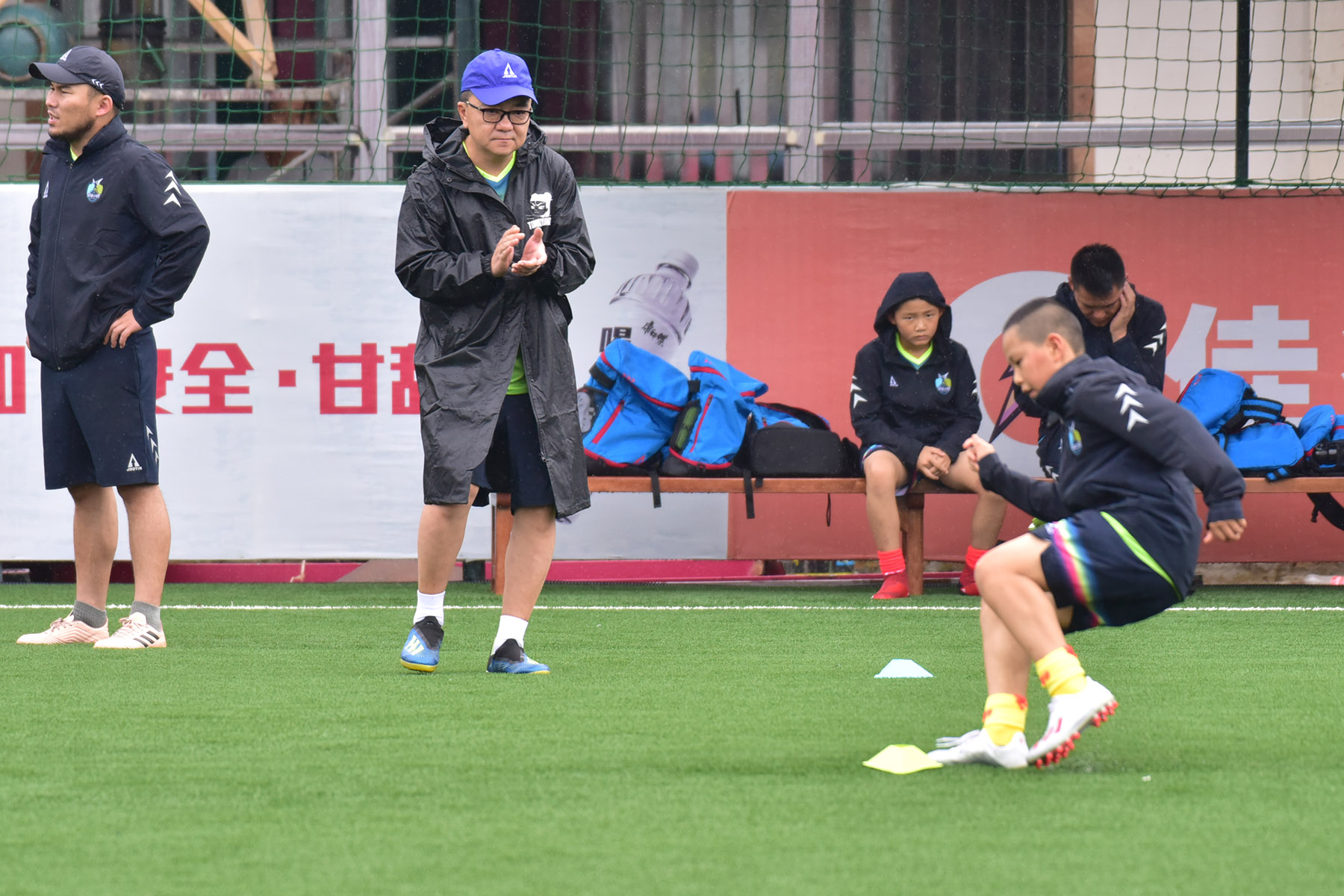
A central pillar of Dong's model is constant exposure to international competition.
In early June, a mixed U16 and U17 squad from the program arrived in Sao Paulo, Brazil, after competing in the Netherlands. The players were scheduled to face youth teams from Brazilian clubs such as Sao Paulo, Palmeiras, and Santos.
"Even if we lose by a large margin, we must play against peers of the same age," Dong said. "Only then can we understand where we truly stand."
For many players, the experience has been formative.
One of the squad members, Yuan Bohan, said after one match in Brazil, he noticed the difference in the pace and intensity of the game. "The rhythm is completely different from what we experience domestically," he said. "Winning and losing both matter, because what we lack most is the experience of winning at this level."
Despite losing, the Chinese team still managed to express its own style of play. "We hope to learn from Brazilian soccer and bring that mentality back to China," he said.
In an environment of constant testing, individual breakthroughs have begun to emerge.
On June 3, Chinese player Li Haoyan, 14, officially joined FC Barcelona's famed La Masia academy at U15 level. He instantly became one of the most closely watched Chinese youth players to enter Spain's elite development system.
Born in Dalian, Liaoning province in 2012, Haoyan first trained at a grassroots club founded by his father, before joining Dong's program at age 10. At age 13, he moved to Spain to pursue soccer full-time.
Adapting to a new country proved challenging. Language barriers and daily life adjustments were significant obstacles. He reportedly wrote tactical instructions on his palm during matches and added extra training sessions on his own initiative.
In the 2025-26 season, Haoyan played 28 league matches with CF Damm. He contributed 12 goals and 12 assists, helping his team finish seventh in a 16-team regional division.
Known for his pace and versatility, Haoyan attracted attention from several Spanish clubs before Barcelona finalized his signing.
"I want to thank every fan who has supported me on the journey to this dream," Haoyan wrote on social media. "This is a new environment and a new challenge, and I will stay focused, train hard, and cherish the opportunity to develop in one of the world's best youth academies.
"I will steadily improve myself, carry the original aspiration of representing my country with pride, and give everything I have to keep moving forward," he wrote.
CFA's support role
Haoyan's journey to Barcelona is one example of what grassroots "wild route" development can achieve through private support and individual commitment. But soccer authorities have increasingly sought to build more systematic mechanisms to support overseas development.
In recent years, the Chinese Football Association has introduced policies that share a similar objective: helping more young players gain experience in high-level overseas environments.
For decades, Chinese soccer has struggled with what many call the"12-year-old drop-off" — a stage at which many promising players leave the sport due to academic pressure and uncertain professional prospects.
Earlier generations of Chinese players who went abroad did so largely alone. Players such as Yang Chen and Shao Jiayi relied on personal resilience and limited support networks during early stints in Europe.
Today, however, institutional support is expanding.
In April 2026, the Chinese Football Association launched its Youth Inspiration Program, aimed at players age 15 to 23. The initiative provides financial subsidies, development support, and performance-based incentives for young players competing overseas.
CFA President Song Kai emphasized that talent development depends on exposure to high-level competition. "We want talented players to go abroad, stay abroad, and play abroad," he said.
For many players, the program reduces uncertainty. CFA officials note that financial instability is one of the key barriers preventing young players from pursuing international careers.
China's head coach Shao Jiayi described the initiative as a meaningful shift. "It provides a clearer pathway and tells young players that they are not alone when they go abroad," he said.
At the same time, domestic grassroots soccer continues to expand. In Nanjing, where Meng Xinyi plays, a structured school-to-school soccer pathway now links primary, secondary, and high school education, reducing dropout risks.
Cities such as Chengdu in Sichuan province have also introduced shared coaching centers, integrating retired athletes into school programs and improving coaching quality at the grassroots level.
According to CFA data, the number of registered elite young players has now reached nearly 100,000, with competition participation continuing to rise.
CFA officials have emphasized that multiple development models are welcome. "Professional academies, sports schools, school-based programs, and social organizations all play a role," Song said. "The key is to broaden the talent pool."
Broader horizon
Looking across the evolving landscape, Chinese soccer today is no longer defined by a single pathway.
There is Meng Xinyi, celebrating in Turin; Li Haoyan, training at La Masia; Dong Lu's teams competing in Brazil; and a growing institutional framework supporting youth development at home.
"The real shortage in Chinese soccer is victory," Dong said.
Yet victory, increasingly, is being pursued through multiple routes — some structured, others experimental, and many still evolving.
ALSO READ: China's soccer strength reboots for a new era
The question of whether grassroots "wild route" initiatives or institutional systems will ultimately prove more effective may be less important than their coexistence. In a mature ecosystem, different pathways often reinforce rather than exclude each other.
Dong recently suggested that the next major breakthrough in Chinese soccer may emerge around 2034, when a new generation of players — shaped by both domestic reform and international exposure — reaches maturity.
By then, many of today's young players will be entering their prime years, some already embedded in overseas systems.
Whether that future delivers long-awaited progress remains uncertain. But for the young players now crossing borders, scoring penalties, and chasing opportunities far from home, Chinese soccer is already being rewritten — not as a single story, but as a widening field of possibilities.
Contact the writers at liyingxue@chinadaily.com.cn
