

Hong Kong’s first astronaut, Lai Ka-ying, successfully launched into space aboard the Shenzhou XXIII spacecraft, marking a milestone in the country’s aerospace program and sparking excitement across the Hong Kong Special Administrative Region. Since the launch, a wave of space fever has swept through the city: The Space Museum has been packed with visitors, and many schools have organized live viewings for their students, reflecting the public’s strong interest and pride in the nation’s technological achievements.
 However, the significance of aerospace technology is not just limited to the awe-inspiring visuals of a rocket blasting off. Every successful launch is underpinned by sophisticated integration of cutting-edge technologies such as next-generation materials science, precision manufacturing, and artificial intelligence. Operating a carrier rocket and spacecraft requires staggering orbital calculations, complex algorithms, and long-accumulated engineering expertise, demonstrating the solid foundation of the country’s comprehensive technological capabilities and industrial systems.
In recent years, the country’s aerospace program has advanced by leaps and bounds. From Chang’e 6’s return from its lunar sample mission to Tianwen 1’s successful Mars exploration mission, and the completion and routine operation of the Tiangong space station, these milestones signify that China has steadily joined the ranks of the world’s leading aerospace powers. These major achievements not only demonstrate scientific and technological prowess but also hold far-reaching strategic significance.
Throughout the complex and ever-changing international landscape, aerospace technology has become a crucial aspect of competition among major countries, encompassing multiple dimensions such as technological innovation, national defense and security, and industrial development. Whoever seizes the initiative in space will be better positioned in global competition. From this perspective, this launch is not only a mission of scientific research but also a powerful demonstration of the country’s overall strength.
Society should take this milestone as an opportunity to further inspire the younger generation’s interest in science and innovation, encouraging them to embrace ideals, remain grounded, and continually strive for excellence across diverse professional fields, thereby contributing to the future development of both the nation and the HKSAR
Lai Ka-ying will conduct a series of high-level scientific experiments at the Tiangong space station. In the extreme environment of microgravity, high vacuum, and intense radiation, she operates precision instruments to carry out research that is difficult to achieve on Earth, including studies in fluid mechanics, space life sciences, and advanced materials. In particular, the work in protein crystal growth and semiconductor-material testing holds significant potential for practical applications.
The findings from these studies will accelerate new drug development, enhance material performance, and advance agricultural technology, demonstrating the transformative power of aerospace technology to improve people’s livelihoods. In fact, there are many conveniences in our daily lives, such as satellite navigation, accurate weather forecasting, and even memory foam, all stem from the long-term accumulation and applied transformation of aerospace research.
As the country’s aerospace engineering continues to advance, Hong Kong is gradually transitioning from a supporting role to a more active one. The city’s universities, with their solid research foundations, have long contributed to national lunar and Mars exploration missions, particularly in areas such as precision instruments, optical sensing, and data analysis. Looking ahead, by further integrating research resources and leveraging its institutional strengths and international orientation, Hong Kong is well positioned to play a significant role in the aerospace industry chain and to establish a unique presence in key technological fields.
In the face of rapid technological advancements, particularly the rise of emerging technologies such as artificial intelligence, talent cultivation has become increasingly important. Aerospace engineering is inherently interdisciplinary, spanning multiple fields including mechanical engineering, electronics, life sciences, and medicine, placing higher demands on the comprehensive capabilities of professionals.
Traditional rote memorization-based learning models are no longer sufficient to meet future challenges. Society must place greater emphasis on interdisciplinary learning and holistic education, nurturing young people’s capacity for independent thinking, innovative spirit, and global vision so they are equipped to seize the opportunities of a new era.
Moreover, scientific exploration has always been accompanied by trials and challenges. If lifelong learning skills and resilient perseverance are cultivated during the school years, young people will be able to face any industry and adapt confidently to the impact of emerging technologies. As the world continues to change, the younger generation must possess the mental fortitude to rise to the challenge.
The successful journey of Hong Kong’s first astronaut into space is not only a personal honor but also a significant demonstration of Hong Kong’s integration into national development, carrying profound implications. This historic moment clearly shows that if we actively equip ourselves and seize opportunities, participation in major national scientific and technological projects is never out of reach. Society should take this milestone as an opportunity to further inspire the younger generation’s interest in science and innovation, encouraging them to embrace ideals, remain grounded, and continually strive for excellence across diverse professional fields, thereby contributing to the future development of both the nation and the HKSAR.
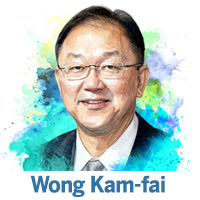
The author is a Legislative Council member of the Hong Kong Special Administrative Region.
The views do not necessarily reflect those of China Daily.
