

Lawmakers and experts back a booking system to ease overcrowding and protect the iconic sea stack’s fragile environment

Hong Kong lawmakers and tourism experts on Monday welcomed a proposed reservation system for Po Pin Chau in Sai Kung, aiming to address frequent holiday overcrowding and disruptions to both the natural environment and local infrastructure.
The proposal, part of a broader policy package to tackle “overtourism”, was submitted to a Legislative Council subcommittee on Monday.
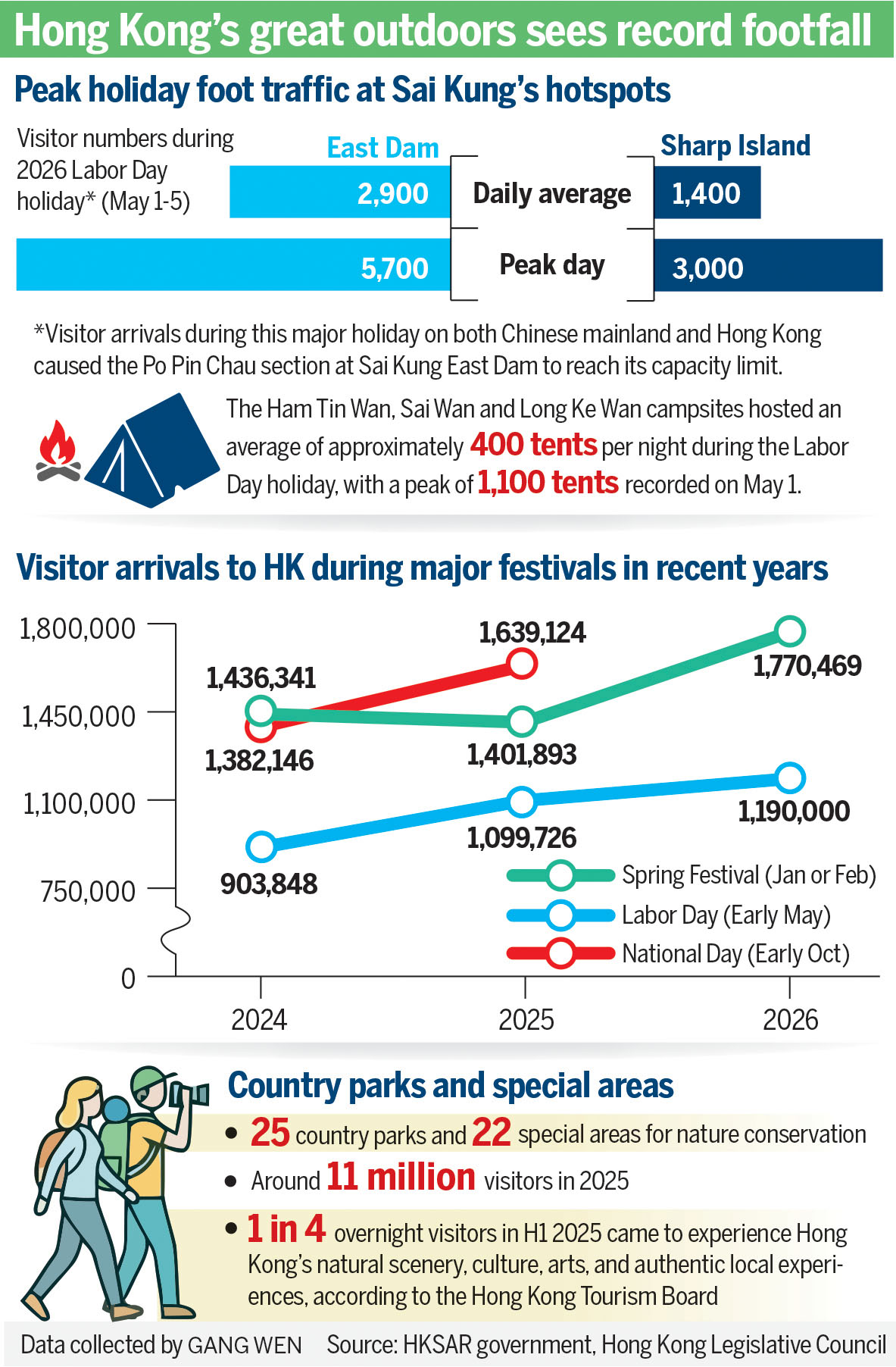
During the LegCo meeting, Diane Wong Shuk-han, undersecretary for environment and ecology, said that the tourism capacity at Po Pin Chau had reached its limit over the Labor Day break in May, with some roads and trails sustaining damage.
Wong said details of the tourist reservation system are under discussion for swift implementation. The government said the Po Pin Chau reservation system will provide data and feedback to inform potential systems at other countryside spots.
Po Pin Chau is a spectacular sea stack off the southeast coast of Sai Kung East Country Park, famous for its massive 140-million-year-old hexagonal volcanic columns.
Lawmaker Kitson Yang Wing-kit expressed support for the proposed reservation system, but added that the government should pay close attention to ticket scalping. He suggested a balloting system instead of a first-come, first-served model.
Wong said the government is considering implementing a real-name registration and balloting system, and will also step up education on hiking etiquette.
Fanny Yeung Shuk-fan, executive director of the Travel Industry Council of Hong Kong, supported such reservations efforts, especially as Hong Kong has seen more visitors in recent years.
The city logged 49.9 million inbound visitor trips in 2025, a 12 percent year-on-year increase. With over 40 percent of Hong Kong’s land designated as country parks, its world-class trails and secluded beaches are also drawing more visitors than ever.
ALSO READ: Southbound travel program expanded to four more GBA cities
Yeung said that reservation systems should be prioritized at busy sites and limited-capacity campsites, particularly during weekends and public holidays, to better manage visitor flows.
Beyond reservations, Yeung stressed the importance of safety education. She said that many social media platforms encourage individuals to visit popular locations for “check-in” trends, often without warning of outdoor risks, leading many tourists to overlook potential hazards.
Luo Tengyi, a 20-year-old outdoor enthusiast living in Shanghai, also touched on the necessity of clearer guidelines for trend-chasing visitors and tour groups.
Luo told China Daily that visitors who lack outdoor experience are unaware of the environmental impact of their actions. Driven by online trends, they often arrive in large tour groups and leave waste behind at scenic spots, Luo said.
Planning to visit Hong Kong soon to conquer the MacLehose Trail — some sections of which are in Po Pin Chau — Luo expressed concerns that the new regulations, once implemented, might complicate his travel plans.
“Implementing such a reservation system will undoubtedly erect an invisible barrier between nature and we hikers,” Luo said.
While he understands the government’s intent, Luo suggested the reservation system should focus more on commercial tour groups, rather than independent hikers.
Roys Zhang and Zeng Ziwen also contributed to the story.
Contact the writers at gangwen@chinadailyhk.com
