

From a bowl of soup, to a shared melody and getting a joke, immersion in culture a gentle process

More than two decades after a photograph of five blonde foreign children entering a local primary school in Dongguan, Guangdong province, appeared on the front page of the Yangcheng Evening News, one of them has returned to the public eye.
Adrianna Rommeswinkel, a 29-year-old content creator known as Addy, was 6 when she arrived in the country in 2002, just a year after China joined the World Trade Organization.
For her, feeling like she belonged in China did not emerge from a single moment. "That feeling grew into my bones… through so many small, unremarkable moments," she said.
That process unfolded through everyday experiences that gradually reshaped her sense of home. One vivid early memory Rommeswinkel has is of her and her siblings joining classmates in morning exercises. "That's the thing about belonging, when you're in it, you don't notice. You just are," she said.
ALSO READ: Young UN trailblazers carving nation's path in world affairs
Over time, belonging became rooted less in physical places than in relationships. She recalls being quietly comforted at her best friend's home as a child.
"My godmother took one look at me and put a bowl of soup in front of me. Didn't ask questions. Just… soup," she said.
Even today, she remembers the landline telephone number of that family and still returns to the neighborhood market where vendors recognize her and recall her childhood preferences.
Her understanding of "becoming Chinese" extends beyond language. While her fluency in Cantonese and Mandarin is the most obvious aspect, she points to the deeper meanings embedded in everyday interactions.
"Language isn't just words. It's the jokes you get, that you learn from years of sitting at dinner tables, listening, absorbing," she said, noting that even her dreams are sometimes in Cantonese.
These experiences were accompanied by shifts in habits and values, from everyday politeness to understanding social connections through relationships.
Growing up in a Chinese school system also shaped her worldview, as the classes emphasized collective identity rather than individual focus.
"You don't really exist as just 'you'. You exist as part of something… fitting in, contributing, being reliable, that's what mattered," she said, noting that this perspective ultimately felt "freeing".
Cultural contrasts still arise, particularly when she is in the United States, but her response upon returning to China is telling."Every time I land in China, every single time, there's this moment when I step out of the airport and the air hits me. The humidity, the smell, the noise, the chaos. And my whole body just… relaxes," she said.
Reflecting on her parents' decision to raise the family in China, Rommeswinkel said:"That choice gave me something I couldn't have gotten anywhere else. It gave me two worlds instead of one. It wasn't easy. But it was everything."
Today, when asked where she is from, her answer is simple. For her, identity is no longer defined by nationality alone, but by lived experiences.
"I grew up in China… that's the most important part, where I became me. My roots aren't in a passport or a bloodline. They're in the life I actually lived," she said.
Shared words
In recent years, more foreigners in China have shared similar stories of cultural immersion shaped by long-term, everyday interactions.
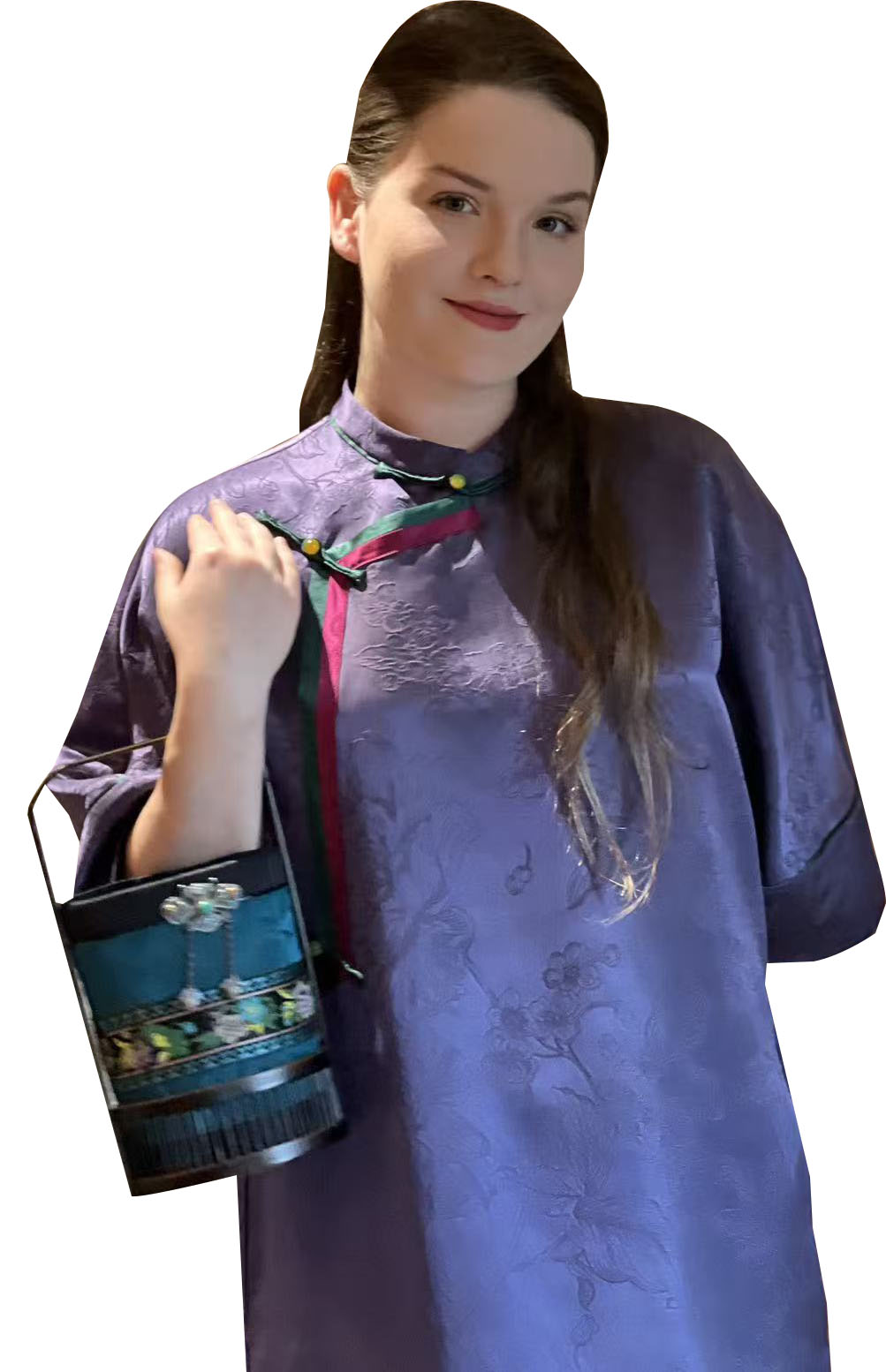
Emma Sandford, a 31-year-old from Northern Ireland, has spent much of the past decade moving in and out of China, building a life closely connected to the country.
From an internship at a charity music festival in Zhuhai, Guangdong province, in 2017, to teaching in Haikou, Hainan province, and Chengdu, Sichuan province, her connection evolved from curiosity into something more personal.
Language was the turning point in her journey, reshaping how she thinks, expresses emotions, and understands the world.
"Through the language, I began to better understand Chinese history, humor, and ways of expressing emotion, opening a deeper path into the culture," she said, adding that certain ideas and feelings can feel more precise in Chinese than in English, giving her a new way to articulate everyday experiences.
Her immersion deepened after moving to Chengdu in 2022, when she made a conscious effort to build friendships with locals who did not speak English. Working in a kindergarten and interacting with older colleagues offered a closer look at everyday perspectives. Living with Chinese roommates, and now with her boyfriend and his mother, further grounded her in daily life.
"These experiences offered me an understanding of culture that goes beyond what short-term visits can provide," said Sandford.
She often describes herself as having "a foreign body but a Chinese soul", a phrase that has taken on more meaning over time. "I drink hot water and I enjoy traditional Chinese medicine. … These things have become part of my daily life now. Such habits have become instinctive, shaping my routines and sense of comfort," she said.
Over time, these routines have also influenced her mindset, as she has come to value a stronger sense of community.
"Shared meals, close family ties and everyday social interactions reshaped my understanding of well-being. I may be heavier now, but I'm much happier and more relaxed about life," said Sandford.
Despite this, she does not see her identity as a replacement of one culture with another.
"My Irish background remains the foundation of who I am, while China has added another layer to how I live and understand the world," she said.
When she returns to Ireland, she notices subtle shifts in her behavior, from bringing small gifts when visiting others to preferring quieter social activities and more collective ways of socializing.
Songs of praise
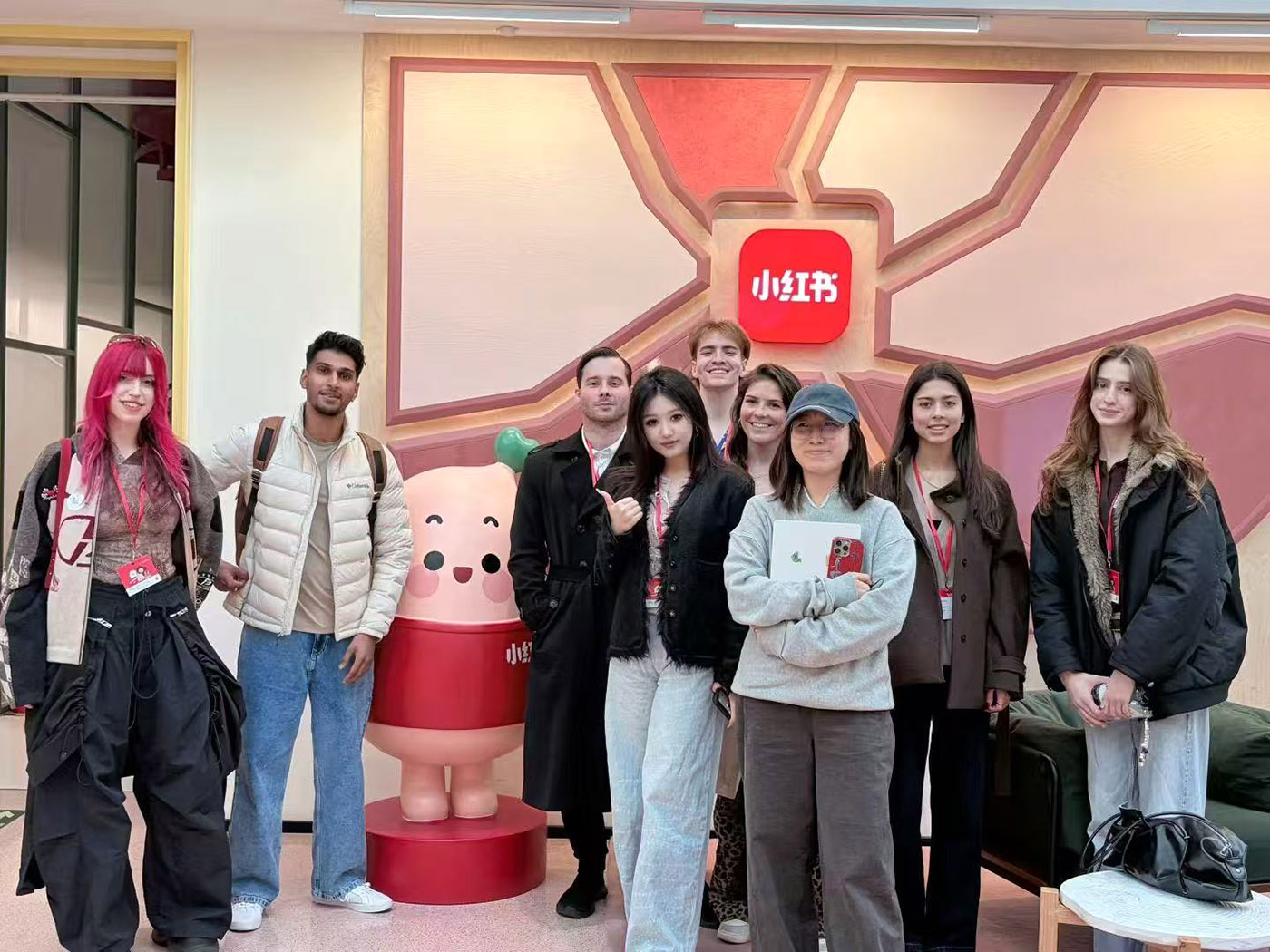
Carly Beth, an American singer-songwriter, pianist and livestream artist based in New York, began her journey with Chinese music unexpectedly while living in London, when a Chinese acquaintance encouraged her to livestream to audiences in China. She continued streaming daily while learning the language and developing her music, building a strong connection with Chinese listeners.
"When I first started livestreaming to China, the response was overwhelming in the most beautiful way. I suddenly had thousands of people connecting with my music at once, but I couldn't communicate with many of them yet," she said.
"I stayed up until 4 am night after night teaching myself Chinese just so I could talk and sing to them."
A turning point came when she encountered the classic song Later by singer Rene Liu that reflects on love and regret.
"I looked up the translation and I cried. The emotional depth of the lyrics hit me so hard that I immediately knew I wanted to continue learning Chinese music," she said.
She developed her own way of learning, slowing songs down and mimicking each sound, finding that melody helped guide both tone and emotion.
"Singing in Chinese actually felt easier than speaking at first, because melodies help guide the tones and emotion… The most rewarding part has been the emotional connection with my Chinese audience. Music stopped being just performance; it became communication," said Beth.
As her work reached wider audiences through platforms such as Xiaohongshu and television appearances, she observed differences in how her music was received. Chinese listeners, she said, tend to respond strongly to emotional depth and poetic expression, while Western audiences often focus more on the conversational aspects of her songwriting.
Chinese music has become "an emotional anchor" in her life, shaping her sense of identity. "It feels less like I chose Chinese music, and more like Chinese music chose me," she said.
Friends and family in the US who had never listened to Chinese music before have begun listening to the songs she performs, forming what she describes as a cultural bridge.

Mixed cultural content
Zhao Danyang, the 26-year-old co-founder of Lumiverse Media LLC in Shanghai, has worked with over 1,000 foreign influencers and links the growing interest to shifts in content production and distribution.
"In recent years, we can clearly feel that more foreign creators are actively engaging with and sharing Chinese culture. If we look at it on a timeline, there are two key phases," she said.
"The pandemic was an overlooked turning point, when many people began exploring other countries through the internet, and China produced a large amount of content."
From 2023, especially with the "TikTok refugee" phenomenon, the trend took hold, as foreign users not only watched but also began sharing Chinese culture.
A 2024 report by Tencent Research Institute and Newrank found that foreign content creators are gaining significant traction on Chinese short-video platforms. Fifteen overseas influencers each have more than 10 million followers, with combined followers of 290 million. More than 100 creators have over 1 million followers, while nearly 1,000 active foreign accounts have surpassed 10,000 followers.
Citing overseas data, Zhao noted that certain types of content perform better across cultures.
"Food is still the most effective entry point. Hotpot, street food, breakfast comparisons and snack tasting are among the easiest for foreign creators to share. The second is internet culture, such as high-speed rail, mobile payments, food delivery, as well as memes, short videos and livestream e-commerce," said Zhao.
She added that the third category is traditional crafts, such as Jingdezhen ceramics, which carry cultural meaning and are more attractive than industrial products.
Beyond content categories, Zhao sees a deeper shift. "Chinese cultural communication has moved from an 'official, institutional model' to a 'content ecosystem model'," she said. "Many creators start with content opportunities because they attract traffic. But after six months to a year, they begin to understand more subtle aspects like communication styles, humor and social norms."
In some cases, this leads to hybrid forms of expression.
"When creators stay in China for a longer period, they begin to produce 'mixed cultural content'. We often call them 'natural cultural translators' because they can connect audiences from both sides," said Zhao.
She said these changes in language and behavior are a sign of deeper cultural internalization, as creators gradually move beyond surface-level content production and begin to engage more meaningfully with Chinese culture.
She also highlighted the role of digital platforms. "Short-video platforms have completely changed the structure of cultural communication. Algorithms decentralize distribution, allowing content itself to determine reach. At the same time, short videos lower the threshold for understanding culture and create a two-way interaction, which leads to co-creation," she said.
Zhao said that in the future, cultural communication will become global co-creation."It may not be about 'exporting culture', but about letting it spread naturally through content ecosystems, with creators from different backgrounds participating together."
ALSO READ: Fujian fishing village revels in crowning glory
Data from the Ministry of Commerce indicates that China's cultural trade reached 1.4 trillion yuan ($206 billion) in 2024, with digitally driven sectors, including online audiovisual content, exceeding 370 billion yuan and accounting for more than a quarter of the total.
Sun Zhe, a sociologist at the Chinese Modernization Institute of Shanghai University of Finance and Economics, described the trend as "a very positive phenomenon" and "another form of globalization in the high-tech era".
"It reflects a shift toward 'plural modernities', where development is no longer defined by a single model but allows for multiple paths, with China offering 'an alternative paradigm' that expands global choices," said Sun.
"We are moving from the television era to the short-video era. Traditional media was highly centralized, while today's platforms are shaped by the diverse technologies, enabling more decentralized and diverse cultural production," said Sun.
Short-video formats also lower the barriers to cultural understanding by making content more direct and easier to interpret. "Instead of grand narratives, foreigners now engage with China through everyday practices such as tea, food and daily routines, with bottom-up, life-based expression," he said.
Contact the writers at sunnyu923@163.com
