

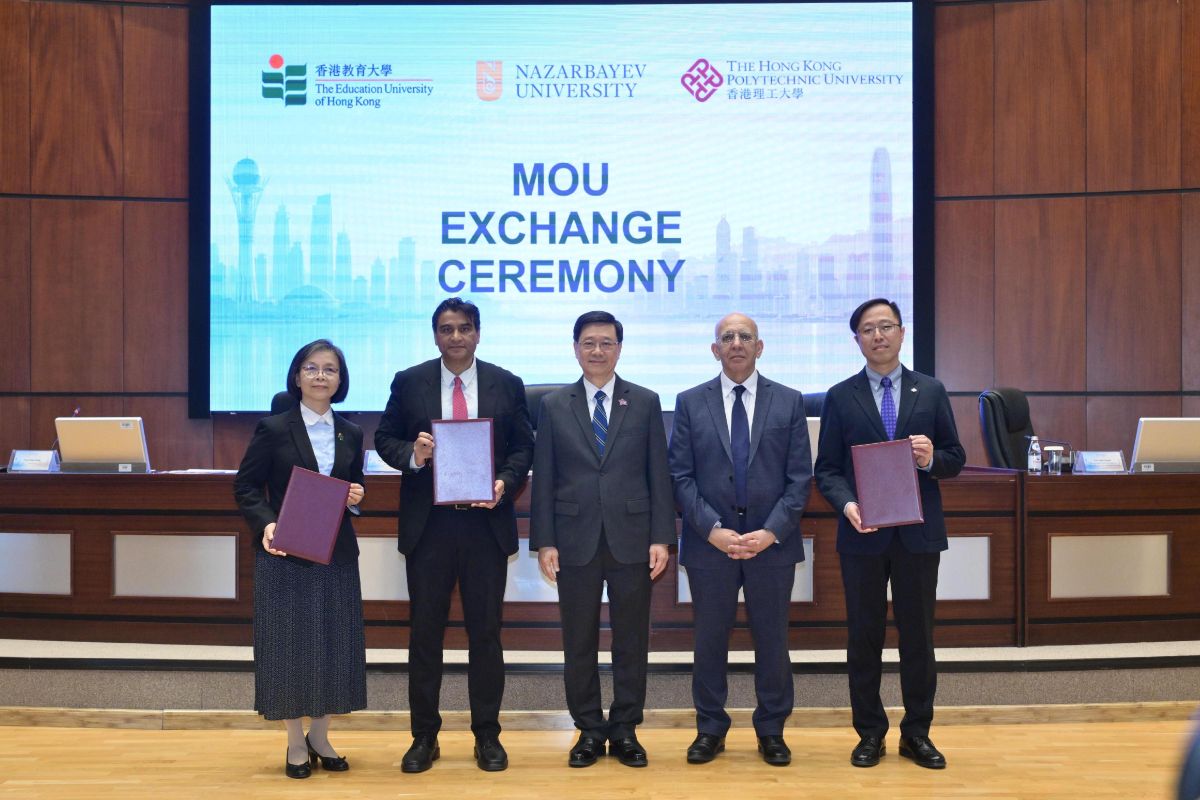
Two Hong Kong universities signed agreements with Nazarbayev University — Central Asia’s No 1 university, in Kazakhstan — on Wednesday, aiming to deepen academic collaboration and talent exchanges.
The Hong Kong Polytechnic University (PolyU) and the Education University of Hong Kong (EduHK) signed memorandums of understanding in Astana during a high-level visit led by Hong Kong Chief Executive John Lee Ka-chiu.
Nazarbayev University was the site of President Xi Jinping’s historic address in 2013, during which he first proposed the Silk Road Economic Belt, which later evolved into the Belt and Road Initiative and “reshaped global cooperation”, Lee said at the signing ceremony.
He described the MOUs as an “encouraging step forward” in deepening academic and research collaboration, and strengthening people-to-people ties between the Hong Kong SAR and Kazakhstan.
Lee said that over 6,000 students from Belt and Road economies are studying in Hong Kong’s publicly funded universities, including around 500 Kazakh students, one of the city’s largest BRI‑related overseas student communities.
RELATED ARTICLES
- HK, Almaty to restore direct air ties in 2027
- HKSAR, Kazakhstan ink 43 MoUs on $100m joint investment, direct flights
- Lee in Kazakhstan: Turn this visit into opportunities
Some of these students have benefited from the SAR government’s Belt and Road Scholarship program, which offers 150 scholarships annually to students from BRI partner countries.
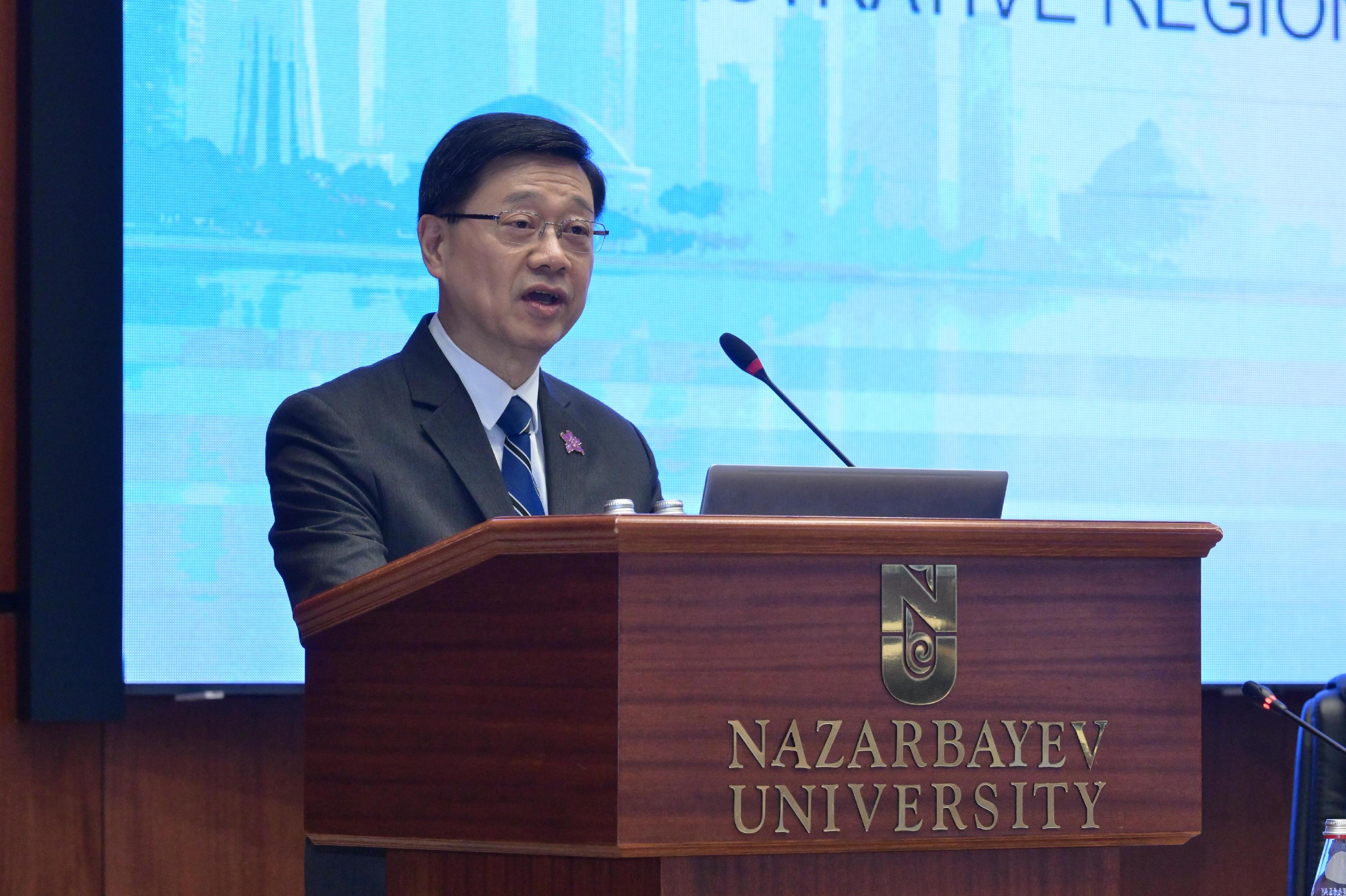
Nazarbayev University President Waqar Ahmad highlighted the university’s close partnerships with Hong Kong institutions, including active student-exchange programs.
He discussed his university’s academic achievements and innovation breakthroughs, such as flexible gas-sensing systems and Kazakhstan’s first domestic green hydrogen pilot program installation.
Replying to China Daily inquiries, PolyU President Teng Jinguang said he hopes the new cooperation will attract talent from Central Asia to Hong Kong for further studies and development, helping consolidate the city's position as an international hub for high-caliber talent.
EduHK President John Lee Chi-kin said the university established a research partnership with Kazakhstan a few years ago. Some Kazakh students who completed doctoral studies at EduHK now work in higher education institutions in their home country, including one who is now a university president. “This is a vivid example of successful talent cultivation through cooperation between the two regions,” he said.
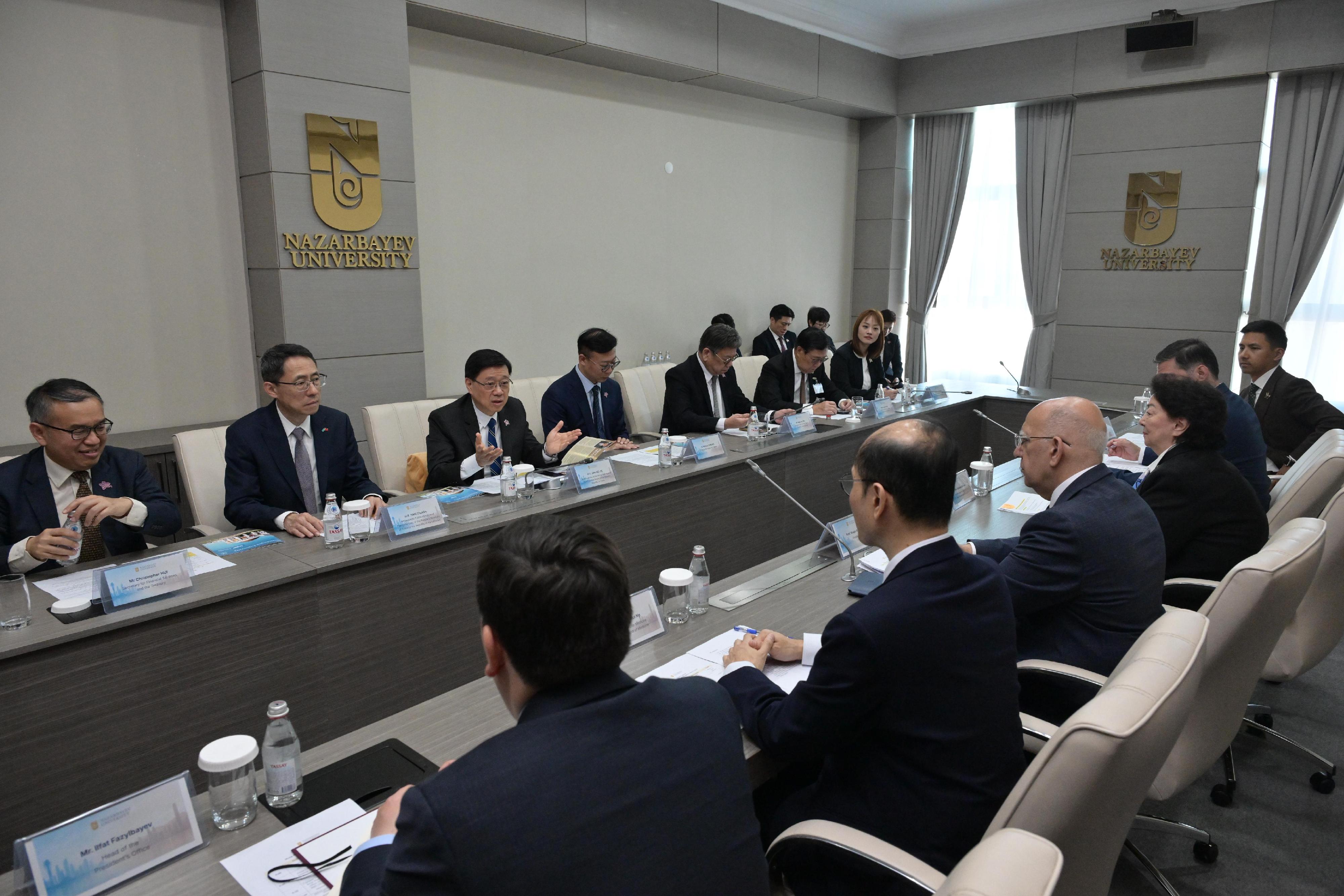
Nazarbayev University Vice-President Assel Uvaliyeva, said that this year alone, the university received two applications from Hong Kong and about 50 from the Chinese mainland. Currently, around 60 students from China are studying at the university.
She estimated that about 30 Nazarbayev students will apply for exchange programs during the first year of the new MOUs, and that number is expected to grow.
Nurken Bolatov, chief operational officer at Artisan Education — a Kazakhstan-based educational startup — said that the new MOUs will bring more opportunities to Kazakh students.
He added that the company has been accepted into the ideation program of the Hong Kong Science and Technology Parks Corp, which provides up to HK$100,000 ($12,760) in seed funding for startups. This serves as a great opportunity for Artisan Education to enter the Chinese mainland and Hong Kong markets, he added.
Before concluding his visit to Kazakhstan, Lee attended a luncheon hosted by Han Chunlin, China’s ambassador to Kazakhstan.
The 70-member delegation, comprising Hong Kong and mainland business and professional leaders, departed for Uzbekistan on Wednesday to continue its weeklong Central Asian tour.
Contact the writer at atlasshao@chinadailyhk.com
