Nestled in the heart of the Hong Kong Special Administrative Region, Hong Kong Baptist University transcends the traditional campus; it is a launchpad for the world’s boldest thinkers and future shapers.
Over the years, HKBU has remained committed to the pursuit of excellence in education, research and service to the community. As one of Asia’s finest institutions of higher learning, HKBU is dedicated to nurturing generations of civically engaged community members with an international outlook, and it provides them with a broad-based, transdisciplinary and creative education.
Student empowerment
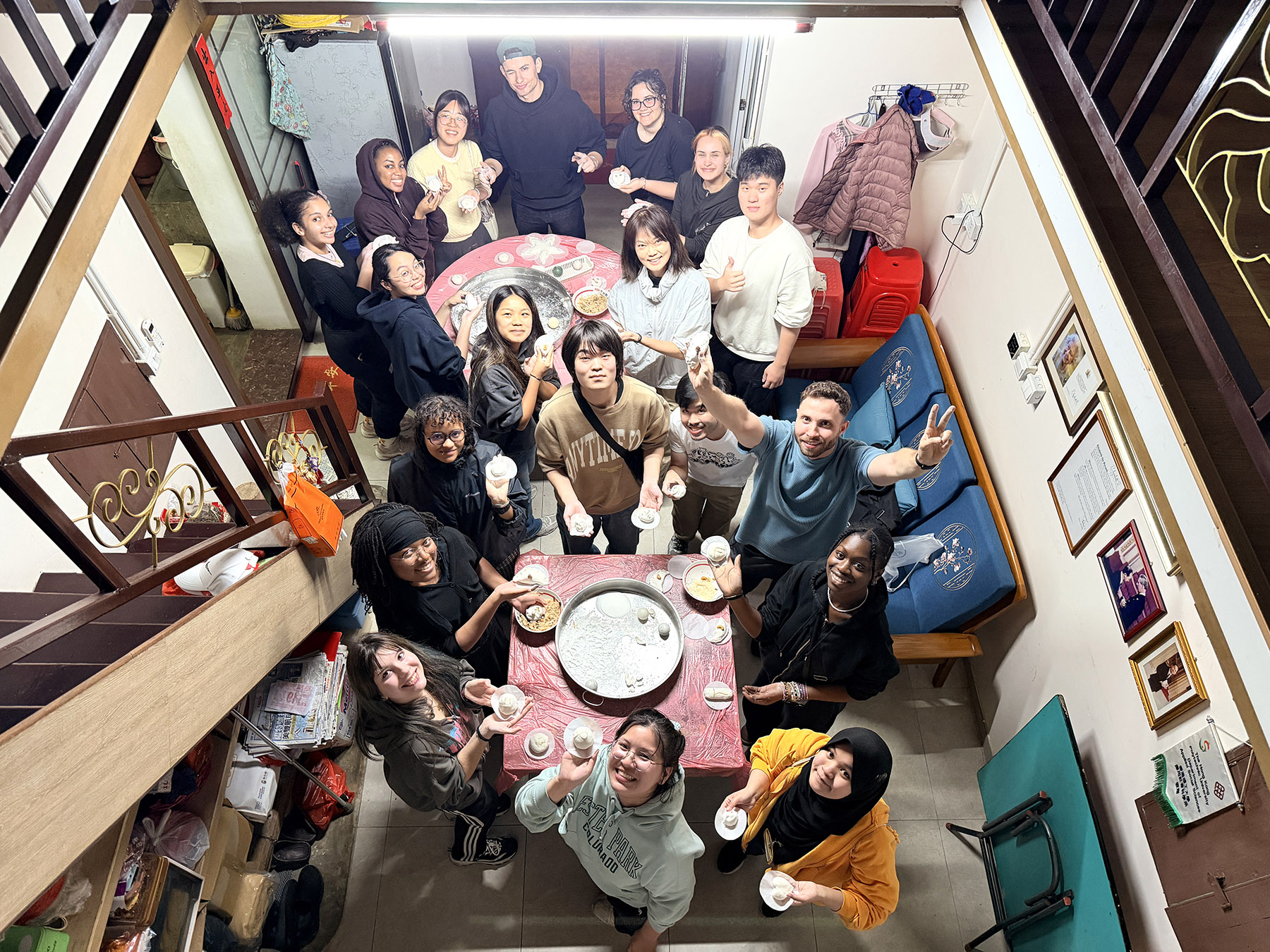
Genuine care for new students takes root even before they step onto campus. In addition to generous scholarships, orientation activities and thoughtfully arranged accommodation, the university places an emphasis on guiding every student to integrate into the vibrant local life and dynamic academic environment, said Albert Chau, vice-president (teaching and learning) of HKBU.
During their study, the university creates opportunities for students to learn in a transcultural environment through group projects on top of daily social interactions, Chau added. “Usually we would put our students from different backgrounds in the same group to foster deeper and meaningful integration … Students have to understand viewpoints of people from different countries and regions.”
Guiding students toward their future careers is another vital element of HKBU’s commitment to student support, according to Chau. Benefiting from the HKSAR government’s accommodating visa policies, he conveyed his earnest aspiration that students would find rewarding career opportunities in the SAR and the Guangdong-Hong Kong-Macao Greater Bay Area.
To assist non-Chinese-speaking students, the university provides language programs to help them thrive. Moreover, HKBU’s rich heritage in media, business, Chinese medicine and beyond — combined with its powerful, far-reaching alumni network — provides students with unwavering support.
International perspective
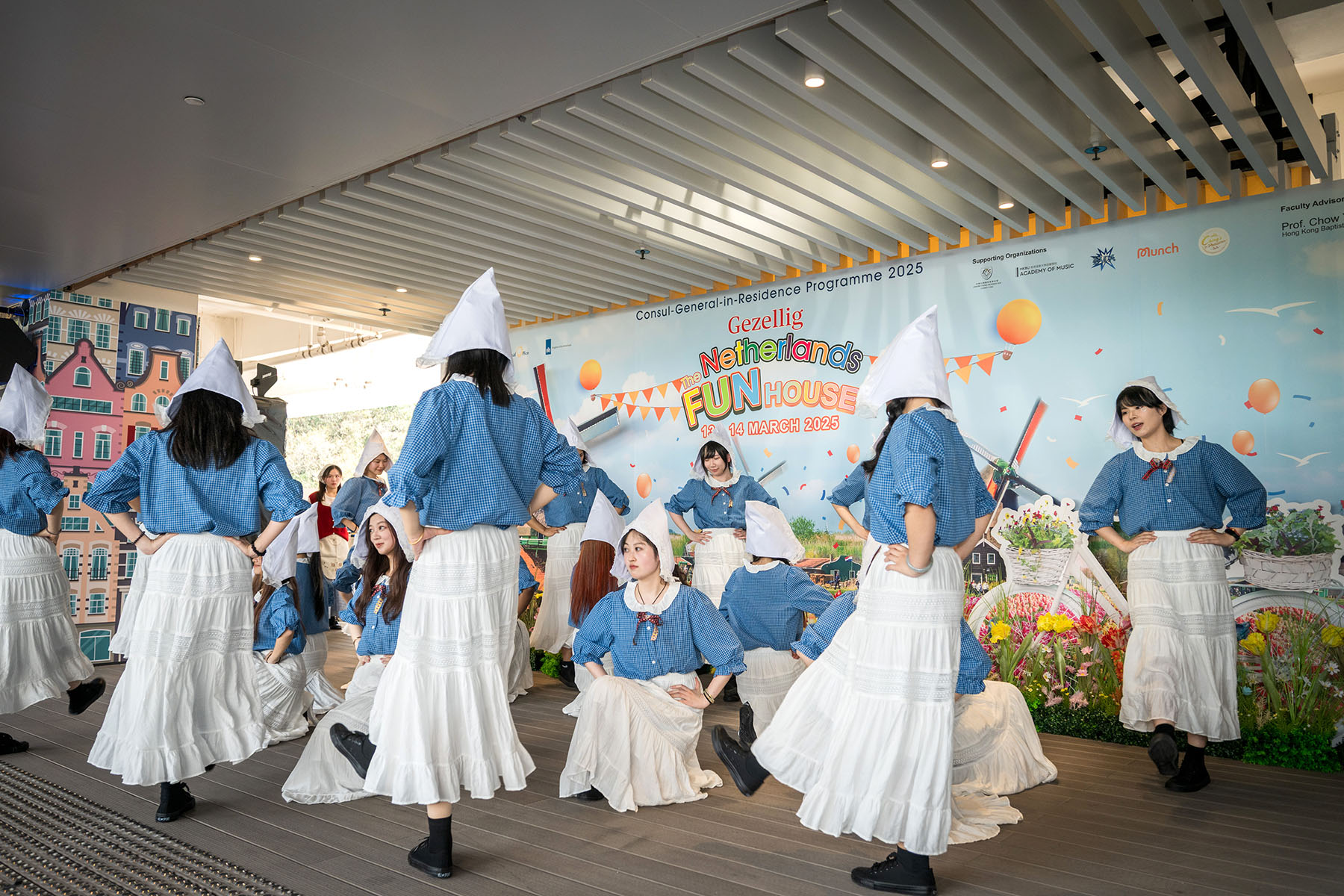
At HKBU, learning is not confined to one campus or one city. It stretches across time zones, enriched by extensive cooperation and a bold vision of internationalization, and finds its truest expression in the spaces where ideas meet without borders.
Chau takes internationalization as a priority of HKBU. He spotlighted the university’s exchange programs as a cornerstone of HKBU’s broader internationalization.
“As of now, we have about 400 partners all over the world for student exchange, meaning that we send students over or the students come over. We have around 8,000 undergraduates on the campus.
“Every year, we send about 10 percent of our undergraduates on exchange, either for one semester, one full year, or the summer term. In addition to exchanges, we also send students to other study opportunities. Putting all of these together, we are now sending about 40 percent of our undergraduates for learning experiences outside Hong Kong.”
Financial support, including scholarships and bursaries, is also provided to students for some of the overseas learning activities to cover air tickets, accommodation, daily subsistence and activity expenses, Chau added.
However, Chau cautioned that internationalization cannot be confined to an exchange program. It must permeate every stage of a student’s academic journey.
“Students will be operating in a globally connected future. Everyone is related to everyone else. Our curriculum has to be more internationalized, bringing in more international perspectives,” he said.
When it comes to educational collaboration between Hong Kong and the Chinese mainland, Chau considers the Beijing Normal-Hong Kong Baptist University in Zhuhai a true milestone. BNBU is the first university cofounded by a leading university, Beijing Normal University, in the Chinese mainland and a public university in HKSAR. At BNBU, students earn HKBU degrees, with the curriculum and quality assurance systems aligned to HKBU’s academic requirements.
He also spoke of the ever-deepening integration between the Hong Kong and Zhuhai campuses by leveraging the “One University, Two Campuses” model. International and exchange students now have a wealth of choices: a three-day immersive tour, or an entire academic year or semester in Zhuhai under the Extended Study Programme, with all eligible credits transferable back.
To HKBU, “the ‘Study in Hong Kong’ brand is broader than just Hong Kong. We promote Hong Kong under the city brand and in a broader context, the Greater Bay Area, or even the whole of China. When studying in Hong Kong, students can actually go to the Chinese mainland to enrich their experience,” he said.
Transdisciplinary education
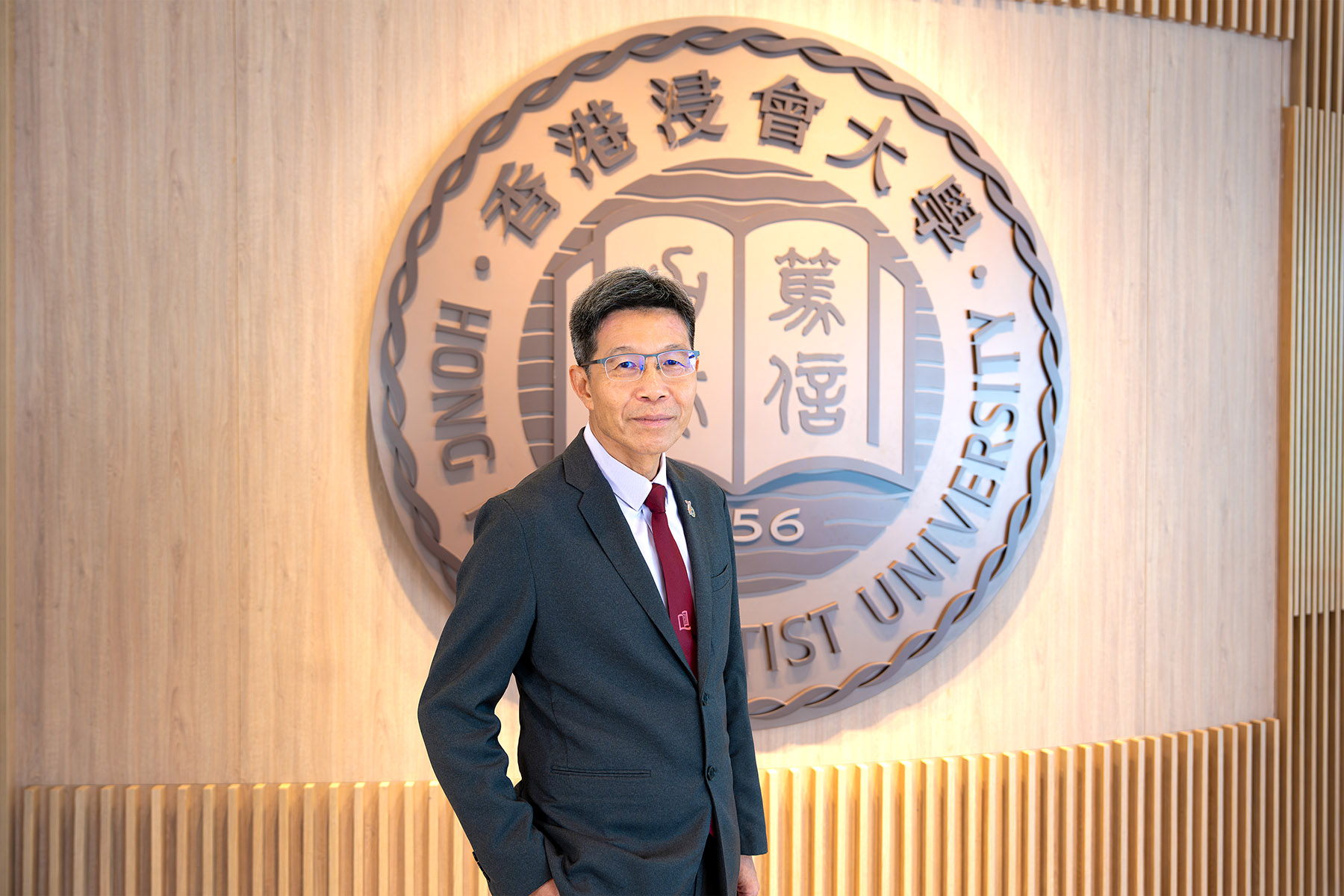
When asked what defines learning and teaching at HKBU, Chau placed transdisciplinary education at the core of the university’s philosophy; a commitment so deep that some of the undergraduate programs are specifically designed to integrate multiple disciplines. This is coupled with a Transdisciplinary Second Major mechanism that allows students to mix and match their first major with a TSM. Transdisciplinary education cultivates students’ capacity to transcend across disciplinary, sectoral and cultural boundaries.
“We don’t use the terms ‘interdisciplinary’ or ‘cross-disciplinary’,” he explained. “That’s because we define the transdisciplinary narrative as something more than interdisciplinary.”
According to Chau, transdisciplinary education at HKBU rests on three core principles. First, transdisciplinary goes beyond simply combining academic disciplines. When different disciplines are brought together, something new emerges: new disciplines, new methods of inquiry and new theories. This process is inherently elevating, creating something higher and better, he said.
Second, transdisciplinary education must be trans-sectoral. It calls for genuine collaboration across the full spectrum of society — academia, industry, nongovernmental organizations and governments — all united in the pursuit of shared goals, he added.
Last but not least, transdisciplinary education is transcultural. Students are called upon to weave together diverse cultural perspectives, for the purpose of this approach is to confront the deepest, most complex challenges facing all of humanity, according to Chau.
“In reality, we place great emphasis on contextualized learning. Learning must happen where the issues actually occur. That’s why we send our students to solution-based learning activities in businesses and NGOs. We want our students to propose and test solutions in authentic, real-world settings,” he said.
Such an approach, Chau explained, demands a shift in assessment, which moves from just outcome-based to also process-based models. Rather than rewarding only successful outcomes, the university must also value learning from unsuccessful attempts, he said.