

Mobile services provide free checkups in variety of locations
Editor's note: May 23 marks the 75th anniversary of the peaceful liberation of the Xizang autonomous region. Over the decades, healthcare has continuously improved, with enhanced access and infrastructure significantly boosting health outcomes and quality of life for residents in the region.
On a crisp spring morning, residents of a high-altitude village in the Xizang autonomous region were filled with anticipation as they waited for the arrival of a mobile medical team.
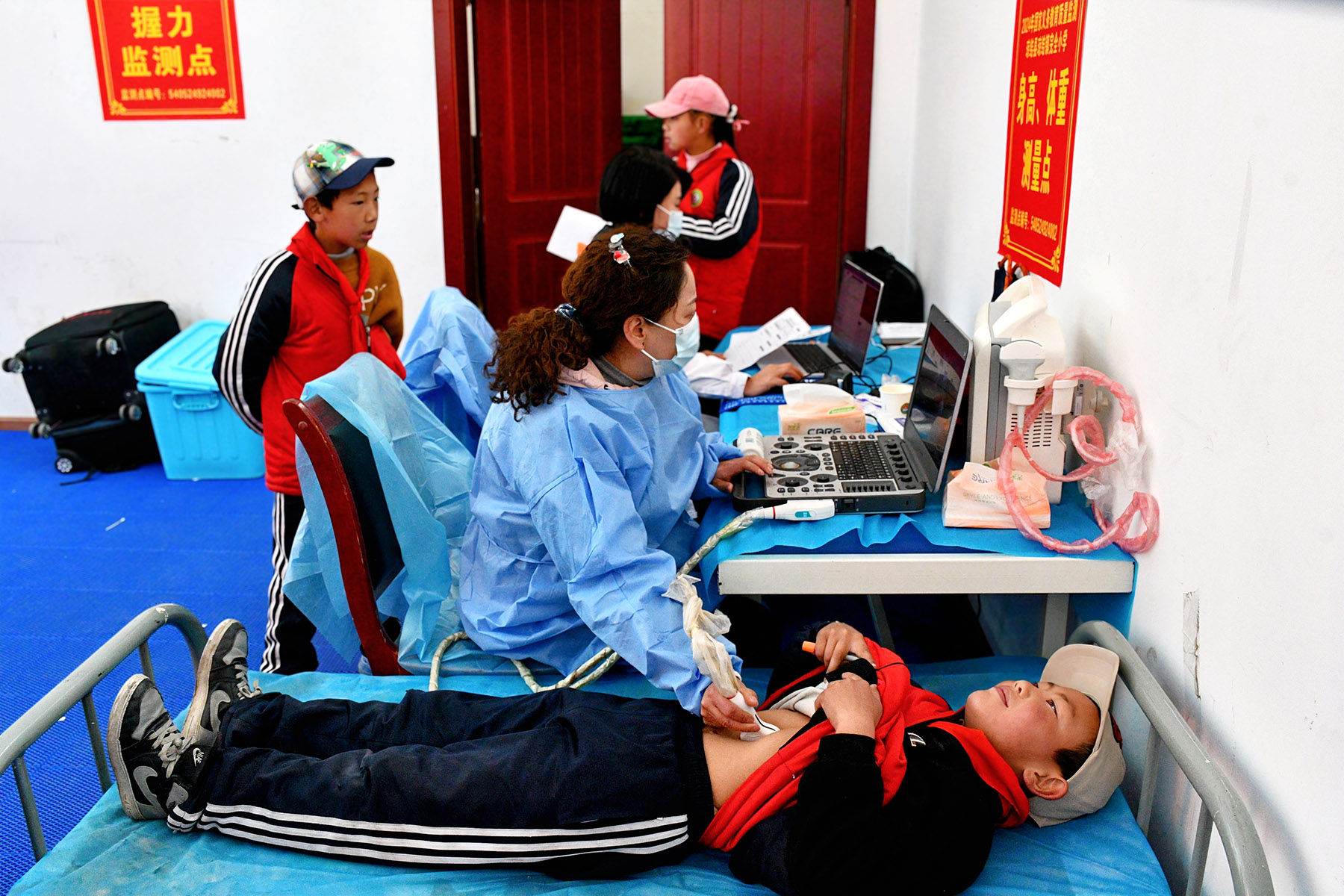
In Namling county, at an elevation of 4,100 meters, the April chill was still in the air. However, it didn't dampen the enthusiasm of local residents, including monks and nuns, who lined up outside the village activity center for their annual health checkups.
READ MORE: Visiting medical experts lift Xizang healthcare standards
A mobile health bus had navigated the rugged village roads, bumping and jostling the medical professionals inside. Its arrival in the village heralded the start of health-themed activities for the day and was indicative of the region's commitment to healthcare equity, even in Xizang's remote corners.
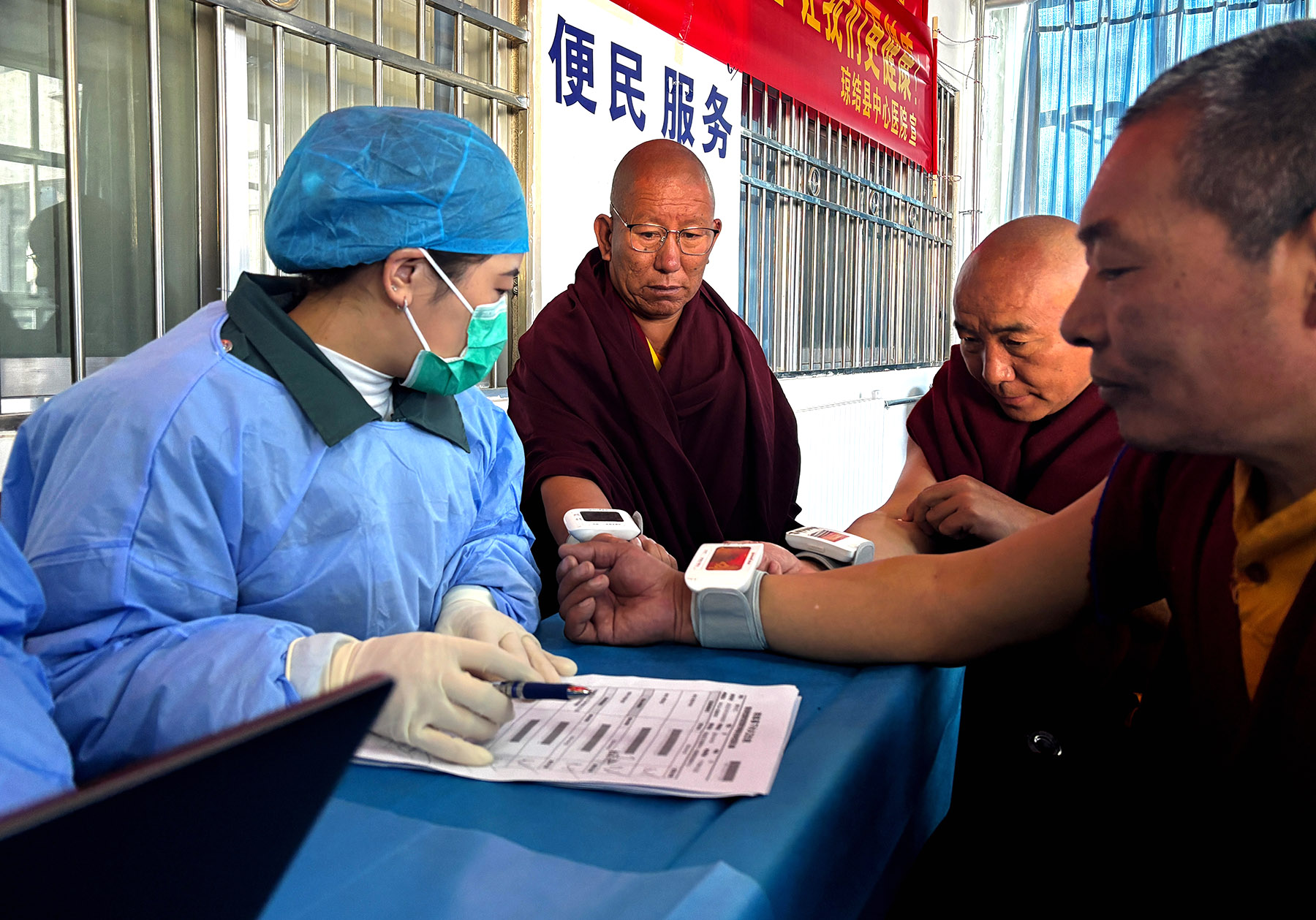
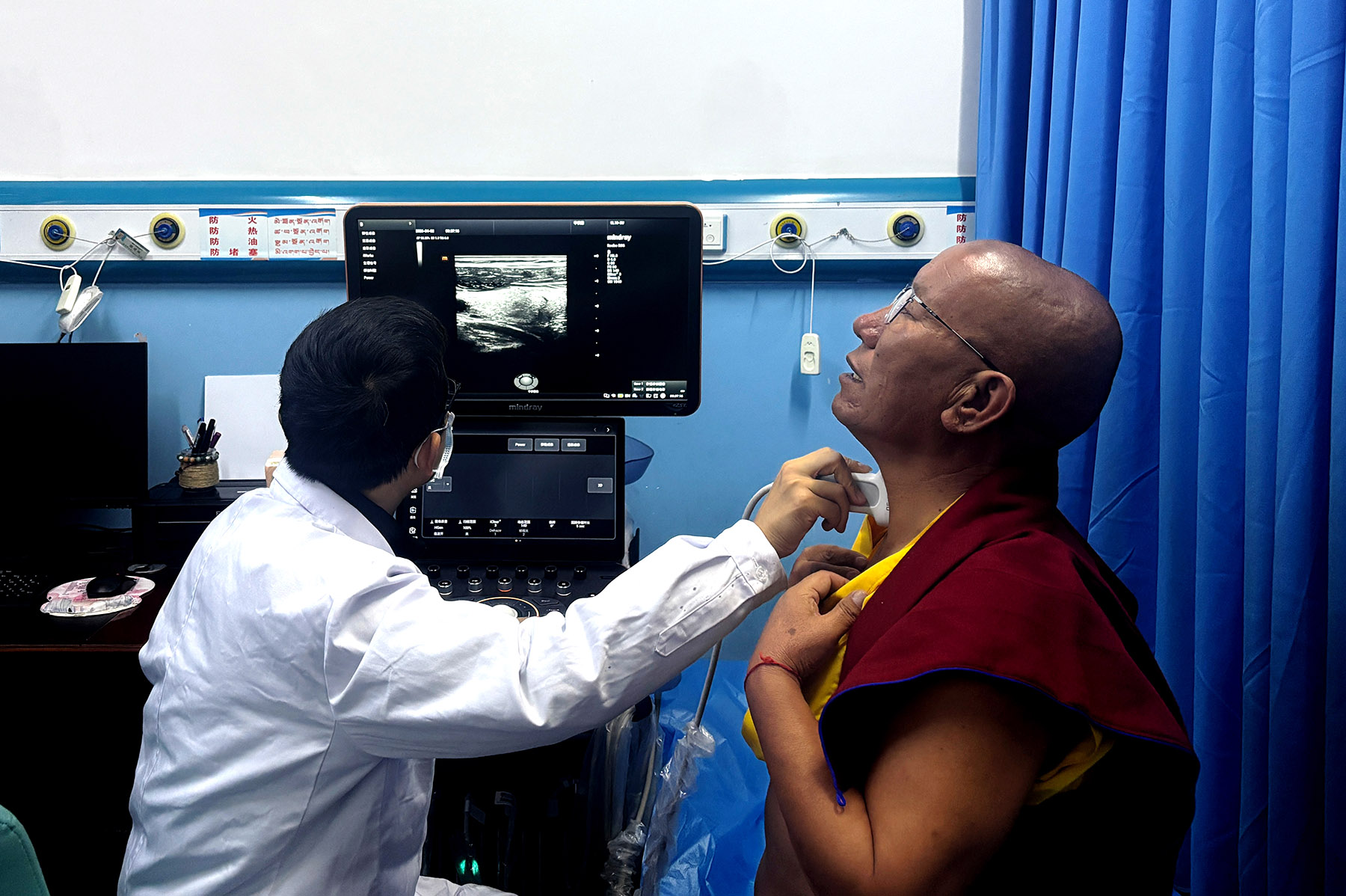
The medics' cups of tea had long gone cold as they worked throughout the day, but they carried out each task with precision and care. The team worked quickly to measure people's blood pressure, monitor heart rhythms, perform abdominal ultrasounds and draw blood for testing.

More improvements
This year marks the 75th anniversary of the peaceful liberation of Xizang, and throughout the decades, healthcare in the region has undergone continuous improvement.
Between 2021 and 2025, Xizang's healthcare sector experienced notable expansion, Xinhua News Agency reported.
The number of healthcare institutions climbed from 6,938 to 7,231, while bed capacity saw an increase from 18,942 to 21,488. The total number of healthcare professionals rose from 40,899 to 50,766.
Total funding allocated to the health sector in the region reached 60.89 billion yuan in the 2021-2025 period, marking an increase of 64.19 percent over the previous five-year period.
Since 2013, Xizang's regional health committee has made steady efforts to promote health checkups for urban and rural residents. Around 22.4 million health checkups have been completed over the period — covering the entire population.
The government provides an annual subsidy for each resident, which was increased to 164 yuan ($24.12) this year, to cover the cost of the checkups. Residents over age 65 receive 200 yuan. Beyond that, many of the subsequent medical services, such as some medications to treat long-term illnesses, are free.
This year, further efforts will be made to expand access to medical services through the deployment of additional mobile health diagnostic vehicles. Upgrades to existing onboard equipment are also planned, along with the distribution of motorcycles and portable diagnostic kits to village clinics, enabling grassroots health workers to deliver faster and more efficient basic checkups.
These efforts have already shown positive results at the county level. In Chonggyai county, for example, 14,000 residents have had health checkups this year, with the participation rate exceeding 88 percent.
"Health checkups for rural residents are an important element of our livelihood project," said Pasang Phenthok, head of Chonggyai County Central Hospital.
The checkups cover liver and kidney function, test blood sugar levels, and include chest X-rays and ultrasounds.
This year, free prenatal health checkups were introduced, along with screenings for major infectious diseases such as hepatitis B, HIV and tuberculosis.
Illnesses common in Xizang are being monitored for early detection. They include hypertension and polycythemia, a blood disorder that farmers and herders can develop at high altitudes because of reduced oxygen. The condition results in the thickening of blood and increases the risk of blood clots, strokes and heart attacks.
Early detection is key
In Chonggyai, health professionals have developed a system to quickly deal with serious illnesses identified during the health checkups.
Emergency treatment is conducted on-site, while patients with long-term conditions, such as diabetes or hypertension, are enrolled in a management system for ongoing care.
"We are forming a closed-loop health management process that prioritizes early detection and intervention," said Pasang Phenthok, adding that routine health checkups can reveal common health problems such as high blood pressure, fatty liver, gallstones, and cardiovascular diseases.
High salt intake in the diets of rural residents, especially from butter tea, is one of the major causes of these conditions.
Efforts to strengthen the medical network span multiple administrative levels. Chonggyai boasts a robust three-tier system at county hospitals, township clinics and village facilities. Currently, 20 village clinics provide medical services that meet national standards.
The mobile health checkup vehicles have become a lifeline for residents in widely dispersed communities, reducing costs and alleviating challenges in obtaining services.
This year, vehicles will be dispatched to seven remote townships for free health checkups, according to the Namling county health commission. The mobile service aims to cover more than 71,800 people. About 23 percent of the checkups have already been completed.
"This program allows for the early detection of problems to prevent severe illnesses and reduce health-related poverty," said Tsetan Drolkar, deputy director of the commission. The goal is to shift from treatment to active prevention, with farmers and herders encouraged to adopt healthier lifestyles.
Screenings tailored for the elderly, women, children and patients with chronic conditions are also improving people's quality of life, and reducing maternal and infant mortality rates in Xizang.
Sogchen Township Branch Hospital in Namling bridges the gap between grassroots patients and more advanced hospitals. Residents of the Tibetan Plateau region often face high-altitude polycythemia, diabetes and echinococcosis, a parasitic infection often transmitted through dog feces.
ALSO READ: Assistance improves healthcare imbalance
The hospital maintains a strict diagnostic process for chronic conditions, providing affordable medication to patients and guiding lifestyle adjustments to reduce risks.
Phurbu, a monk at Namling's Dragkar Monastery, recounted how regular checkups helped him detect and manage hypertension and significantly improve his health.
"Around 2021, during a checkup, the doctor advised me to take anti-hypertensive medication long-term. Now, after years of medication, my blood pressure has returned to normal," Phurbu said.
Similarly, Phurbu Tsering, a monk from Chonggyai, praised the benefits of annual health screenings: "These checkups are effective tools that allow for timely treatment and prevention of more severe complications."
Contact the writers at palden_nyima@chinadaily.com.cn
