

Prominent writer returns to painting and presents new exhibition depicting scenes from youth and memory across many years of work, Lin Qi reports.
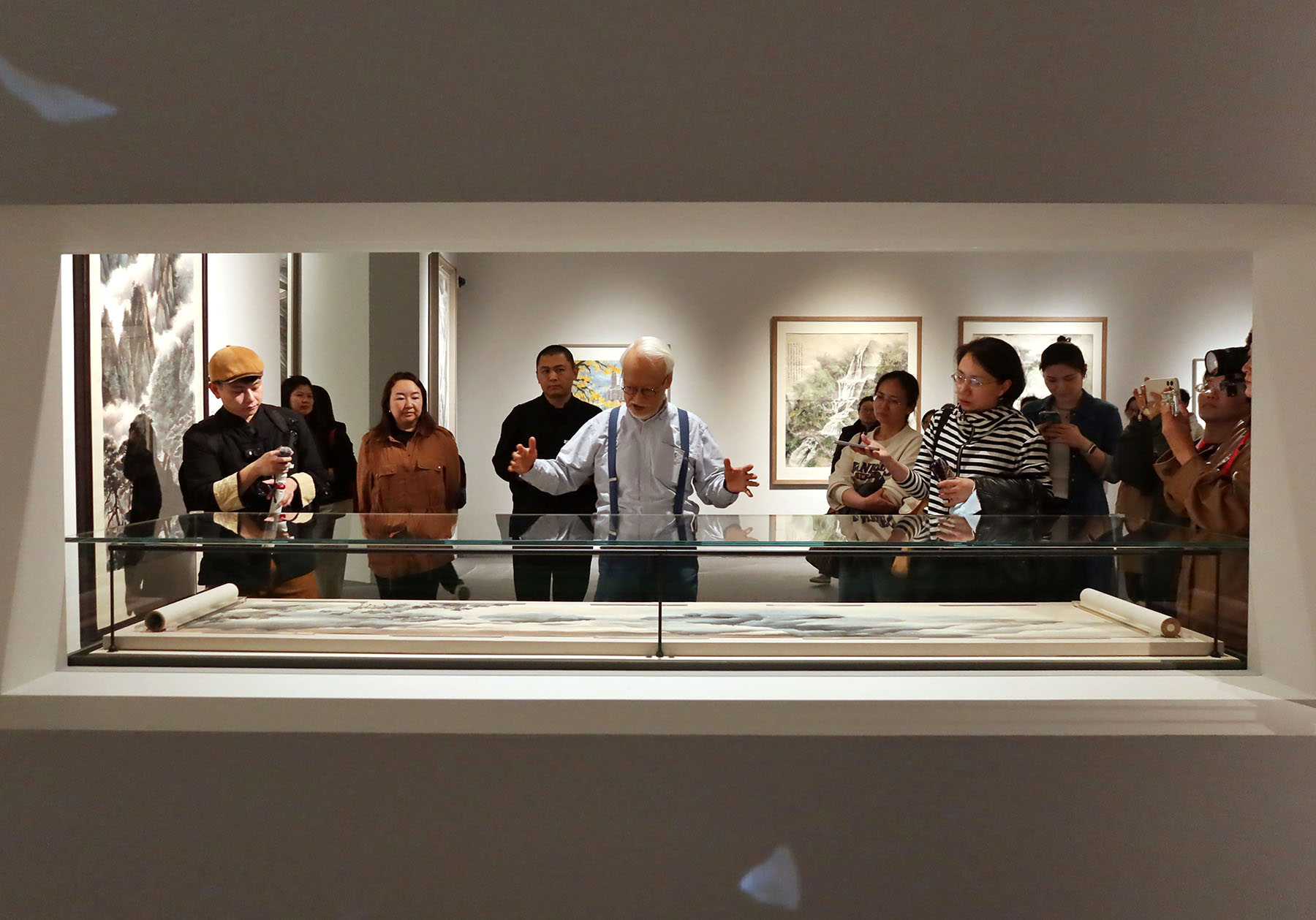
When Yung Liu, widely known as Liu Yong, talks about observing begonias, he doesn't just describe them. He performs them. He extends his forearms, bends his wrists, and lets his body sway, tracing the arc of branches and the quiet tension of leaves unfurling. The gesture is instinctive, almost childlike. His eyes light up as he drifts into memory — Taipei night markets alive with open-air opera, food stalls steaming under dim bulbs, and the hum of a city that shaped him. Then, unexpectedly, his voice falters. He recalls fishing trips with his father, and emotion breaks through.
At 77, Liu is not discussing his literary career — the one that made him a household name across Chinese-speaking communities.
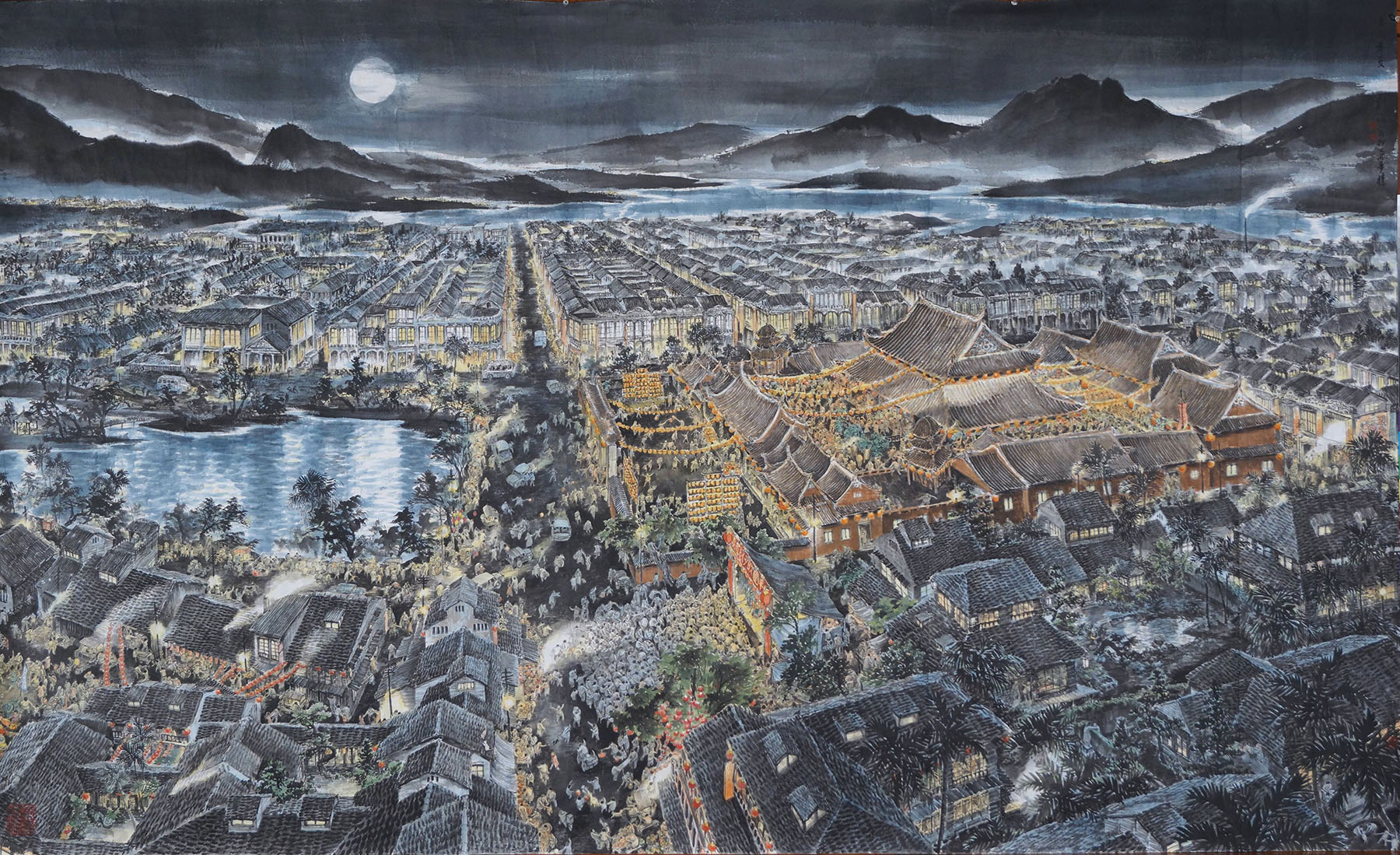
Instead, he is revealing a parallel life that has long run beneath the surface: painting. Now, that side of him has taken center stage. At the National Museum of China in Beijing, Liu presents Poetic Years: Dreams Flow into Paintings, an exhibition of 89 works in traditional Chinese ink styles, on display through June 8. The show charts decades of exploration — from flower-and-bird compositions and tranquil moonlit scenes to lively reinterpretations of urban life reminiscent of the 12th-century classic Qingming Shanghe Tu (Along the River During the Qingming Festival), but filtered through a modern sensibility.
ALSO READ: Artist's legacy revered in Beijing exhibition
The exhibition also marks a personal return. More than 30 years ago, Liu frequented the same institution — then known as the National Museum of Chinese History — gathering material as a television scriptwriter exploring Chinese civilization.
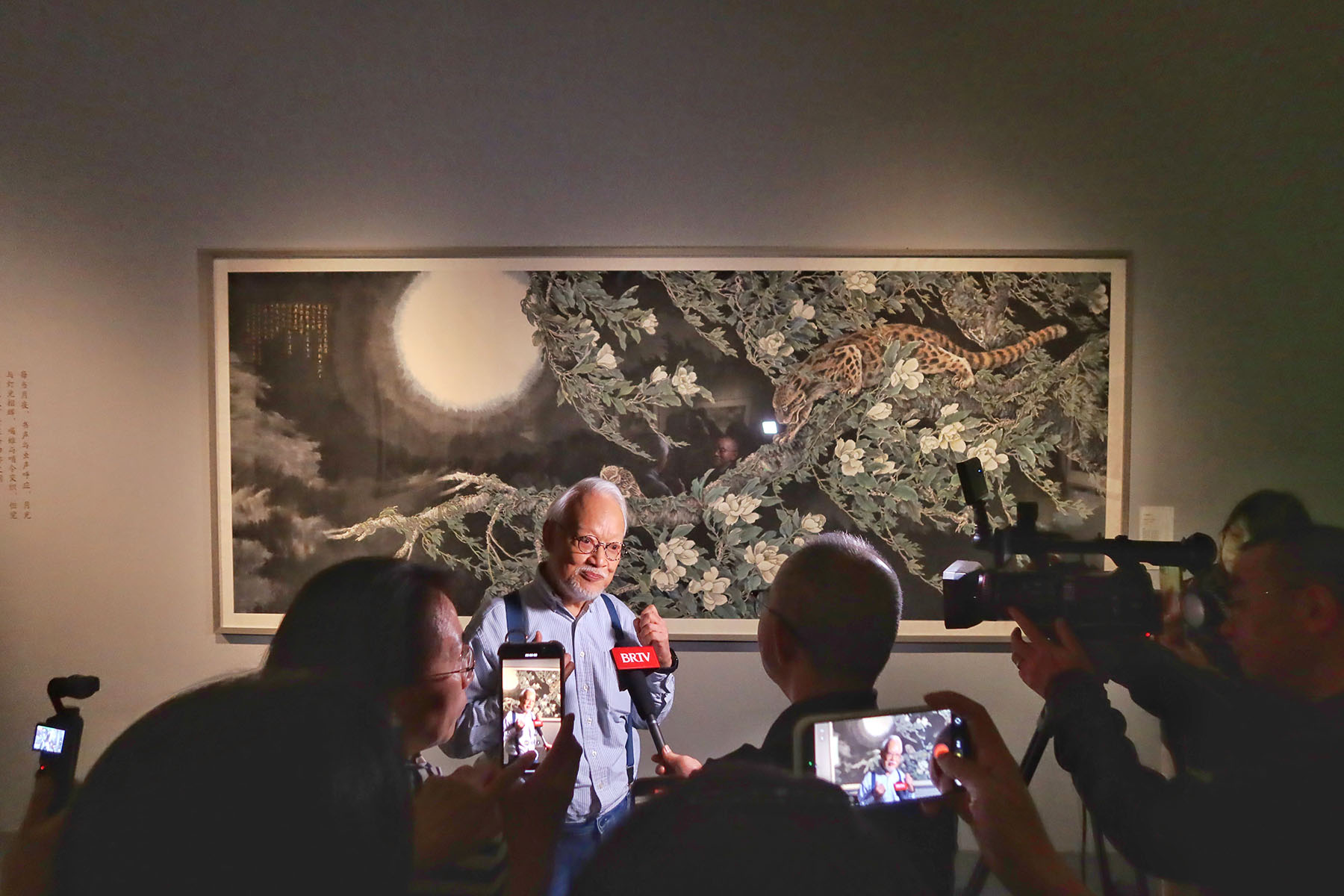
"I visited many times, for there were so many artifacts of great importance here," he says, adding that the "serendipity" and "decades of hard work" have brought him back, so that he can rekindle his link with the national museum and, this time, with his own art.
Liu's reputation as a writer is formidable. Since the 1970s, he has produced best-selling essays, fables and art theories, often drawing on everyday life to distill reflections on human nature, resilience, and time.
"His prose is known for its philosophical clarity, wit and understated humor, qualities that also permeate his paintings," says Huang Xiaojiao, the exhibition's curator at the National Museum of China.
For Liu, the connection is inseparable. "These paintings are my heart and soul," he says. "When I look at them, I feel renewed."
He is keen, however, to correct a common assumption: writing may be what most people know him for, but painting came first.
"I want people to see the whole of my world," he explains. "Writing is familiar to readers. But painting — that's my true profession."
That claim is not rhetorical. Liu showed early promise as a painter in his teens. He studied under Hu Nianzu (1927-2019), a respected figure in the mountain-and-water style of classical Chinese painting who hailed from Hunan province. And he won prizes in school art competitions.
His technical foundation was solid from the start. One of the earliest works in the exhibition — a 3.5-meter handscroll of historical figures completed in 1964 when he was just 15 — demonstrates both discipline and ambition.
Another early piece, created in 1966, captures cascading mountain springs shrouded in mist. It was inspired by a grueling winter hike. "It rained heavily. The paths were muddy and dangerous," Liu recalls. "I came home soaked. But instead of resting, I painted it and finished in about an hour.
"When I see it now, I remember that feeling — the energy and enthusiasm of a 17-year-old."
Liu went on to study fine arts at Taiwan Normal University, graduating in 1972 before taking a position as a high school art teacher.
Throughout the 1970s, he exhibited and wrote about Chinese painting in Taiwan, as well as cities in Europe and the United States.
Even as his literary career gained prominence, he never abandoned painting. Instead, the two practices evolved in parallel — each informing the other.
While his artistic influences are rooted in the Song Dynasty (960-1279), widely considered the pinnacle of Chinese art, Liu has never been content with imitation. Living and working in the West exposed him to new ideas, prompting him to experiment with unconventional techniques.
One such method involves spraying ink through a tube — a practice inspired by a childhood chore. As a boy, he helped his mother smooth wrinkled bedsheets by blowing water across the fabric. He also manipulates paper, repeatedly wrinkling and ironing it to create textured surfaces that interact unpredictably with ink.
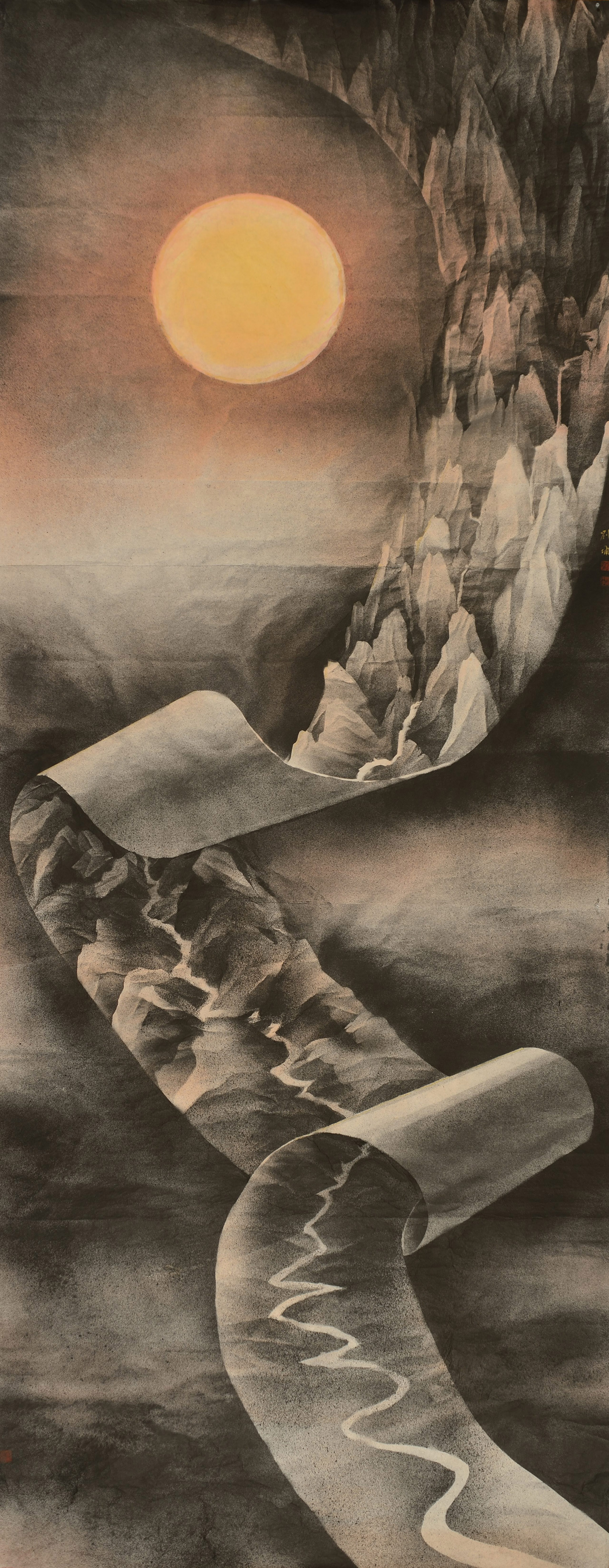
These experimental approaches are evident in a series of large-scale works, including four paintings donated to the National Museum of China in 2025 that are now on show: Chenxi (Morning Glow), Shuiyue (Moon on Water), Shujuan (Volumes of Books), and Jiangshan (The Land).
Each vertical scroll rises more than 3.6 meters, echoing classical landscape traditions while subtly dismantling them. Details are pared down. Colors recede. What remains are distilled forms — mountain silhouettes, luminous moons, flowing lines — rendered through delicate contrasts of light and shadow. The effect is meditative, almost austere, inviting viewers into a space of stillness and introspection.
Liu says painting "not only captures a view, or shows a space, but also carries the weight of time in passing". That idea finds poignant expression in a pair of works displayed side by side. Both depict a porcelain vessel of flowers under moonlight, yet each tells a slightly different story.
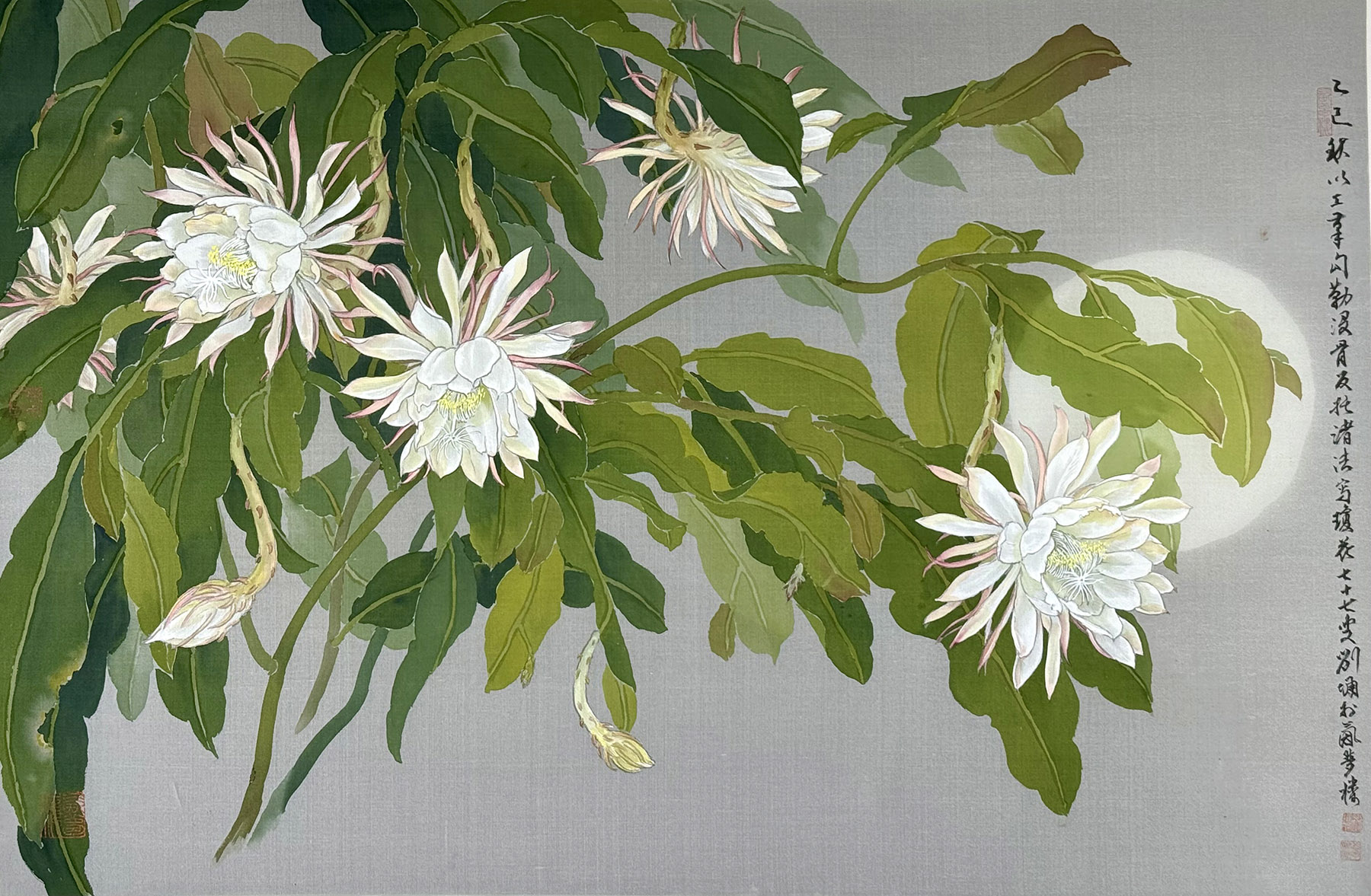
Come Back in the Morning with a Harp if You'd Like shows a lotus pot in an empty classical Chinese garden, with a hollowed rock mountain on one side and a stone table and stools on the other side. Beautiful Moon, Light Breeze, Night-Blooming Cactus shows a vigorous cactus in an empty room, with curtains on both sides.
Liu says neither painting includes human figures. Yet traces of human activity are everywhere — an open book, a partially unrolled scroll, a toppled wine bottle, and curtains swaying.
Liu often works in pairs like this, exploring variations on a theme. The approach reflects his broader philosophy: that art should create a space where viewers feel compelled to linger, a long-held core value of Chinese painting.
ALSO READ: Digital homecoming for a buried city's lost masterpieces
"I want to paint scenes that people can enter," he says, "places where they can rest — not just physically, but emotionally."
In recent years, Liu has turned increasingly toward studying classical masterpieces. After turning 70, he began copying iconic works such as Zaochun Tu (Early Spring) by Guo Xi and Xishan Xinglyu Tu (Travelers among Mountains and Streams) by Fan Kuan, both living in the Northern Song Dynasty (960-1127). The process is rigorous and physical.
"I kneel on the floor and re-create each stroke," he says.
"One has to move forward boldly," Liu reflects, "but also look back and examine oneself."
Contact the writer at linqi@chinadaily.com.cn
