

Once the cradle of China's industrial revolution, site gets a makeover, turning it into a hub of tourism and tradition, Yang Feiyue reports in Tangshan.
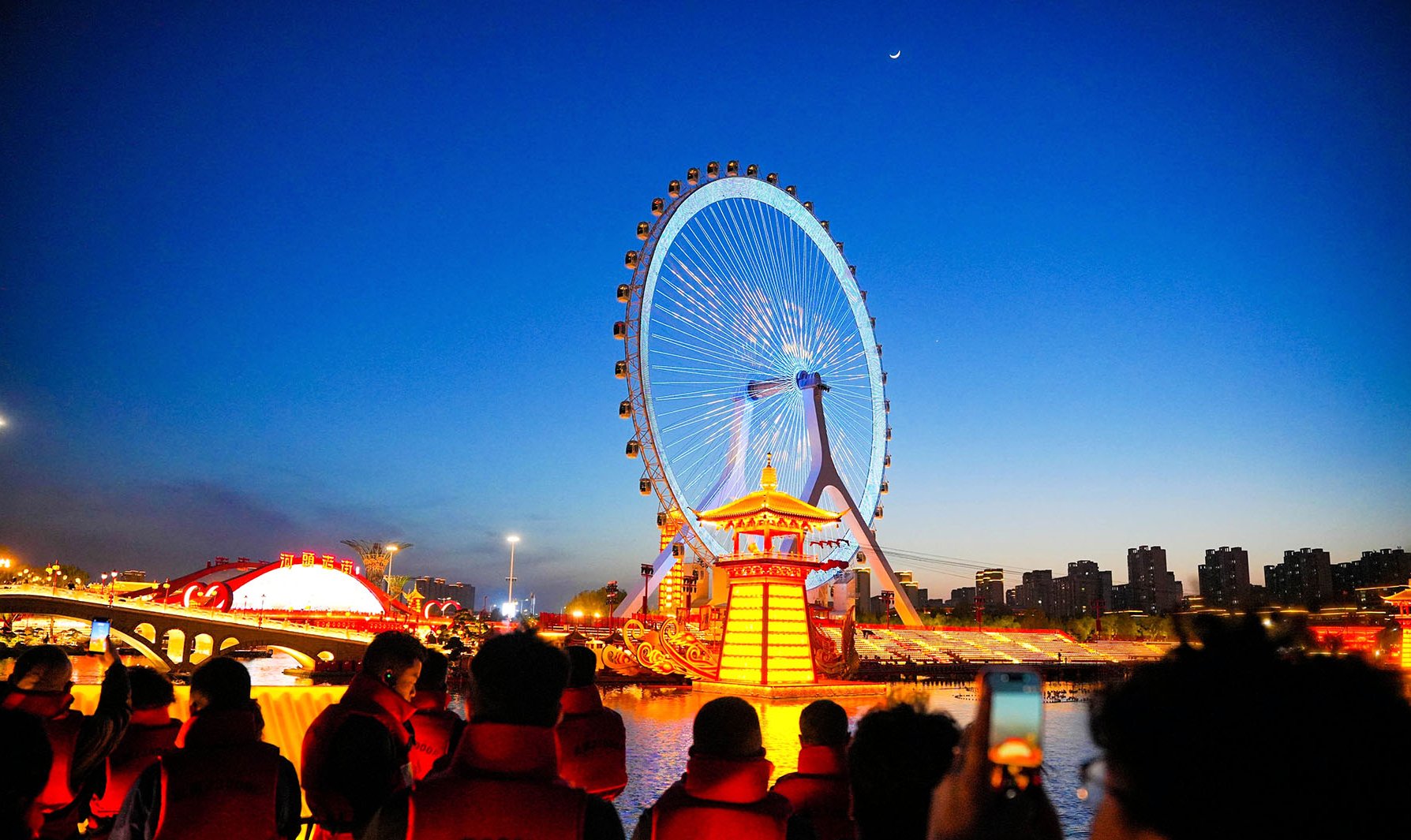
The boat glides slowly along the Tangjin Canal, a waterway that once connected the industrial cities of Tangshan in Hebei province and Tianjin. On either side, hundreds of Tang Dynasty-styled lanterns rise in formation, their crimson glow chasing away the last chill of an April evening as it illuminates the countless bricks and latticed windows lining the streets.
A massive Ferris wheel with playful expressions flashing across its digital screen looms ahead. The air is filled with the distant melody of Pingju Opera, a centuries-old folk tradition born in this very region.
For a moment, it is easy to believe you have traveled back in time to the Tang Dynasty (618-907), an era celebrated as the golden age of Chinese art, culture and cosmopolitan ambition.
READ MORE: Hebei deepens opening-up to drive high-quality development
But this is not Xi'an in Shaanxi province, the ancient capital most associated with the Tang. It is Hetou Laojie (Hetou Old Street), a water town in the city, better known as a cradle of China's modern industrial revolution.
And, just a few years ago, this waterway was silent.
"Please lower your head," boat guide Shi Jia gently cautions her guests as the vessel approaches a low bridge adorned with a glowing light belt.
It is a practical safety reminder. But for the creative team behind the old street, it has become something of a metaphor.
After more than a decade of lying "low" as a lackluster commercial project, this place has raised its head, blossoming into one of the most dazzling nighttime tourism destinations in the province.
In 2025, the street welcomed 8 million visitors, with a single day reaching 166,000. On a typical Monday night in April, the street is crowded with travelers as if it were a holiday.
Since opening in 2023, it has been recognized as a national tourist and leisure street and received the 2025 China Cultural Tourism Pioneer Award from the China Association of Amusement Parks and Attractions.
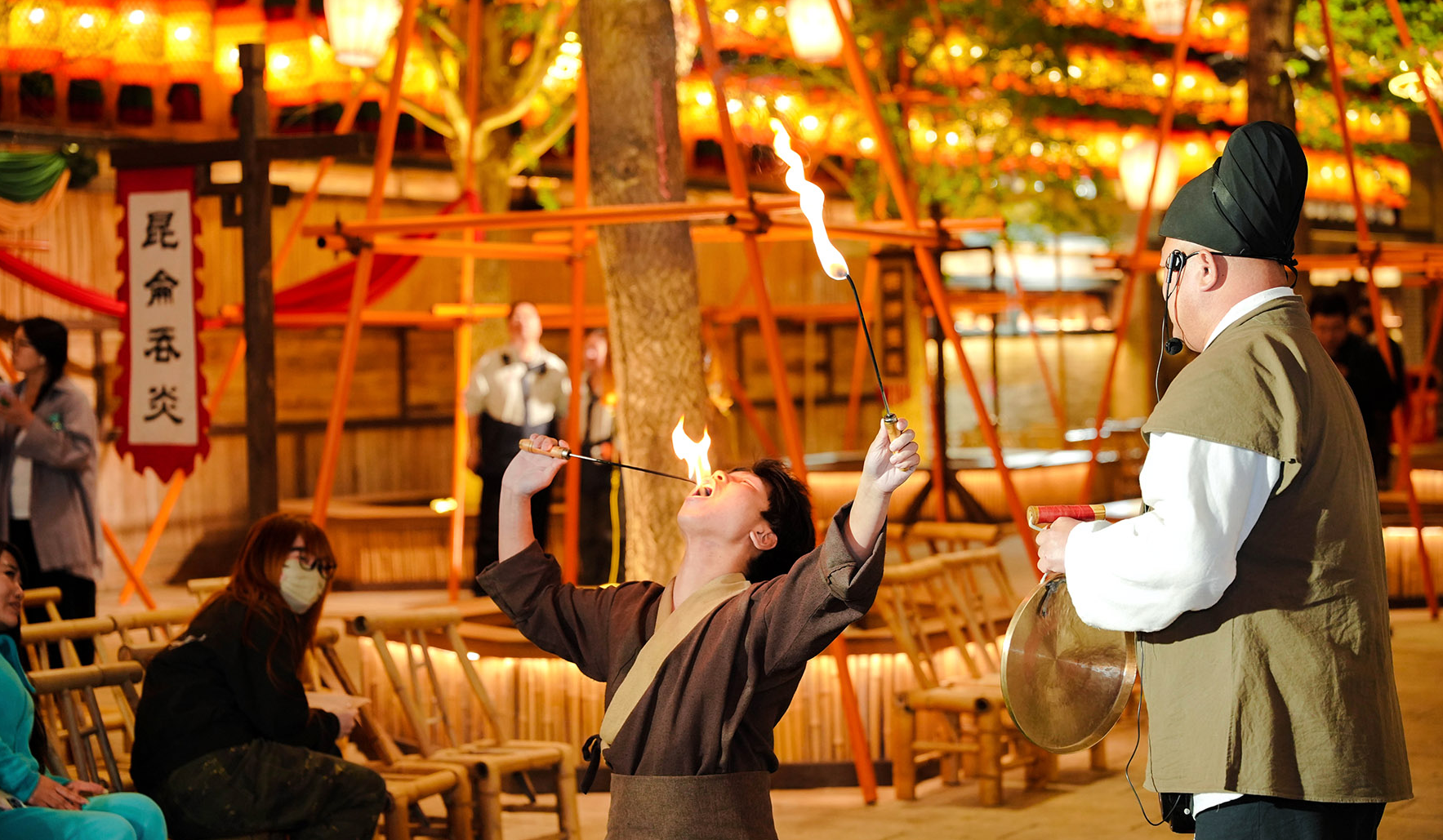
The 2,000-mu (133-hectare) site is the result of a partnership between the Fengnan district government and Kaige'er Group, a local cultural tourism enterprise. It now offers a fully immersive Tang experience, where visitors can eat, stroll, shop, and watch performances in a meticulously re-created historical atmosphere.
As the boat continues its journey, passengers pass multiple performance installations along the banks, where singers, dancers, acrobats, and actors in Tang-era costumes create vivid scenes that unfold as a scroll painting brought to life.
"The performers are inheritors of intangible cultural heritage, and they perform to audiences' reactions," Shi emphasizes.
She often recommends her guests stay for a short Pingju Opera performance, which originated from Tangshan.
In addition to the dynamic performance, the giant lanterns are eye-catching, each standing about 7 meters tall and featuring patterns from The Court Ladies Adorning Their Hair with Flowers, a Tang Dynasty painting now housed in the Liaoning Provincial Museum.
About half an hour's drive from Hetou Old Street, Tangshan Feast, also known as the Tangshan Food Culture Museum, pleases the palate of even the most discerning gourmand.
The 40,000-square-meter indoor complex features 150 varieties of Tangshan snacks and more than 20 types of foods crafted with intangible cultural heritage skills, all spread across "five streets, two alleys, and one river" on its ground floor.
"Tangshan Feast is what we call 'an edible museum'," says Wang Caitong, a guide at the complex.
"It was originally a disused shopping mall. The creative team reshaped the space and built a 'super scene' with cultural tourism appeal- small bridges, flowing water, pavilions, towers, and the hustle and bustle of traffic," she adds.
In 2025, it attracted 5.5 million visitors, 70 percent of whom came from outside Tangshan. On its busiest day, it welcomed 50,000 people.
Old wooden houses, some more than a century old, have been dismantled and reassembled here. In re-creations of some "grandpa" or "grandma" shops, elderly artisans demonstrate traditional crafts.
"We collected six century-old houses from the countryside," Wang says."Every brick and tile carries the trace of time. These scenes are designed to evoke childhood memories and to make people feel something."
On the second floor, a replica of Xiaoshan'er, a commercial district that once rivaled Beijing's Dashilar and Tianjin's Quanyechang in the 1930s, has been rebuilt.
Literally meaning "Little Hill", Xiaoshan'er rose to prominence in the late 19th century as the northern terminus of the Tangxu (Tangshan-Xugezhuang) Railway, China's first standard-gauge railway. A commercial explosion then ensued, with department stores, bathhouses, theaters, teahouses, and restaurants packed into just a 500-meter-long stretch.
"In those days, if you came to Tangshan and didn't visit Xiaoshan'er, you hadn't really been to Tangshan," she says.
Every snack at Tangshan Feast has a story. For instance, gezha, a mung-bean pancake, is said to have been named by the Empress Dowager Cixi.
"The Empress had a habit of taking at most two bites of any dish. When she tried gezha, she liked it so much that she took a second bite and said 'ge zhe' — meaning 'set it aside'. The eunuch thought she was naming the dish — and the name stuck," Wang recounts.
The "Fourteenth Prince" dry-braised chicken derives its name from Emperor Kangxi's 14th son, who was sent to guard the Qing tombs in Tangshan.
"He didn't have much appetite until the palace chef took a local dry-braised chicken recipe and combined it with imperial roast chicken techniques. The prince ate with great pleasure, and the dish has been passed down for 300 years," Wang says.
The success of Hetou Old Street and Tangshan Feast did not happen in a vacuum. They are the products of a deliberate, province-wide strategy to turn Hebei into a weekend destination for the 110 million people living in the Beijing-Tianjin-Hebei region.
For years, Hebei was overlooked by tourists despite being home to several UNESCO World Heritage sites and containing all seven major landform types, notes Wang Rongli, deputy director of the Hebei provincial department of culture and tourism.
That began to change in 2022, when Hebei launched a strategic push to become the "weekend leisure destination of choice" for residents of Beijing and Tianjin. The slogan,"So close, so beautiful — spend your weekend in Hebei", was elevated to a provincial development strategy.
But traffic comes and goes quickly. "For a brand to last, it must rely on products and services," Wang emphasizes.
Since 2023, Hebei has become one of the first provinces to offer free expressway for tour buses traveling on weekends and public holidays. By 2025, the policy had saved tour operators more than 510 million yuan ($75 million) and covered more than 3.4 million buses, local authorities report.
"The fee reduction isn't large for any single tourist, but it sends a signal that Hebei genuinely welcomes you, and we're even willing to save you the tolls," she explains.
The province has also launched a luggage delivery service called "Easy Hebei Tour", allowing visitors to check in their bags at Beijing West Railway Station and find them already waiting at their Hebei hotel.
"The most durable, most powerful, and most cost-effective marketing is always word-of-mouth," Wang says.
ALSO READ: Ancient crafts dance to Spring Festival beat
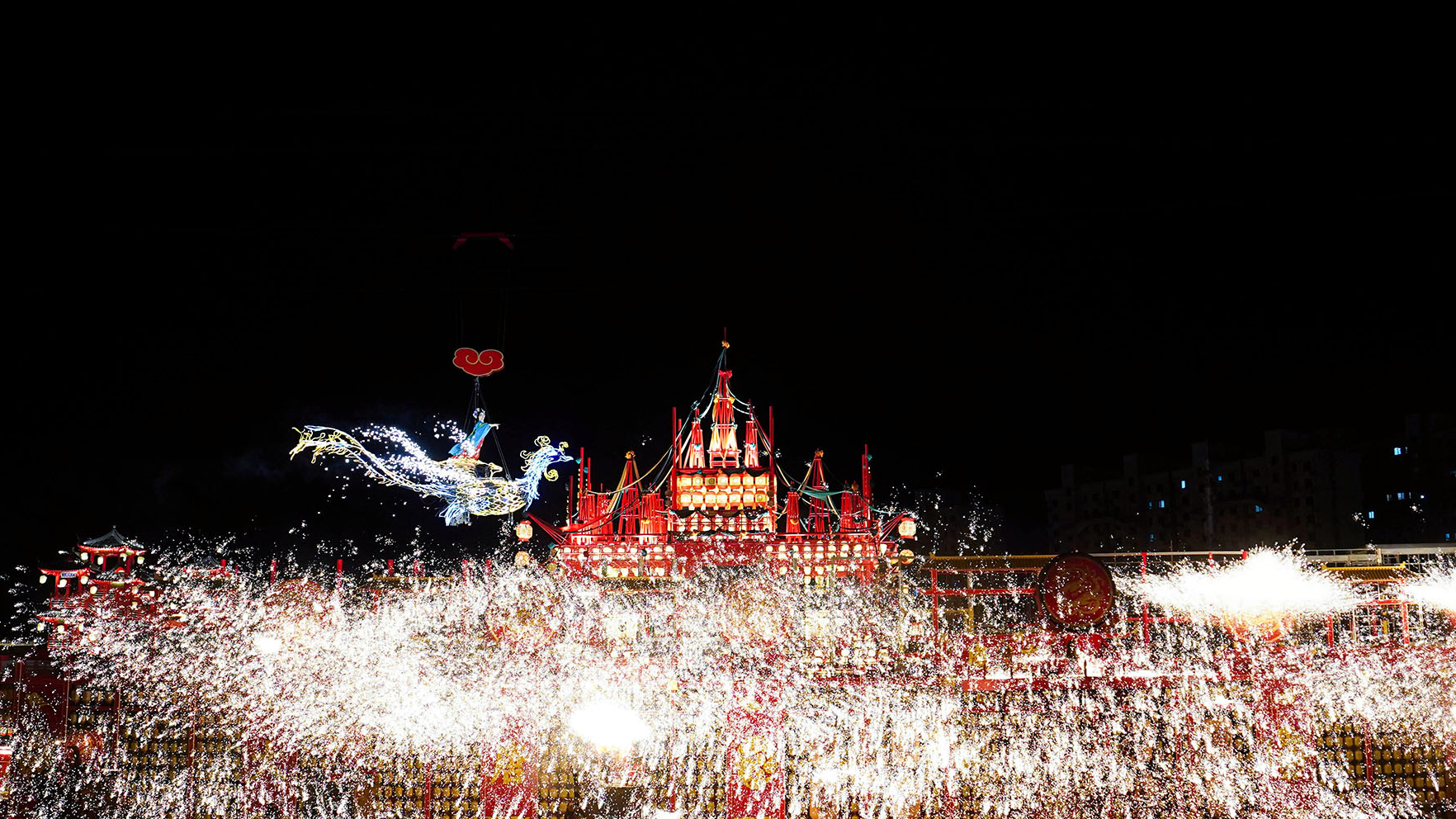
Midway through Hetou Old Street, the night erupts. Along a stretch of the canal transformed into a battlefield, six former fishing boats have been refashioned into Tang Dynasty warships. On and around them, more than 500 performers charge on horseback, spin towering flags, and hurl themselves into staged combat.
From both ends of the canal, actors suspended from cables glide across the night on mechanical phoenixes, their robes streaming behind them as they pass through cascades of molten iron. The iron, heated to 1,600 C, is flung by hand against a brick wall, a thousand-year-old folk tradition called da tie hua. It explodes into a blizzard of white-orange sparks that rain down over the water, the boats and the upturned faces of the crowd.
For Shi Jia, the boat guide, the performance captures something essential about Hetou Old Street.
"For 12 years, this place was nothing. Now people come from Shanghai and Guangzhou, Guangdong province, just to see this," she says.
The low bridges are still there. So is her warning: "Please lower your head." But when the phoenixes fly, no one is looking down.
Contact the writer at yangfeiyue@chinadaily.com.cn
