

City's open approach, policies attract startups, talent and innovation
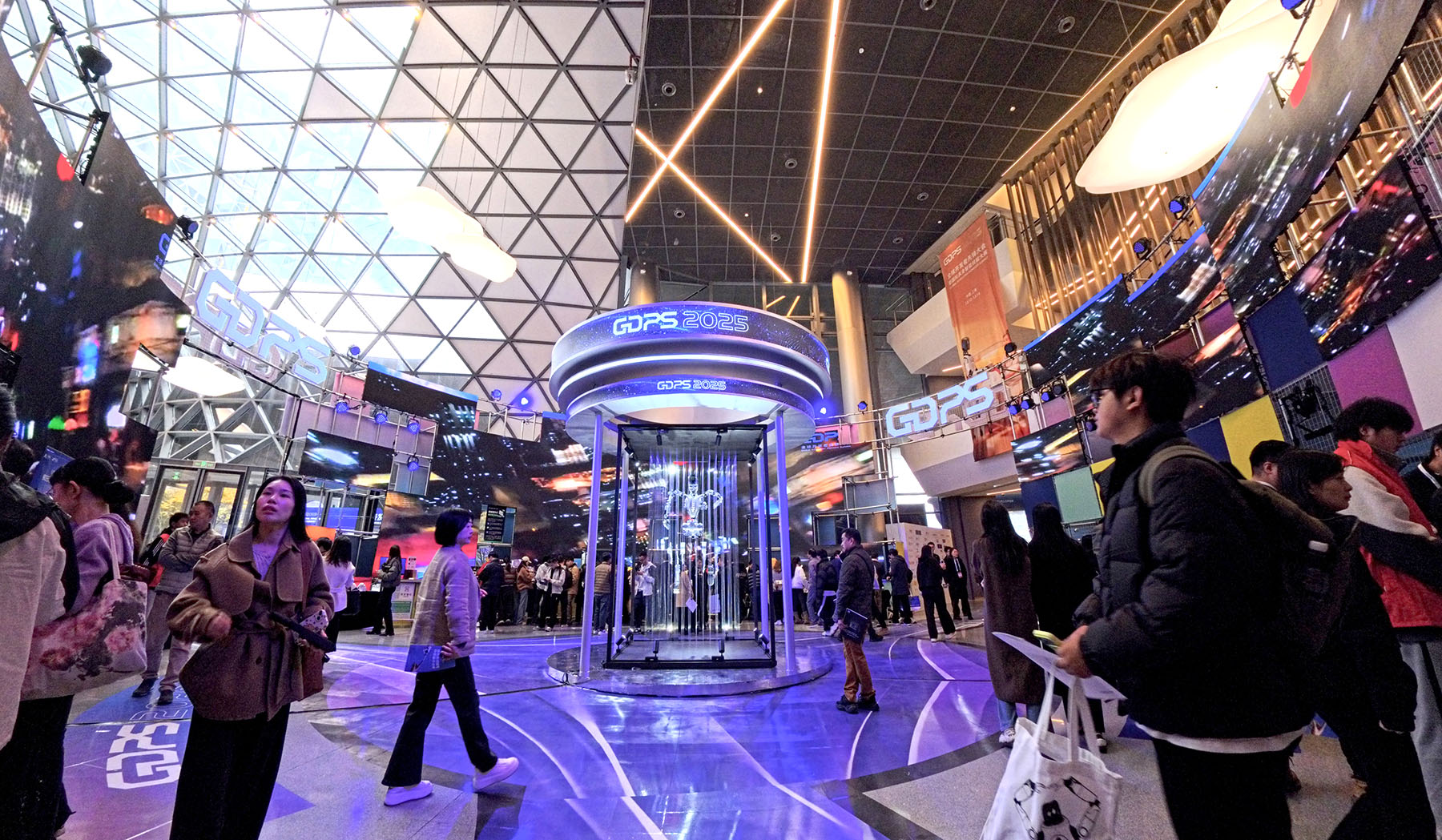
At an auto plant in Puebla, a historic city in central Mexico, a digital system introduced this year by a Chinese company has significantly improved production efficiency.
The system's provider is Black Lake Technologies, an industrial internet company based in Shanghai's Changning district.
Founded in 2016, Black Lake is currently developing industrial-grade artificial intelligence agents and actively expanding its overseas customer base, promoting a new "Made-in-China" model of intelligent manufacturing abroad.
In the domestic market, the company also has big ambitions.
READ MORE: Shanghai to further boost advanced manufacturing
"There are 5 million factories across China, but Black Lake has only served 30,000 of them so far," said Zhou Yuxiang, founder and CEO of Black Lake, expressing optimism about the company's growth potential in the coming decade.
In 2021, the company relocated its headquarters to Changning's "Silicon Alley", a technological innovation block that has revitalized the concept of a traditional tech park by building an urban innovation ecosystem that brings together companies across the industrial chain.
However, Silicon Alley is only one example of Shanghai's wider efforts to attract AI entrepreneurs and startups through its friendly policies and strong computing capacity.
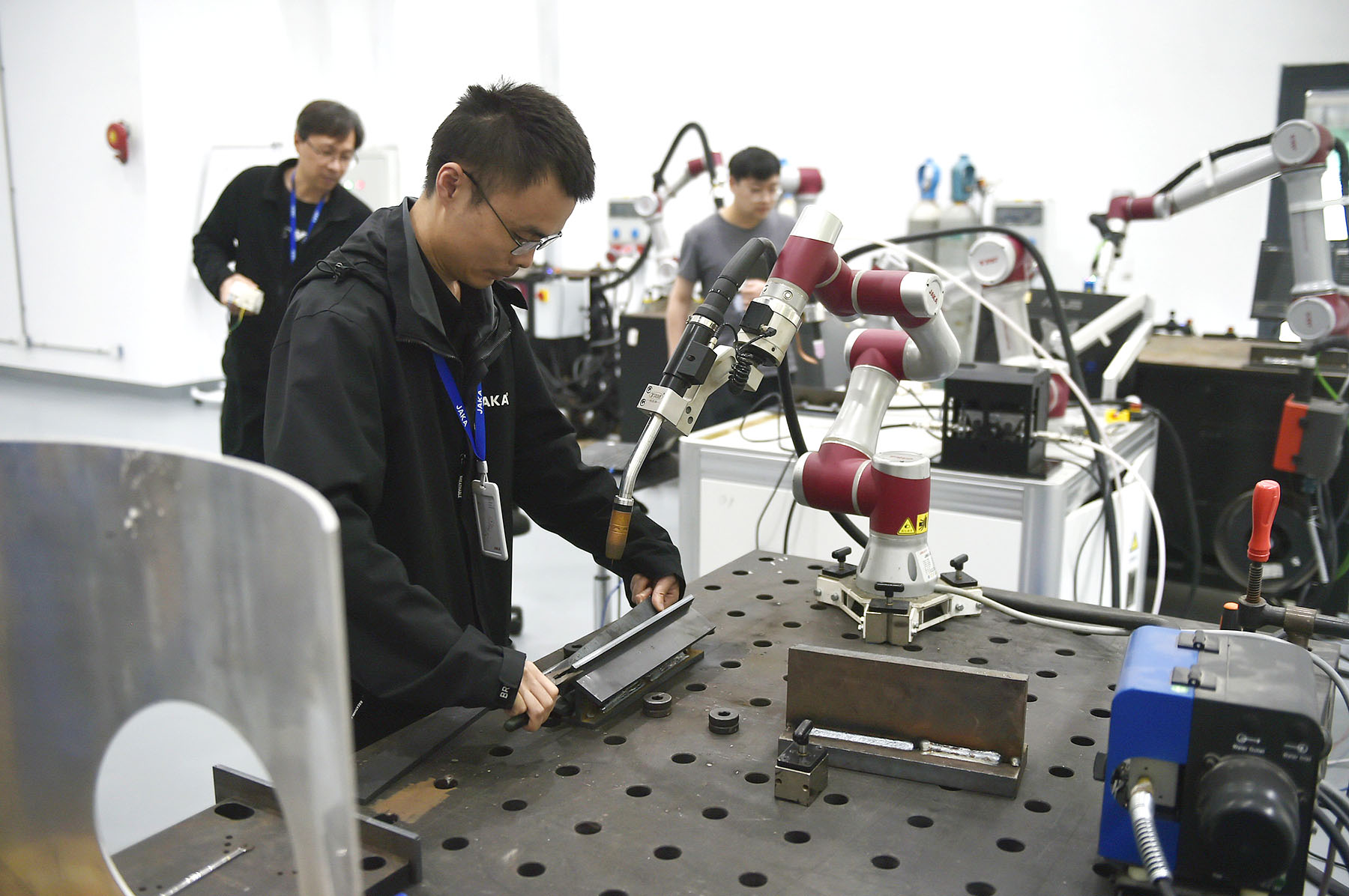
Chen Jie, vice-mayor of Shanghai, said at the opening ceremony of the 2026 Global Developer Pioneers Summit last month that Shanghai is determined to become a city that best understands developers and provides them with solid and welcoming support.
"Shanghai accounts for 10 percent of the nation's intelligent computing capacity, operates the country's first public corpus service platform, and has more than 150 registered large models," Chen told the summit that concluded on March 29. "By lowering the threshold for entrepreneurship, big ideas are unlocked in the city," he added.
A total of 394 AI companies in Shanghai, each with a designated annual revenue of 20 million yuan ($2.93 million) or above, saw their combined industry scale exceed 637 billion yuan in 2025, up 39.5 percent year-on-year, said Pan Yan, deputy director of the Shanghai Commission of Economy and Informatization.
As of Feb 28, as many as 149 generative artificial intelligence services completed filing across Shanghai, and the AI sector has become an important engine in driving the city's GDP growth, Pan added.
Wooing developers
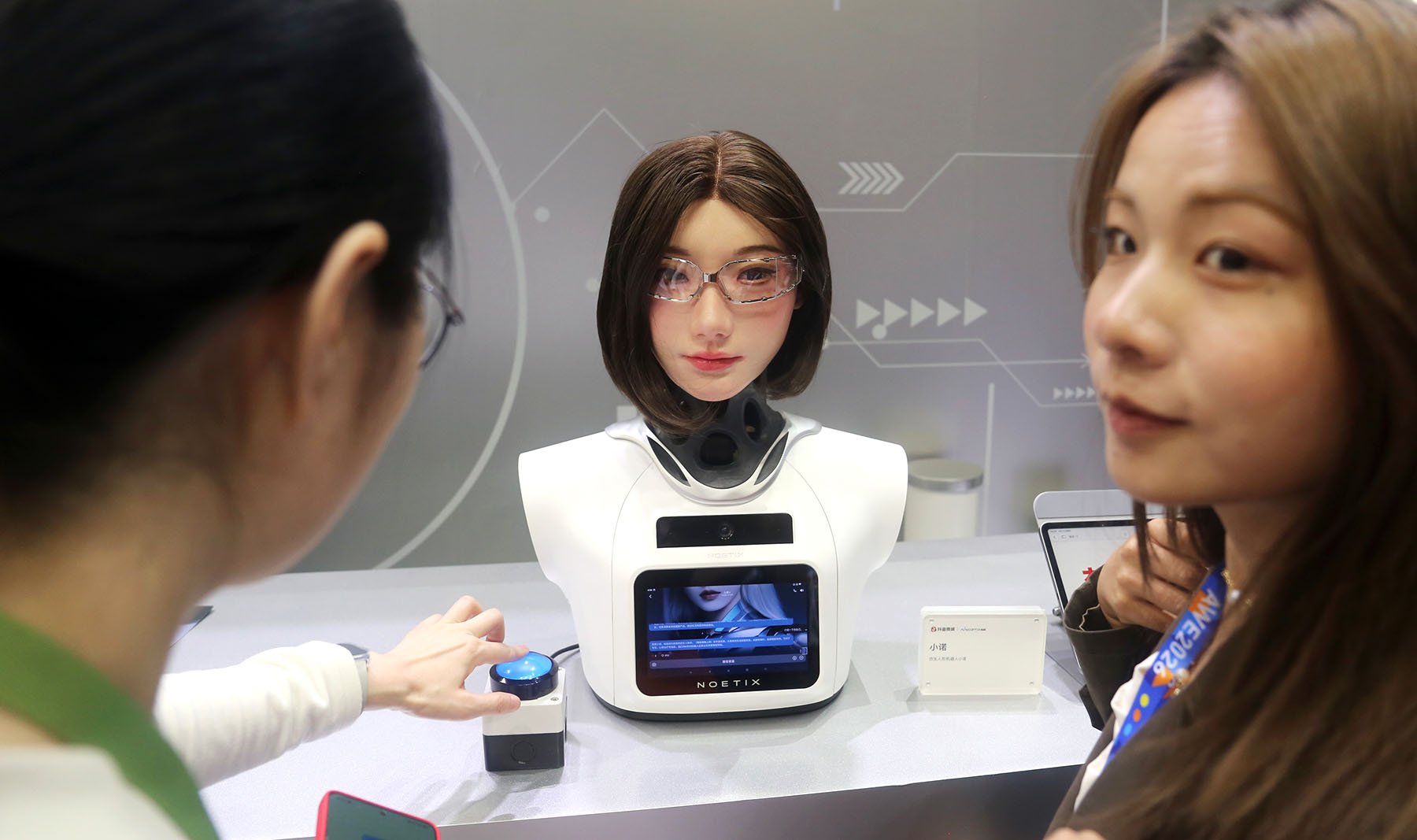
After a successful entrepreneurial career in Shanghai, Wang Zhe decided to become a developer focusing on the AI industry.
"Shanghai gave me the stage for my first startup, and also gave me the speed to start a new venture," Wang, founder of Sitesfy AI, said during the main forum of the summit, an AI event for global developers to communicate, collaborate and innovate.
Referring to the technology company he co-founded with friends in 2015, Wang said, "It is Shanghai's open market, high-quality talent and receptiveness to new ideas that enable us to serve the world's top brands here."
Before starting the company, Wang worked at an accounting firm in New York for five years after graduating from Columbia University in the City of New York 15 years ago.
He said his familiarity with Shanghai was one of the primary reasons he chose the city to start a new company. "More importantly, our team deeply believes that the city offers an environment that allows us to perform better than in any other place," he said.
In less than six months of beginning operations, the company's team of fewer than five people had served hundreds of companies across dozens of countries.
"Our monthly revenue is approaching 1 million yuan and continues to grow rapidly," Wang said.
He added that this is not solely due to their team's exceptional talent, but mainly the decision to develop the company along with the development of the AI industry in Shanghai."I believe that in the future, more and more teams like ours will emerge from here, using AI to create global value. I hope the seed of connection I planted in Shanghai will reach the world," he said.
Luo Zheng, co-founder of Jike App and head of the podcast platform Xiaoyuzhou (Cosmos), said his success over the past decade can be attributed in large part to Shanghai.
"Shanghai's charm lies in its inclusiveness and diversity, which provide an ideal environment for content communities such as Jike and Cosmos. It is the best place for us to explore AI applications," he said.
Luo's companies have focused on using technology to make cultural innovations.
Jike is one of China's top AI topic discussion communities, with more than 60 million registered users. Cosmos provides a platform for young people to express and discuss their emotions, and has become the preferred choice for 95 percent of podcast content creators, according to Luo.
Magnet for talent
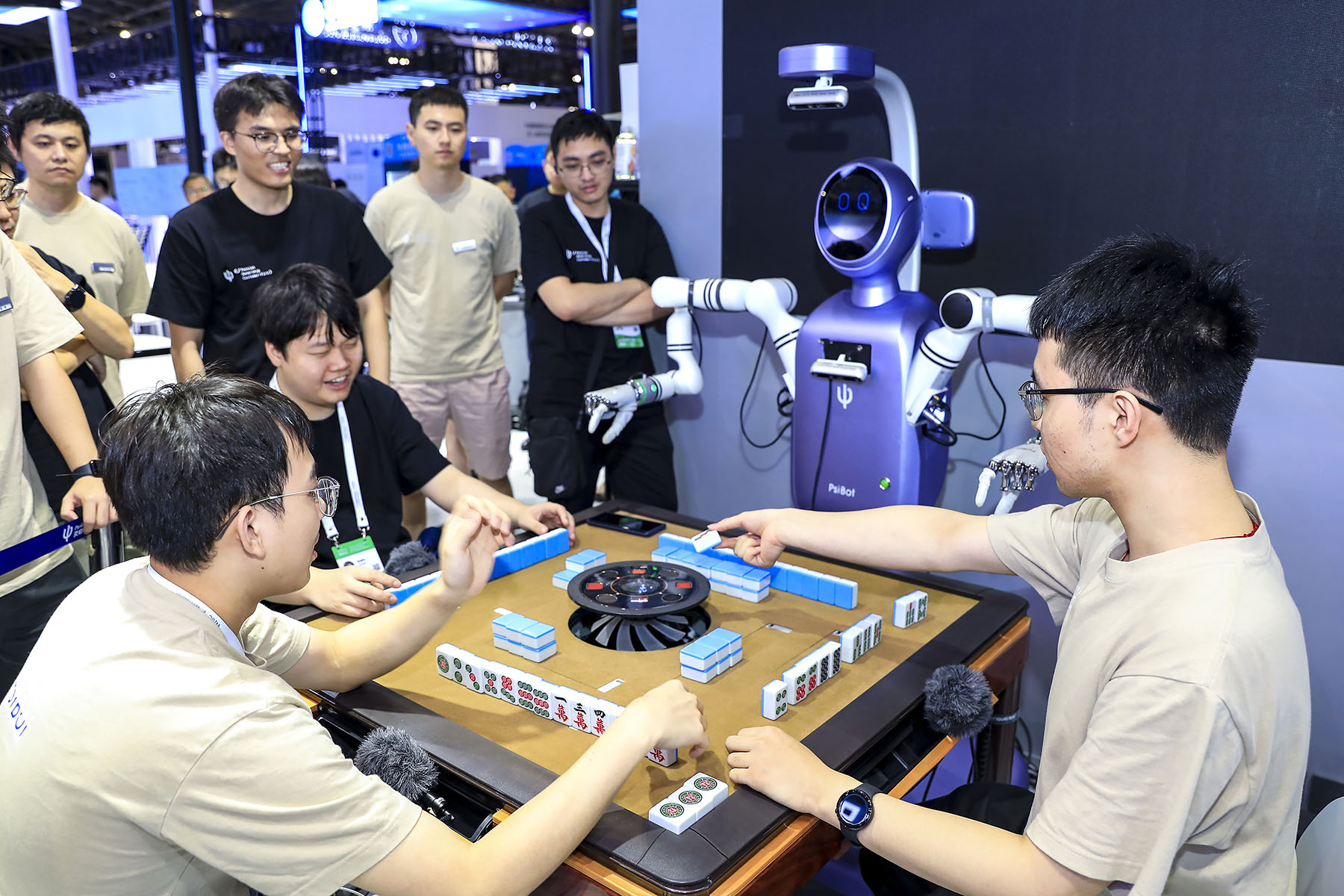
By providing various forms of support for developers and entrepreneurs to experiment and innovate, the city has attracted nearly 300,000 AI talents, according to Chen, the vice-mayor.
"Gathering top-level developers from around the world, the event (summit) aims to explore cutting-edge technologies and industry integration, turning creativity into tangible results, and making Shanghai a global city where developers pursue their dreams," Chen said.
Huang Yi, founder and CEO of Shanghai RoboParty Technology Co, said one of the most frequent questions he is asked is why his team traveled more than 2,000 kilometers from Northeast China to establish the company in Shanghai.
"It is because, on this land, we can realize our ideas and dreams at a speed that can only be achieved in China," said the humanoid robot developer, who is in his early 20s and one of China's youngest CEOs.
"For a small, specialized technology team, Shanghai not only supports our pursuit of dreams, but also provides an environment and policies that allow us to live and grow. The city's growing potential also enables us to invest every penny in research and development," Huang added.
Li Jinjin, founder of Shanghai Jincheng Technology Co, said that over the years she had been a witness and beneficiary of Shanghai's efforts to gather global talent.
"The municipal government's inclusiveness and the rising demand for AI have facilitated the progress of transforming our technologies into market solutions," said Li, who is also a professor at Shanghai Jiao Tong University and director of the Artificial Intelligence and Micro Structure Laboratory.
"China is the world's largest industrial manufacturing country with a complete industrial system. I firmly believe that the future of industry requires not only standardizing processes for instruments and equipment, but also preserving the lifelong hands-on experience of veteran workers," said the scientist and cross-disciplinary entrepreneur.
The large models developed by her company have successfully achieved substantial implementation in numerous industrial scenarios, Li said.
"For instance, we've developed an AI bio-fermentation engineer, which can learn the experience of master craftsmen passed on from generation to generation and can help listed companies increase their production by 5 percent to 10 percent, generating hundreds of millions of yuan in economic value," she said.
"Manufacturing is the foundation of a nation, and AI will be the impetus for its upgrading," she added.
Overseas expansion
Shanghai Westwell Technology is another company situated in Changning that has experienced rapid overseas expansion in the past year.
The company received an order placed by the United Kingdom's Hutchison Ports' Port of Felixstowe last September for the second batch of 34 autonomous trucks, which will double its fleet and cement its position as a leader in port automation, according to a Xinhuanet.com report. Felixstowe is one of the busiest container ports in the UK.
The first batch of 34 autonomous trucks deployed in 2025 has been operating at the port's Trinity Terminal alongside conventional trucks, marking Europe's first successful use of autonomous trucks in mixed-traffic operation, the report said.
"As customers focus more on the effectiveness of application in global logistics scenarios, including ports and airports, our unmanned vehicles have seen a clear increase in repurchase rates," said Tan Limin, chairman of Shanghai Westwell Technology, a logistics solutions provider specializing in AI and autopilot technology.
With more Chinese companies going global, the competition is shifting to gaining advantages in innovation, research and development, service quality, and supply chain enhancement, added Tan.
Both Black Lake Technologies and Shanghai Westwell Technology are among nearly 900 innovative enterprises in Silicon Alley's 1.48-square-kilometer core area.
Three science and technology innovation platforms were officially unveiled on April 17 in Changning, tasked with facilitating the area's transformation into a "global urban district" featuring borderless science and technology innovation integration. The vehicles to drive innovation — including Digisilicon, an industrial incubation ecosystem platform that integrates AI agents and embodied intelligence, and the East Hongqiao International Youth Sci-tech Center — are expected to further support the district's ambition to seize opportunities emerging from the development of new quality productive forces.
During the April 17 ceremony, the Changning district government announced a series of measures to position the district as a hub of core technological innovation, a birthplace of future industries, and a center for young innovative entrepreneurs.
On the same day, an industrial map of Changning district's embodied intelligence and AI agents was jointly released by the district's science and technology commission and the Shanghai AI Industry Association, that clearly outlined the district's industrial layout.
"If Changning district is viewed in three sections, the eastern, central and western areas each have their own priorities," said Xu Qi, deputy secretary-general of the SAIA.
Changning is located in the western part of the city and covers an area of 37.18 square kilometers.
ALSO READ: New products debut at key expo in Shanghai
Xu said the district's eastern section houses Silicon Alley and has a focus on innovation including AI algorithm research and development, integrated circuit design, and electronic materials.
The central part, based around the Hongqiao international trade center, specializes in high-value application scenarios such as integrating AI with culture, tourism and finance. The west side will actively develop an embodied intelligent robot industry park and headquarters for companies aiming to go global.
"The three parts are designed to complement each other and form a complete innovation loop ranging from technology to global market development," Xu added.
Contact the writers at wang_ying@chinadaily.com.cn
