

Ginkgo Project shows that grassroots bonds bridge China-US divide, strengthen bilateral relations
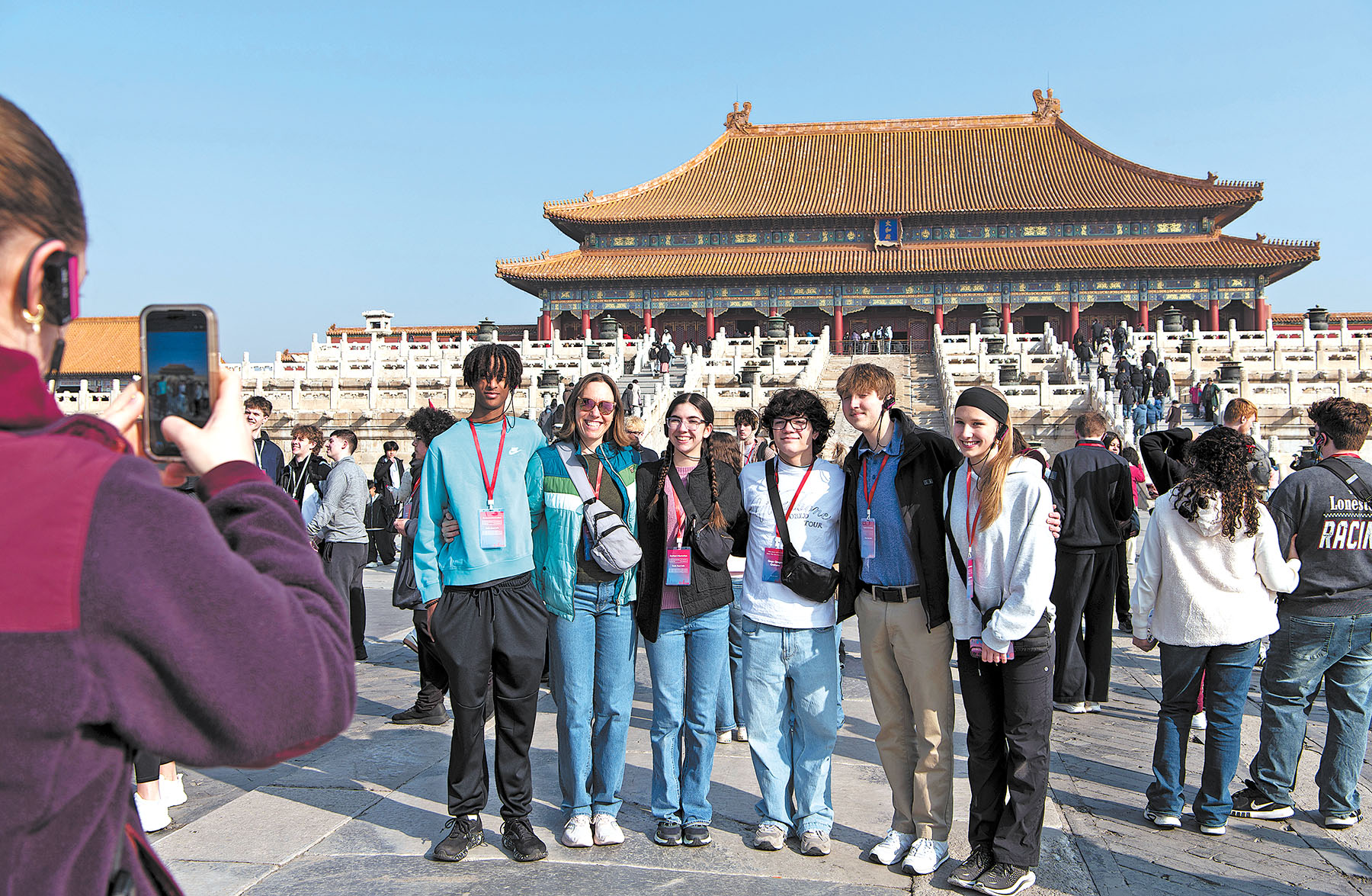
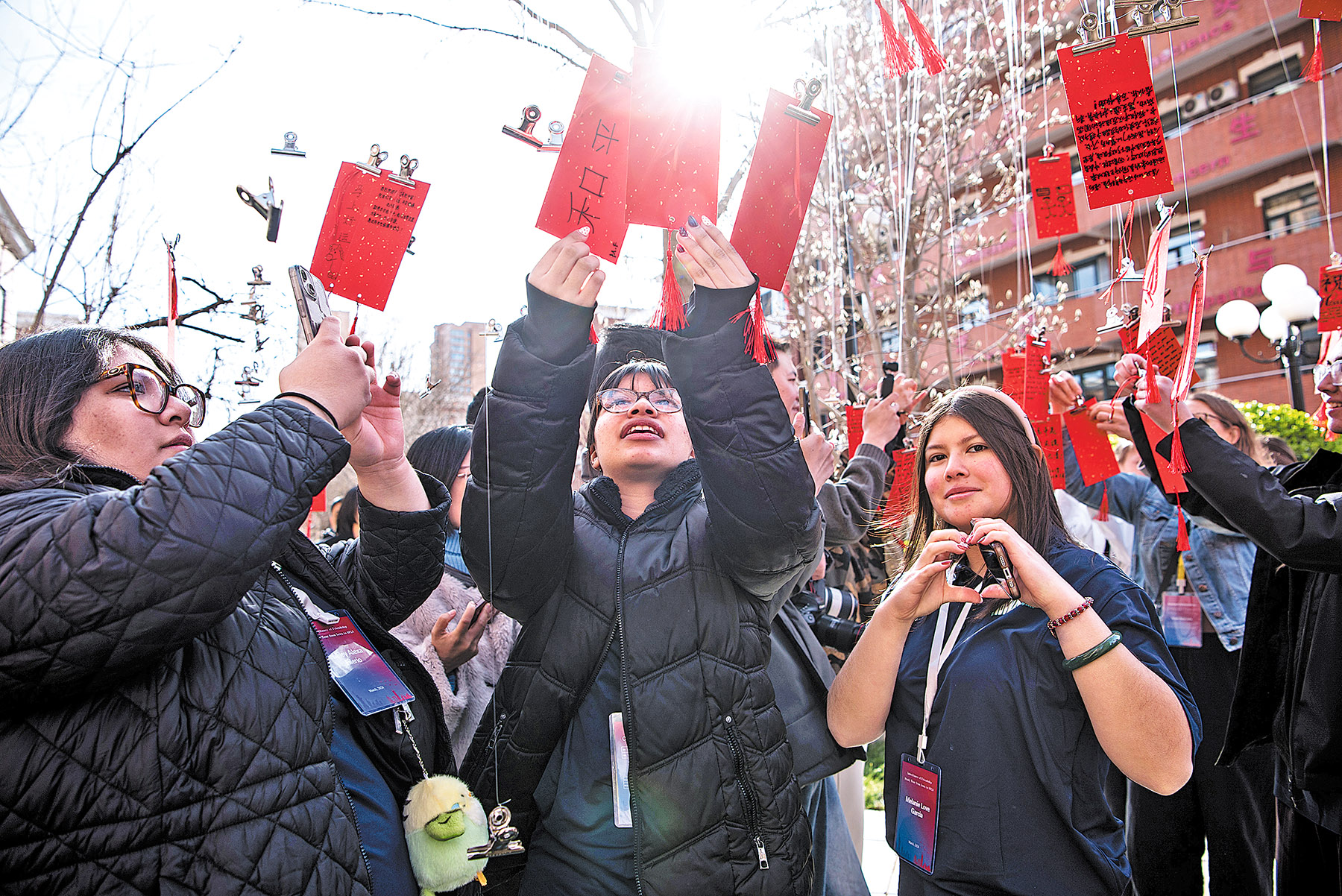
Beneath a ginkgo tree at Shijiazhuang Foreign Language School in Hebei province, the future of relations between China and the United States is written on red wish cards and hung from the budding branches. From March 14 to 22, a 100-member delegation of Iowan students visited several places including Beijing, Shanghai, and Shijiazhuang in Hebei.
The visit was part of the “50,000 in Five Years” initiative, which was announced by Chinese President Xi Jinping in San Francisco in 2023 to encourage exchanges among the youth of the two countries.
The cards written by the Chinese and US students carried wishes for peace and prosperity, and were filled with the warmth of new friendship and the quiet surprise of seeing another country up close.
The “China-US Friendship Tree — The Ginkgo Project” was initiated by Luca Berrone, a board member of Iowa Sister States, to carry forward the sister-state friendship forged between Hebei and Iowa. It invites people on both sides to write or draw their hopes for the future and tie them to a tree long associated with resilience, longevity, and enduring bonds.
While the Ginkgo Project began with a simple exchange of cards, its roots reach back to a 1983 agreement that first linked the cornfields of Iowa with the industrial heart of Hebei.
Decades on, this sister-state bond has evolved from a formal handshake into a vital lifeline for sub-national diplomacy.
As top-level geopolitical moves often dominate headlines, these grassroots connections — fueling the “50,000 in Five Years” initiative — provide a stable channel for dialogue.
The ginkgo tree stands as a reminder that the most enduring relationships are often built from the bottom up.
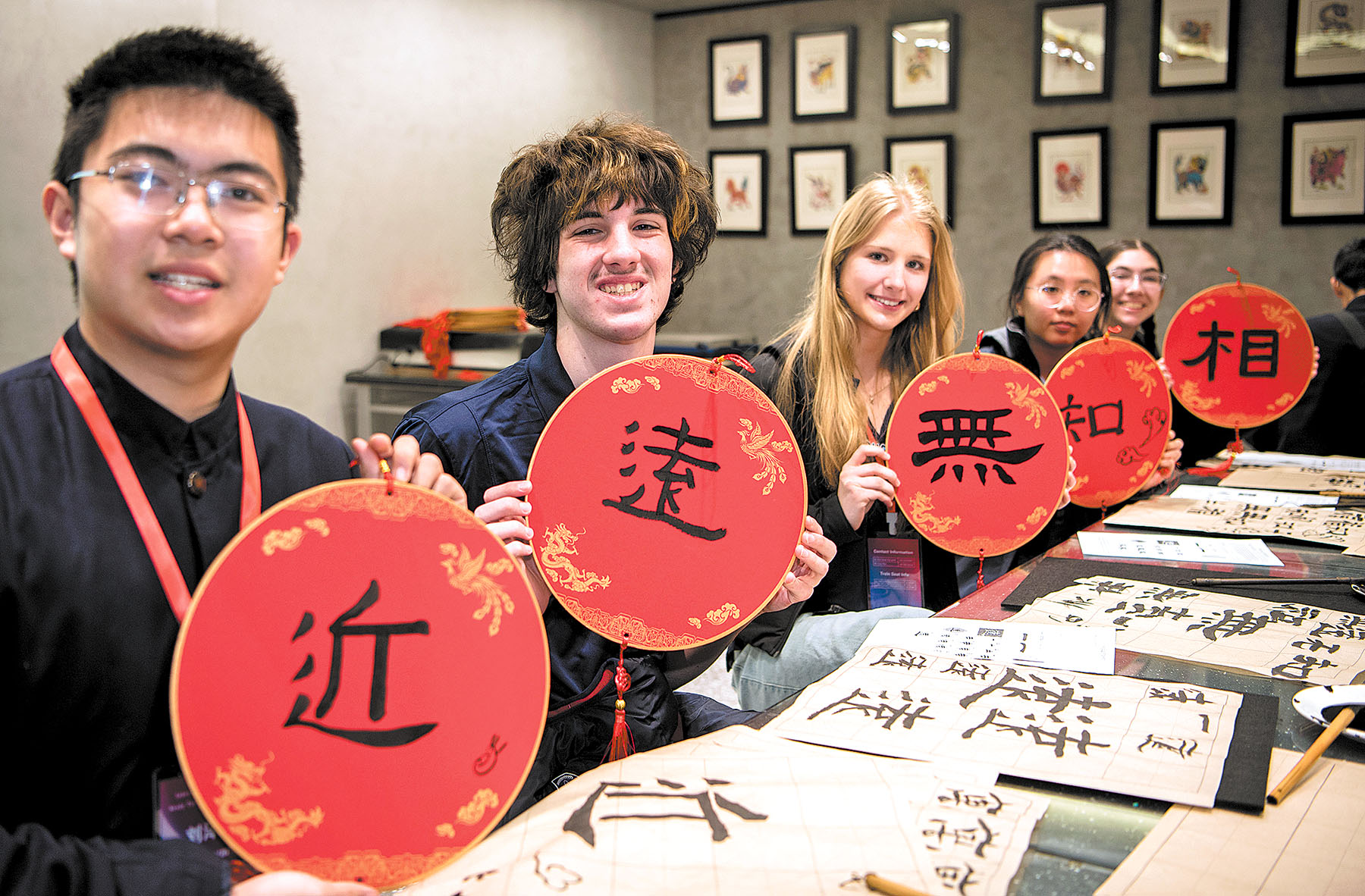
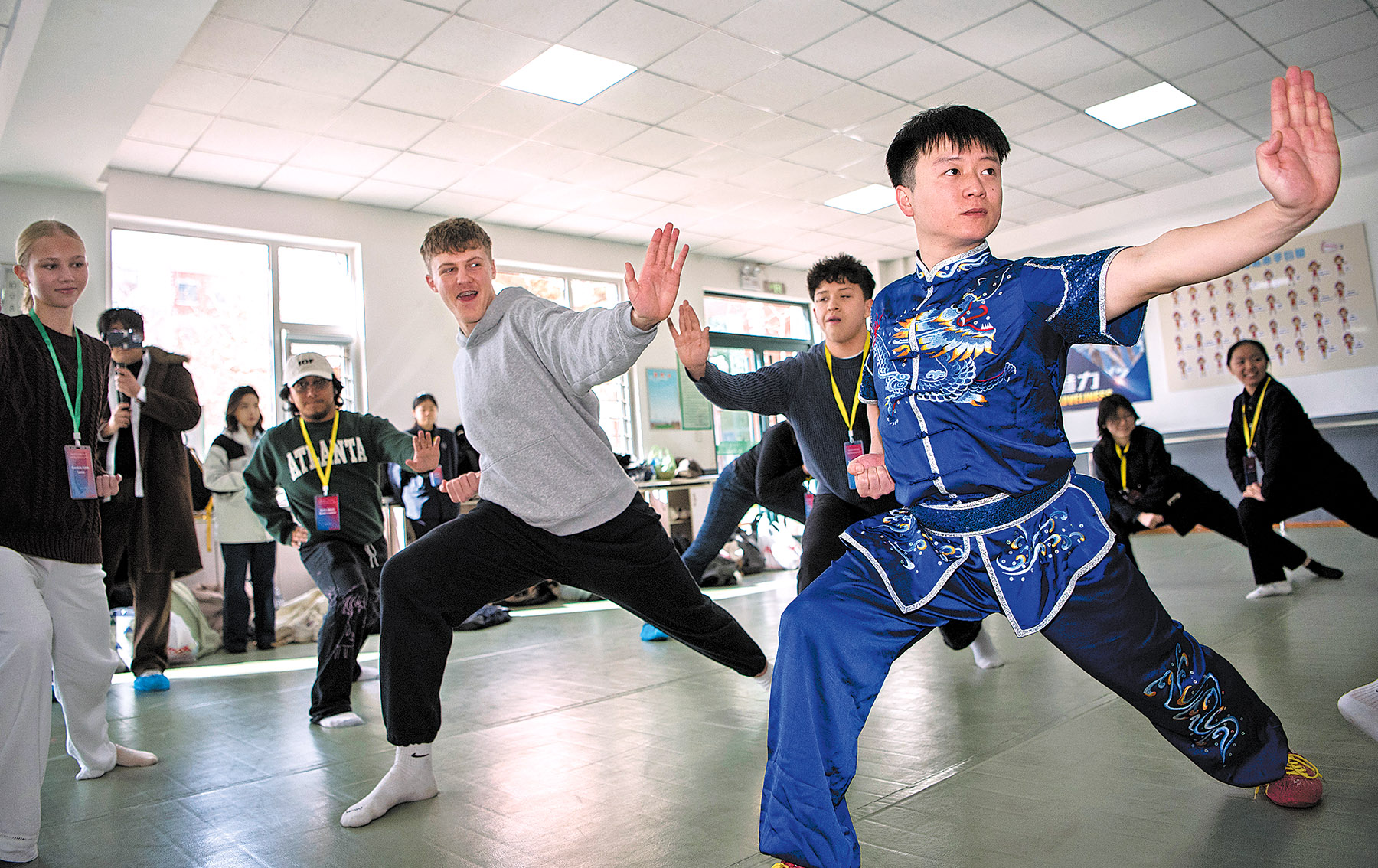
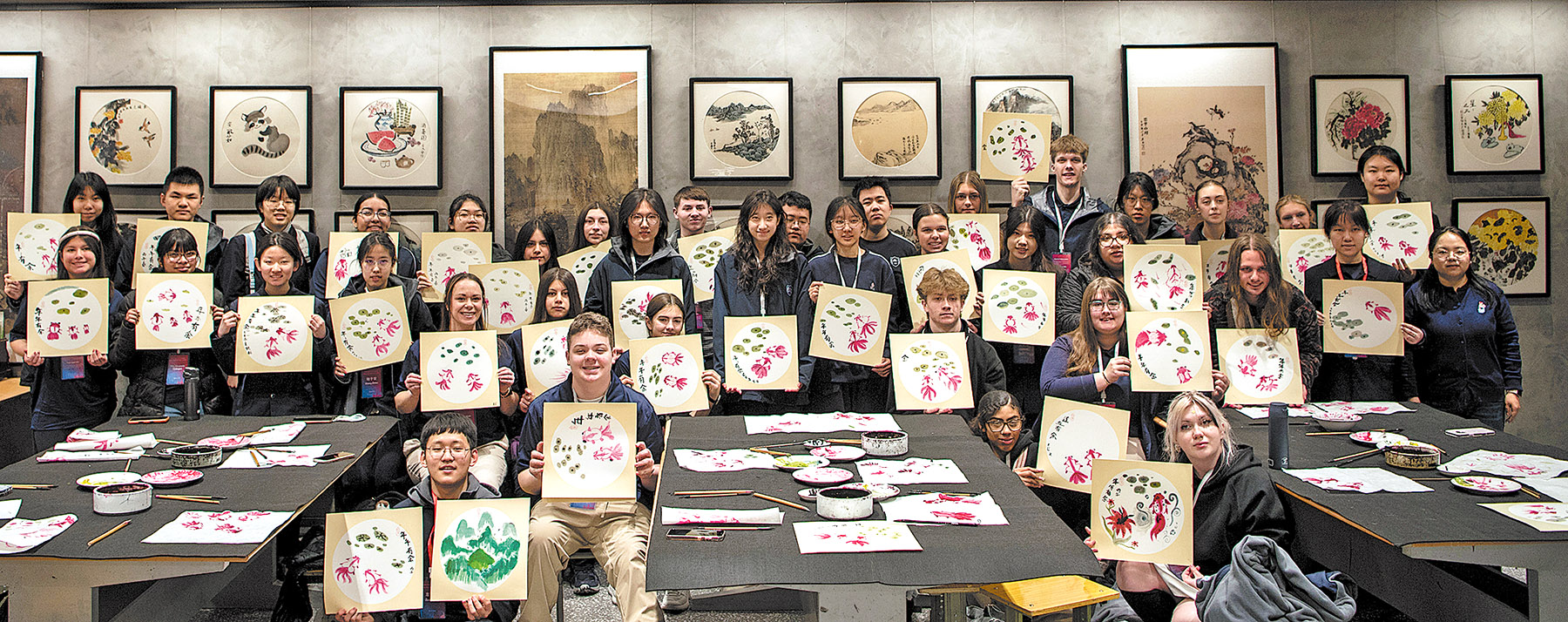
Traveling through different cities, the group experienced both the scale of Chinese civilization and the intimacy of people-to-people exchanges — visiting historical landmarks, trying traditional activities such as Chinese
knot weaving and martial arts, playing sports with Chinese peers, touring campuses, and even visiting local homes.
Within that larger journey, the wish cards on the ginkgo tree turned a single moment into a symbol of something bigger.
For Berrone, the symbolism is deeply personal. His connection to China dates back to 1985, when he helped arrange Xi’s visit to Iowa as a young county official and traveled with the delegation across the state. He still remembers Xi as a “very smart, very curious” and, above all, warm in person.
That sense of continuity resurfaced in early 2026, when Berrone joined other Iowa friends in sending New Year greetings to President Xi, saying they treasured their friendship with the Chinese people and would continue helping it grow.
On Feb 16, Xi replied to friends in Iowa and sent them a Chinese New Year card in return, recalling the warm reception he received in Iowa 41 years earlier.
He said the hope of the China-US relationship lies in the people, its foundation is in grassroots connections, its future depends on the youth, and its vitality comes from sub-national exchanges.
For Berrone, the exchange was moving — not only as a personal response, but as a reminder that people-to-people ties still matter deeply to the future of the relationship.
Another old friend from Iowa, Sarah Lande, placed the recent visit within that longer history of friendship in a video message shown during a China-US student icebreaking session.
Recalling Xi’s 1985 visit to Iowa, Lande described her friendship with him as “a living testament to how genuine human connections can bridge differences and build lasting bonds of understanding and respect”.
“Real diplomacy is rooted in people-to-people ties, in shared laughter, shared experiences, and mutual respect,” she said.
Watching students from Iowa and Shijiazhuang meet, exchange stories and form friendships of their own, she reminded them that they were “part of something truly special and historically significant” and called them “ambassadors of friendship, peace, and mutual understanding”.
For many of the US students, the trip was not simply about seeing China. It was about discovering how quickly a place that had once felt distant could begin to feel human, familiar, and real.
Samuel Jacob Griffith, 18, said he first chose to study Chinese in eighth grade for what he admitted was “a very teenage reason”. When his school asked students to choose between Spanish and Chinese, he remembered thinking: “Everybody learns Spanish. I was like, I gotta be different. I gotta learn Chinese.”
Now on his second visit to China, the student from central Iowa said what struck him most was not how foreign the country felt, but how quickly that sense of distance faded.
“I came and I found the people are very kind, just like in America,” he said. “Everybody is very kind there, everybody is very kind here.”
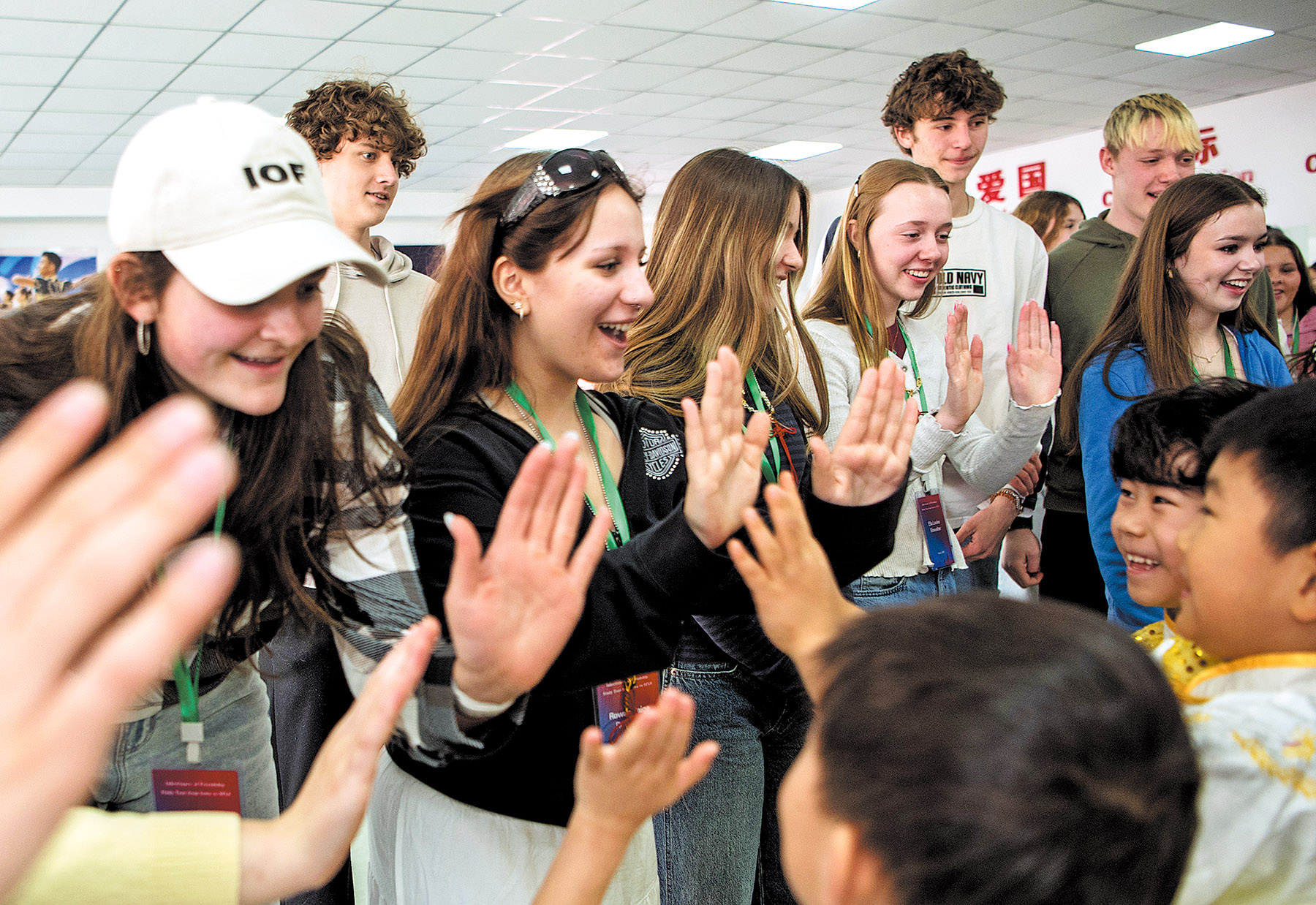
For Griffith, that was the value of exchange. In the US, he said, much of what young people know about other countries comes secondhand — through films, the internet, or political narratives.
“There’s no way to really know what goes on in daily life other than just going to the place and talking to people and seeing what goes on,” he said. After visiting Peking University, he said he had even begun thinking about applying to study there for a semester in college.
That same sense of discovery was shared by 15-year-old Mavis Claire Duke, who came to China hoping to experience something entirely new.
In Shijiazhuang, she said, the welcome from local students was immediate, while activities such as making Chinese knots and practicing martial arts offered more than cultural experience — they gave her, in her words, “a feel for what China is like”.
Yet what stayed with her most was also the simplest realization. “It’s cool to see that people are still people, and the relationships between people are still the same,” she said.
For Duke, that was why such exchanges mattered far beyond a single trip. “Young relationships are the future of our world,” she said.
For Ava Grace Courtney, that realization took on a more reflective tone beneath the ginkgo tree, where students tied handwritten wish cards to the branches.
On hers, she wrote about gratitude — for the chance to visit a country she described as beautiful, and to meet people whose kindness had left a deep impression. “It has really just opened my eyes,” she said.
What moved her, she said, was not the disappearance of difference, but the possibility of connection across it.
“Even though our cultures are not the same, at our core we are all people, and there’s value and beauty in connecting with people even if they are a little bit different from yourself,” she said.
After visiting the Forbidden City and the Great Wall, she said she also came away with a stronger awareness of China’s long history. “I felt very connected to people from a long time ago,” she said.
For some students, the small cards hanging from the ginkgo branches became a place to express hopes that reached beyond the trip itself.
For Lincoln Robert Fletchall, 17, a senior from Iowa on his first trip not only to China but also overseas, that meant writing a poem about peace between China and the US.
Fletchall said he hopes that the peace between the two countries would be “everlasting” and that “we can continue to move forward”.
The trip, he added, had already widened his sense of the world. Beijing left one of the strongest impressions. “It was insane how large it is, and how much history there is,” he said. Coming from a much younger country, he said he was struck by how visibly China’s past remained present in everyday life.
Amid the larger discoveries, there were smaller ones too. “As a teenage boy, I like food a lot,” he said with a laugh, adding that trying new dishes had become one of the most memorable parts of the visit.
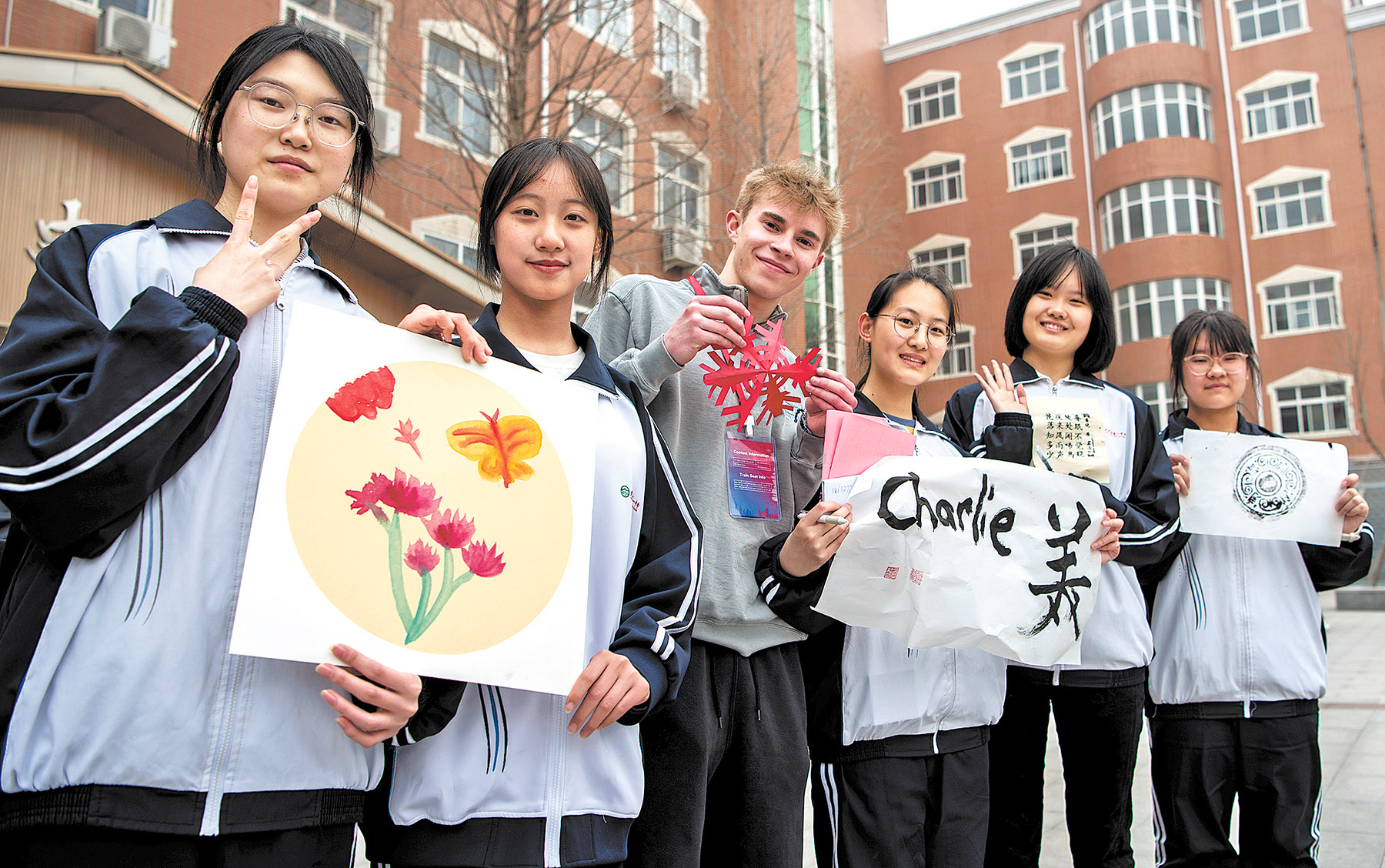
For the Chinese students helping host the exchange, the ginkgo tree was more than part of the day’s ceremony. It was a reminder that the friendship being celebrated had a history — and that it was now being carried forward by a new generation.
Wang Ziyao, 18, said she had spent days preparing for the Iowan students’ arrival, hoping to help them understand the story of friendship linking her school with Iowa.
What impressed her most, she said, was the eagerness with which the US students engaged. In weaving and martial arts classes, they listened closely, joined in enthusiastically, and applauded the children performing at the start of the martial arts session.
“You could really see how much they admired Chinese culture,” she said.
For Wang, however, the emotional center of the day came in the school’s Friendship Grove, where a ginkgo tree planted years ago by honorary principals Lande and Berrone has come to symbolize continuity across time and distance.
“Each time US students visit China, they hang their wishes on the tree, helping carry the friendship forward,” she said.
Wang herself had experienced that continuity from both sides. After visiting Muscatine, Iowa, and Muscatine High School, she was able to reunite in Shijiazhuang with a US student she had met there the year before.
“We saw each other again here in China and said, ‘Long time no see,’” she said. “What had begun in Iowa had now come back to Hebei.”
For others in the delegation, moments of unscripted delight also became part of what they would take home.
“This is my first time seeing a panda in my life,” said Eric Yael Rodriguez-Alcaraz. “Seeing a panda in person is amazing.” He said he had already been calling family and friends back home about what he had seen, and hoped one day to bring his family to China.
Nearby, Irene Loonga Alobo adjusted a fuzzy panda hat bought at the Great Wall and smiled at the attention it drew. “It’s very cute and very comfortable,” Alobo said. “But also, it’s nice that China shares pandas with zoos across the world so everyone can enjoy them.”
For the adults accompanying the group, those moments of delight formed part of a larger picture.
For Del Christensen, executive director of Iowa Sister States, the value of youth exchanges lies not only in what students see during a visit, but in what stays with them after they return home. “These young people may not be leaders today, but they may become leaders in the future, and the understanding they gain now will help them then,” he said.
Reflecting on the friendship tree, he reached for an image that captured the continuity between generations.
“The roots are the old friends that have been made between the United States and China,” Christensen said. “But all the branches and leaves are the new young friends.”
Tamela Dawn Visalden, a teacher from Iowa on her first trip to China, said the visit showed her how much such exchanges can matter, especially for students who might otherwise never have had the chance to travel abroad.
Calling the “50,000 in Five Years” initiative “an amazing opportunity”, she said it gave young people from the US not only a chance to experience Chinese culture, but also to interact directly with Chinese students. “My hope is that we can continue to come together and build a strong bond,” she said.
For Berrone, that movement from observation to relationship is where the meaning of exchange begins. Its deeper value lies not in ceremony alone, but in the habits it builds — dialogue, respect and a willingness to learn from difference.
“I cannot go to China and expect to find New York. Just like if you come to New York, you don’t find Shanghai or Beijing,” he said. “You have to respect the surroundings and cultural differences and learn from those.”
Back beneath the ginkgo tree, the wish cards tied to its branches appear weightless in the spring breeze. Yet what they carry — peace, curiosity, gratitude, and friendship — is anything but small.
Each exchange, Berrone said, is “like throwing a stone in the lake”.
No one can say exactly where the ripples will end up. Perhaps that is part of the point: their force is often felt later — in memory, in recognition, and in the quiet ways a brief encounter can widen into something lasting.
Contact the writers at zhaojia@chinadaily.com.cn
