

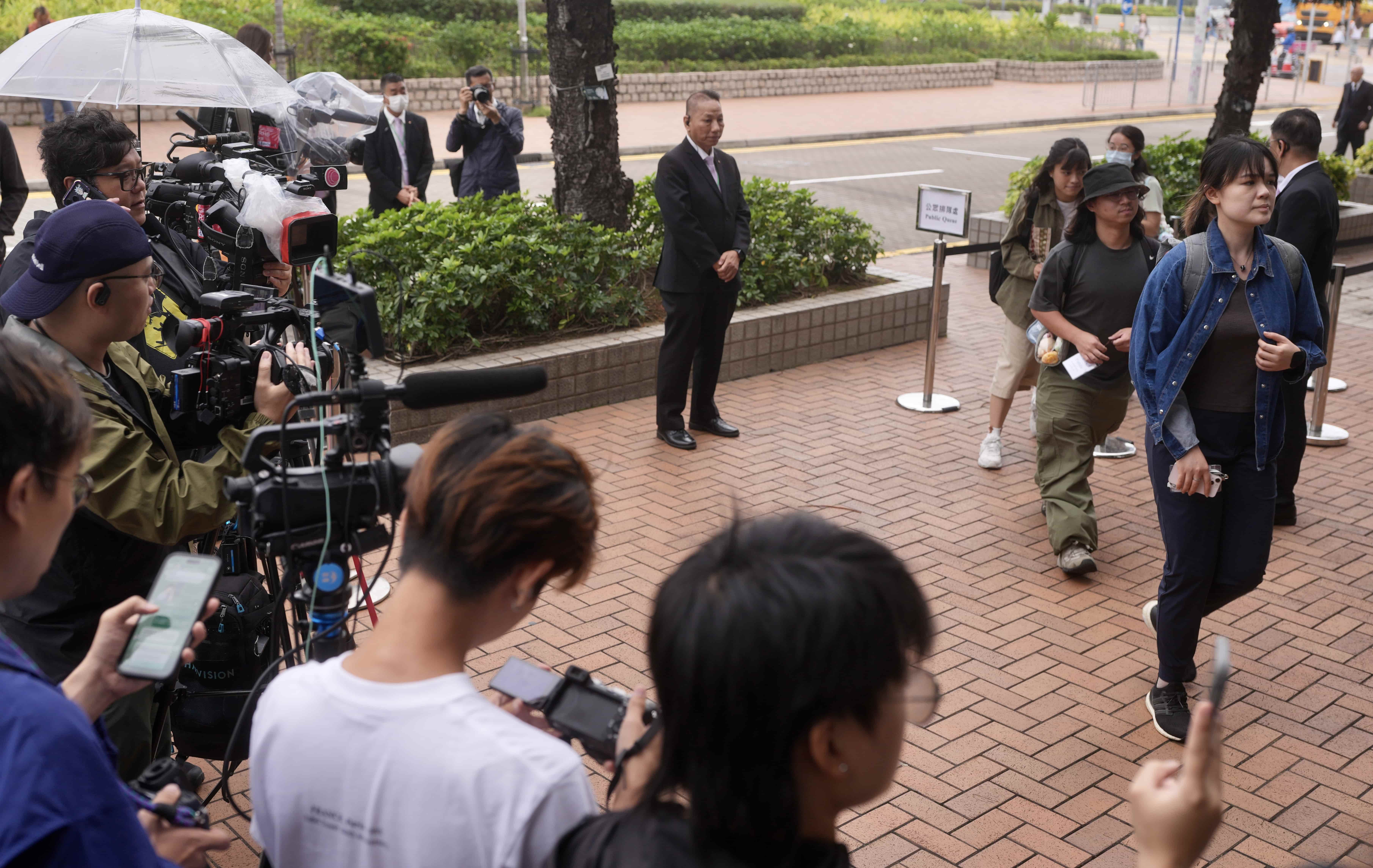
The absence of a clear, agreed mechanism “in black and white” to coordinate emergency call handling by police and fire services’ respective call centers “has room for improvement”, a public inquiry into last November’s deadly Wang Fuk Court fire heard on Wednesday, after evidence emerged of suboptimal practices during the blaze.
The 12th evidential hearing into the inferno that claimed 168 lives heard of questionable emergency call management.
SPECIAL PAGE: Tai Po fire inquiry hearings
Operators with the Hong Kong Police Force — always the first point of contact on the special administrative region’s 999-emergency line under the current procedures — in some cases, took initial details from callers, who were then required to repeat their accounts to fire services’ responders after call referrals that took up to 15 minutes.
Some callers abandoned their attempts before reaching the fire service. Other calls were never forwarded. At least one individual whose call was not transferred later died, it was disclosed.
The mechanism for cross-agency emergency call handling involving police and fire services “has room for improvement,” Sunny Wong Sze-lut, a deputy chief fire officer of the Fire Services Department’s operational support and professional branch who oversaw the department’s call center’s operation during last year’s deadly blaze, told the inquiry.
He agreed that some on-the-ground procedures at that time had strayed from both departments’ existing written protocol, while certain situations were managed based on “past experience” in the absence of any agreed “written-down, black-and-white” guideline.
Wong pledged before the panel that his department has plans for joint reviews with police to draw lessons from their response to the Wang Fuk Court blaze in order to enhance overall operational efficiency.
Wong testified that his department logged 373 emergency calls on the day of the fire.
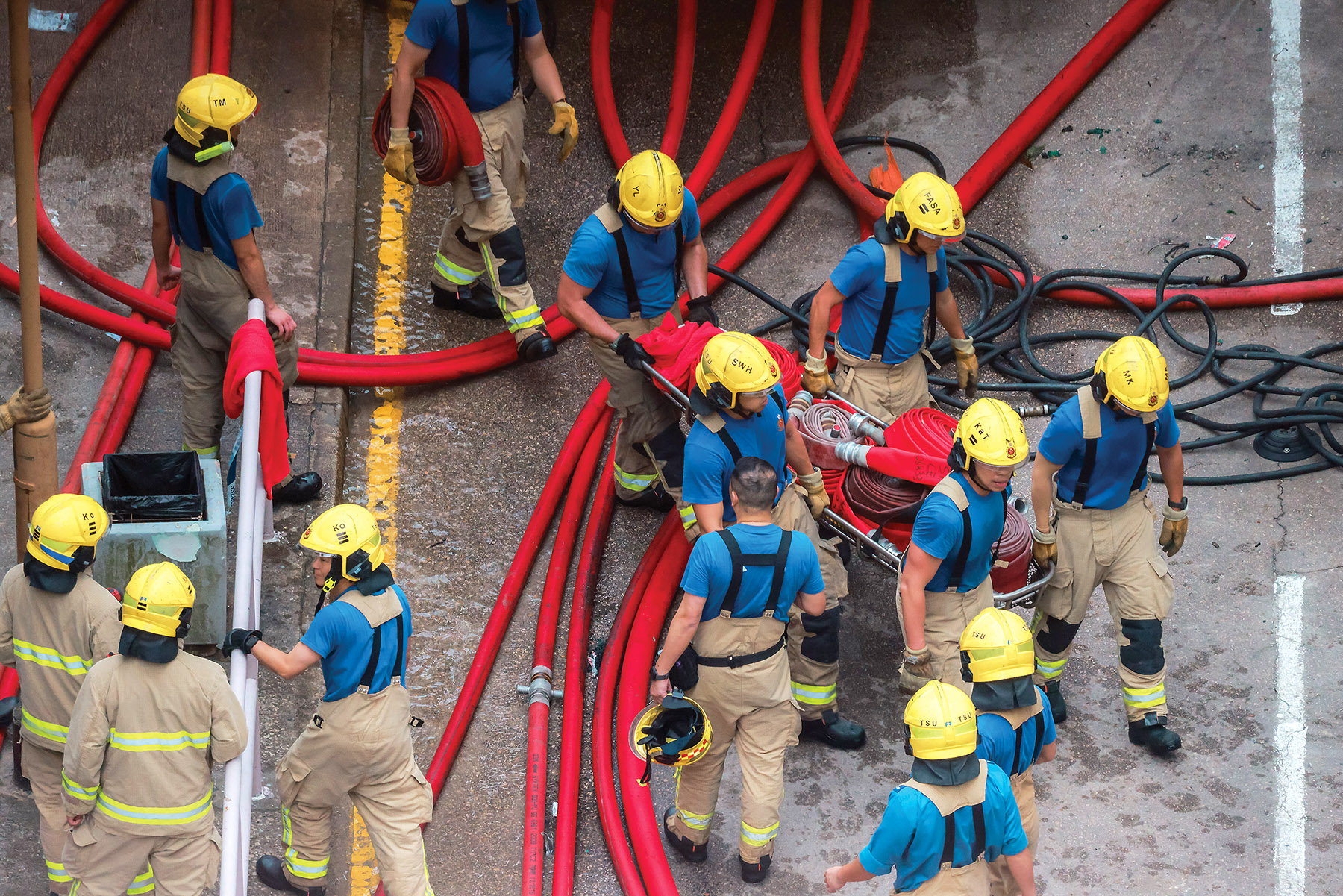
The fire services call center “had exhausted all available personnel” at that time, Wong said. In addition to the center’s usual 30 telephone lines in full operation, 80 additional staff were mobilized to set up a support team with 18 extra lines dedicated to a “call-back” mechanism.
He described this level of resources as “largely sufficient” to meet the day’s call volume.
Still, Victor Dawes, lead counsel to the inquiry, pointed to a capacity mismatch between the police and the fire services’ call centers that led to a “bottleneck” in the communication line between the two sides.
The Hong Kong police force operates three 999-emergency report centers with a combined 207 telephone lines, Dawes cited, whereas the city’s fire service has only 30 lines, meaning it can handle no more than 30 emergency calls simultaneously.
Wong agreed that improvements must be made. “In manpower, hardware and technology, we hope to do better in future operations,” he said.
Call recordings played at the hearing revealed callers repeating personal and location details to fire services after already providing them to the police.
Dawes suggested the intended protocol required rapid police-to-fire referrals, with police operators likely expected to refrain from gathering detailed information from the callers. Wong responded that fire services do not typically rely on police for information, opting instead to verify details directly for accuracy.
RELATED ARTICLES:
- Fire commanders admit to evacuation gaps with inactive alarms
- Time gap revealed in Wang Fuk Court fire safety system oversight
- Booking opens Thursday for public hearings into Tai Po fire
- HK's first public hearing on Tai Po fire scheduled for March
On dropped calls that did not reach fire services, Wong said the police, relying on a default, unwritten mechanism, would fax caller details to his department.
While noting that fire services might still obtain that caller information via alternative routes, he conceded that direct digital sharing between police and fire services would be “optimal” but added that such a system has not yet been available.
Police internal guidance displayed at the hearing noted that during a “major fire, accident or disaster”, its operators are instructed to “thank the caller and close the conversation” if the caller is “merely reporting the incident” with no “additional information to supply”.
Wong said that he had not previously seen the document but agreed that a clear mechanism should be in place for cases where fire-alarm calls received by police are not promptly transferred to fire services.
The committee on Wednesday also heard from Tsang Shuk-yin, the officer-in-command of the Hong Kong Police Force’s casualty enquiry unit, and Cheng Ka-chun, the officer-in-charge of the force’s disaster victim identification unit, who respectively gave evidence on casualty enquiries and the recovery of deceased victims’ bodies after the fire broke out.
Cheng said that, to his knowledge, any evidence suggesting a death toll exceeding the current official number of 168 would be “almost impossible” to find.
He added that the final set of victims’ remains was only located on the fifth search attempt, with “every inch” of the fire scene examined. “Any substance we believed to be human remains would be recovered,” he said.
Contact the writer at wanqing@chinadailyhk.com
