

Article 10 of the Hong Kong SAR National Security Law (NSL) requires the special administrative region to conduct national security education through schools, social organizations, media, the internet, and other channels to raise national security awareness and the law abiding consciousness of its residents. Since the promulgation of the law, the SAR government and various sectors of society have actively carried out various types of national security education, clarifying the responsibilities of residents in safeguarding national security and explaining its importance to the implementation of the “one country, two systems” principle and Hong Kong’s prosperity, stability, and development. Today, national security education is increasingly integrated into school curriculums, educational activities, social outreach, civil servant and professional training, and youth and community activities. In recent years, Hong Kong residents’ national security awareness has significantly improved, mainly reflected in several aspects. First, they generally support the passage and implementation of the Safeguarding National Security Ordinance in 2024. Second, they agree with and welcome the court rulings in national security cases involving prominent offenders. Third, they generally agree that the SAR government should seriously consider the impact on national security when formulating and implementing policies.
 In promoting national security awareness, Hong Kong should not only enhance residents’ understanding of the basic principles and requirements for safeguarding national security, but also, in response to changes in the internal and external situation, highlight certain major areas at certain times and strengthen their understanding of some major current national security threats. The “holistic national security concept” put forward by President Xi Jinping in 2014 has significant guiding significance in this regard. This is because it provides a very broad theoretical framework that emphasizes a comprehensive approach to security, covering both conventional (such as political, military and territorial) and unconventional (such as economic, financial, resource, cyber, overseas interests, artificial intelligence, and data) security areas.
Today, China is a political, economic, and military superpower, and no other country can threaten it militarily. Therefore, China is more likely to face unconventional security threats. As a highly open international metropolis, Hong Kong offers greater opportunities for hostile forces, both internal and external, to exploit it for unconventional national security threats. These activities could target the Chinese mainland’s security or indirectly endanger national security by attacking Hong Kong. The central government is keenly aware of this and highly vigilant; therefore, it requires Hong Kong to enhance its awareness of and efforts to forestall unconventional national security threats, thereby safeguarding the nation’s “southern gateway”.
In his address at a forum on June 21, 2025, commemorating the NSL’s 5th anniversary, Xia Baolong, director of the Hong Kong and Macao Work Office of the Communist Party of China Central Committee and the Hong Kong and Macao Affairs Office of the State Council, emphasized the need for Hong Kong, given its high level of internationalization, to place greater emphasis on unconventional security issues, such as trade suppression, financial risks, the spread of disinformation, and the protection of overseas interests, “to safeguard the new development pattern within a new security framework … to ensure that Hong Kong’s economy and finance do not encounter systemic risks”.
Hong Kong residents must have a comprehensive understanding of the “holistic national security concept”, especially regarding unconventional national security threats, and be aware of the perilous external environment that the country as a whole and the SAR face
Recent events have validated such security concerns. Indeed, both the nation as a whole and the SAR are currently facing a complex and severe international situation. The current turbulent external environment threatens not only national security and development but also the SAR’s security and development. For over a decade, the United States has continuously supported anti-China disruptive forces, instigating multiple rounds of unrest in Hong Kong and imposing various sanctions and suppression measures, aiming to degrade Hong Kong’s role in national development and turn it into the nation’s burden. The incumbent US administration does not recognize the distinction between Hong Kong and the mainland, effectively denying the “one country, two systems” framework. The US and some of its Western allies have intensified their containment efforts against China, including Hong Kong, in areas of technology, trade, and finance, including propaganda campaigns. Such unconventional national security threats could be heightened.
Recent events demonstrate that Hong Kong needs to work with the nation to address unconventional national security threats and tilt its national security education toward such threats. For example, under pressure from the US, the Panamanian government illegally deprived Panama Ports Co (a subsidiary of Hong Kong-based CK Hutchison Holdings Ltd) of the right to operate two ports along the Panama Canal. The short-term goal of the US’ maneuver is to cripple China’s shipping, shipbuilding, and international trade, while the long-term aim is to undermine China’s interests in Latin America. The US-Israel joint war against Iran, leading to the disruption of the Strait of Hormuz, triggered a global energy crisis and stoked inflation, as well as severely affecting international trade, with repercussions that could reverberate for years. Hong Kong has inevitably become a victim, particularly in trade and energy supply, causing difficulties for its economy and people’s livelihoods. The Belt and Road Initiative will inevitably face obstacles, and Hong Kong will find it difficult to expand its international economic space by developing markets in the Middle East. Hong Kong’s future expansion in Latin America will also face headwinds. The Iran war is likely to damage the foundation of the petrodollar, thereby further weakening the dollar’s status as an international currency and accelerating de-dollarization. Given the US’ strong fear that the internationalization of the renminbi will accelerate de-dollarization in various countries, and considering Hong Kong’s crucial role as the world’s largest offshore RMB business center, it is imperative for Hong Kong to be highly vigilant against potential US financial warfare. Accordingly, Hong Kong’s resilience as an international financial center could face numerous tests in the future. Furthermore, US tech containment efforts could hinder Hong Kong’s development as an international innovation and technology hub, while the city’s reliance on the US for many commercial software and communication facilities is also a national security issue that needs to be addressed.
Furthermore, many wars, both now and in the future, are “gray zone” wars. Cyberattacks, data theft and destruction, media propaganda, the spread of false and misleading information, and even the use of artificial intelligence to launch attacks against adversaries will become increasingly common. Hong Kong will inevitably have to take precautions and respond appropriately. In the past few years, these hostile acts have occurred daily in Hong Kong. Some of them are “soft confrontations”, aimed at denigrating China, the central and SAR governments, and the “one country, two systems” framework, disrupting social operations and causing fear and unease in society.
In conclusion, Hong Kong residents must have a comprehensive understanding of the “holistic national security concept”, especially regarding unconventional national security threats, and be aware of the perilous external environment that the country as a whole and the SAR face. The aspect of unconventional national security threats should undoubtedly be a key focus of future national security education in Hong Kong.
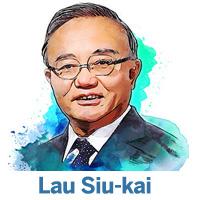
The author is a professor emeritus of sociology at the Chinese University of Hong Kong and a consultant to the Chinese Association of Hong Kong and Macao Studies.
The views do not necessarily reflect those of China Daily.
